Skip to content

Invoicing software for designing agencies, branded down to the document

The invoice a design studio sends is still a piece of client-facing work. Invoice Crowd puts your logo, colors and wording on every estimate, proposal and invoice, then handles the deposits, stage payments and retainers that design work is actually billed in.

  • Invoice and proposal templates
  • Deposits and stage payments
  • multiple provider integrations

What is inside

The document, the billing model, the money

Three things decide whether billing is a chore in a design studio: what the client opens, how the work is priced into stages, and how quickly the money arrives after that.

The document

Client-facing work, not paperwork

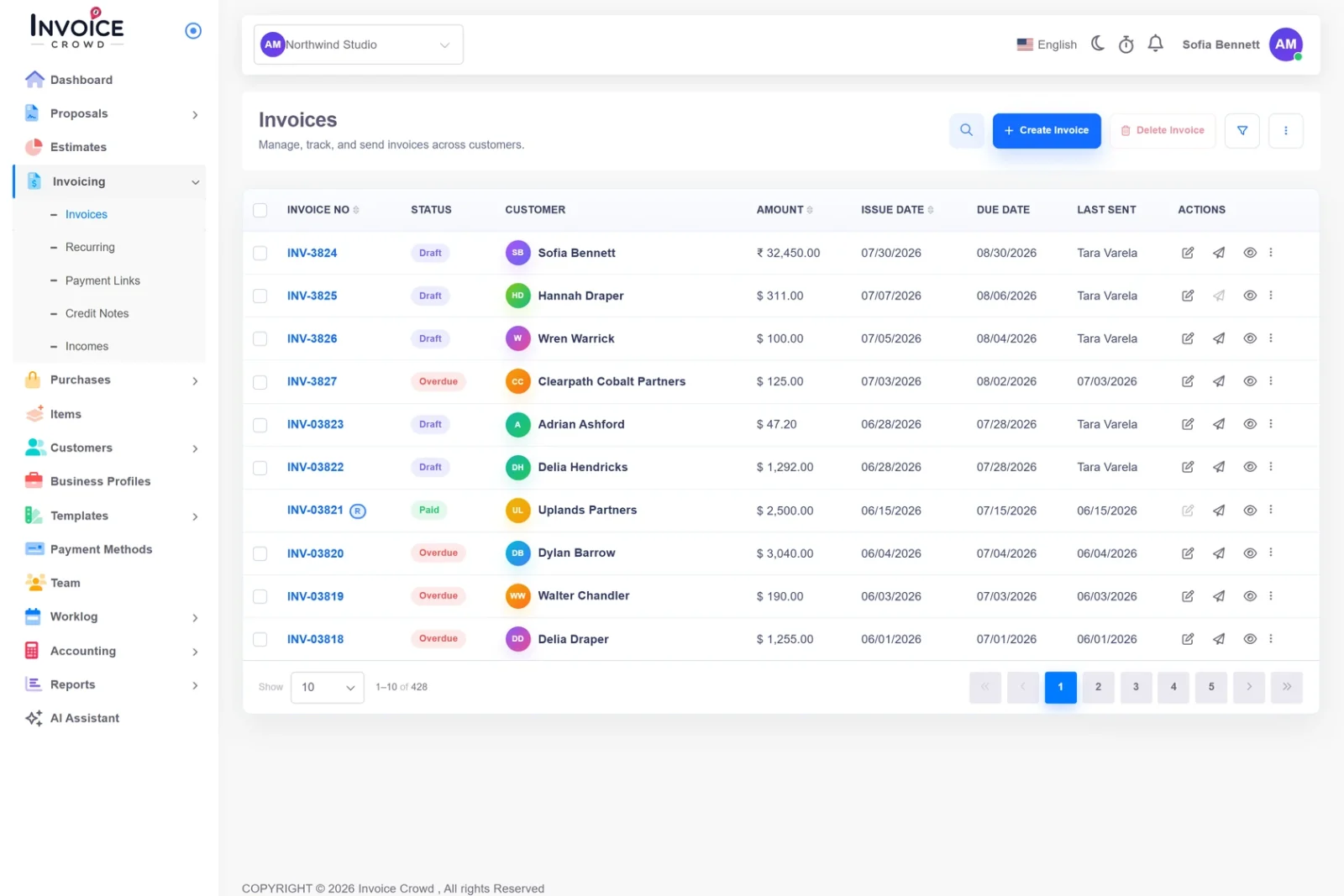
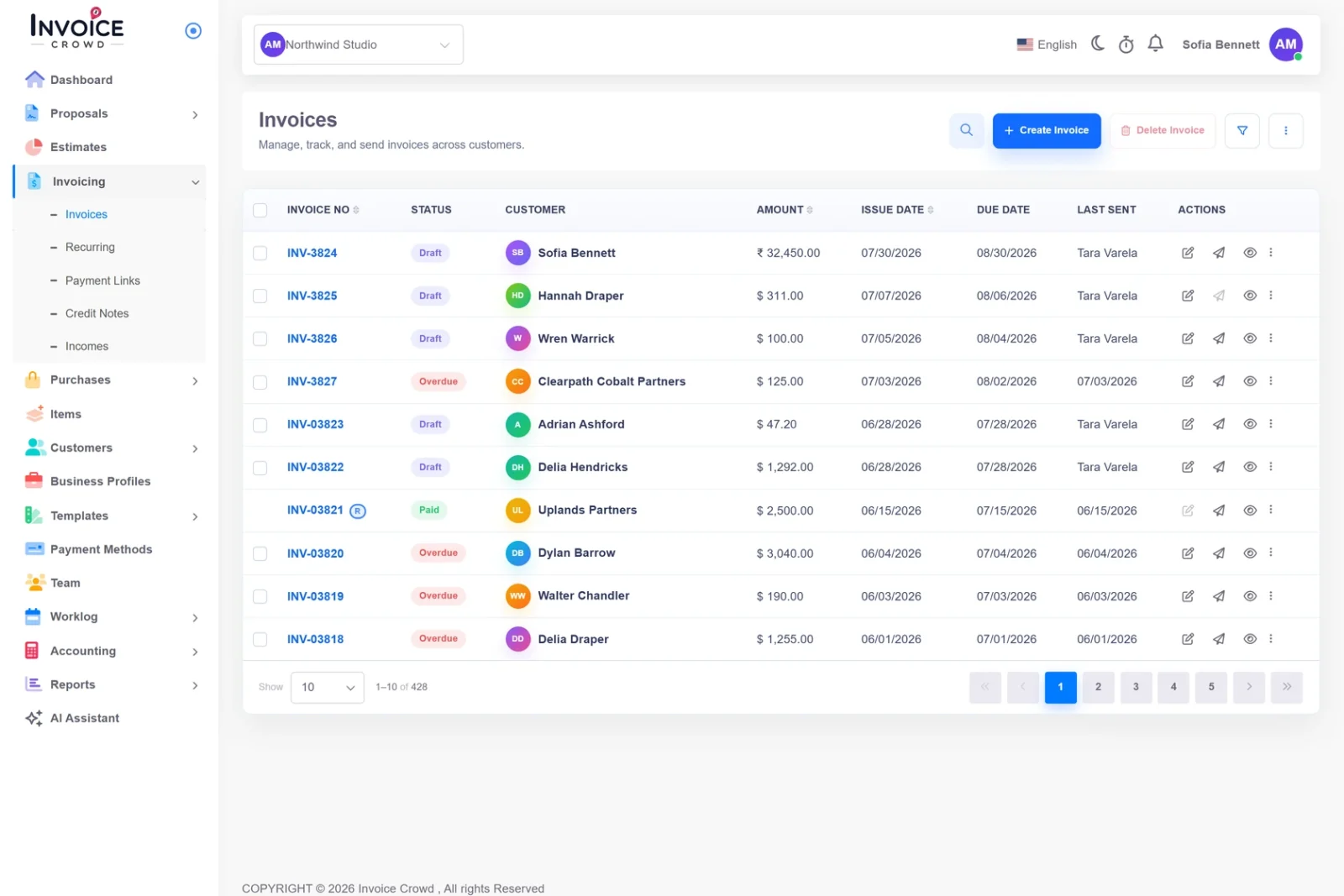
The Invoices screen in Invoice Crowd, listing invoice number, status, customer, amount, issue date and due date

Templates you can put the studio on

Pick an invoice template, set the logo, the colors and the wording, and every document that leaves the studio matches the rest of your work. Custom fields carry a project code or a purchase order number, and saved notes and terms stop you rewriting the same paragraph.

  • Invoice templates and 40+ proposal templates
  • Custom fields for project and PO numbers
  • Saved items for the services you quote most
The pitch and the price in one document

A proposal built from your own content library, signed in the browser, with client-removable line items the client can keep or remove and quantities they can set themselves. An approved estimate then turns into an invoice without a single line being retyped.

  • Start from any of 40+ proposal templates
  • E-signature, with nothing to print or scan
  • Optional extras the client chooses at approval
client-removable line items

How design work gets billed

Deposits, stages, retainers and hours

Half up front, the rest on delivery

Take a deposit before the studio opens a file, then bill the balance when the work ships. An invoice can be paid in parts, so a client settles each stage as it is signed off and the outstanding amount is always what is actually left.

  • Split an invoice into part payments
  • Advance payments before the work starts
  • Automatic reminders and late fees on overdue amounts
Split and partial payments
Recurring invoices in Invoice Crowd listing schedules, frequencies and next run dates

Retainers that bill themselves each month

A monthly design retainer, a brand guardianship agreement, an ongoing template subscription. Set the amount, the client and the cycle once and the invoice is raised on schedule. Packages let you bundle the services in that retainer so the line items are the same every time.

  • Weekly through annual schedules
  • Packages bundle a fixed scope of services
  • Stop or amend a retainer at any time
Packages

Getting paid

The shortest path from sent to settled

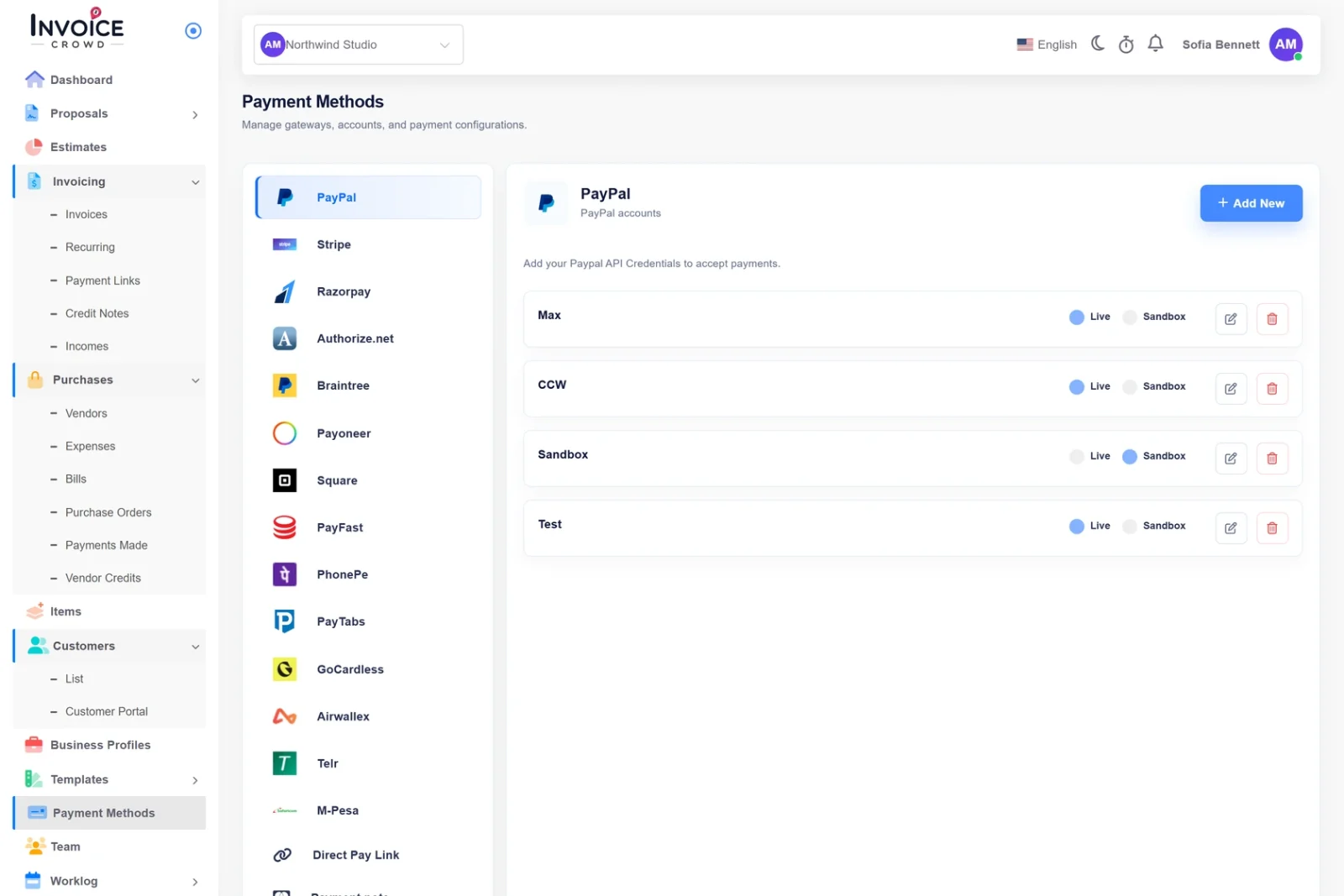
Payment methods screen in Invoice Crowd listing the gateways available on an invoice

10+ ways for the client to pay

The invoice can carry PayPal, Stripe, Razorpay, Square, Payoneer, Braintree, Authorize.net, Airwallex, GoCardless, PayFast, PayTabs, Telr or M-Pesa, so a client abroad pays with whatever their finance team already uses. Bill in their currency while your own reporting stays in one currency. Nothing changes on the template when the gateway does.

  • multiple provider integrations to switch between
  • Multi-currency invoices, base-currency reports
  • Deposits and part payments through the same gateway
Payment gateways

A portal instead of a resend

Clients open a portal where their estimates, proposals and invoices sit together: approve the quote, download the PDF for their accounts team, pay the balance. The studio stops digging through mail threads for a document sent four months ago, and the client stops asking.

  • View, approve, download and pay in one place
  • Every document for that client in one list
  • No PDF copy to keep chasing by email
The customer portal

Compared with the usual stack

What a studio normally pays four tools to do

Design agencies tend to run a proposal tool, an invoicing tool, a payment processor and a bookkeeper's file that has to agree with all three. These four things sit in one subscription instead.

  • Proposals, invoices and books

    The quote, the invoice and the ledger entry are one record at three stages, so nothing has to be lifted out at month end and matched up again.

  • A second studio identity

    A sub-brand, a joint venture or the side practice you bill separately each gets a profile with its own logo, its own documents and its own accounts.

  • Whatever the client's finance team uses

    multiple provider integrations are supported, so an overseas client is never blocked because the billing tool only offers the one you happened to sign up with.

  • Foreign clients, one set of books

    Bill in euros, dollars or rupees as the contract says, and still read profit and loss in the single currency your accountant works in.

Also included

The rest of the studio's billing

Invoicing is one module in an account that also holds proposals, projects, timesheets and a full accounting records and report views with visible integrity checks.

  • Estimates and approvals

    Send a priced quote, let the client approve it online, and keep the version they agreed to.

  • Estimate to invoice

    An approved quote becomes an invoice with the lines, tax and totals already in place.

  • Service packages

    Bundle a logo sprint or a brand refresh into one reusable set of line items.

  • Hours and timesheets

    Log hours against a project when the work is billed by the day or the hour.

  • Reminders and late fees

    Overdue invoices chase themselves on the schedule you set, with a fee applied if you want one.

  • Team members

    Designers, a producer and an accounts person can each work in the account with their own role.

  • Reports and books

    Aged debt, income by month and a full profit and loss, without exporting to another tool.

  • Running a design agency

    The wider view of client work, projects and cash flow across a studio, not just the billing.

  • Connect other tools

    Reach the 5,000+ apps on outbound webhooks, or Pabbly Connect, from the same account.

  • Costs and receipts

    Record a font license or a freelance illustrator's fee as an expense and attach the receipt to it.

  • Bills and purchase orders

    Raise a purchase order for a printer or a retoucher, then record the bill and the payment made.

  • Client records

    Contacts, billing addresses, tax numbers and every document that client has been sent, kept in one place.

Questions

Invoicing for design studios, answered

What is the best invoicing software for a designing agency?

The one that carries the studio's branding onto the document and bills the way design work is sold: a deposit, then stages, or a monthly retainer, or hours. Invoice Crowd does those and keeps proposals and the ledger in the same account, so nothing is exported between tools.

Can I brand invoices with my studio's logo and colors?

Yes. Invoice templates and proposal templates take your logo, colors and wording, and each business profile keeps its own set, so a sub-brand sends documents that look like the sub-brand rather than the parent studio. More than 40 proposal templates are there to adapt.

How do I bill a 50 percent deposit before starting work?

Raise the invoice for the full fee and take it as a split payment, or invoice the deposit on its own and the balance on delivery. Either way the outstanding figure reflects what has actually been paid, and the client settles each part through the gateway on the invoice.

Can I invoice a client in another country and currency?

Yes. An invoice can be raised in the client's currency and paid through any of the 10+ supported gateways. Your reports still total in your base currency, so a studio billing in three currencies still reads one profit and loss at the end of the year.

How do monthly retainers work?

Create a recurring invoice for the client, the amount and the cycle. Each month it is raised and sent on the date you chose, and a package can hold the retainer's fixed scope so the line items never have to be rebuilt.

What does it cost a small design studio?

Review the current Pricing page for plan prices, team limits, billing options and trial terms. Packaging can change, so this guide avoids repeating volatile pricing details.

Send an invoice that looks like the studio sent it

Brand the template once, pick the billing model the project needs, and let the retainers run on their own schedule. Thirty days is enough to put it through a live client job.

  • Templates carry your branding
  • Deposits, stages and retainers
  • multiple provider integrations on one invoice