Skip to content

Split an invoice, or let the client pay in parts

One bill does not always get settled in one go. Break the total into segments with their own due dates, or set a floor and let the client decide what to send above it. Either way the invoice keeps its own running balance.

  • Split by amount and date
  • Minimum on partial payments
  • Balance updates as it is paid
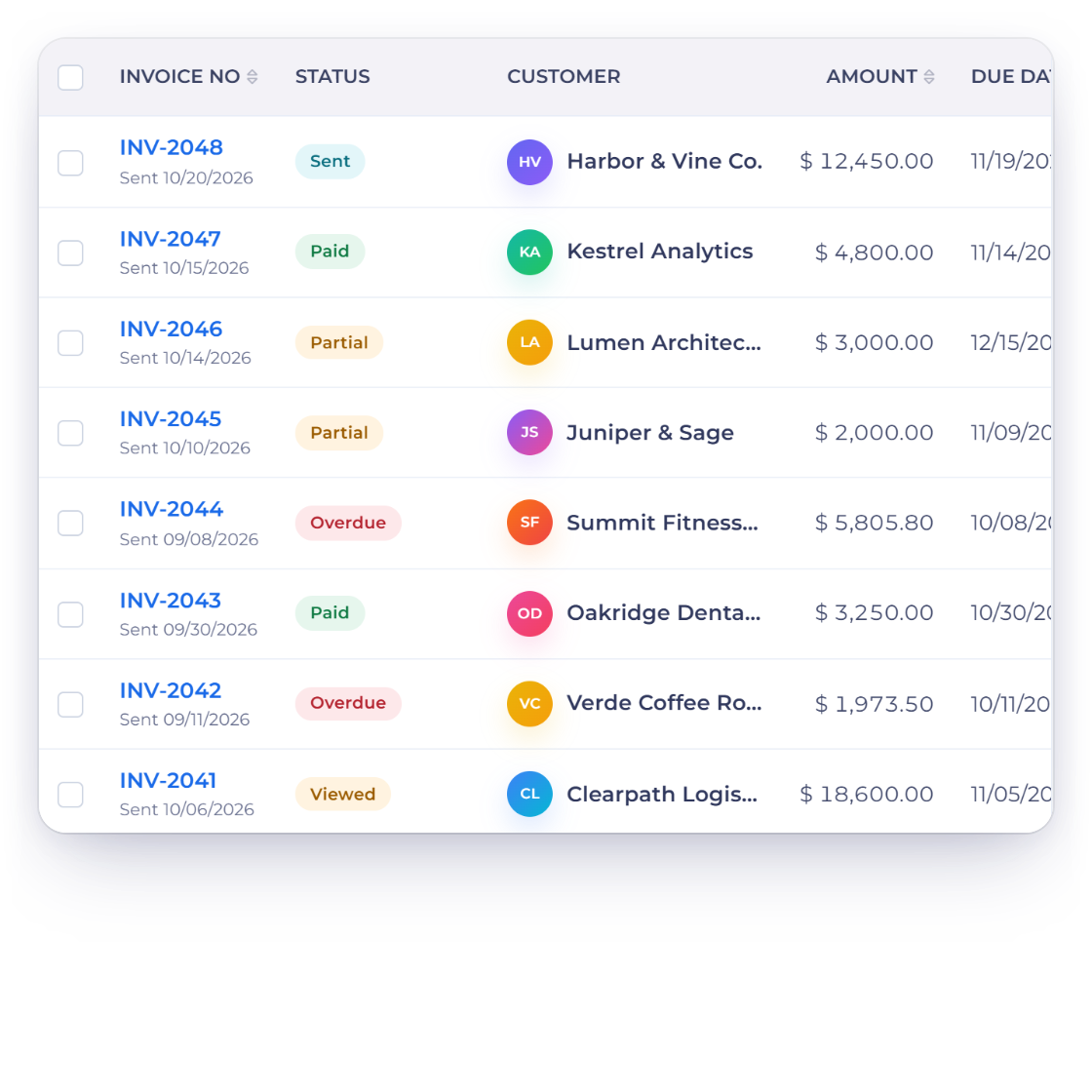
The Invoices screen in Invoice Crowd, showing part-paid and outstanding balances

What is inside

Two ways to be paid less than the whole amount

Split payments are your schedule: you decide the segments and the dates. Partial payments are the client's: you set the minimum and they choose the rest. Both run on the same invoice.

Split payments

You set the schedule

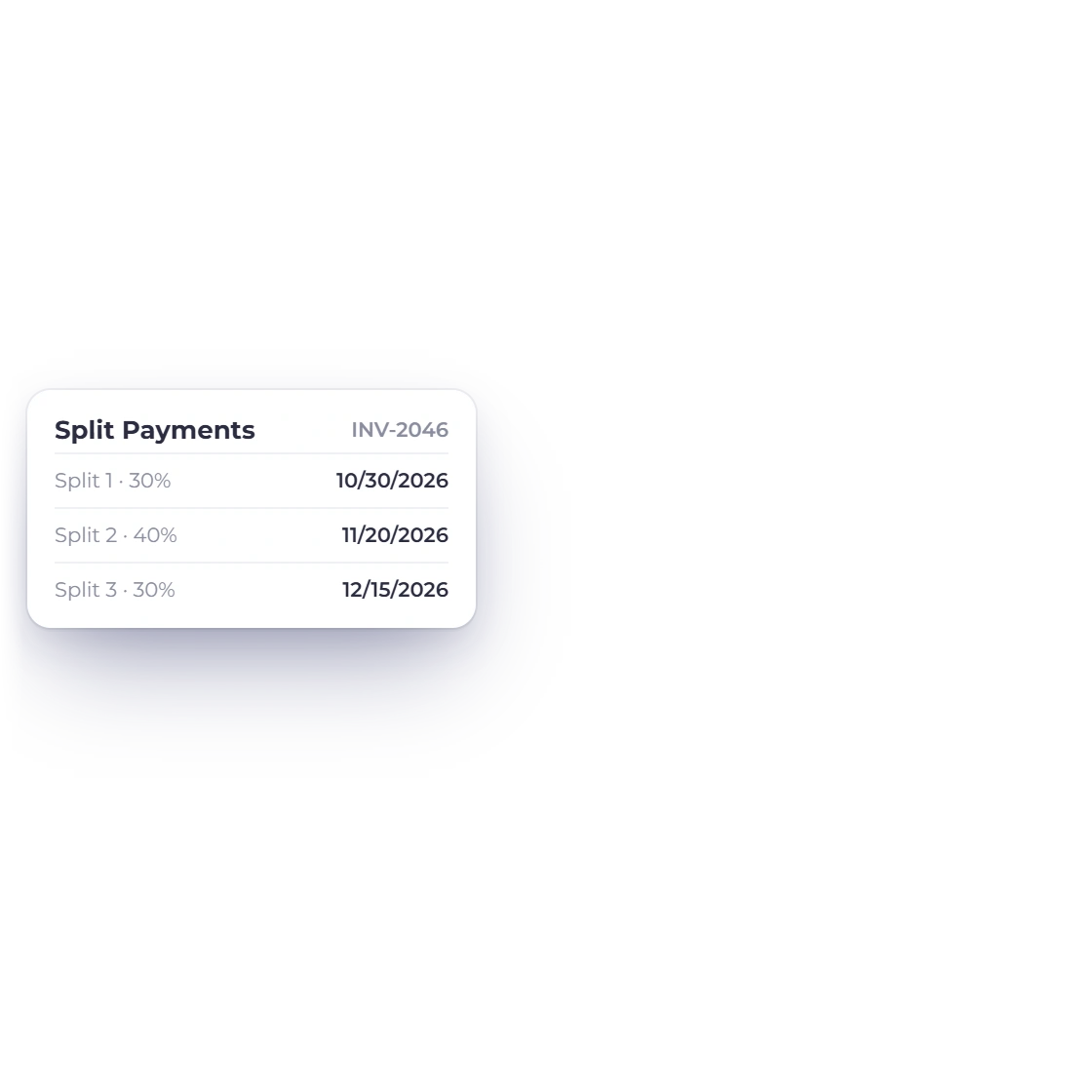
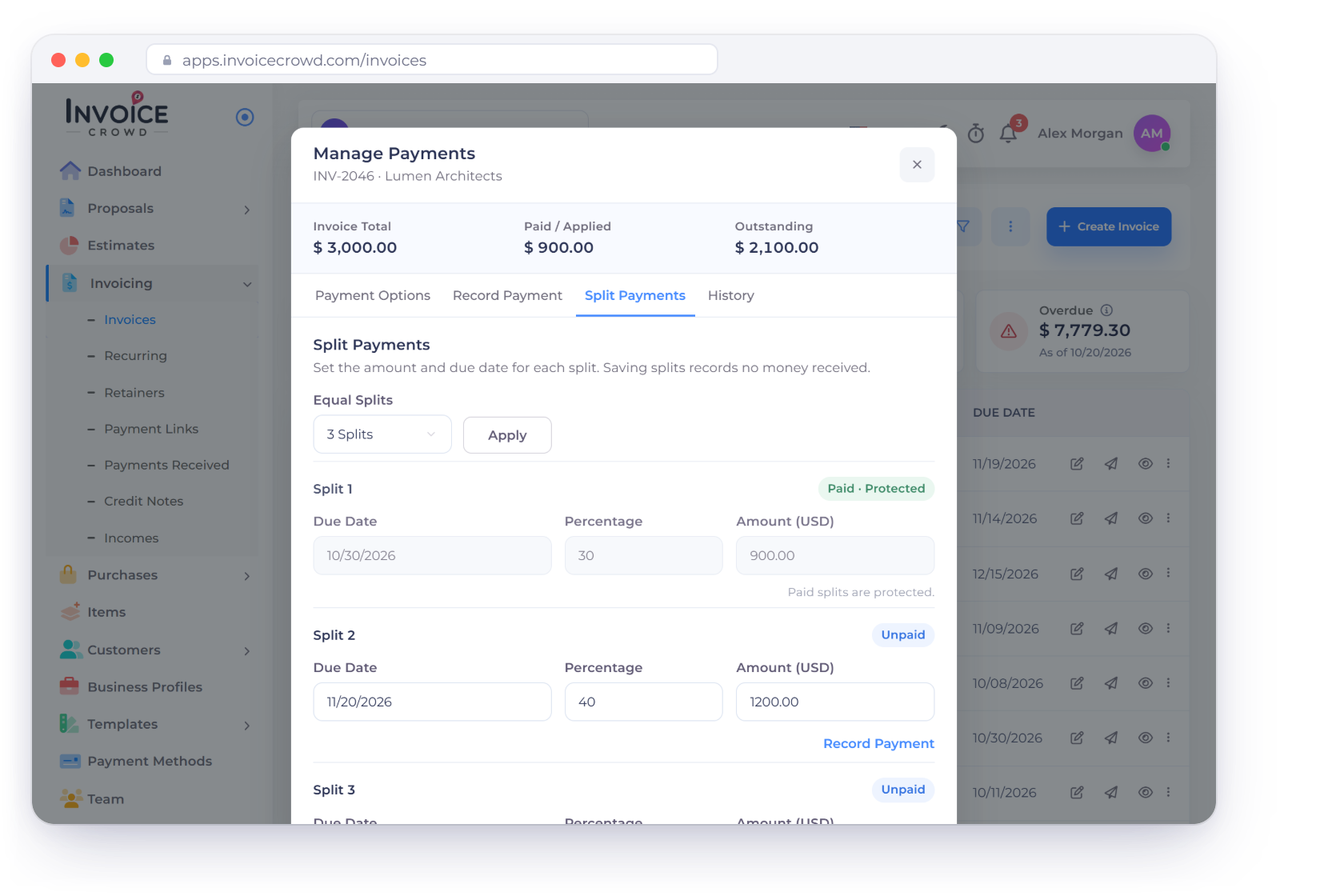
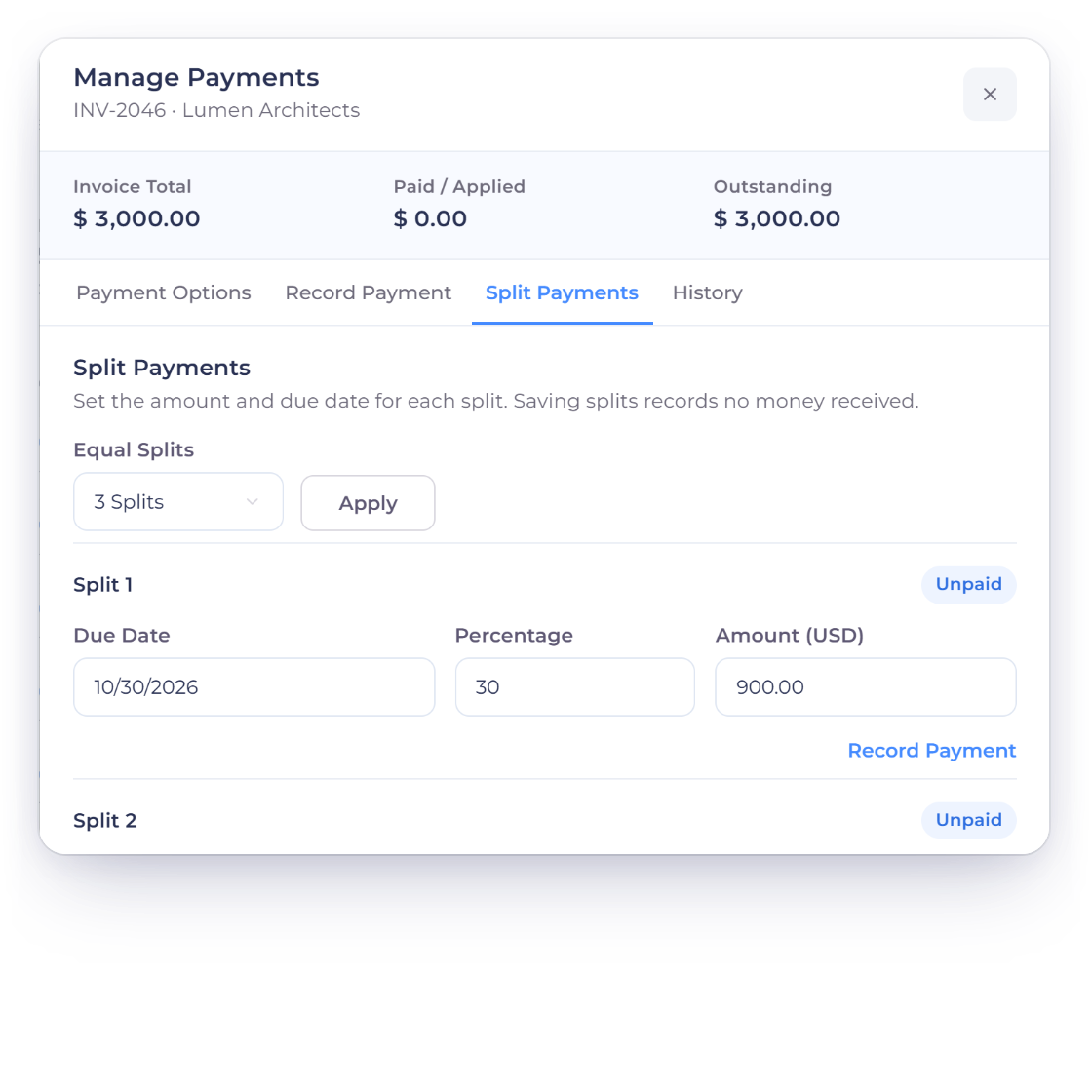
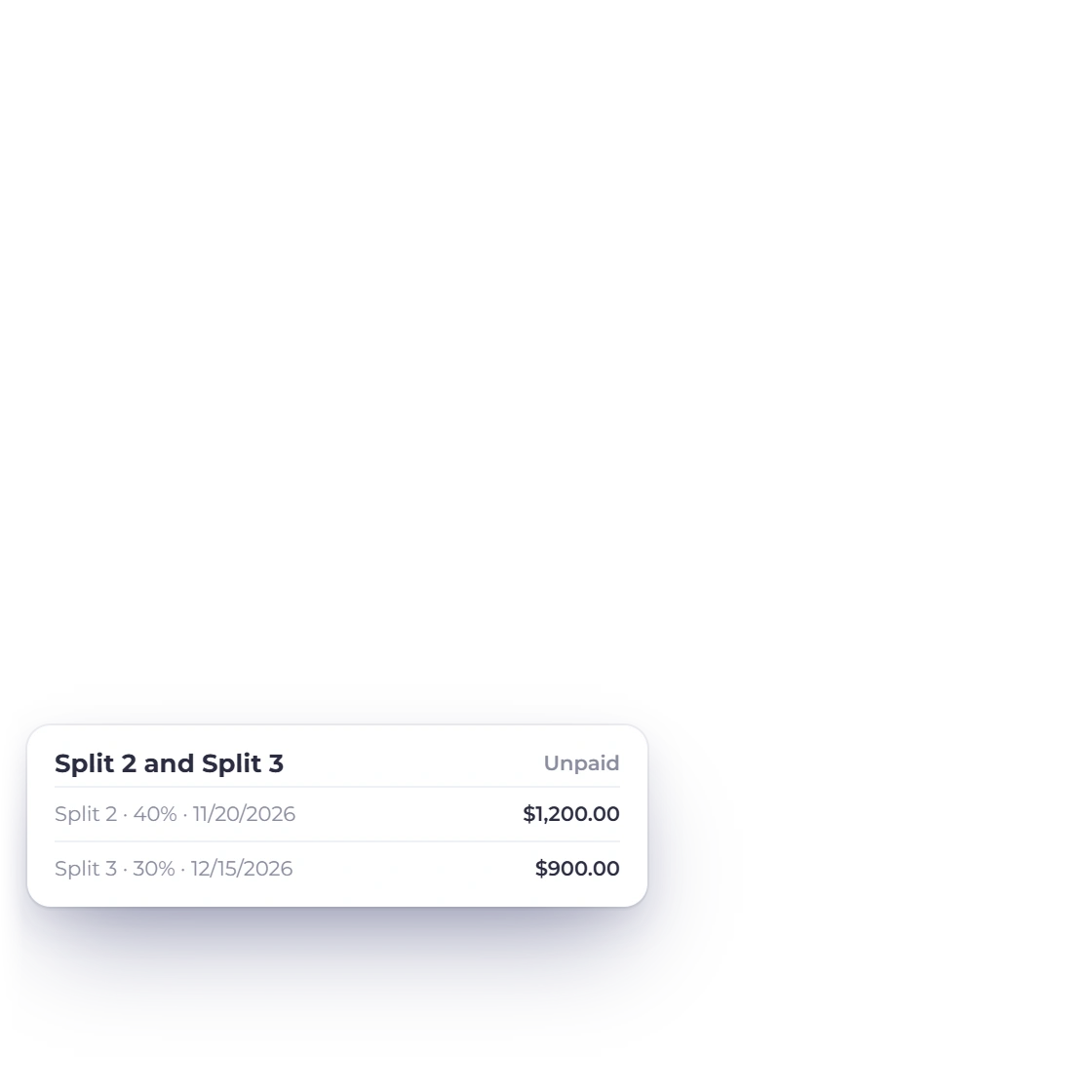
An invoice broken into split payment segments in Invoice Crowd

Break the total into structured amounts

Decide how a large invoice comes in: a third on signing, a third at the halfway point, the rest on delivery, or any breakdown that matches the work. It suits phased deliverables and longer contracts where asking for the full sum up front would stall the job.

  • Define each segment of the total
  • As many splits as the job needs
  • Suits phased and long-running work

A due date on each segment

Every split carries its own date, so the client knows what is owed and when rather than facing a single deadline. It also makes the year predictable at your end: the schedule you agreed is the schedule the invoice enforces, and each date is chased on its own.

  • One date per split, not one per invoice
  • Reminders go out ahead of each date
  • Cash flow you can plan around
How reminders work

Partial payments

The client sets the amount

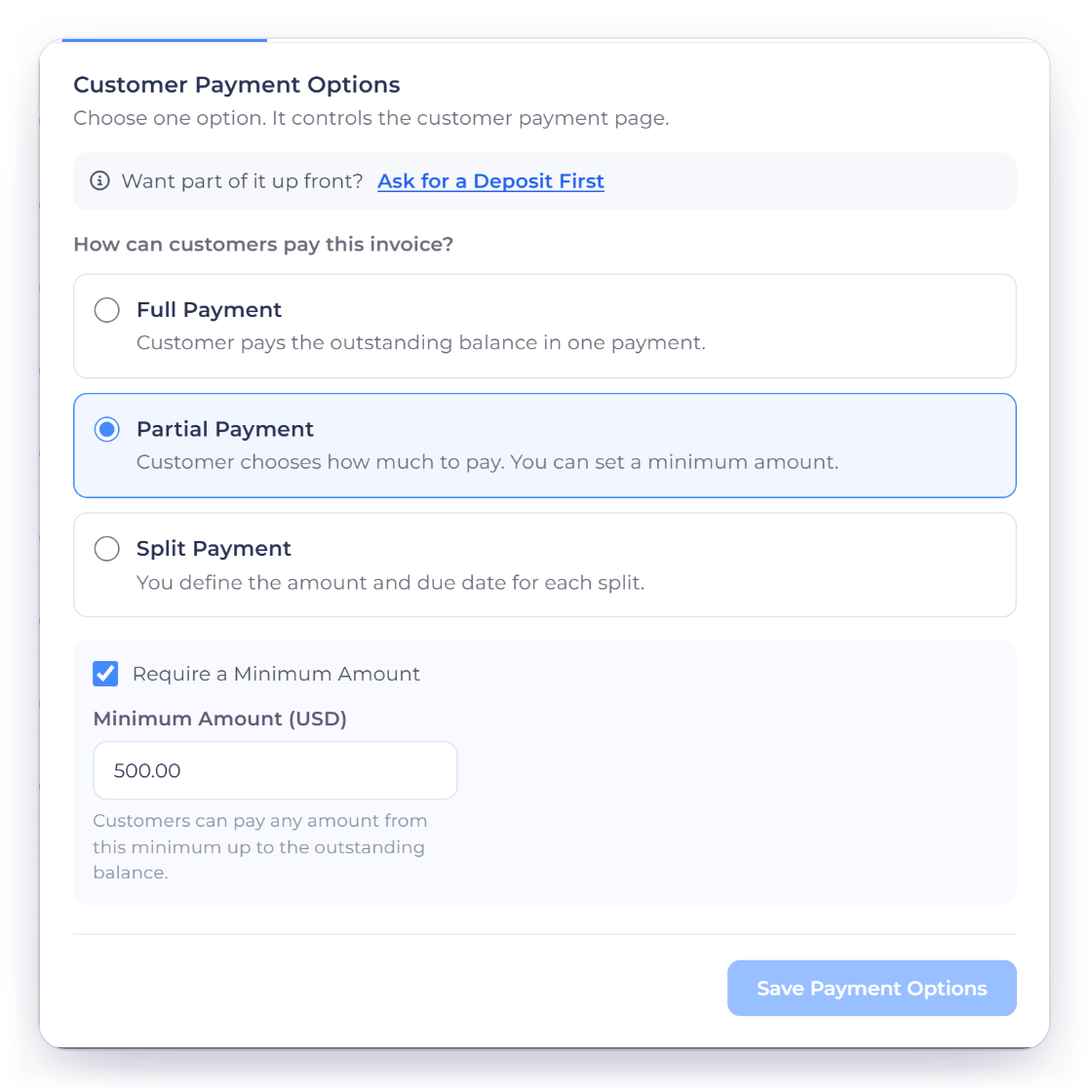
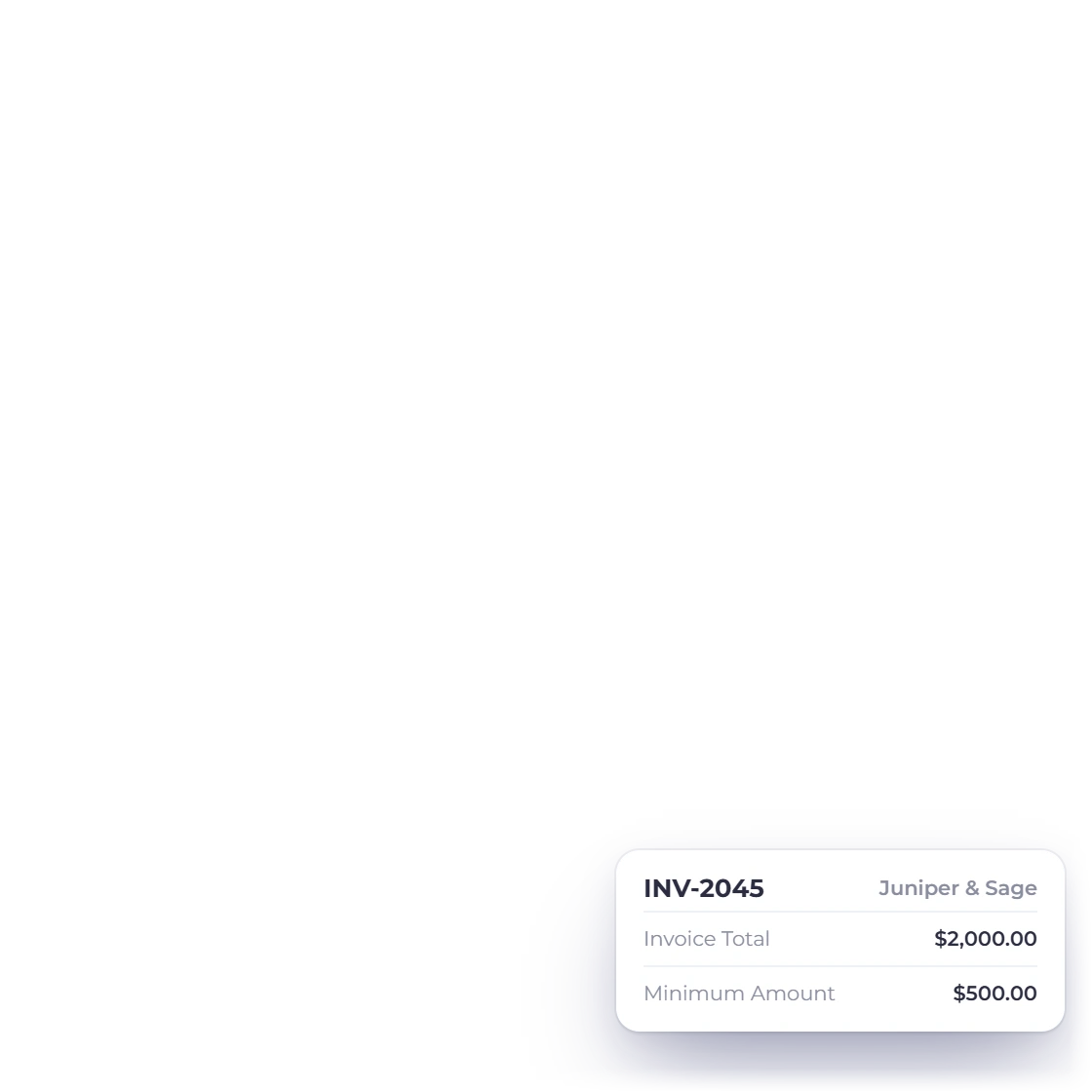
Setting a minimum partial payment amount on an Invoice Crowd invoice

Set the minimum you will accept

A partial payment starts with a floor. Set the smallest amount you are willing to take against the invoice, whether that is a flat deposit or enough to cover materials, and the client cannot pay less than that at the first attempt.

  • A base commitment before work starts
  • A fixed floor per invoice
  • Anything above it is the client's call

The client chooses what to send

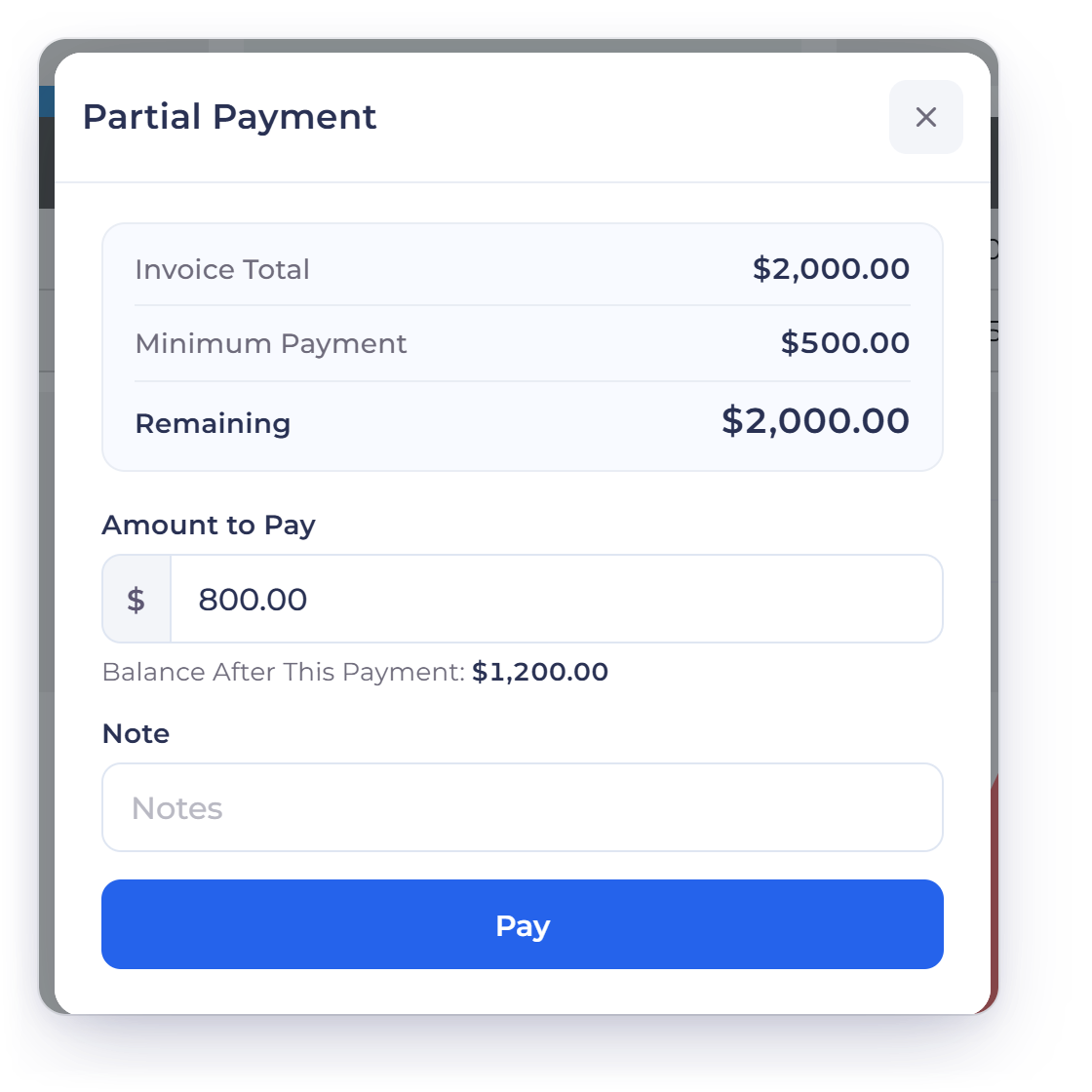
Above the minimum, the amount is theirs to pick. A client with a good month can clear most of the bill; a client with a tight one can pay what they have and come back to the rest. Anything extra reduces the outstanding balance straight away.

  • No fixed installment size above the floor
  • Pay again whenever they are ready
  • Overpayment above the minimum is recorded

While it is being paid

The invoice does the bookkeeping

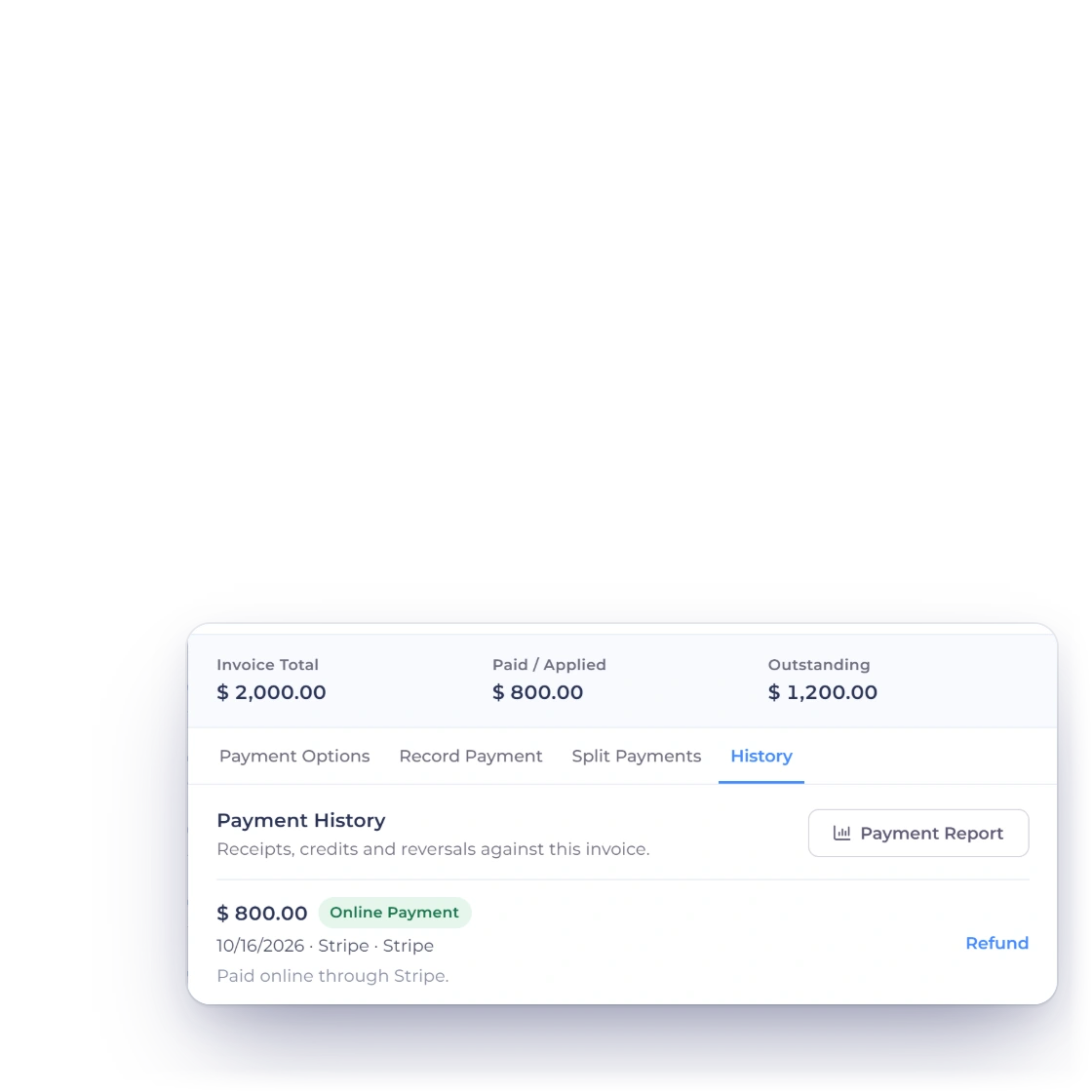
An Invoice Crowd invoice showing payments received and the remaining balance

The invoice updates as money lands

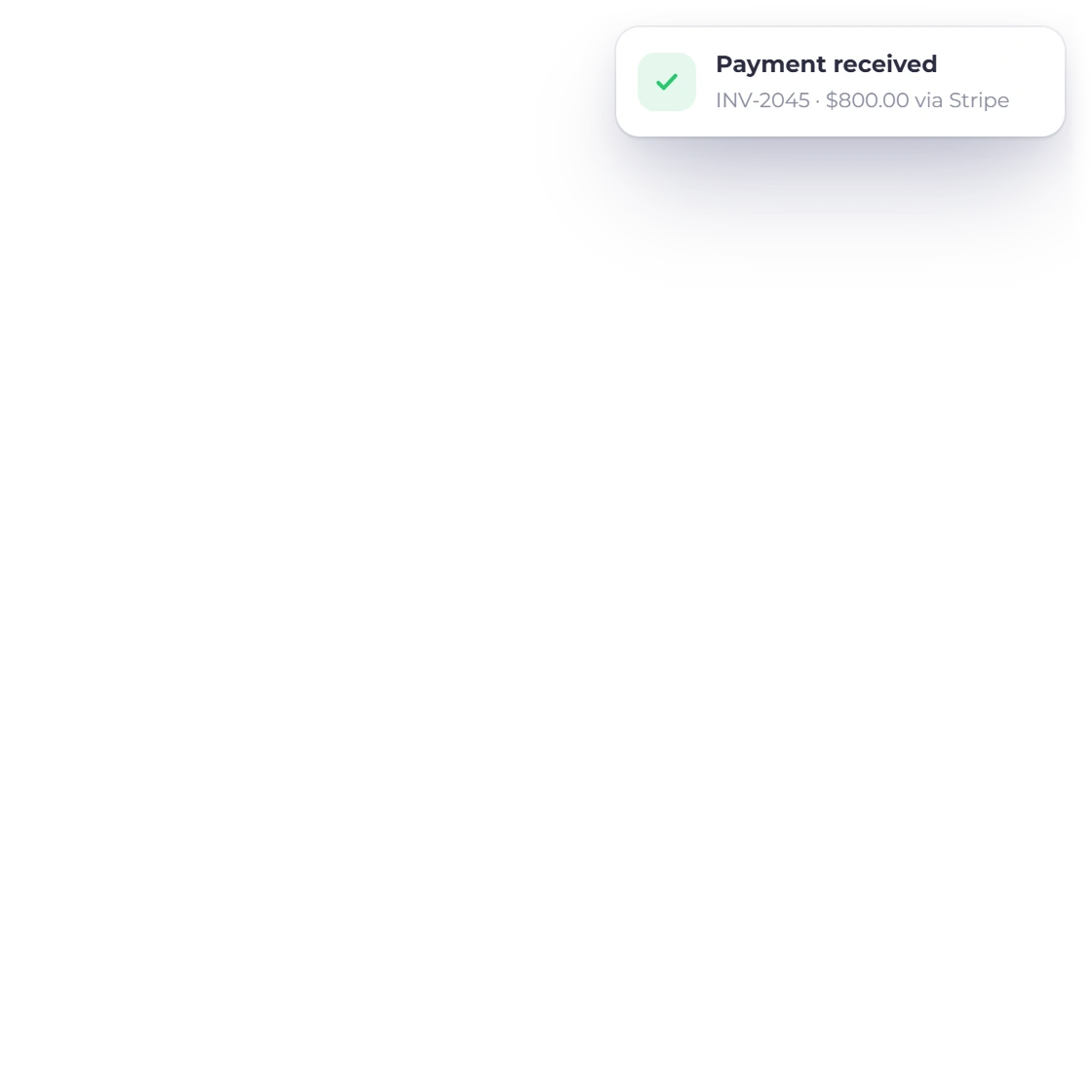
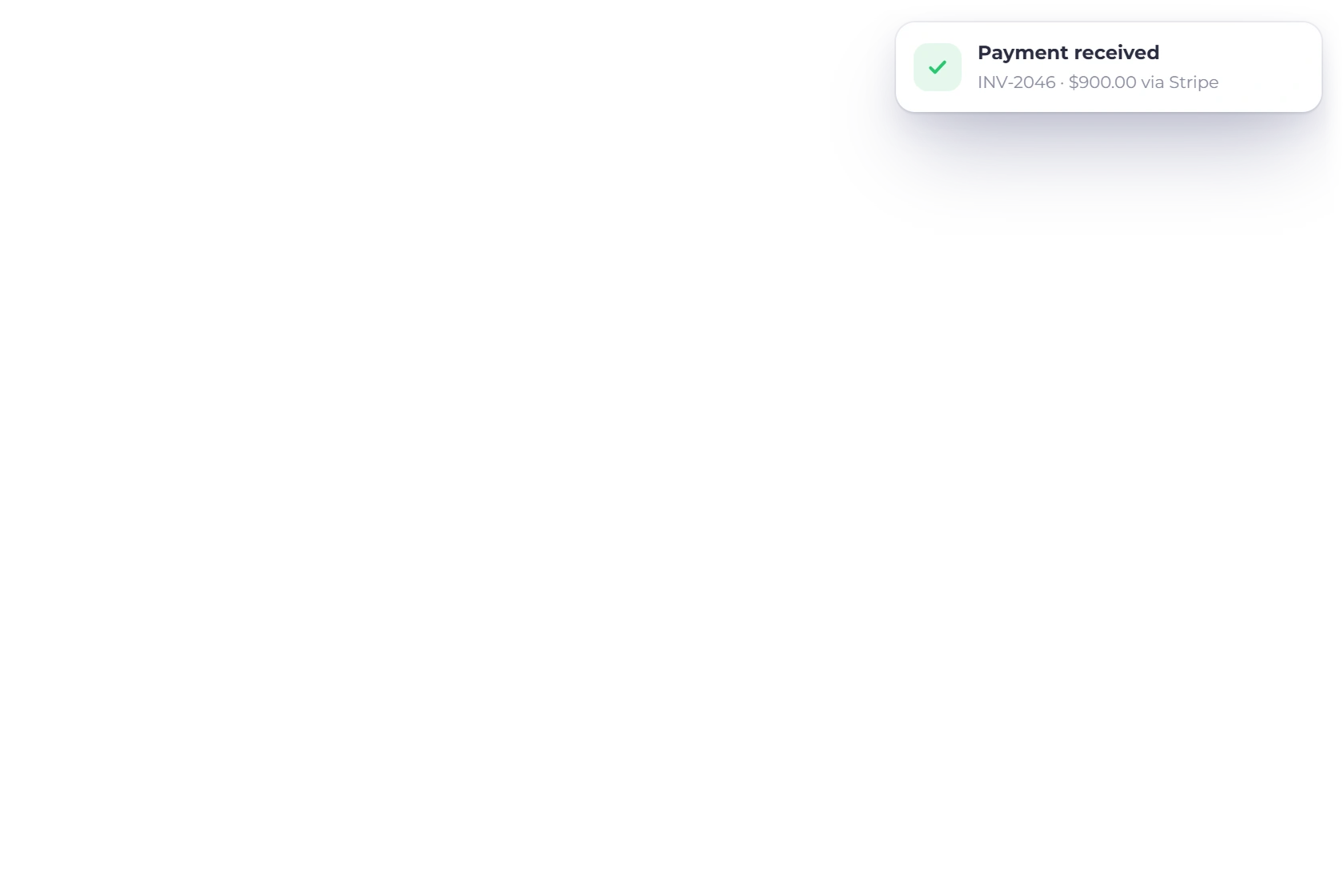
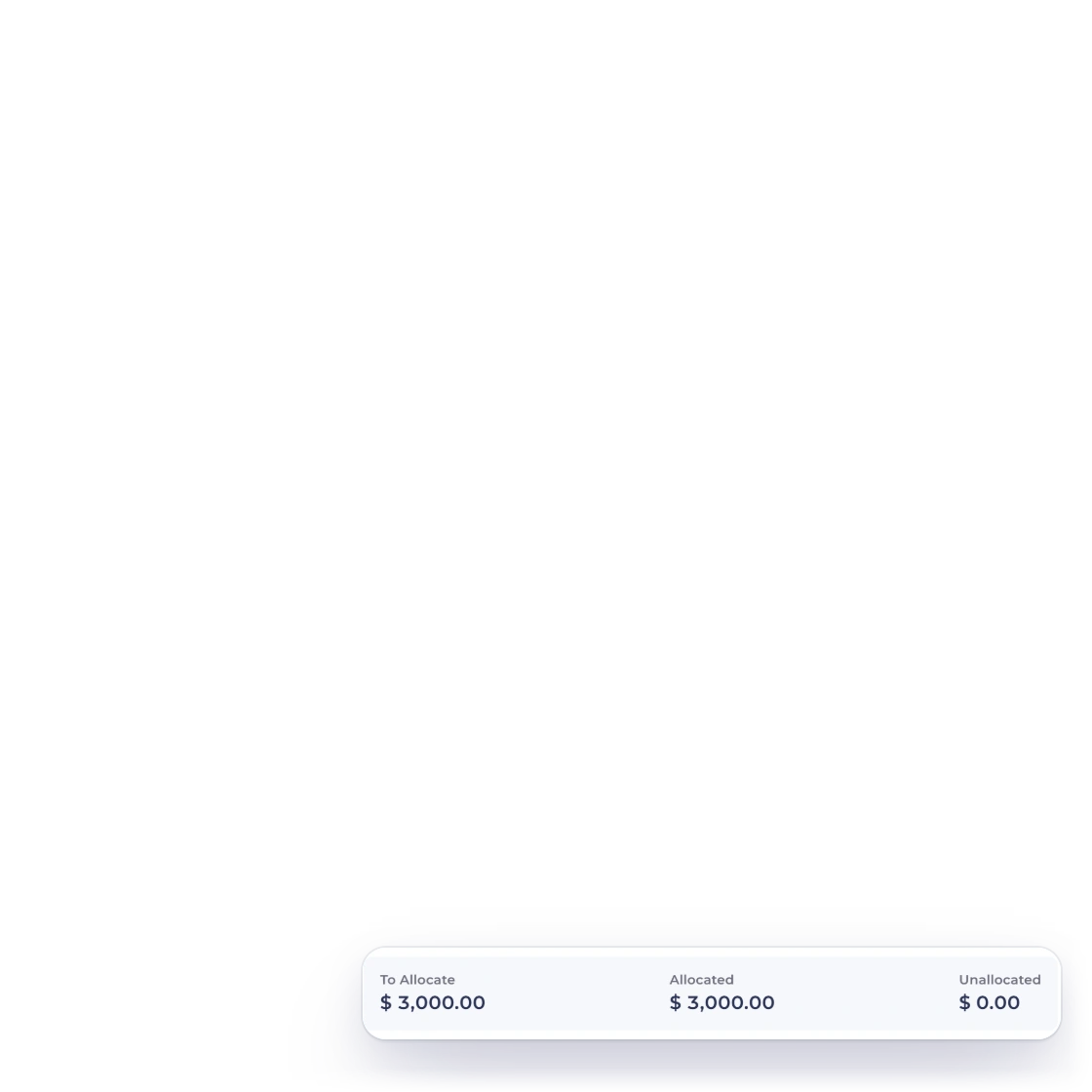
Each payment is written against the invoice as it arrives, with the date it was received and the amount. The outstanding total drops to match, so what a client owes is never a matter of adding up receipts from three different weeks.

  • Amount and date recorded per payment
  • Remaining balance recalculated each time
  • One invoice, however many payments

Reminders before each date falls due

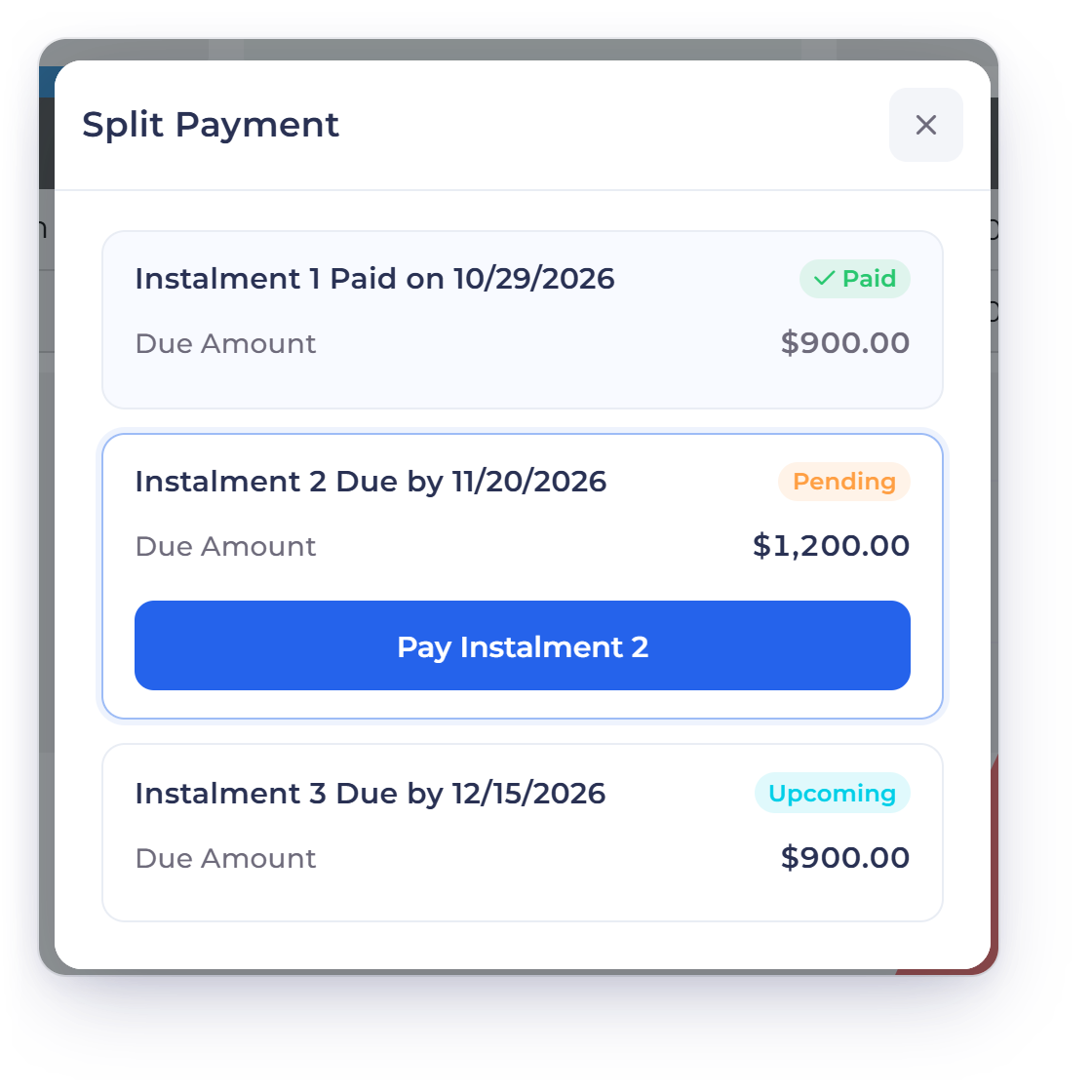
A split payment schedule is only useful if someone remembers it. Reminders go out ahead of each due date, so the client is warned before the amount is late rather than after, and you are not the one sending the same email four times.

  • Sent a few days ahead of each split
  • About the segment due, not the whole bill
  • Runs without being scheduled by hand
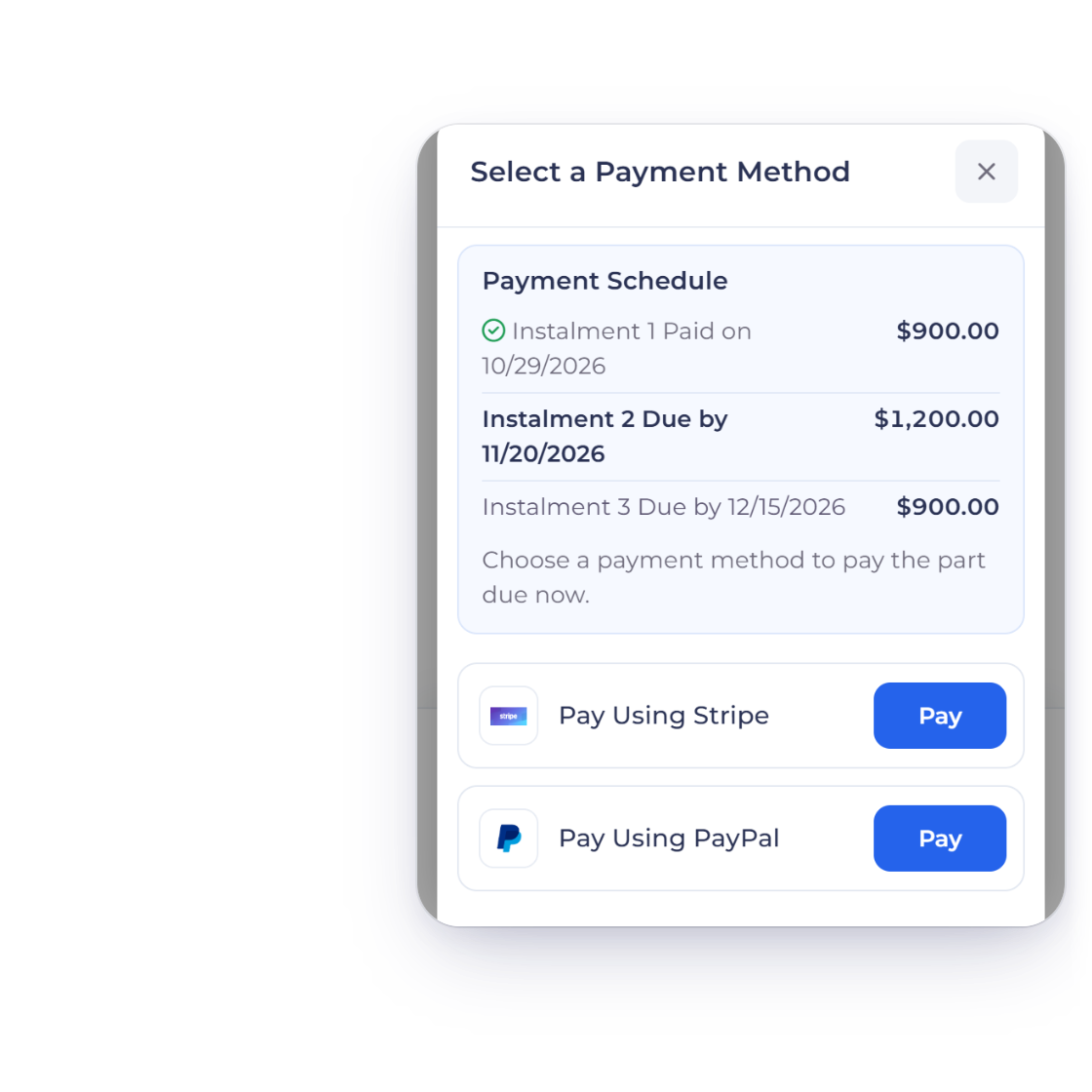
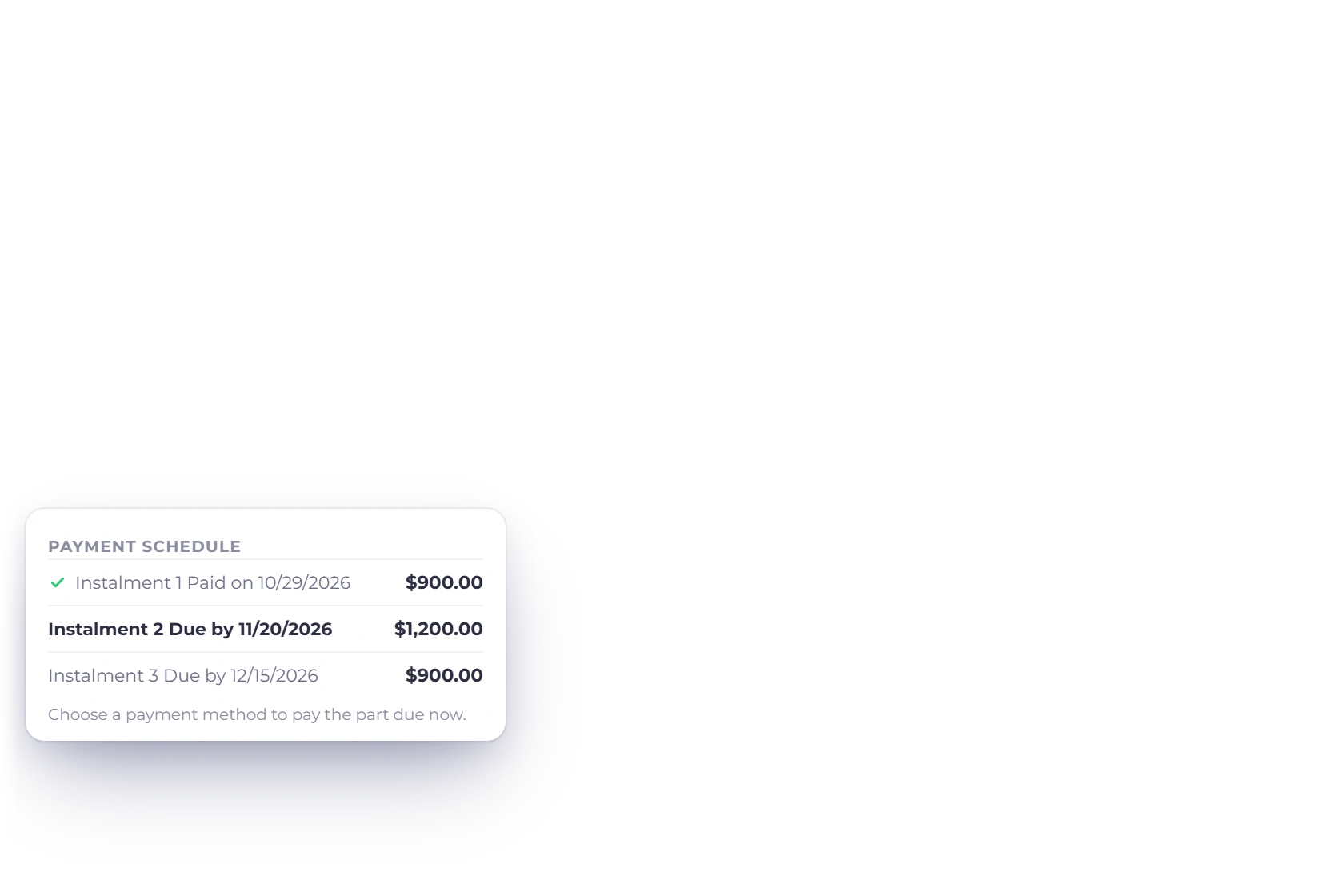
What the client sees

Also included

More of what split and partial payments carry

Flexible payment terms only work if the record keeping keeps up. These are the parts that make sure it does.

  • Automated alerts

    Reminders are sent ahead of each split due date without you scheduling them by hand.

  • Adaptable invoicing

    The document reflects every payment as it is made, so records stay current.

  • Dashboard view

    Track the status of each split and partial payment from one screen.

  • Gateway security

    Part payments run through the same processors and security as a full payment.

  • Any connected gateway

    A client can settle one split with PayPal and the next with a card.

  • Outstanding balances

    Part-paid invoices show what is still owed in the aged debt report.

  • Portal visibility

    Clients see what they have paid, what is left and when the next amount is due.

  • From an estimate

    An approved estimate can become an invoice that is then split into stages.

  • Alongside recurring

    Staged payments and repeating invoices can both run in the same account.

  • Posted to the ledger

    Each amount received posts to the ledger on the date it actually arrived.

  • Multi-currency splits

    A staged invoice in a client's currency is paid in that currency each time.

  • Deposits on packages

    For a fixed-price product, a payment link takes the whole amount up front instead.

Questions

Split and partial payments, answered

Can I switch a client between split and partial payments?

Yes. The two are settings on the invoice rather than a permanent choice about the client, so a job that started with a fixed schedule can move to a minimum-plus-flexible arrangement if the circumstances change part way through.

How do reminders work on a split payment?

Each split has its own due date, and a reminder goes to the client a few days ahead of it. That means one invoice can generate several reminders over its life, each one about the segment that is coming up rather than the whole balance.

What if a client pays more than the minimum?

The full amount is recorded and the outstanding balance falls by however much came in. There is no rounding to the nearest installment and no credit sitting in limbo: the invoice simply shows a smaller figure still to pay.

Is there a limit to how many splits I can create?

No fixed limit. Break an invoice into as many segments as the contract calls for, whether that is two payments across a month or a dozen across a year of retained work. Each one carries its own amount and its own date.

Can a deposit be taken before the work starts?

That is what the minimum amount is for. Set it to the deposit you need, send the invoice, and the client cannot pay less than that figure to begin with. The balance then sits on the same invoice until it is cleared.

Are part payments as secure as paying in full?

They go through the same connected gateways, with the transaction handled on the processor's side. Nothing about paying in stages changes how the money is taken; it changes only how much is taken and when it is taken.

Let the invoice match how the work is paid for

Stage a large bill across the months it takes to deliver, or set a floor and let the client fill in the rest. The balance keeps itself straight either way.

  • current trial
  • No card to start
  • Available only where the configured payment path supports the requested split or partial collection