Skip to content

One record per customer, with their whole invoice history

The customer section keeps contact details, the invoices you have sent, what has been paid and what is still open, and the files exchanged along the way. Search finds a record as you type, and details can be corrected in place.

  • Details and history together
  • Search as you type
  • Export the list any time
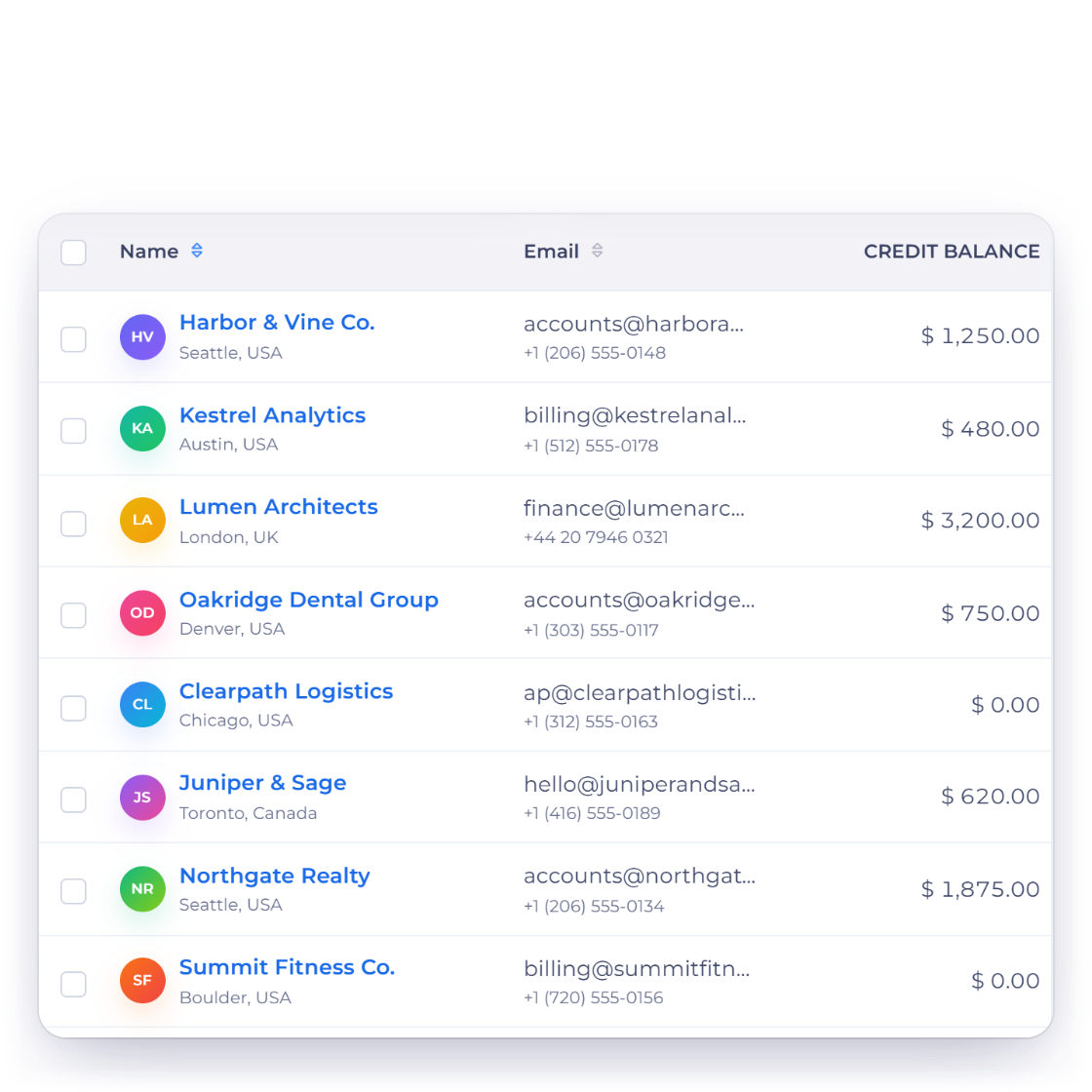
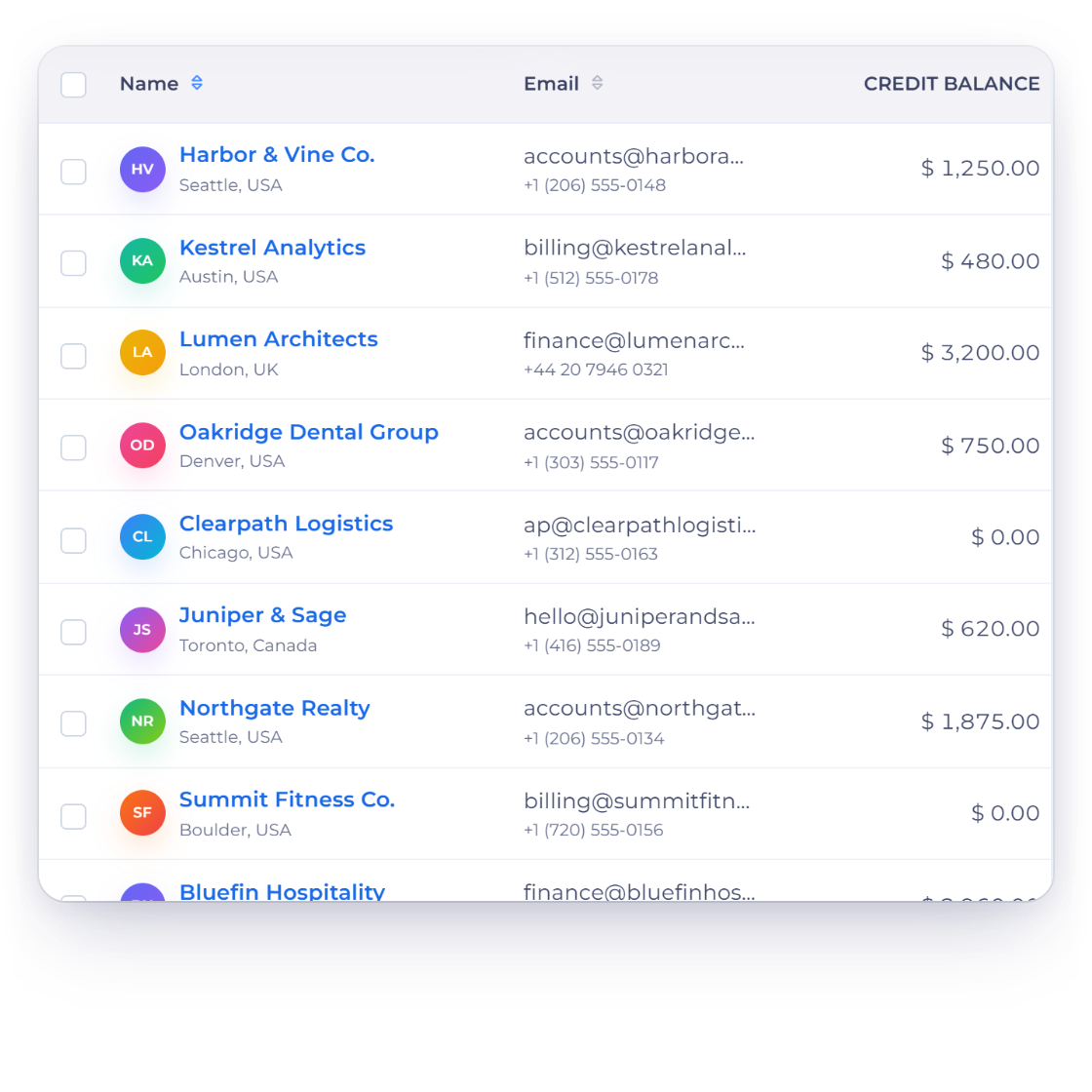
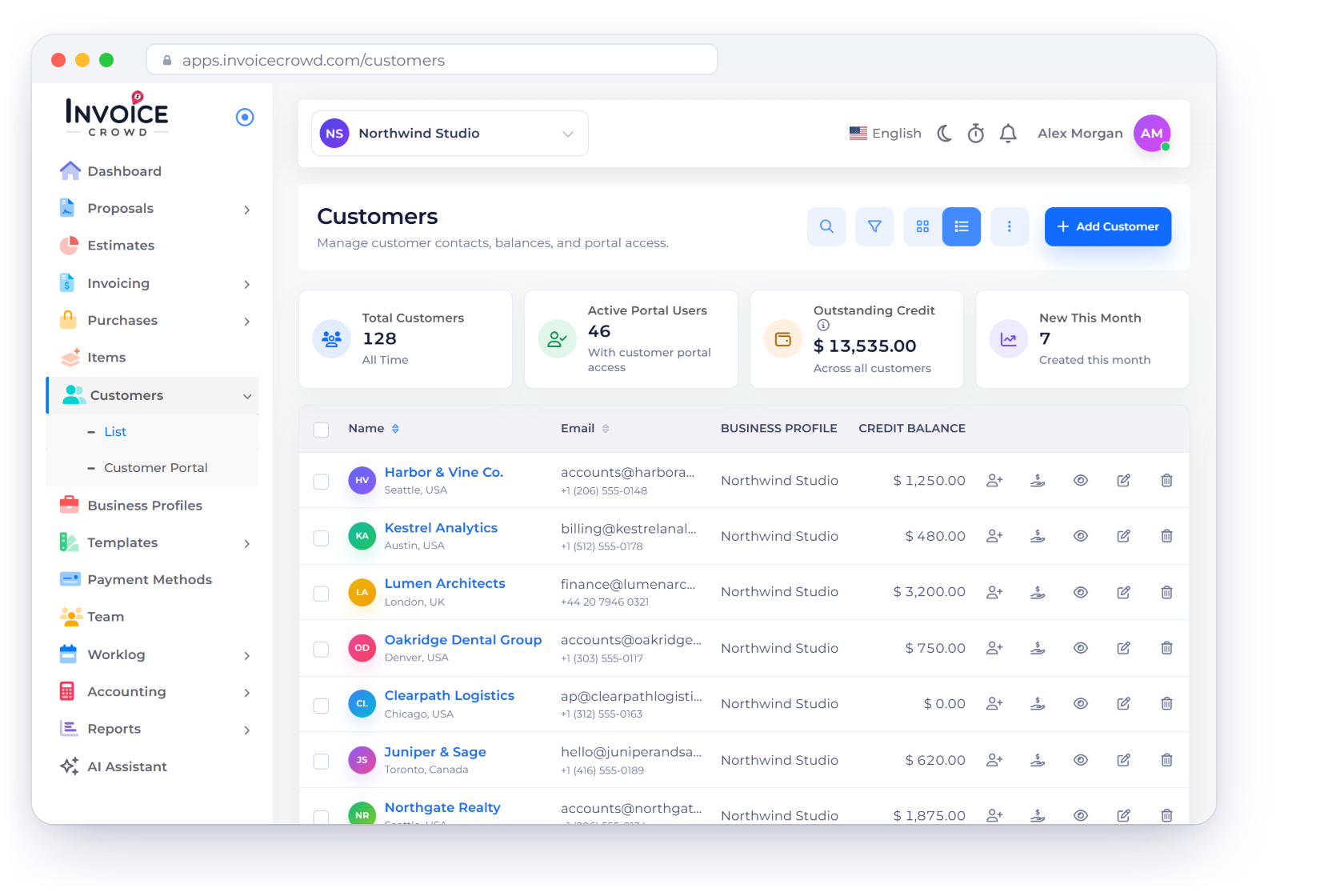
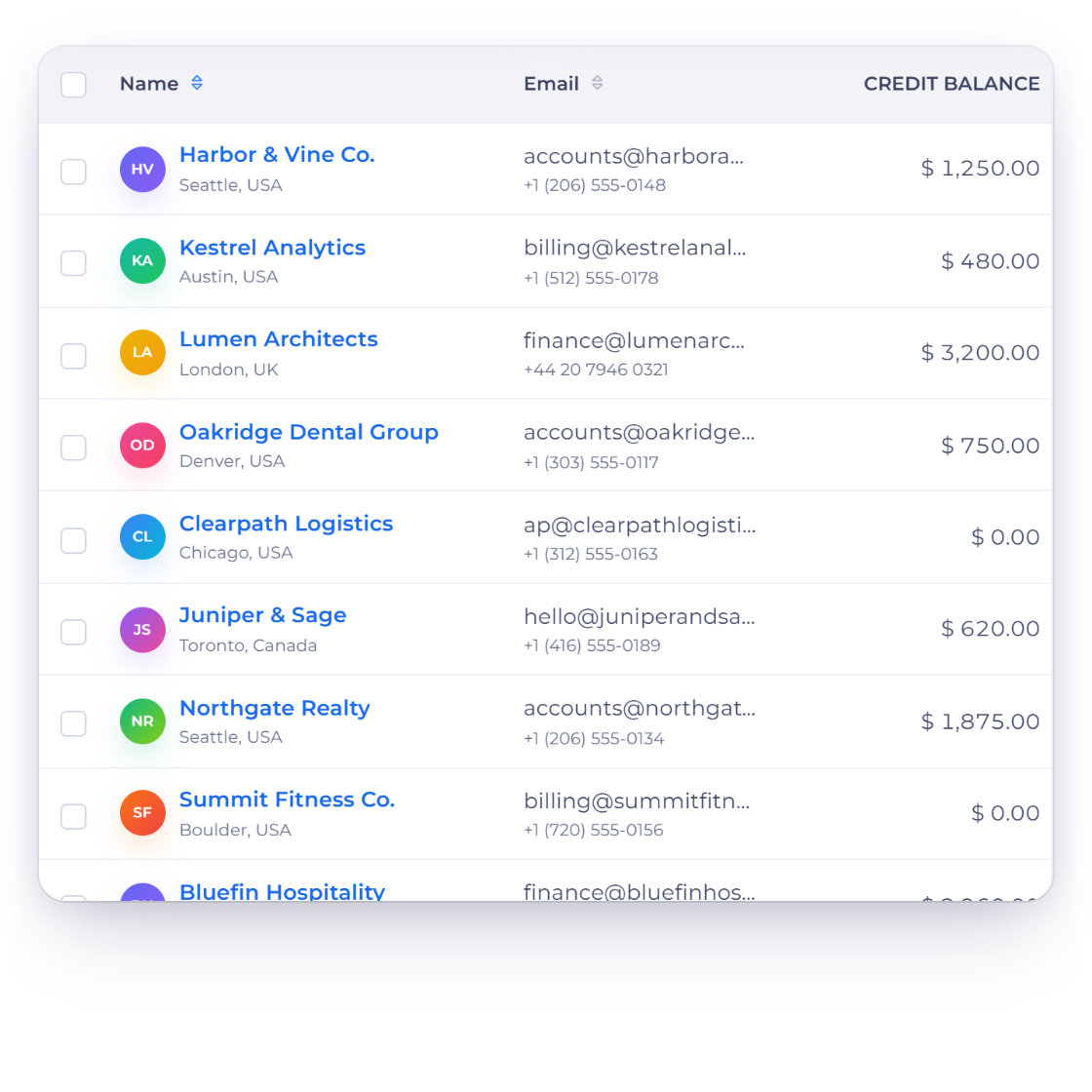
The Customers screen in Invoice Crowd, showing contacts, balances and portal access

What is inside

Everything about one client, on one screen

The customer section is where contact details, invoice history and attachments meet. It exists so that a question about one client can be answered from one screen instead of four.

The record itself

Who they are and what they bought

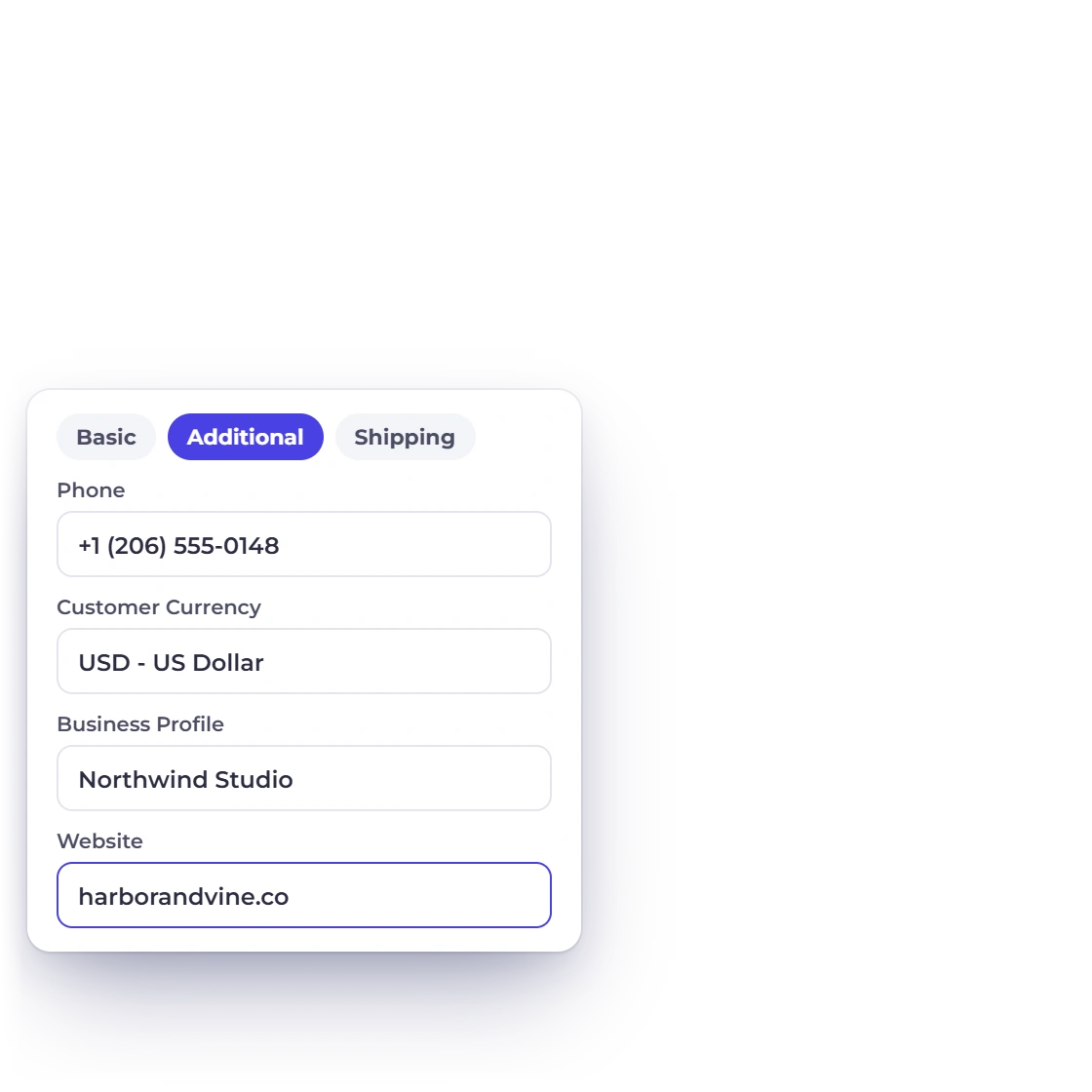
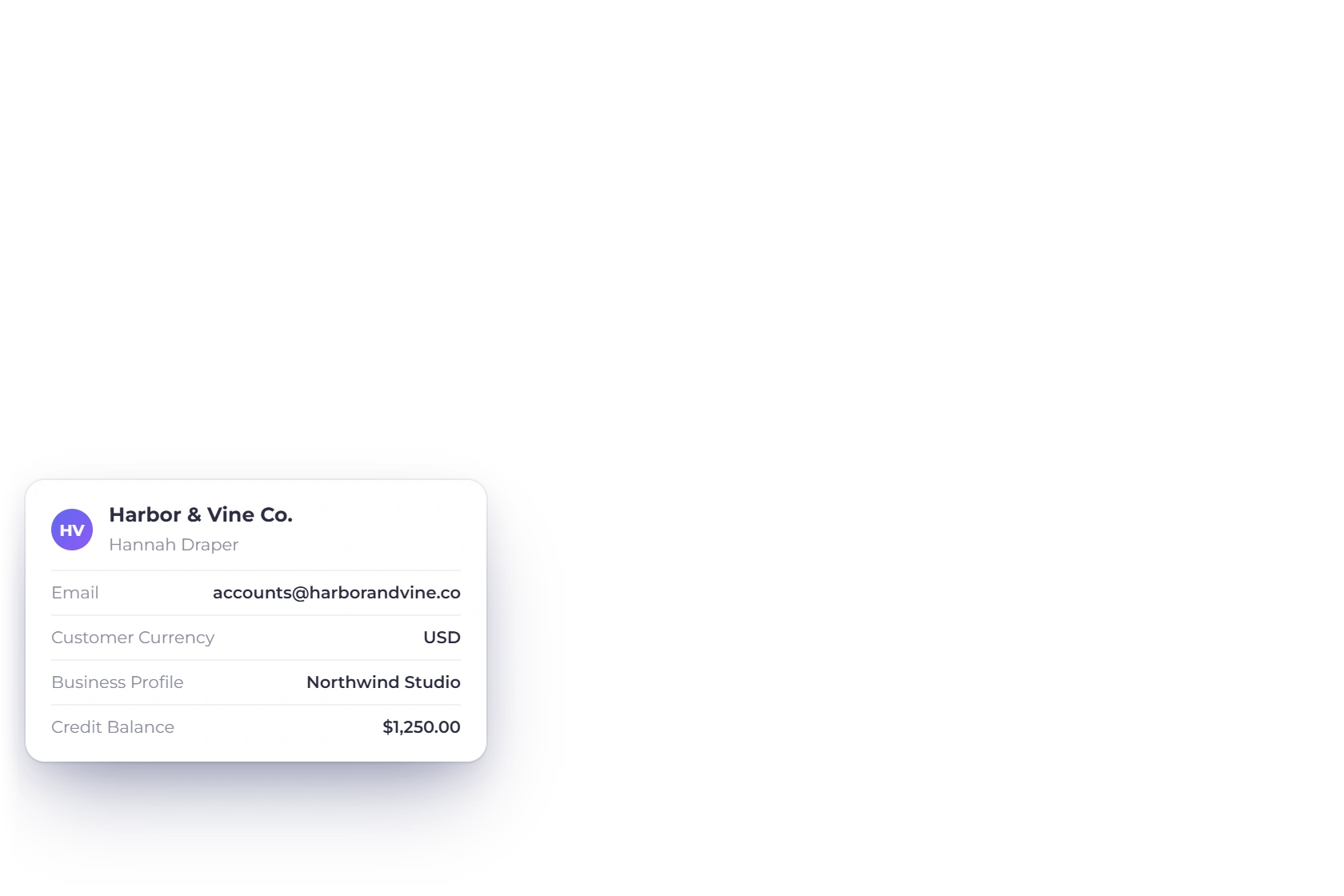
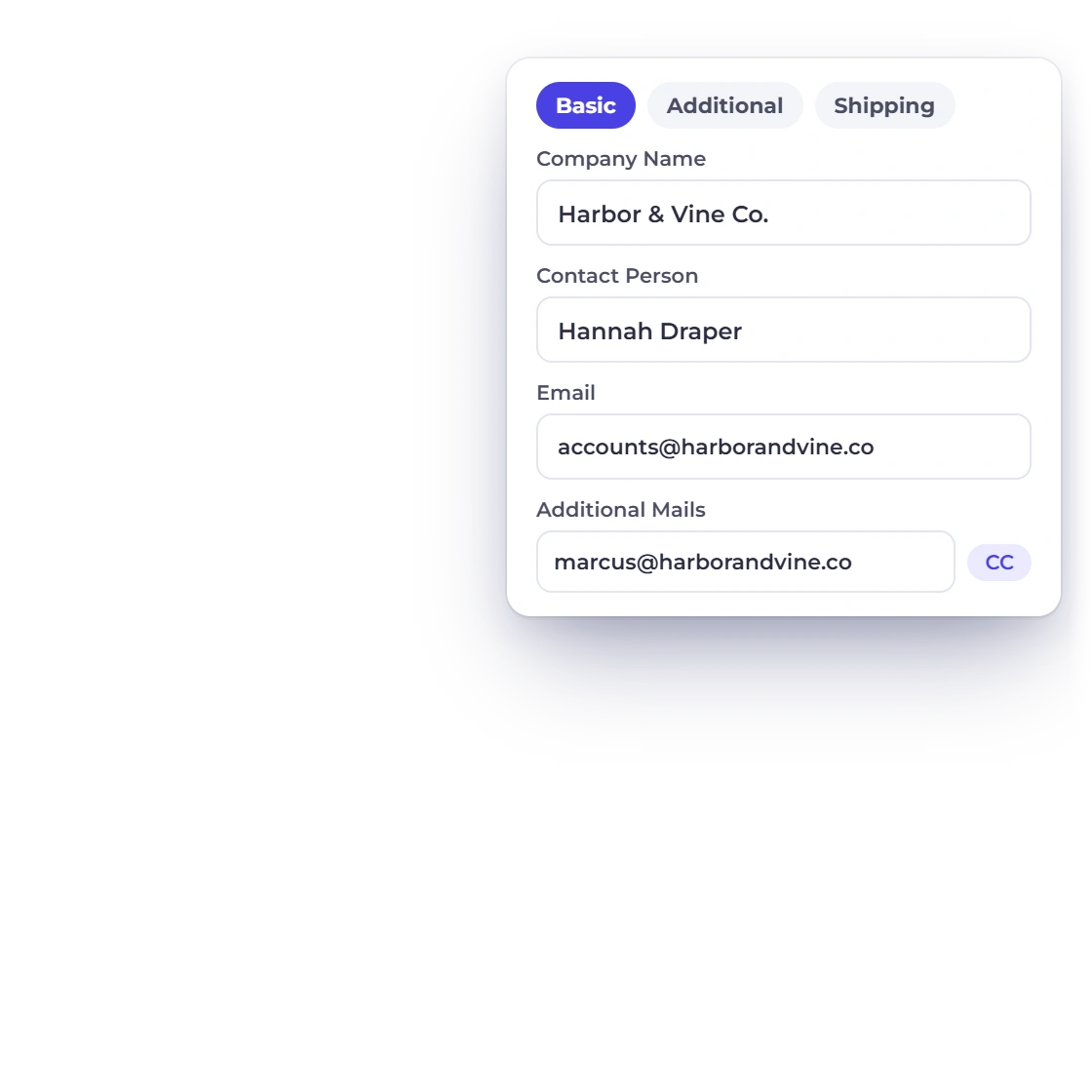
A customer profile in Invoice Crowd showing contact details alongside purchase history

A single profile for each customer

Open a customer and their contact details sit next to what they have bought from you. There is no second place to look for a billing address, the email an invoice went to, or the history behind a relationship. The record is the whole picture of that customer.

  • Contact details and purchase history on one screen
  • The billing address used on every document
  • Entered once, reused on everything you raise
Details corrected in place

Contact details go stale: people change roles, companies move, an email starts bouncing. Update the record and the correction carries to whatever you send next, so you are not fixing the same wrong address on invoice after invoice. Nothing has to be re-entered to change one field.

  • Edit any field on the record
  • Corrections carry to the next document
  • No duplicate record needed to fix a detail

What they have been sent

Invoices and files, kept together

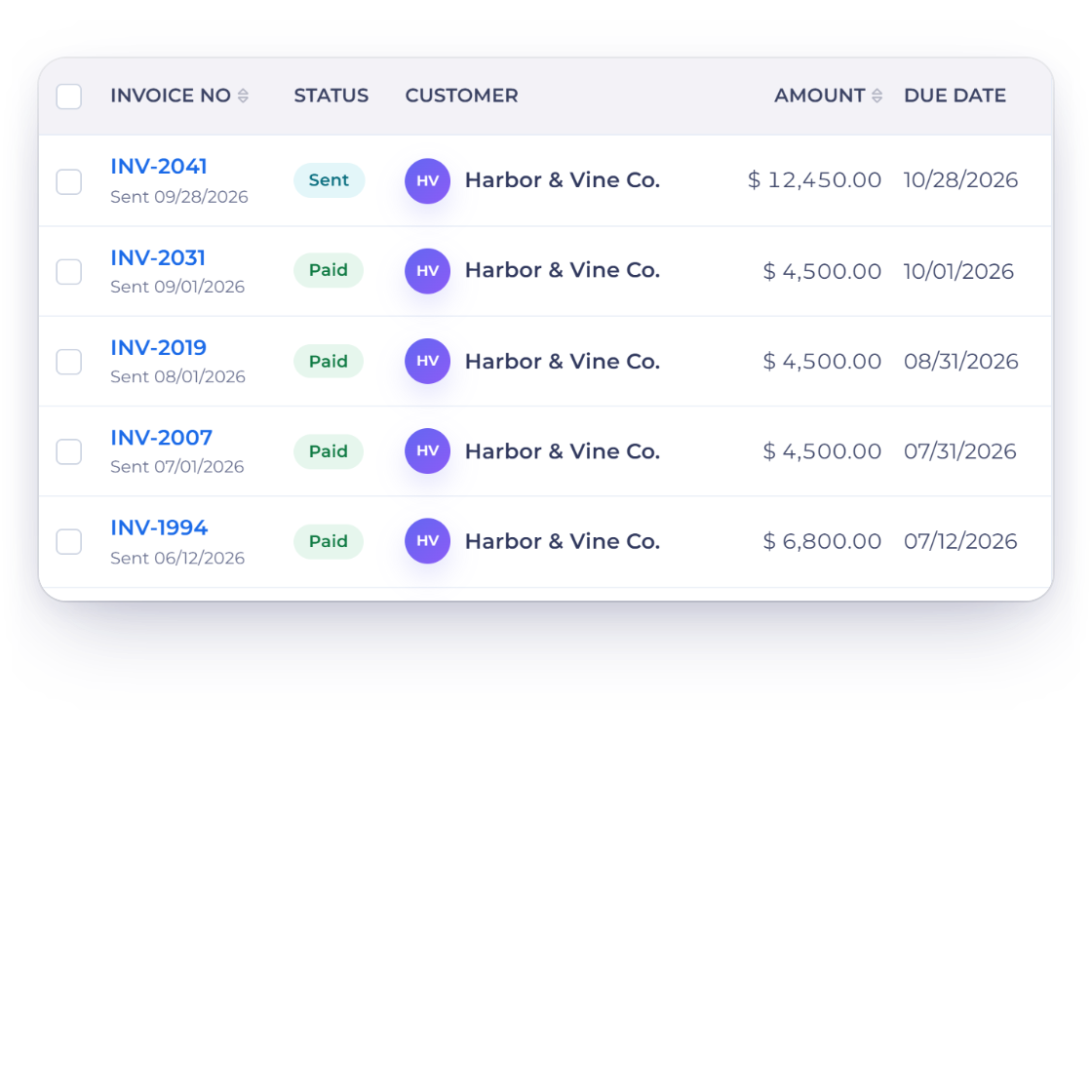
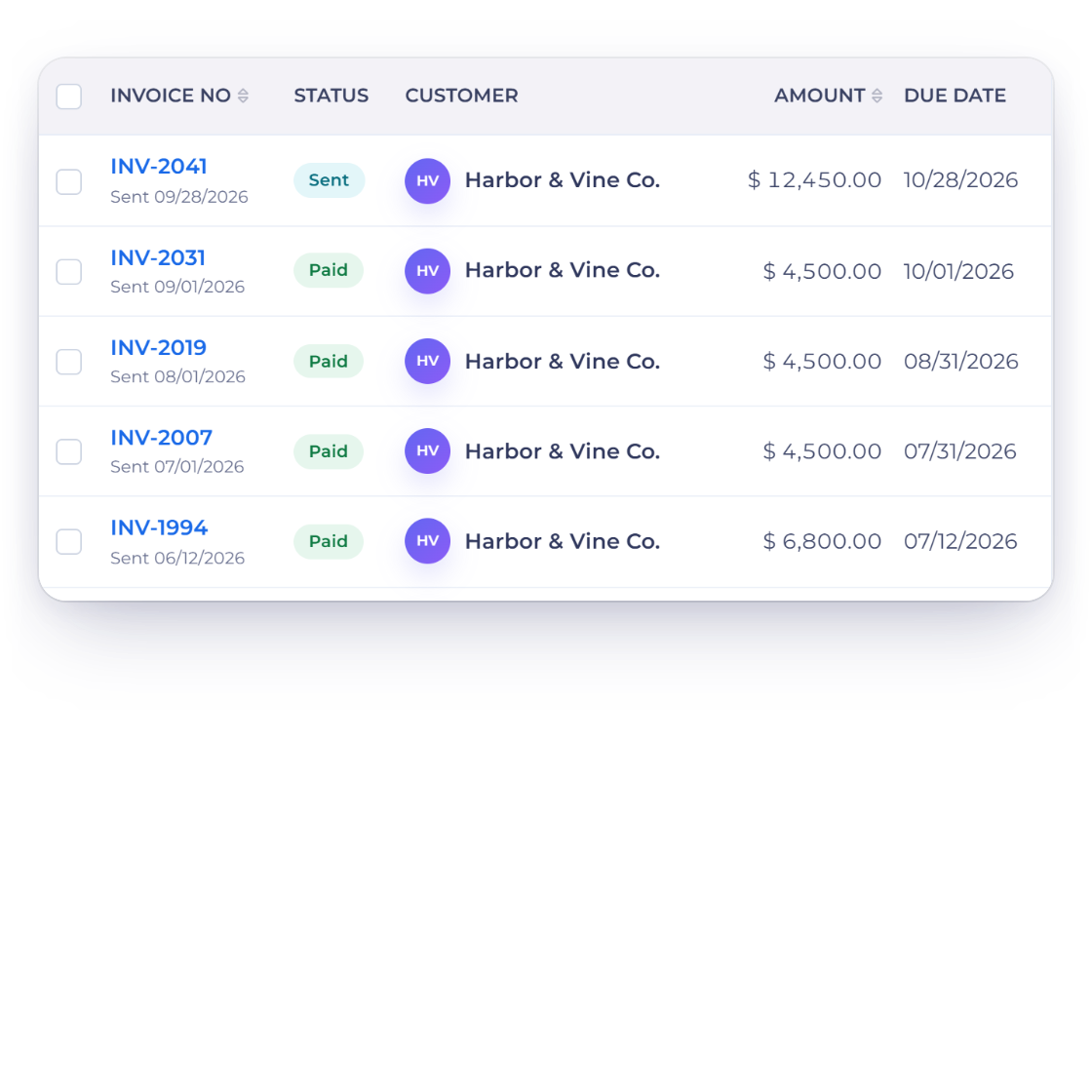
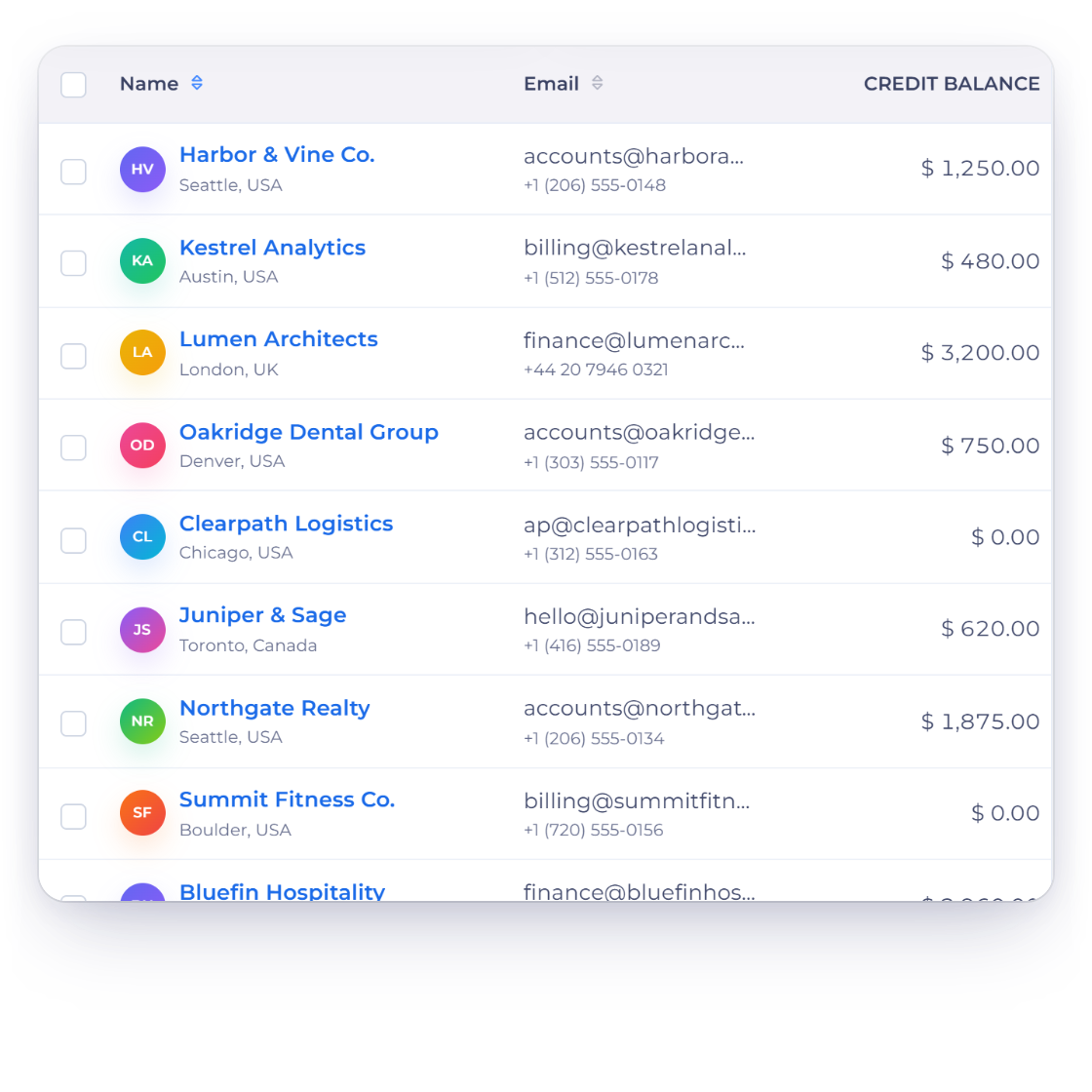
The invoice history on a customer record in Invoice Crowd, with paid and pending invoices

Every invoice, paid and outstanding

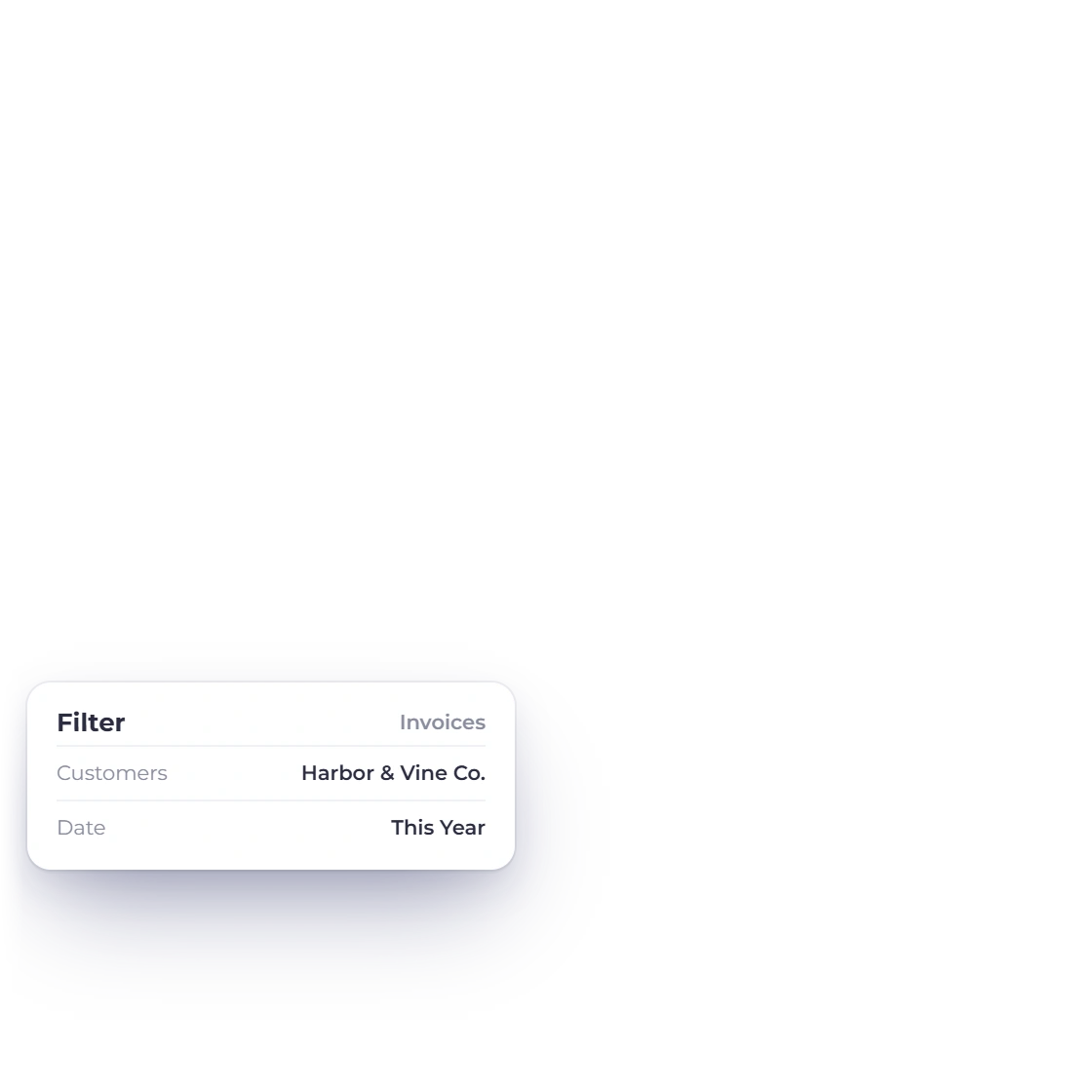
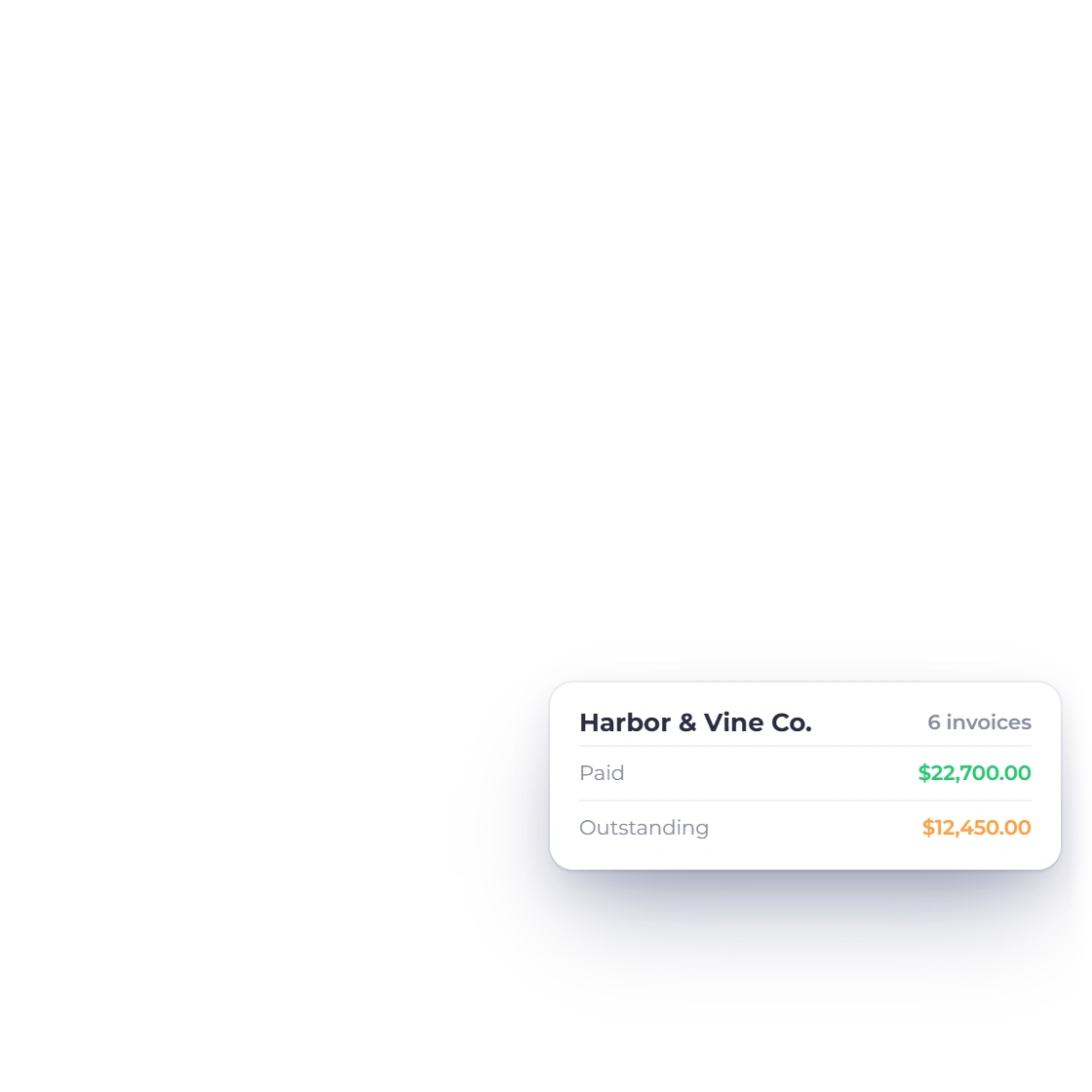
The record lists every invoice raised for that customer, showing what has been settled and what is still open. Before a conversation about money, that list answers how much they owe and how long it has been sitting there, without filtering the whole invoice ledger first.

  • Sent, paid and pending in one list
  • The outstanding balance for that customer
  • Open any invoice straight from the record
Raising the invoice

Attachments kept with the customer

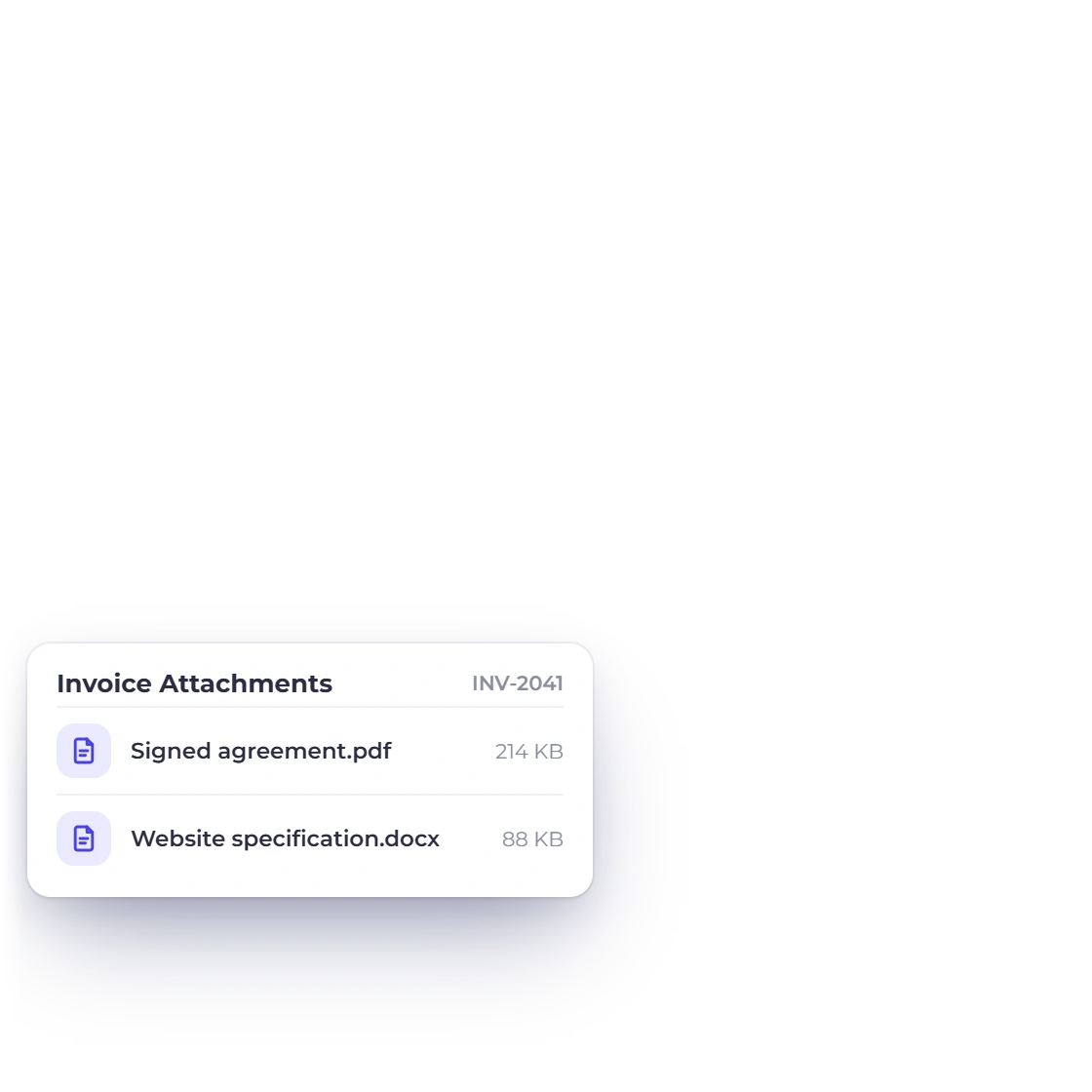
Files exchanged with a customer stay on their record rather than in a mail thread. A signed agreement, a receipt, a specification sent with an estimate: whatever was attached over the life of the relationship can be opened from the same place months later.

  • Attachments held against the customer
  • Opened from the record, not the inbox
  • Available for as long as the record exists

Getting to the right person

Find them, or take the list elsewhere

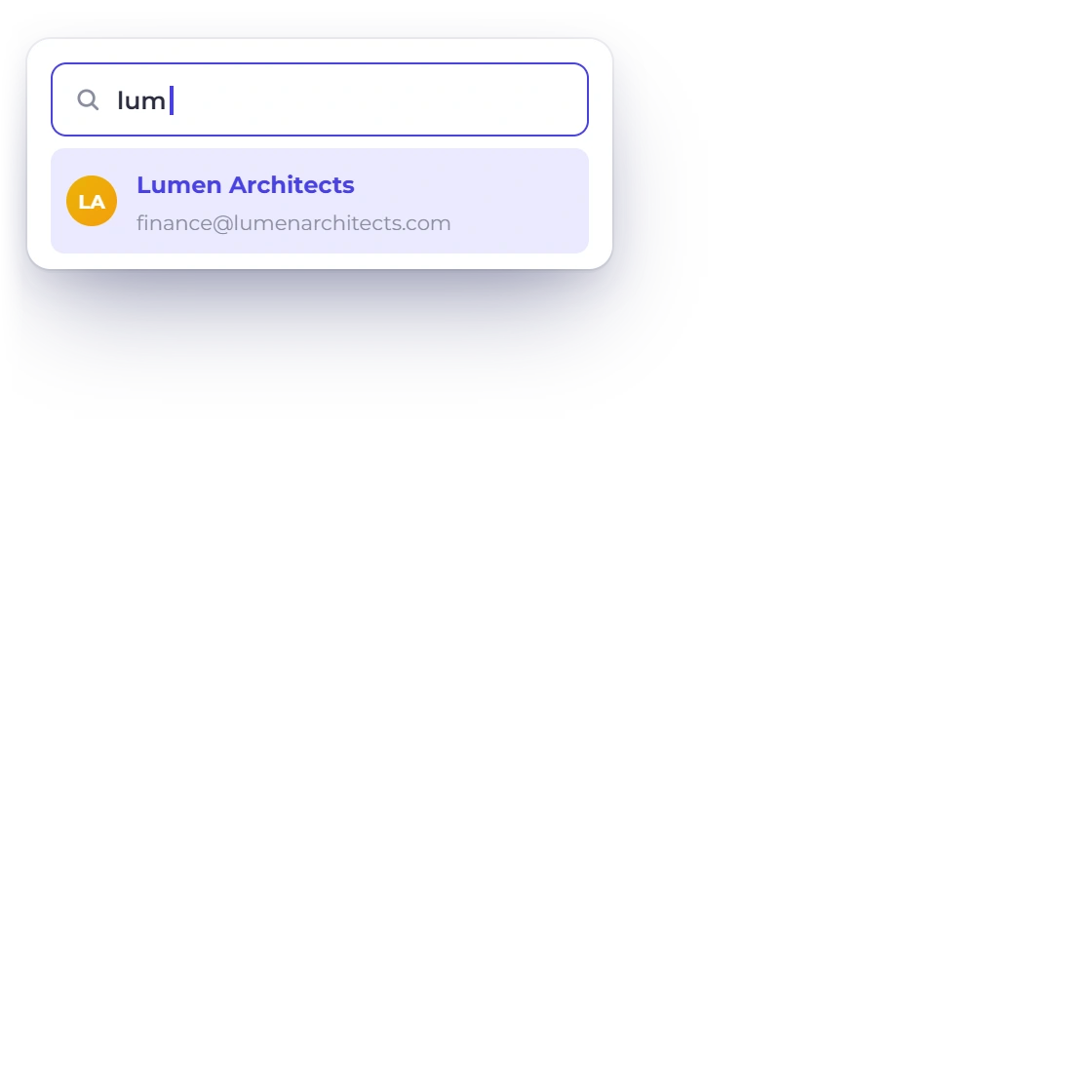
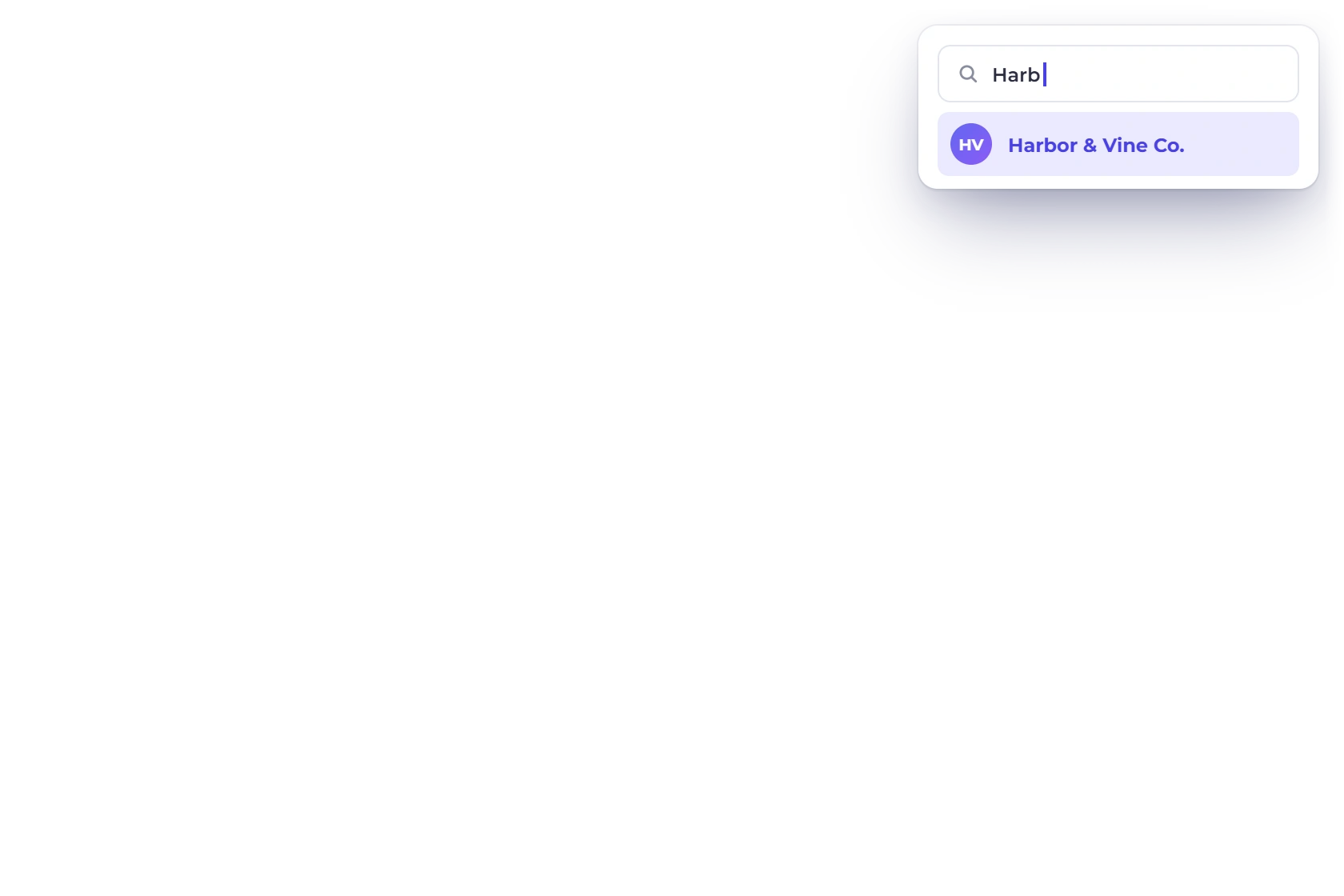
Searching the customer list in Invoice Crowd, with results narrowing as the query is typed

Search that narrows as you type

Type part of a name, a company or an email address and the list narrows to the matching customers. It is built for the moment a client calls and you want their record open before the conversation gets going, rather than for a considered database query.

  • Match on name, company or email
  • Results narrow with each character
  • Searches the whole customer list

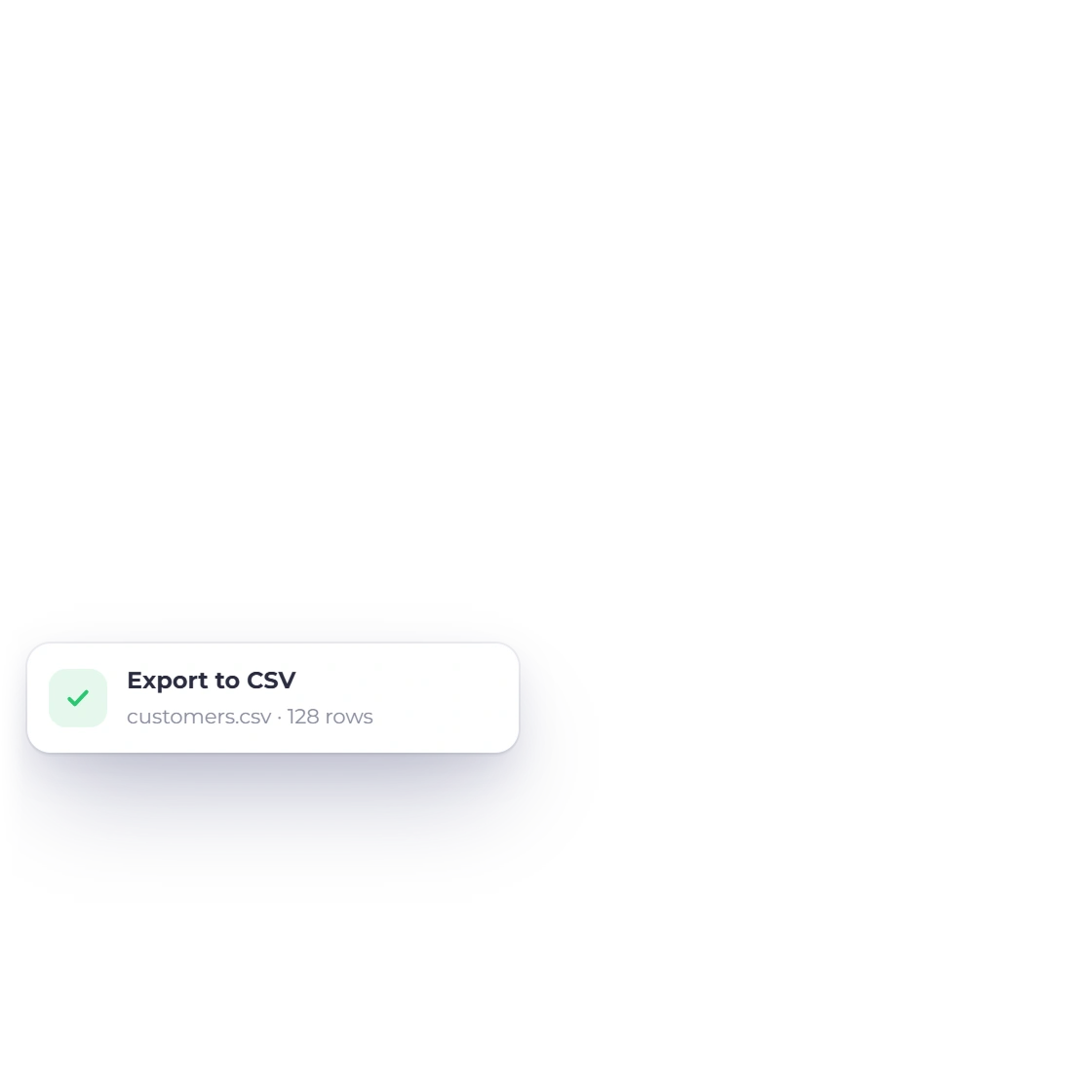
Export the list or pipe it out

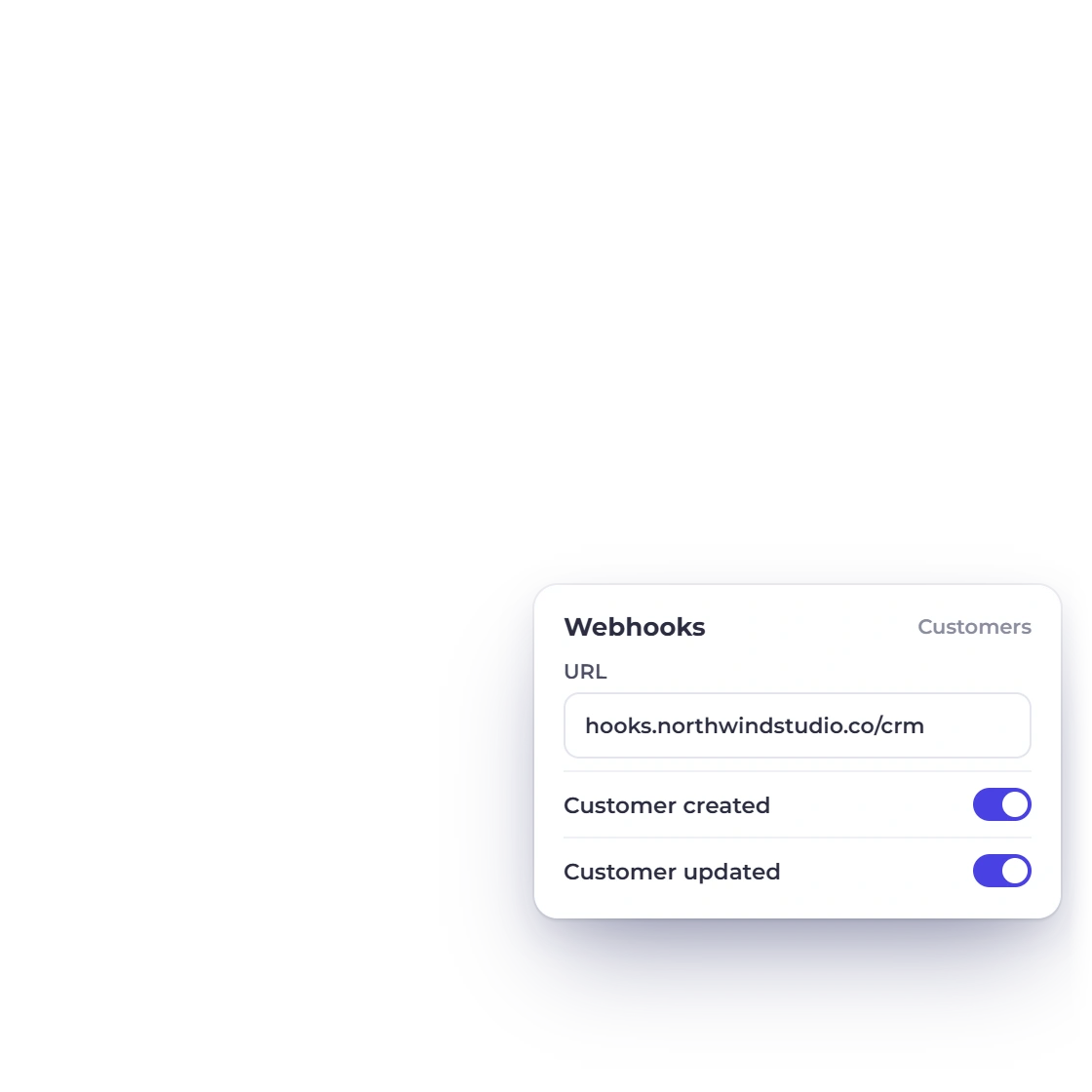
A customer list is yours to move. Export it for a mailing tool, a spreadsheet or an accountant, and configure the customer_created webhook to notify a receiver you control. Nothing is locked in here just because it was entered here.

  • Export the customer list in full
  • Outbound webhooks send selected events to a receiver URL you control
  • The receiver decides what happens next
Outbound webhooks

Also included

What else reads from the customer record

A customer is not a standalone address book entry. Billing, reporting and portal access all point back at the same record.

  • Their own portal login

    Customers sign in to view, approve, download and pay what you have sent them.

  • Recurring agreements

    See which customers are on a schedule and what each cycle bills them.

  • Per-client late fees

    Give a long-standing client different penalty terms from the ones a new client gets.

  • Buyers become customers

    Someone who pays through a package link is added as a customer record.

  • Currency per customer

    Bill an overseas client in their currency while your reporting stays in yours.

  • Estimates and proposals

    Quotes sent to a customer sit alongside the invoices that came out of them.

  • Separate businesses

    Each business profile keeps its own customer list, all reachable from one login.

  • Outbound webhooks

    Notify a configured receiver when a customer is created; this does not create a two-way CRM sync.

  • Custom fields

    Record the reference number or account code a particular client insists on.

  • Aged debt report

    See which customers are behind and by how long, across the whole list.

  • Profile limits by plan

    Customer-profile allowances depend on the current plan; review the live pricing page for today's limits.

  • Team access

    Team members with the right role can work from the same customer records.

Questions

Customer records, answered

How many customers can I add?

Customer-profile limits depend on the current plan. The live pricing page is the source for the allowance that applies when you subscribe.

Can I export my customer list?

Yes. The list can be exported for use outside Invoice Crowd, whether that is a mailing tool, a spreadsheet, or handing contact details to an accountant. Your customer data is not held hostage by the fact it was entered here.

Can I connect customer records to my CRM?

There is no direct CRM sync. Export the list for a manual handoff, or configure the outbound customer_created event to notify a receiver URL you control. That webhook is one-way and does not create or update Invoice Crowd records.

What is kept on a customer record?

Contact and billing details, every invoice raised for that customer with its current status, and the attachments exchanged with them over time. It is meant to answer questions about one client without you searching the whole invoice list.

Can customers see their own invoice history?

Yes, through the customer portal. They sign in to view what has been sent, approve estimates, download documents and pay outstanding invoices, which cuts down the emails asking you to resend something they already have.

How is customer data stored?

Customer access is scoped to the account, active business and the permissions assigned to invited team members. Review roles before granting another person access.

Put every customer on a record worth opening

Contact details, invoice history and attachments in one place, and a search that gets you there before the client has finished saying their name.

  • Review current plan terms before signup
  • No card details asked for
  • Export your list whenever you want