
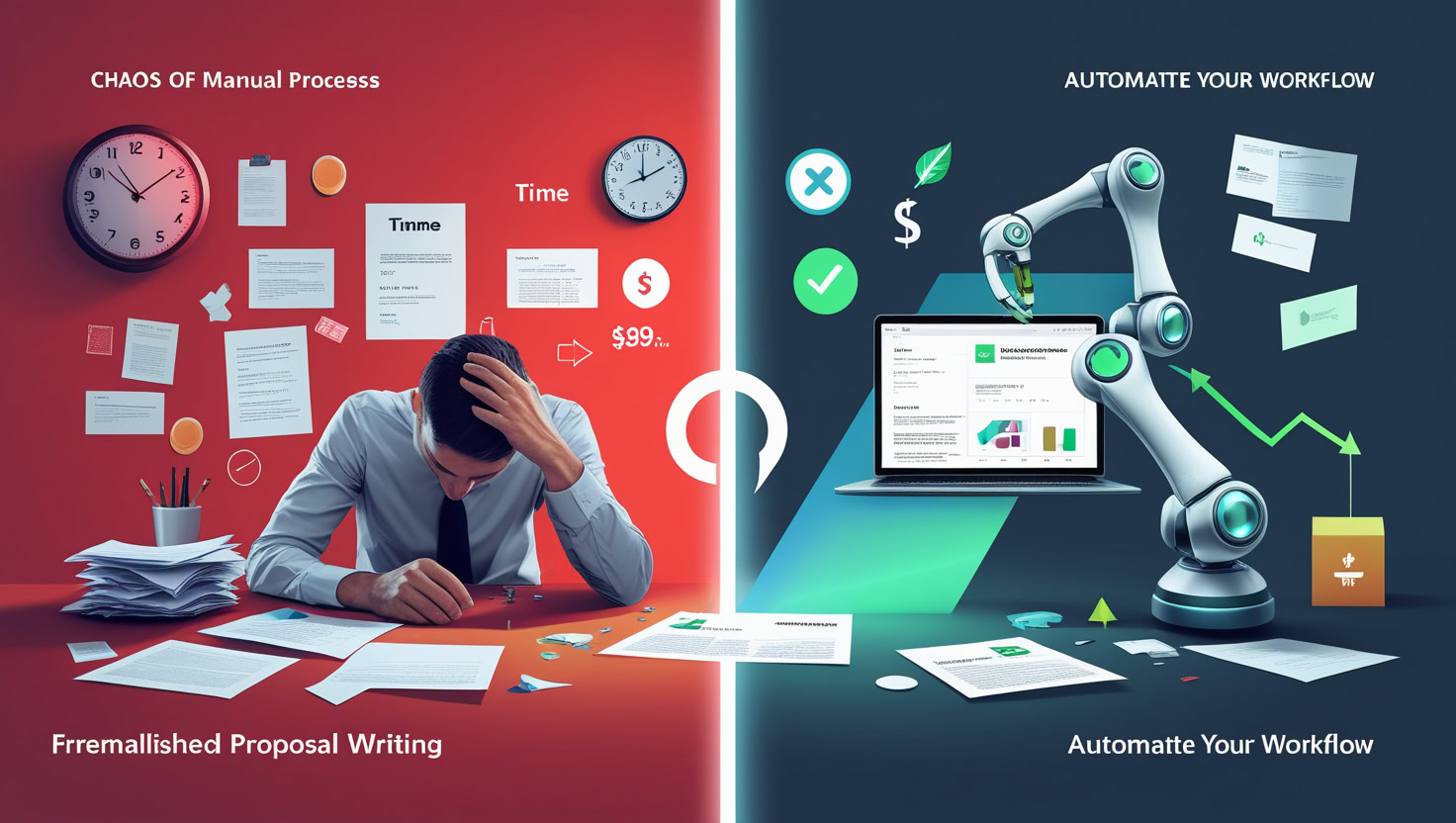
Manual proposal work includes gathering requirements, reusing approved content, pricing, revisions and follow-up. Standardizing the repeatable parts can reduce preparation time while leaving room to explain the client-specific scope and value.
Measure one complete proposal
Record the time spent collecting scope, preparing prices, writing, reviewing and sending the offer. Include the work done by colleagues. Note any corrections caused by using an old document or copying details between systems.
Calculate a practical estimate
If a proposal takes three hours and your planning cost is $40 per hour, preparation represents $120 of work. Ten similar proposals would represent $1,200 before software costs. These are example assumptions, not promised savings.
Standardize the repeated material
- Keep approved service descriptions and terms in one place.
- Use a consistent structure for scope, options and prices.
- Assign ownership of pricing and final review.
- Keep the accepted version separate from later changes.
Leave room for the customer’s specific problem and requirements. A faster proposal is not useful if it describes the wrong job.
Test whether software reduces the work
Compare preparation time and correction rates over several proposals. Include setup, subscription fees and the time needed to maintain templates. Check whether the accepted offer can be carried into delivery and invoicing without entering the same details again.
Our proposal builder provides a place to prepare offers and collect customer approval. Start with one commonly sold service, test the process and keep the changes that demonstrably reduce effort.