
Skip to content

Proposals, staged invoices and vendor bills for event planners

An event is booked months before it happens and paid for in pieces. Quote it, take a booking deposit, raise each staged invoice as the date approaches, and keep every supplier bill against the same customer as the fees you charged.

  • Staged payments across the lead time
  • Supplier bills in the same account
  • Headcount changes the quantity

What is inside

Nine months of documents for one afternoon

A wedding or a conference generates a quote, a deposit, several staged invoices, a pile of supplier bills and a final reconciliation. All of it belongs to one client and one date.

Winning the booking

The document the client signs

The Proposals screen in Invoice Crowd, listing sent proposals with their status, customer and value

Venue, catering and staffing in one document

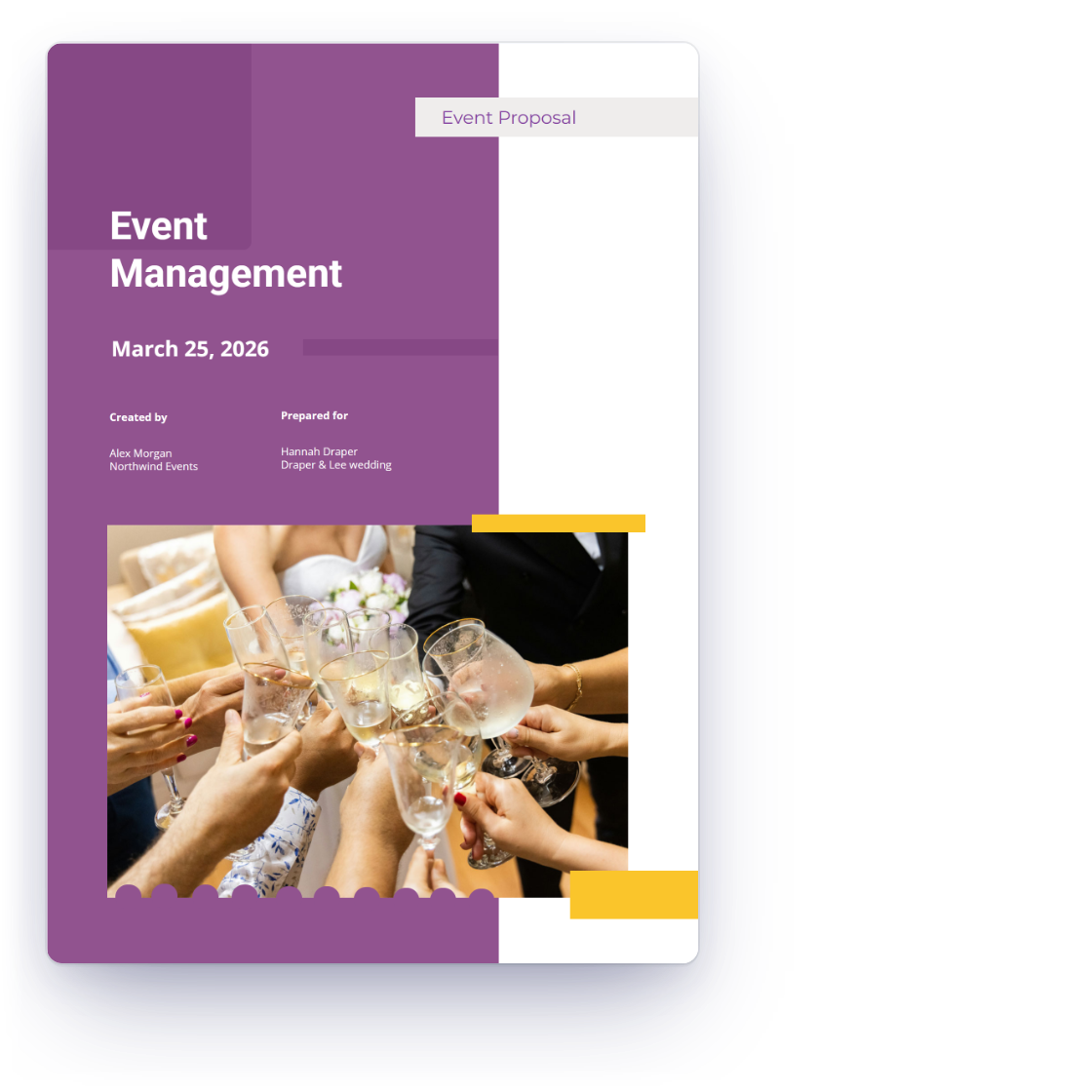
Event pitches run long: the concept, the run of show, the suppliers, the staffing plan and a budget broken down by category. Build it in sections from a template, price the budget table inside it, and let the client sign in the browser rather than printing a page to scan back.

  • 40+ proposal templates, editable section by section
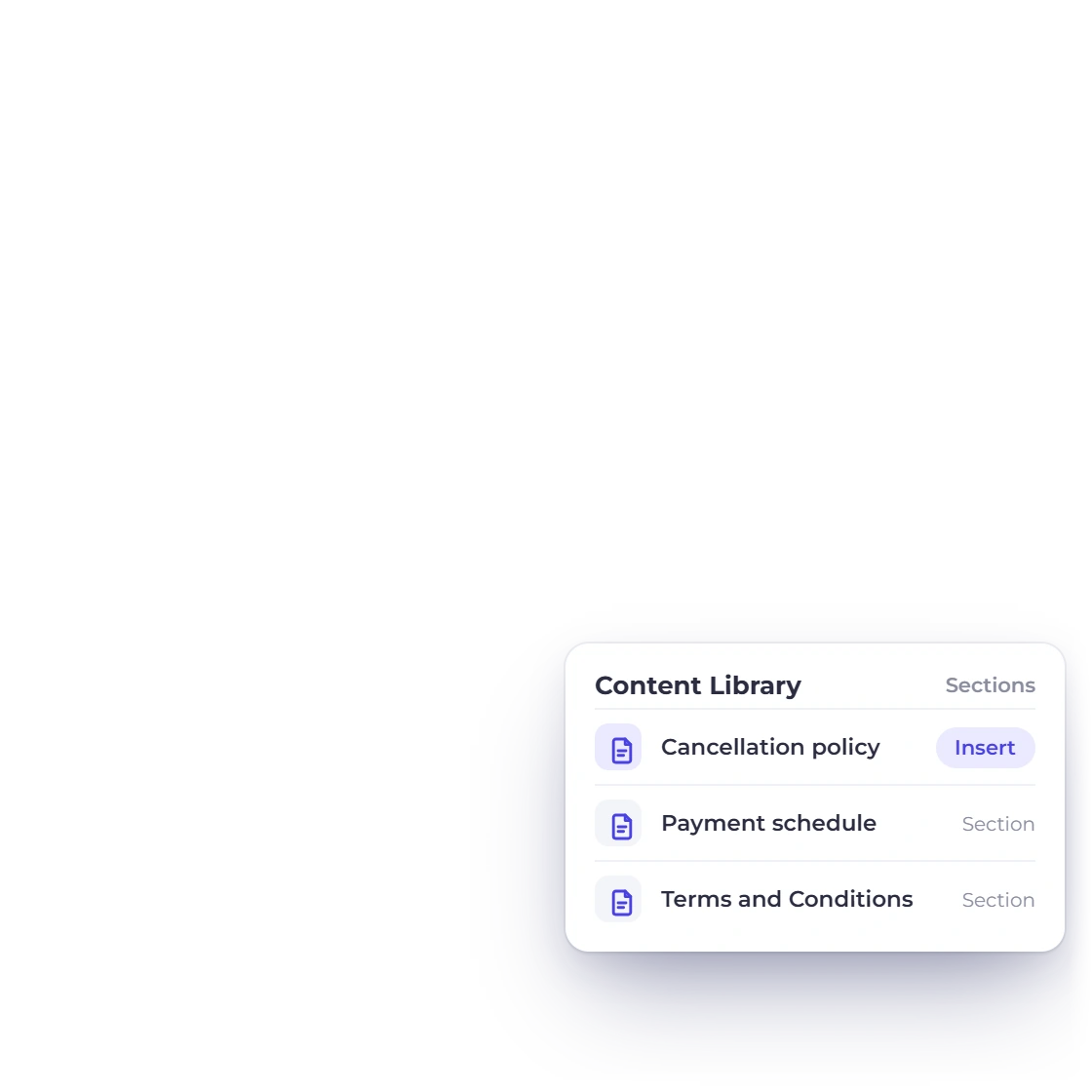
  • Content library for terms, cancellation and payment schedules
  • E-signature the client adds online
Proposal builder

Headcount moves, the quantity moves with it

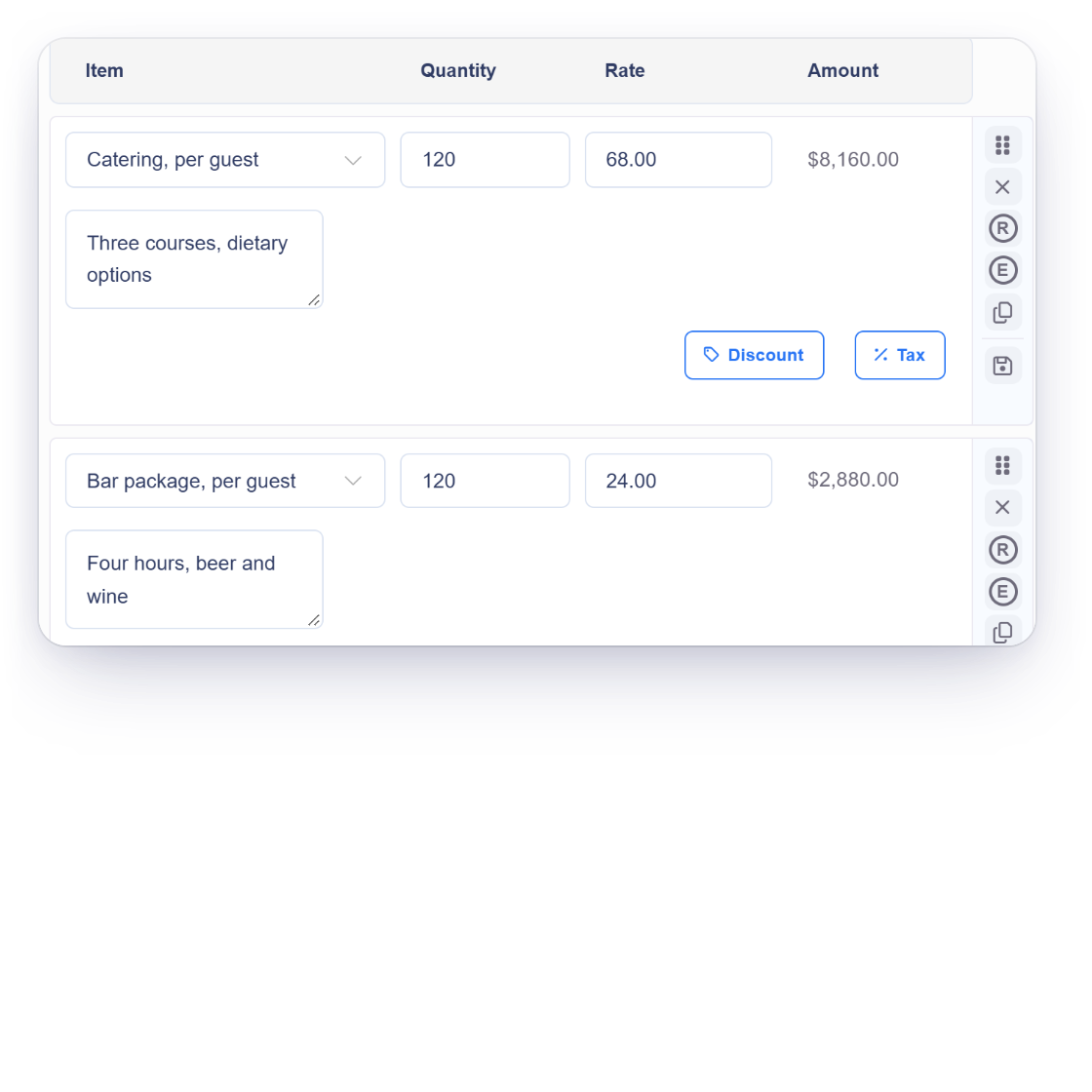
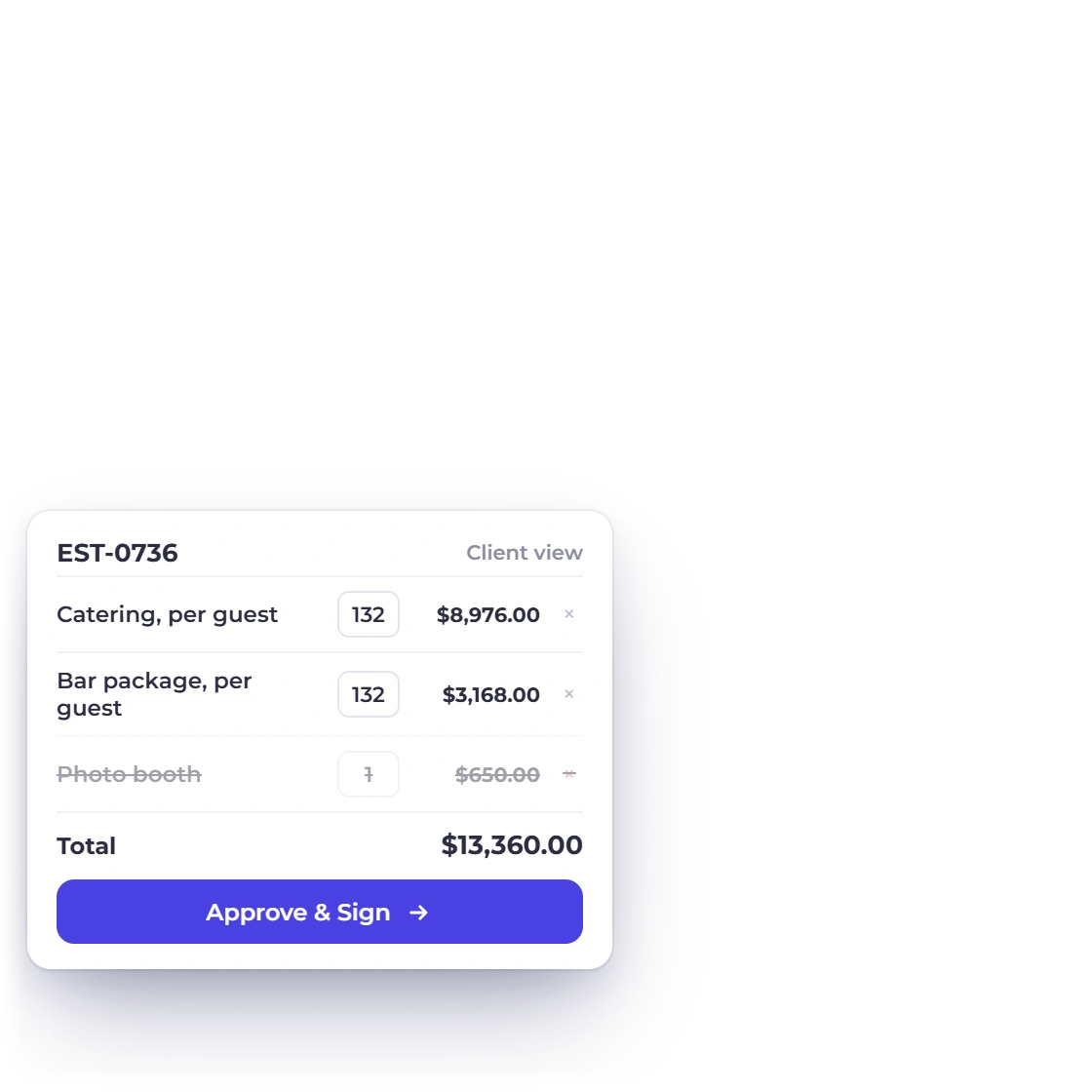
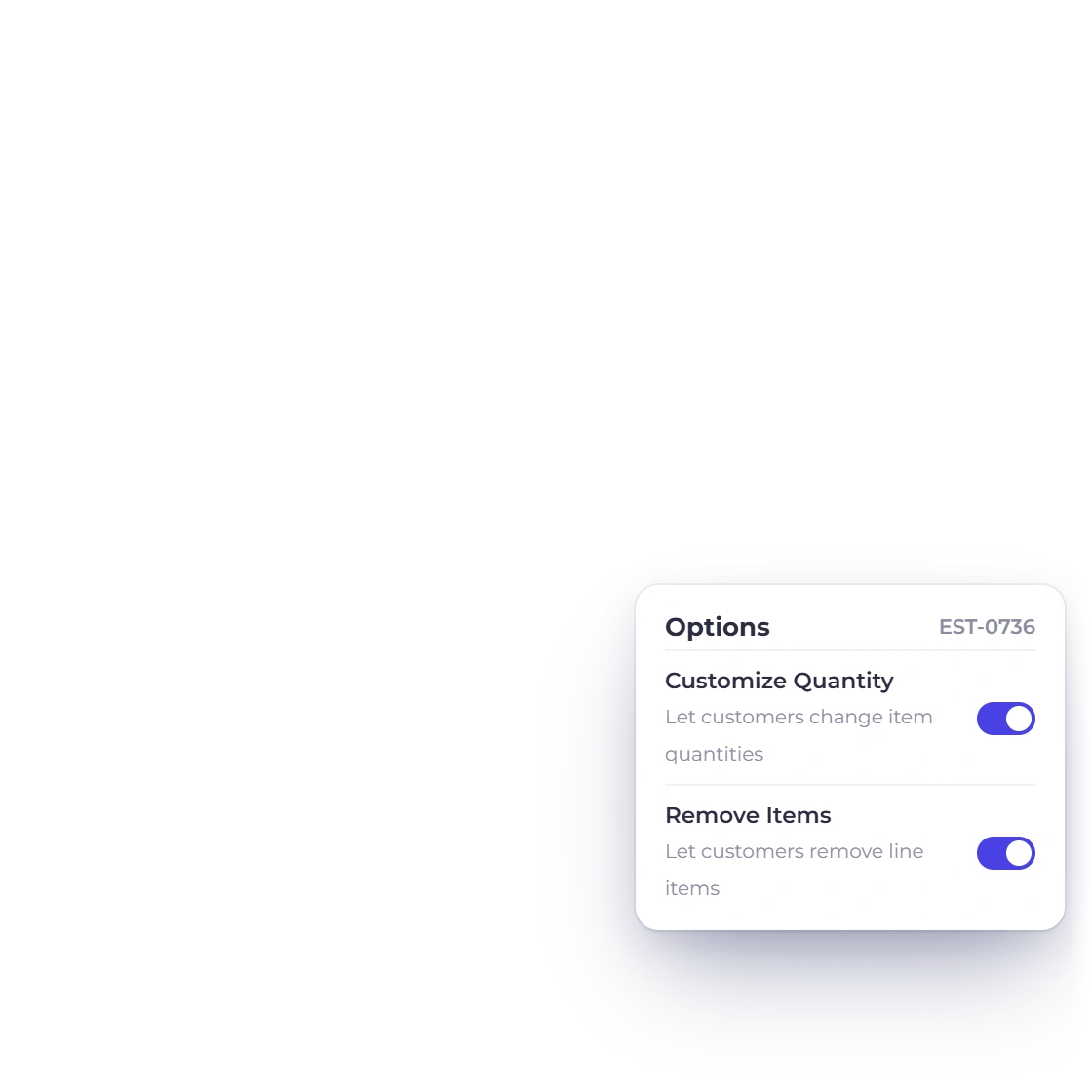
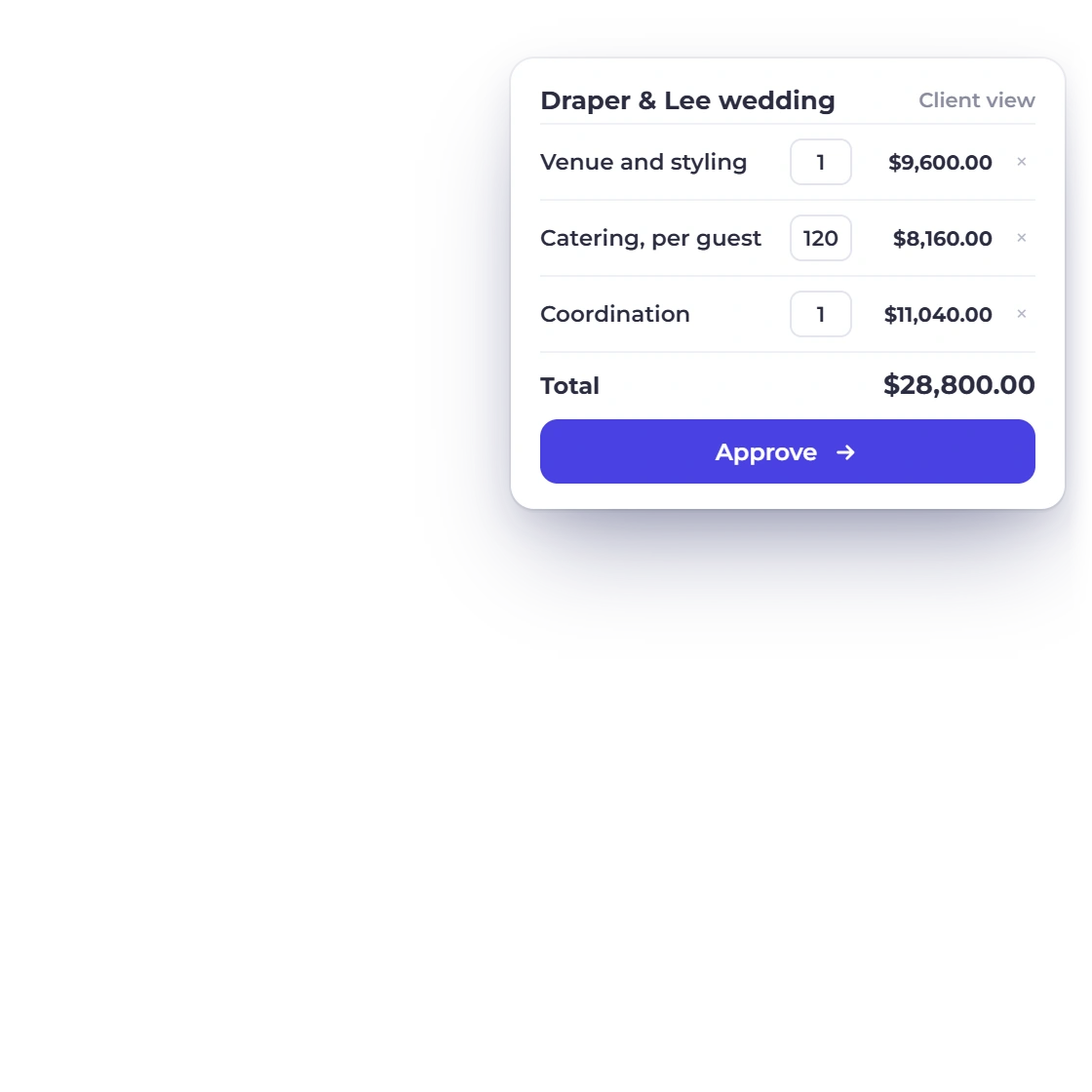
Catering, hire and staffing are priced per head, and that number is rarely final until the week of the event. Let the client edit the quantity on the lines you choose, and the line total and the grand total follow. A revised guest list stops being a rebuilt quote.

  • Client-editable quantities on the lines you allow
  • Optional items for the extras they may or may not take
  • Totals recalculate as the numbers change
Change quantity

Paying for it in stages

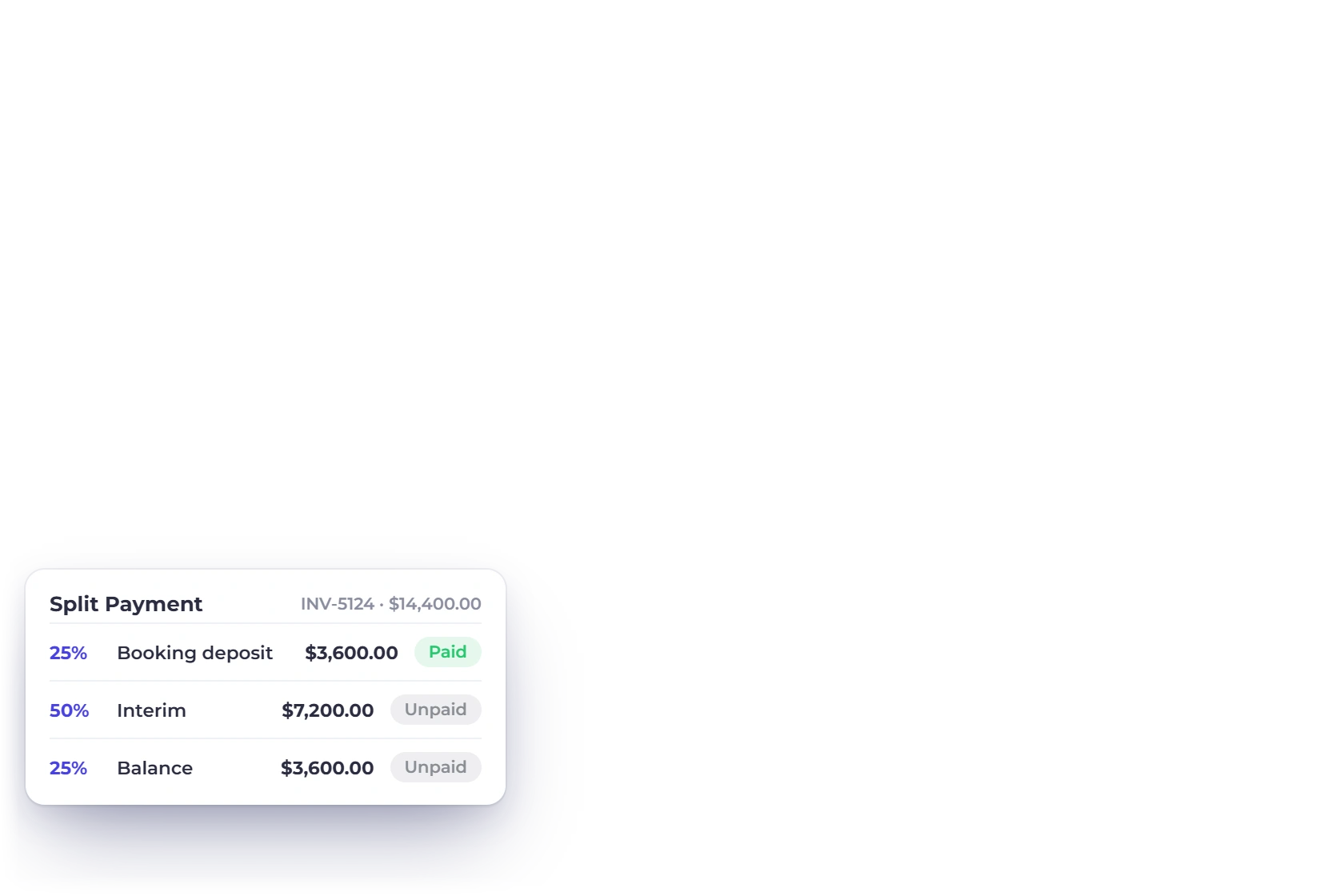
Deposit, interim, balance

Booking deposit now, balance before the date

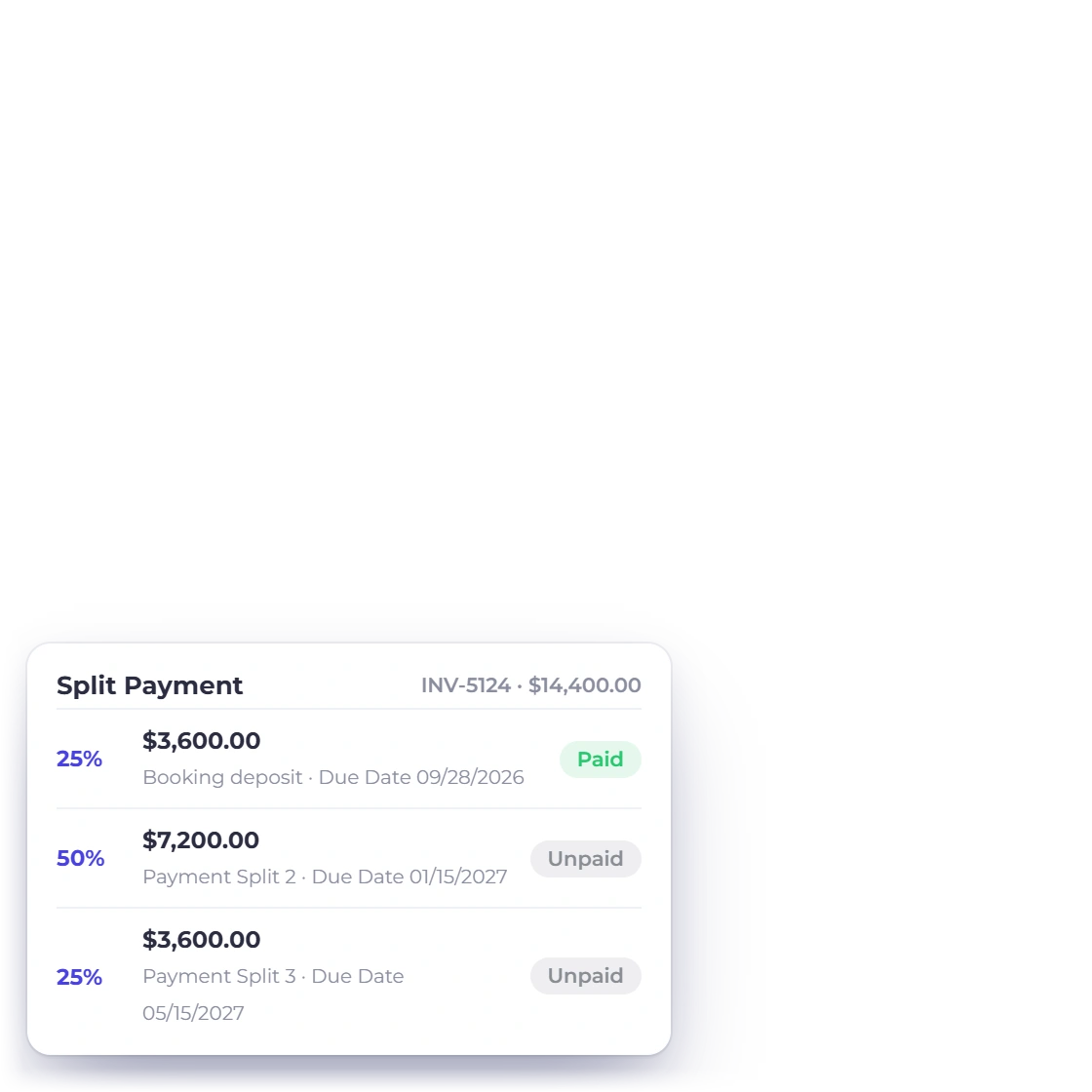
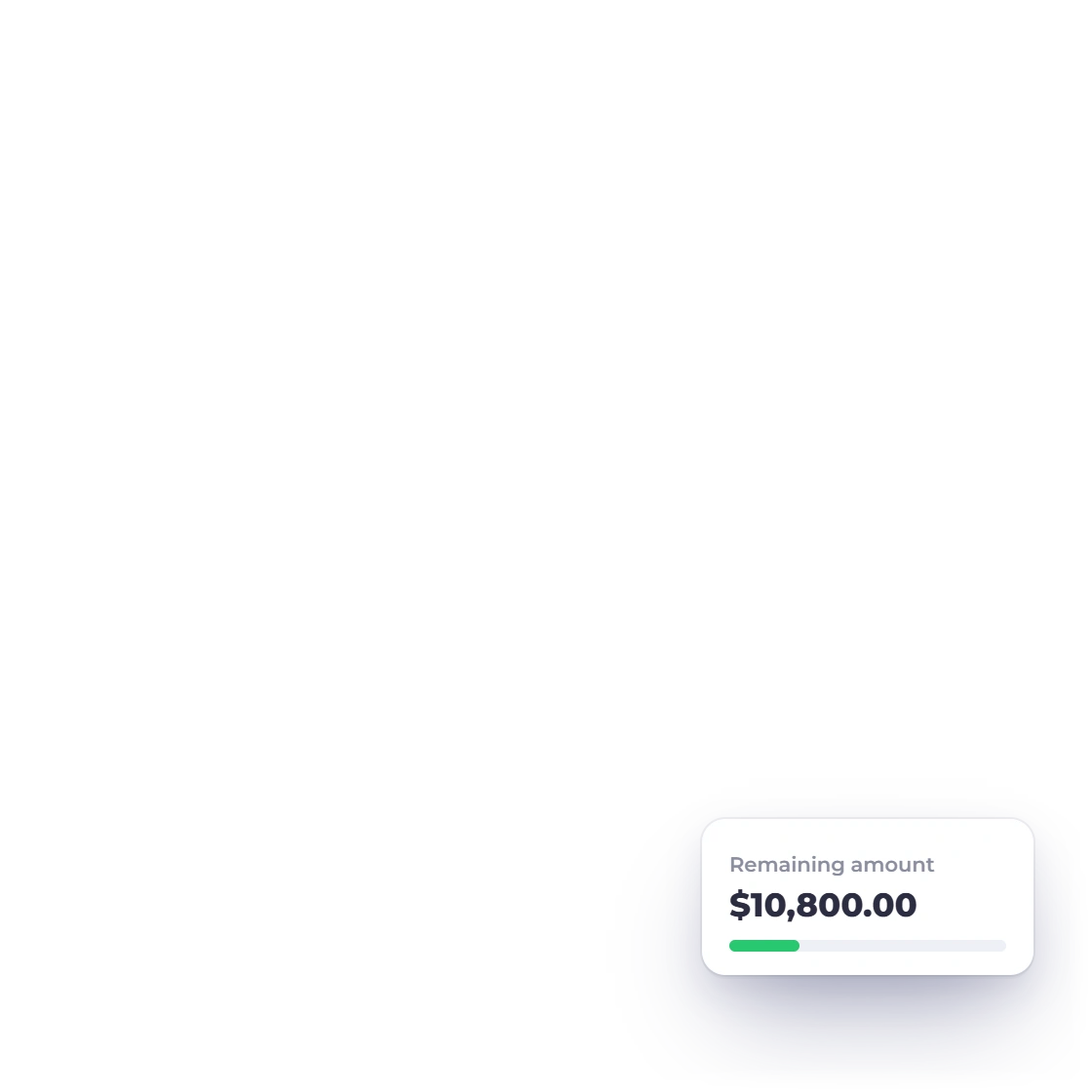
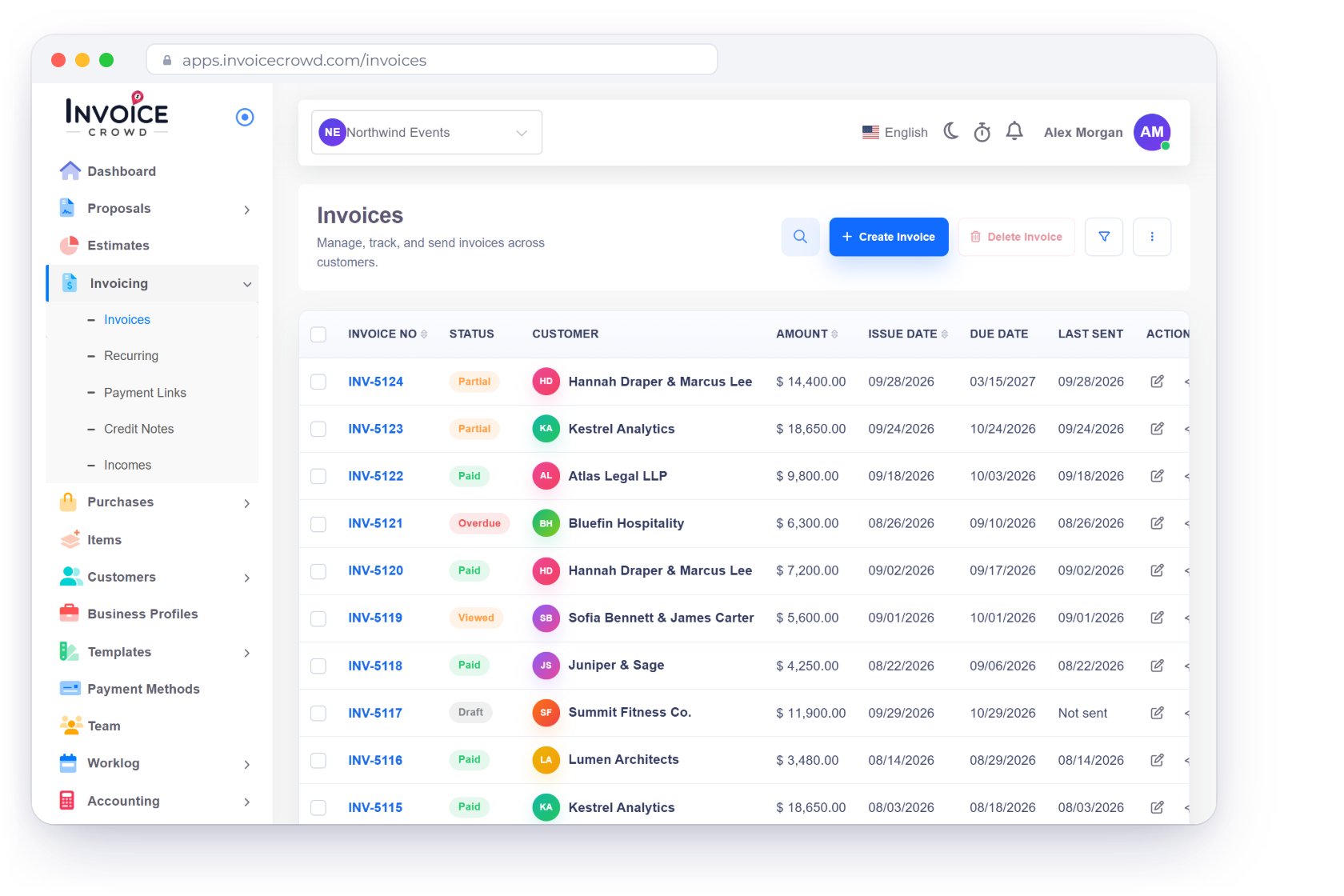
Most event contracts are settled in three or four moves across a long lead time. Split and partial payments put the deposit and the remaining amount on the same invoice, so a total is never tracked across separate documents and the client can see how much of it is closed.

  • Deposit and balance held against one total
  • The client sees what has been received and what remains
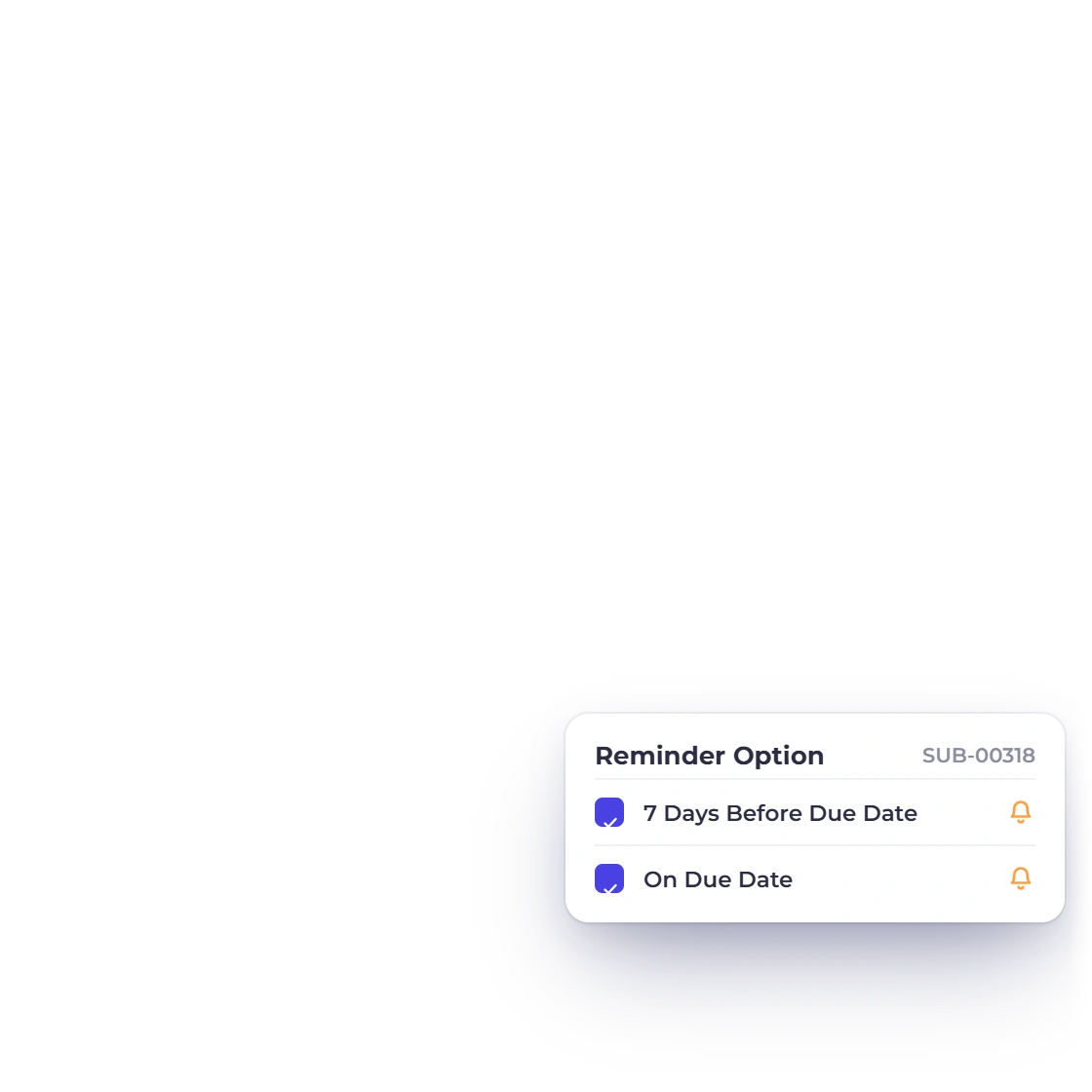
  • Reminders and late fees on the outstanding amount
Split and partial payments
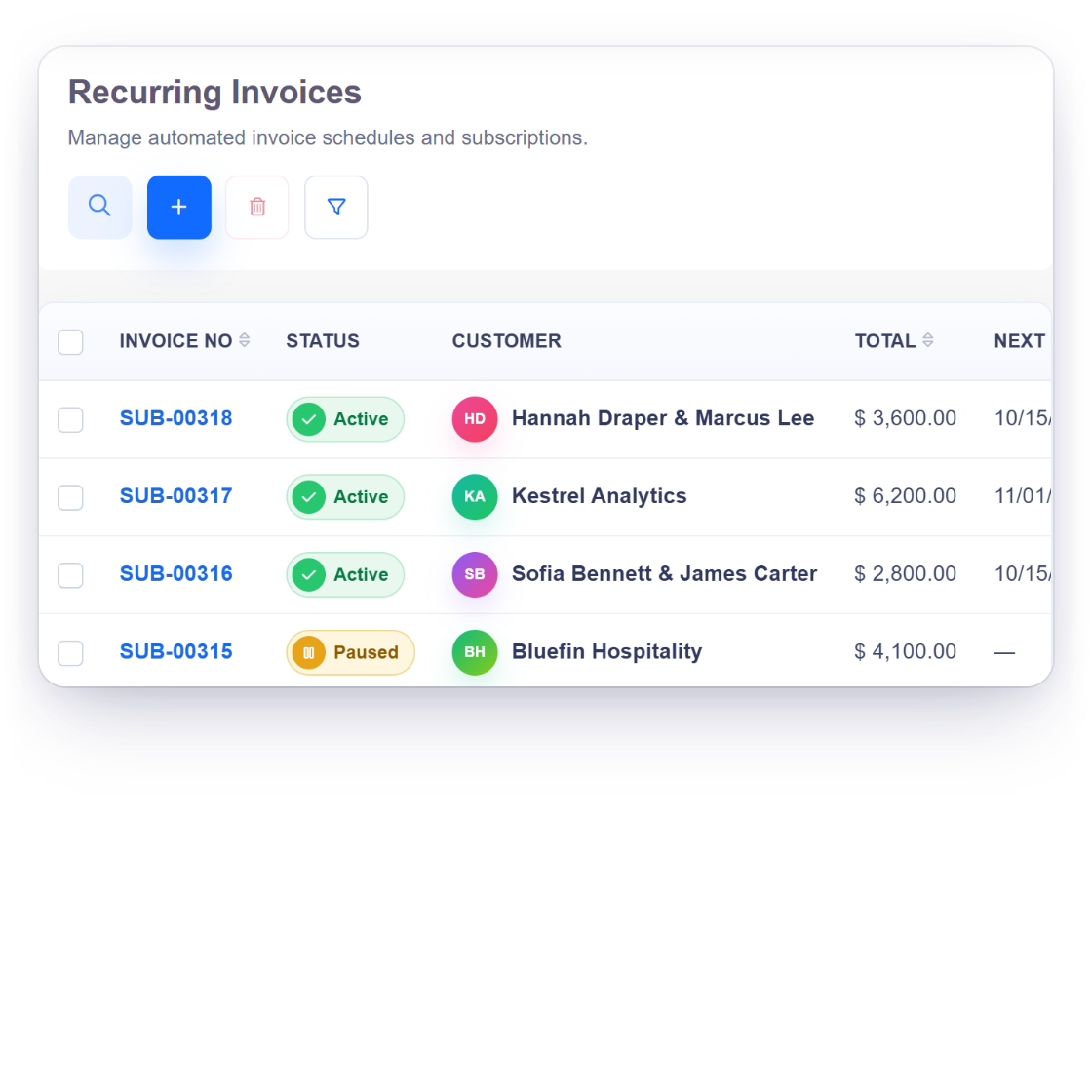
Recurring invoices in Invoice Crowd showing schedules, customers and next issue dates

Interim invoices on the dates you set

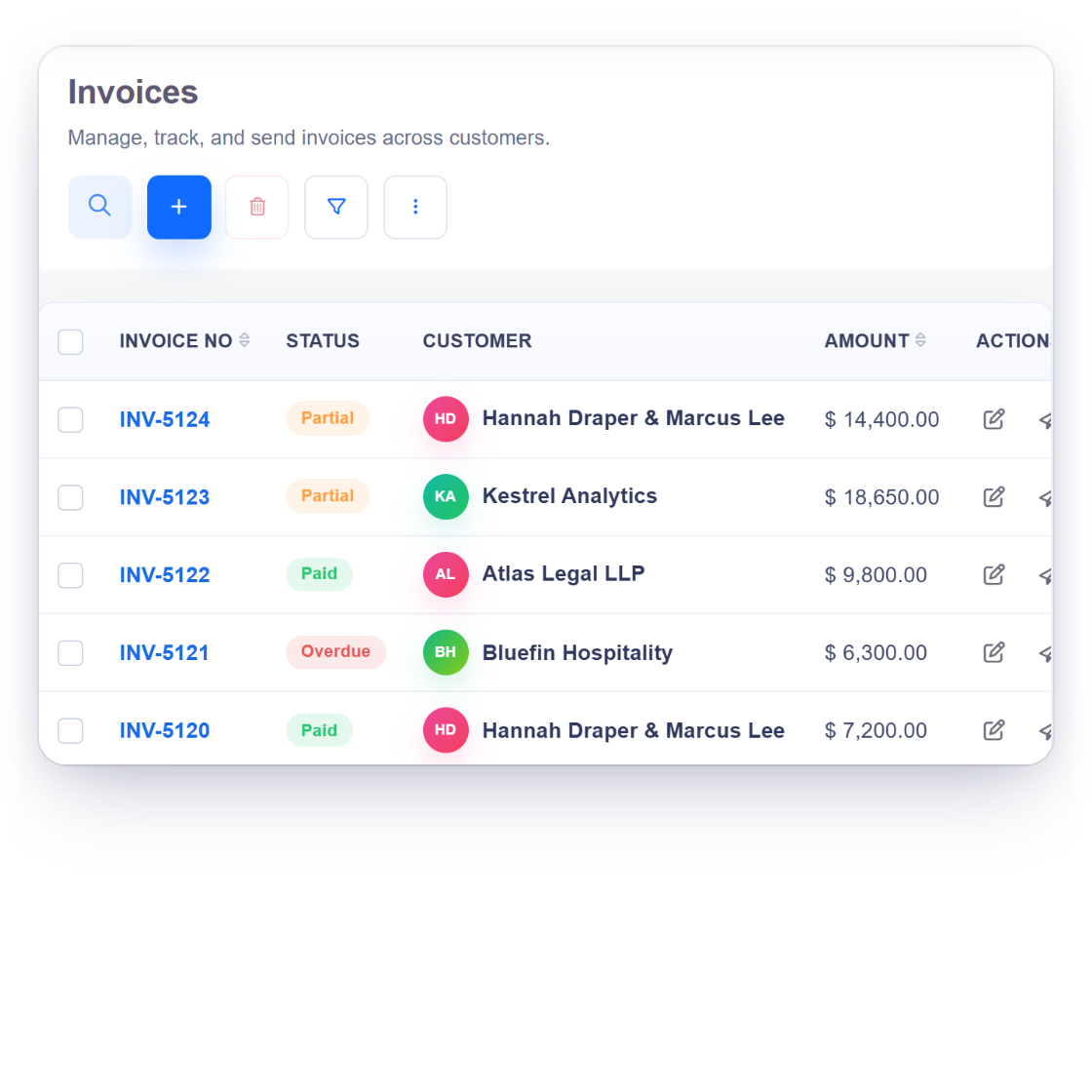
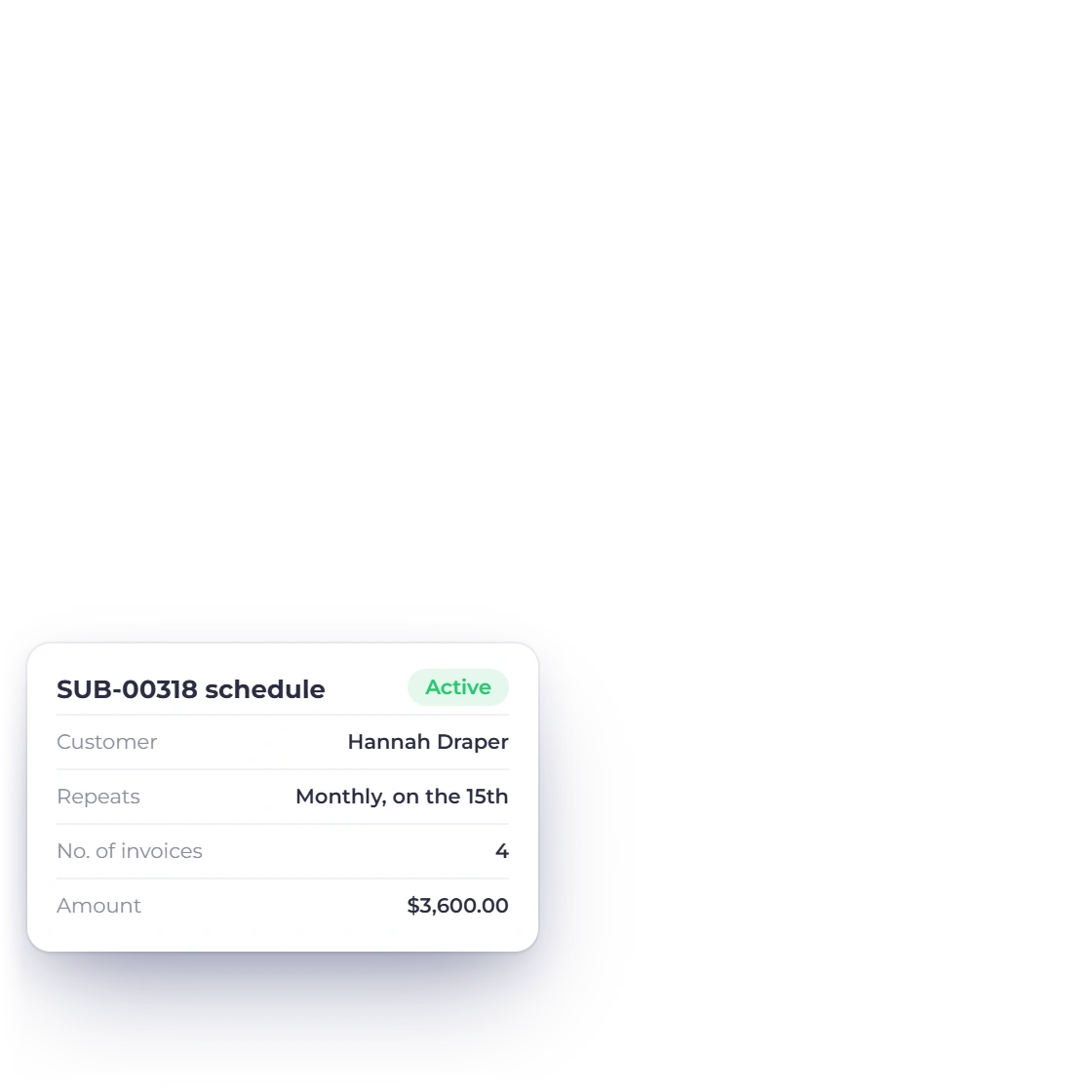
A payment schedule agreed in January should not depend on somebody remembering it in June. Put the interim stages on a recurring schedule, or raise each one as its milestone lands, and every stage becomes a numbered invoice against the customer instead of a line in a planning doc.

  • Recurring invoices weekly, monthly or on a cycle you define
  • Automatic reminders before a due date passes
  • Aged debt showing which stage went unpaid
Recurring invoices

What the event cost

Suppliers on one side, fees on the other

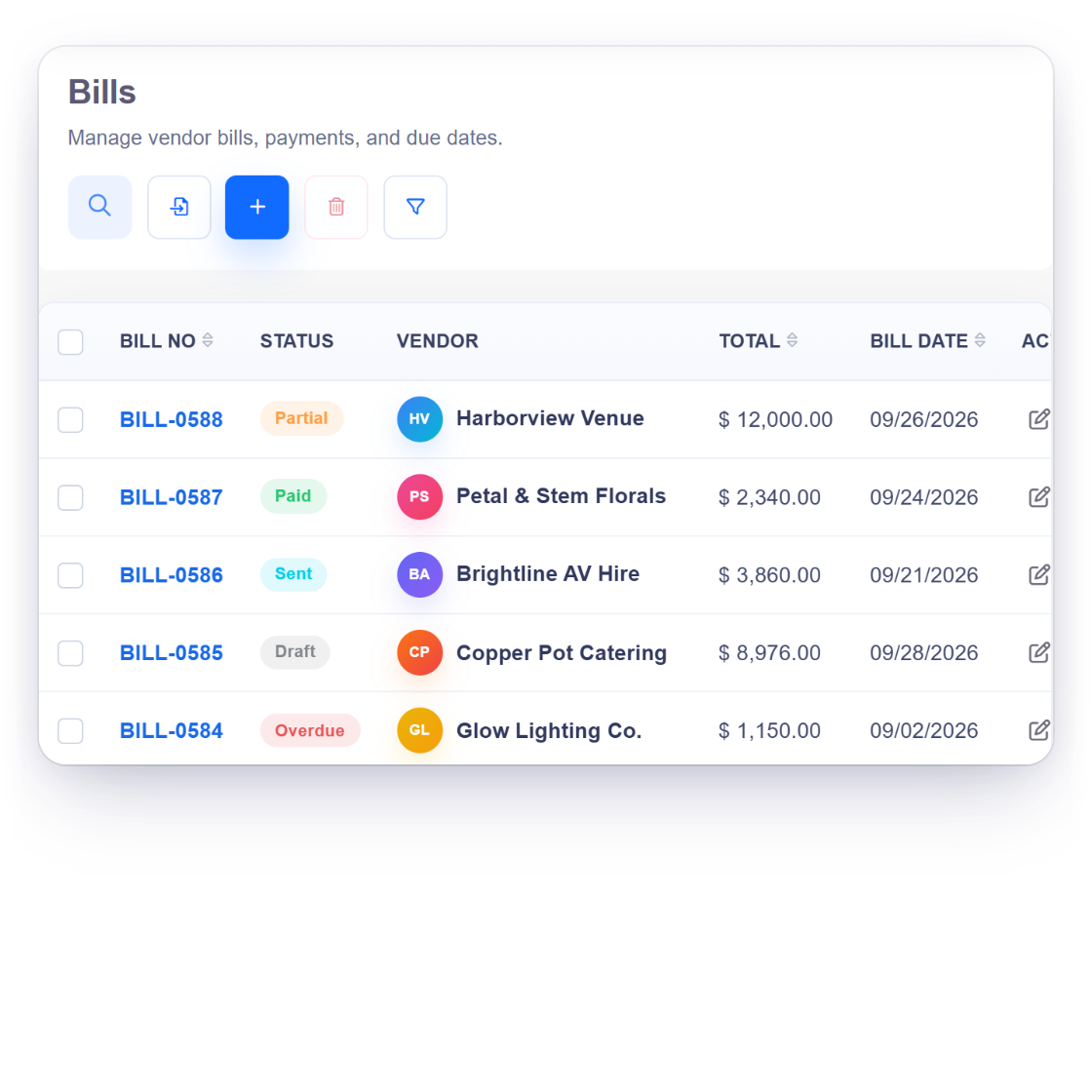
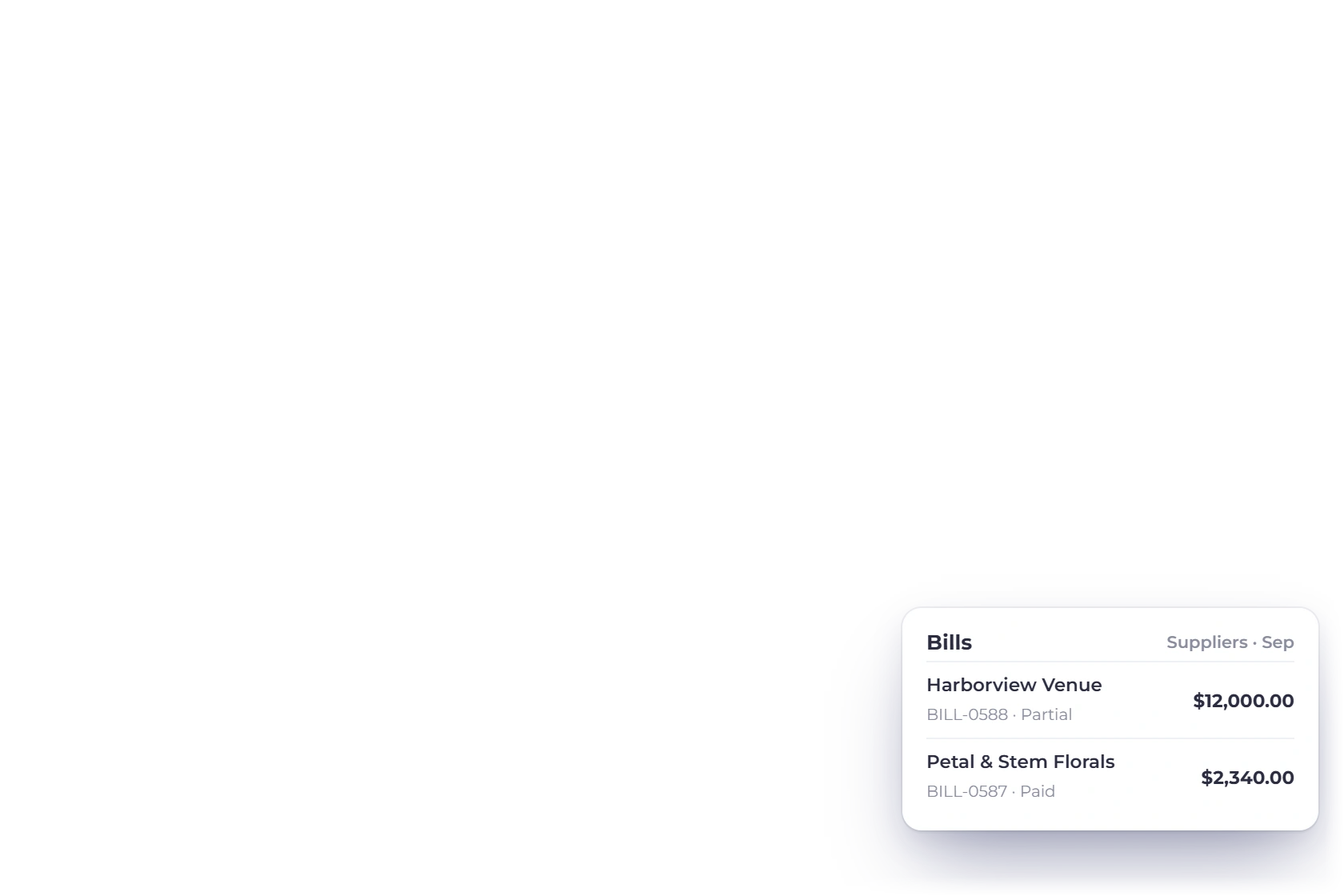
Bills list in Invoice Crowd showing vendor bills with due dates, amounts and payment status

Supplier bills against the same event

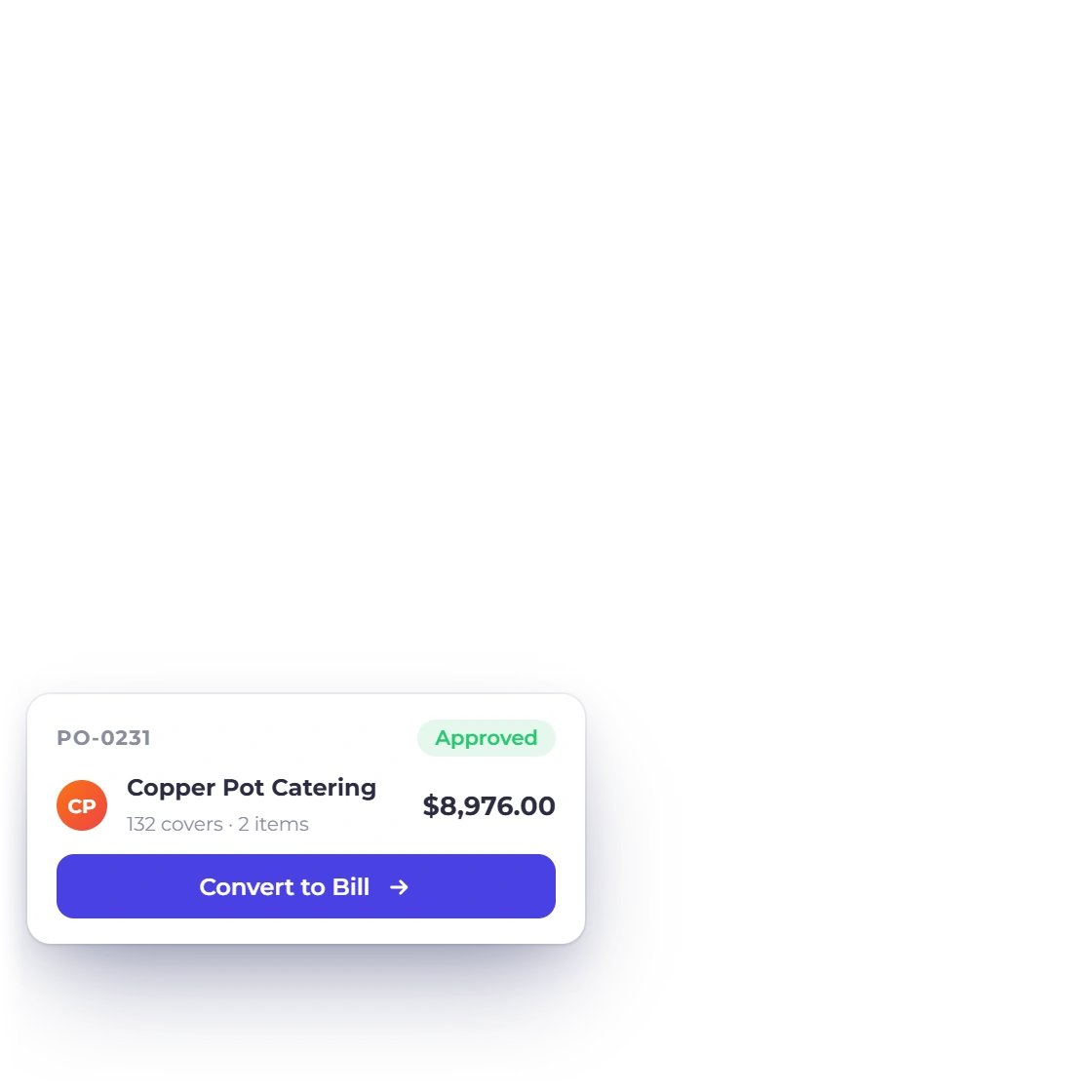
Florists, AV, venue hire, security and catering all invoice you separately and rarely on time. Record them as vendor bills with purchase orders behind them, track what has been paid and what is still owed to whom, and hold it in the account that already has the client's invoices.

  • Vendors, bills and purchase orders in one place
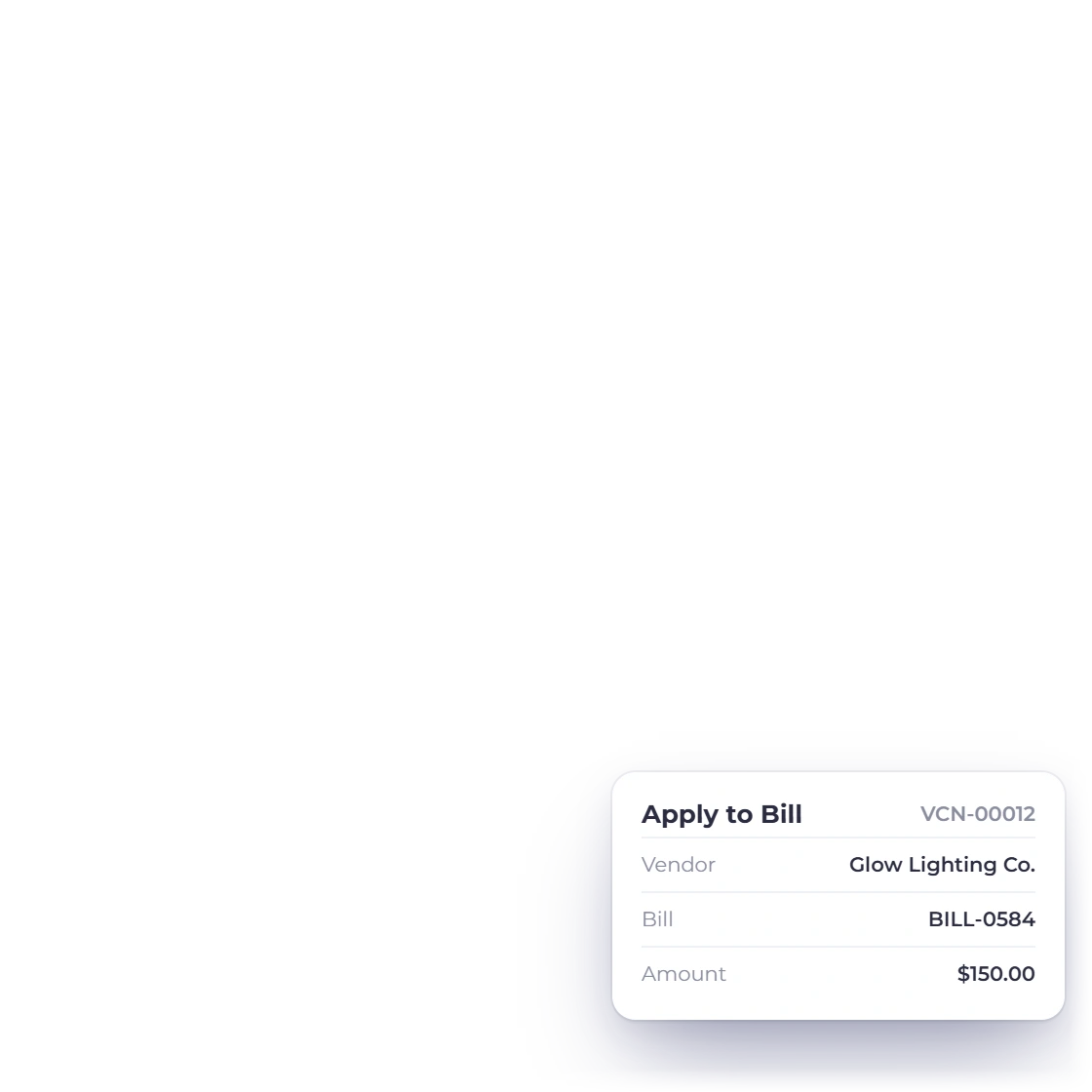
  • Payments made and vendor credits recorded per supplier
  • Expenses carrying the supplier receipt with them
Track expenses

The fees and the costs read one ledger

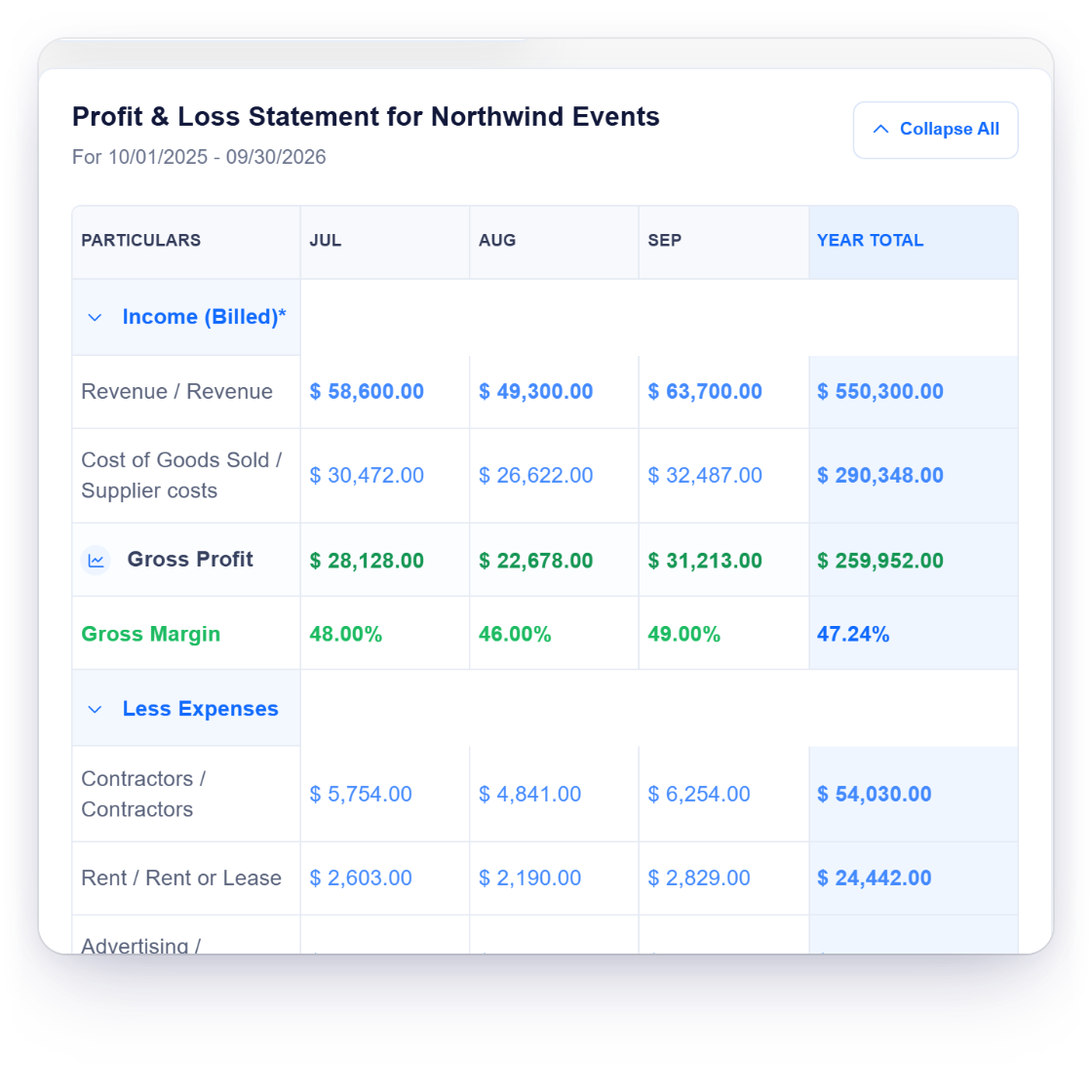
Because invoices, supplier bills and expenses all post into the same double-entry ledger, the income, expense and profit and loss reports are drawn from one set of books. Group the work under a project for the event so the documents and the team's hours stay together.

  • Income and expense reports for any period
  • Profit and loss without a separate bookkeeping tool
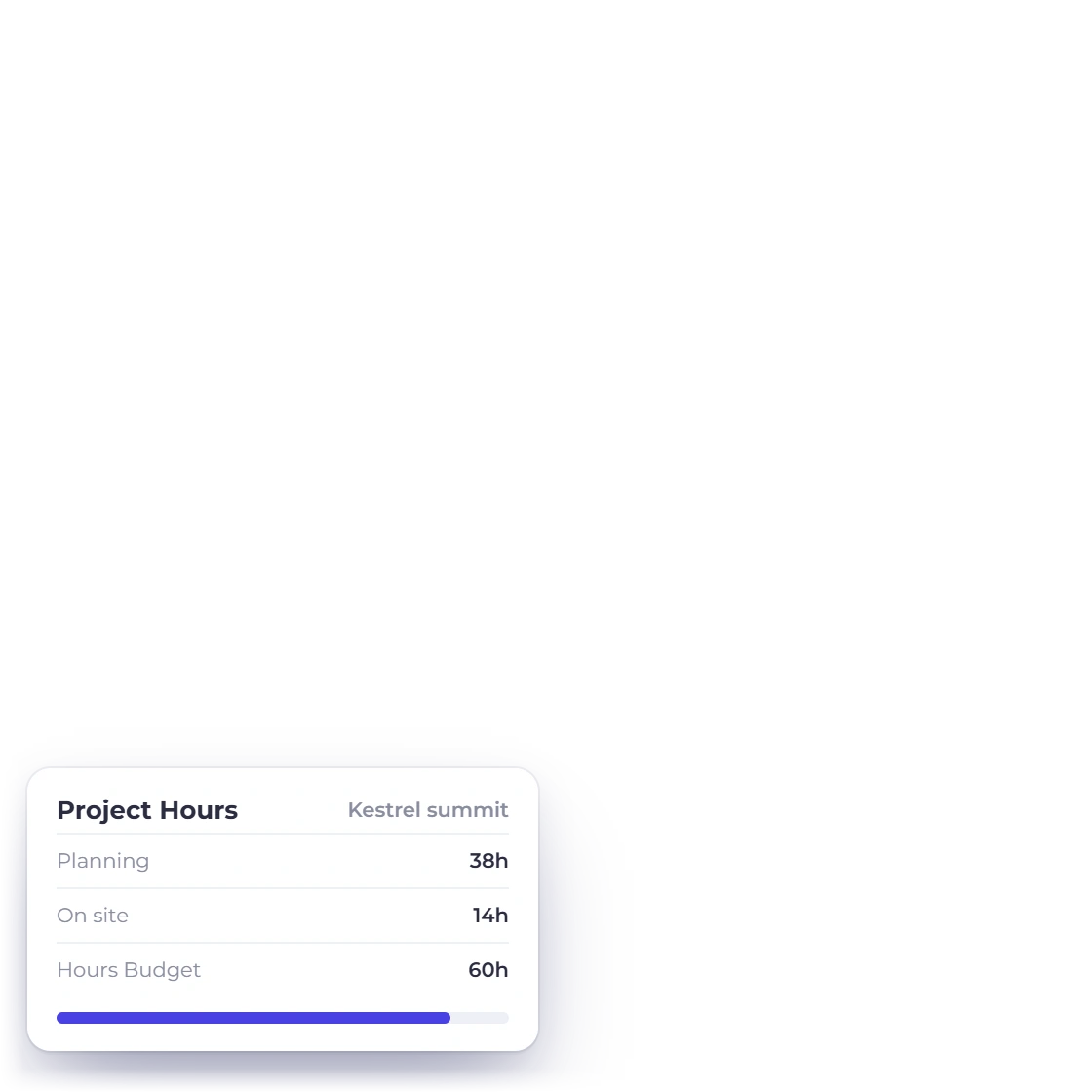
  • Projects and timesheets for on-site and planning hours
Profit and loss

The order of documents

One event, from the first quote to the closed books

Long lead times mean the paperwork outlives the planning. Each document hands to the next inside one account, so nothing is rekeyed between the pitch and the final reconciliation.

Start either way

Proposal

For a pitch that has to sell the concept: run of show, suppliers, staffing and a budget the client signs online.

Estimate

For a booking that only needs numbers: priced lines, per-head quantities the client can adjust, and a validity date.

  1. Staged invoices

    Approval raises the first invoice, and the deposit and later stages all sit against the same customer and the same date.

  2. Payments in

    The client settles each stage through the portal using a gateway you connected, in full or as a part payment.

  3. Costs and books

    Supplier bills and expenses post beside the fees, so the ledger holds both sides of the event.

Also included

The rest of an event planning practice

Nothing here is an add-on. It is the same subscription the proposals and the staged invoices already live in.

  • Event packages

    Bundle a ceremony, a reception and day-of coordination into one priced package you quote repeatedly.

  • Optional add-ons

    Offer a photo booth or an extra hour of bar service the client accepts or declines.

  • Client portal

    Couples and corporate clients check documents, balances and payment history without emailing you.

  • 10+ gateways

    PayPal, Stripe, Razorpay, Square, Payoneer, Braintree, Authorize.net, Airwallex, GoCardless, PayFast, PayTabs, Telr, PhonePe and M-Pesa attach to an invoice.

  • Overdue stages

    A stage that passes its due date chases itself rather than waiting for a free afternoon.

  • Coordinators on the account

    Add planners and on-site staff as team members with roles, at $5 a month each.

  • Destination events

    Invoice a client or a venue abroad in their currency while your reports stay in yours.

  • Aged debt

    See which stage of which event is unpaid and how far past its due date it has drifted.

  • Weddings and corporate

    Run two sides of the business as separate profiles with their own branding and books.

  • Cancellation credit notes

    Raise a credit note against an invoice when a booking is canceled or a stage is refunded.

  • Text message alerts

    A mobile-message integration sends invoice alerts by SMS, for clients who never open the email.

  • Event reference fields

    Custom fields carry the event date, venue and booking reference onto every document raised for that client.

Questions

Billing an event, answered

Can I set up a payment schedule for an event booked a year out?

Yes. Split and partial payments hold a deposit and a balance against one total, and a recurring schedule raises the interim invoices on a cycle you set. Each stage is a numbered document against the same customer, and reminders go out before a due date passes.

What happens when the guest count changes?

Per-head lines are quantities, so you can let the client edit them on the estimate or proposal and both the line and the grand total follow. Anything they may not take, an extra hour of bar or a second photographer, can be marked optional instead.

Can I record what suppliers charge me for an event?

Yes. Vendors, bills, purchase orders, payments made and vendor credits all sit in the same account as the invoices you raise. Attach receipts to expenses, and the supplier side of an event sits beside the fees instead of living in a separate spreadsheet.

Can I see the profit on a single event?

Every fee you invoice and every cost you record post into one double-entry ledger, so both sides of an event are in the same books. A project groups the documents and hours for a date, and the income, expense and profit and loss reports read that same ledger.

Do clients get somewhere to check what they have paid?

Yes. The customer portal shows the proposal or estimate they approved, every invoice raised for the event, what has been received and what is still due. They can download a PDF and settle a stage from the same screen through a gateway you connected.

Can I run weddings and corporate events as separate businesses?

Yes. Business profiles give each side its own branding, documents and books under one login: one profile on SOLO, two on PRO, five on TEAM and ten on BUSINESS. Every invoice, bill and expense is tagged to a profile, so the numbers stay apart.

Book the event, stage the payments, close the file

Quote it once, collect the deposit, raise each stage on time, and keep the supplier bills next to the fees they were spent against.

  • Free for 30 days, no credit card
  • Deposit, interim and balance on schedule
  • Client fees and supplier bills in one ledger