
Skip to content

Features

Projects that carry their own rates, hours and invoices

A project in Invoice Crowd is tied to one customer and one billing method, and that method decides how tracked hours become money. Add tasks, assign the team with their hourly rates, log the time, then turn the billable hours into an invoice laid out the way that client wants it.

  • One customer, one billing method
  • Hourly rates per task or per member
  • Four invoice line layouts

Last updated:

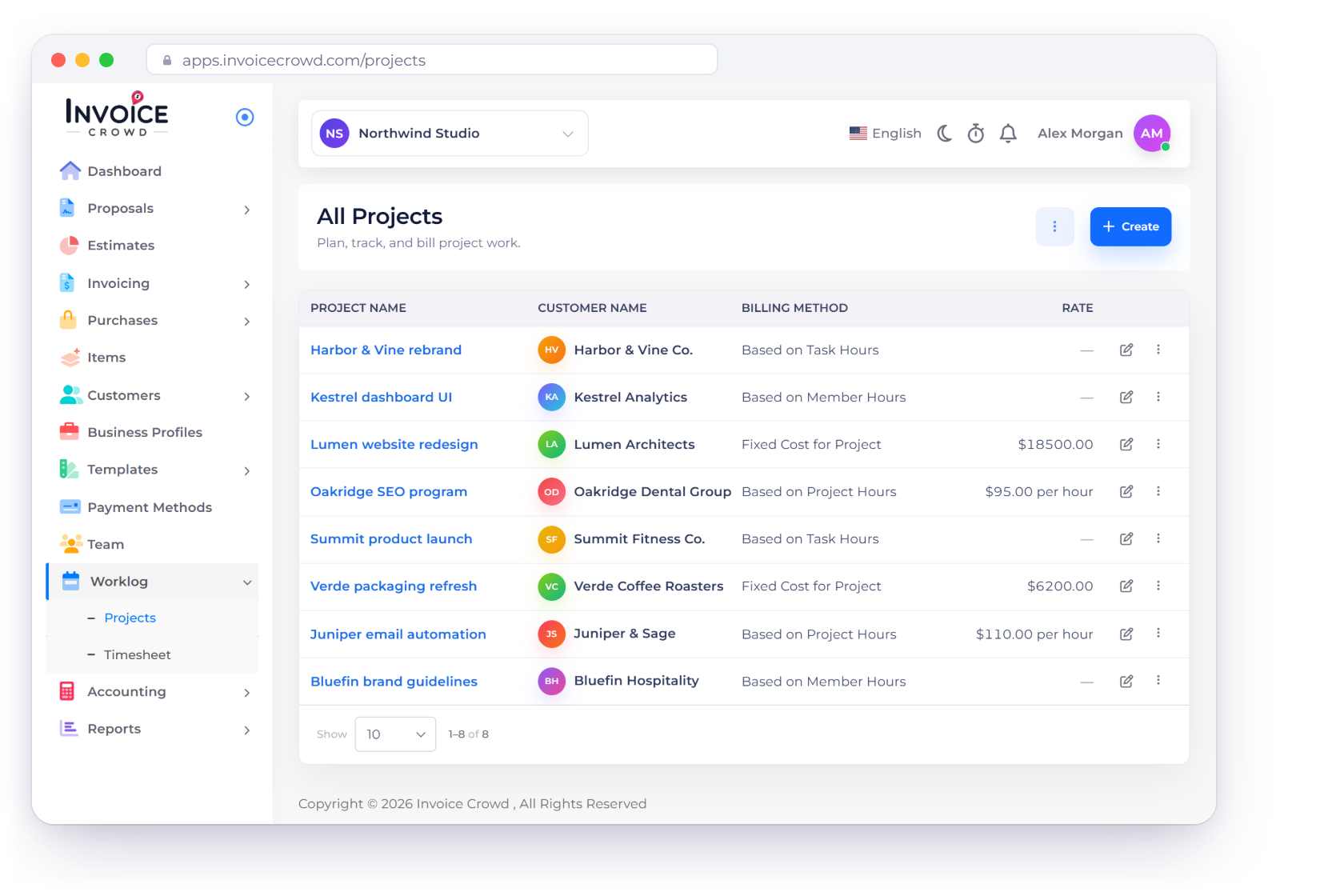
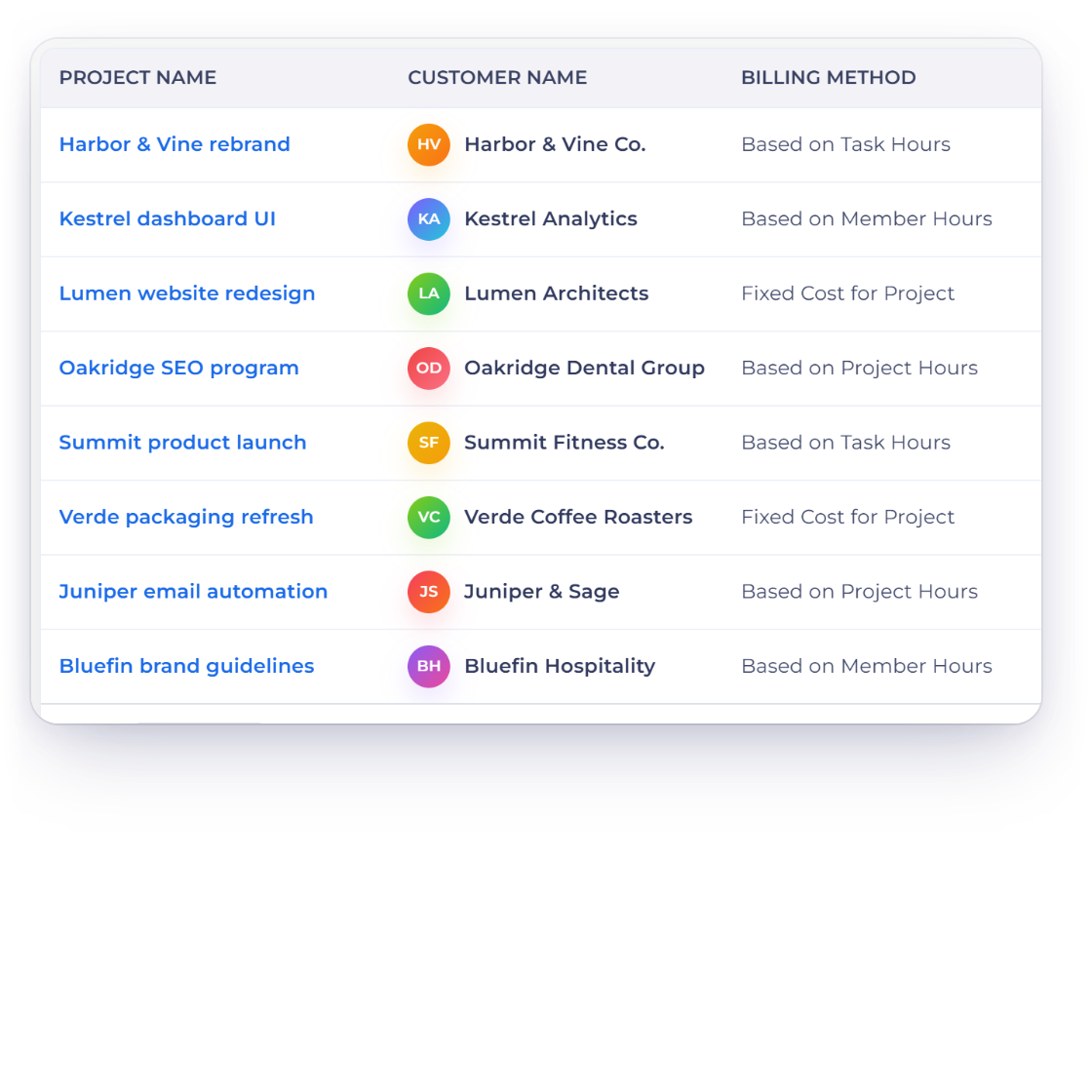
The Invoice Crowd projects list showing each project's customer, billing method and rate in one table.

What is inside

Set the rate once, and every invoice off that project follows it

A project ties one customer to one billing method. Tasks and assigned members carry the rates that method reads, and the billable hours you log become invoice lines laid out the way that client wants them.

Setting up the job

One customer, one method

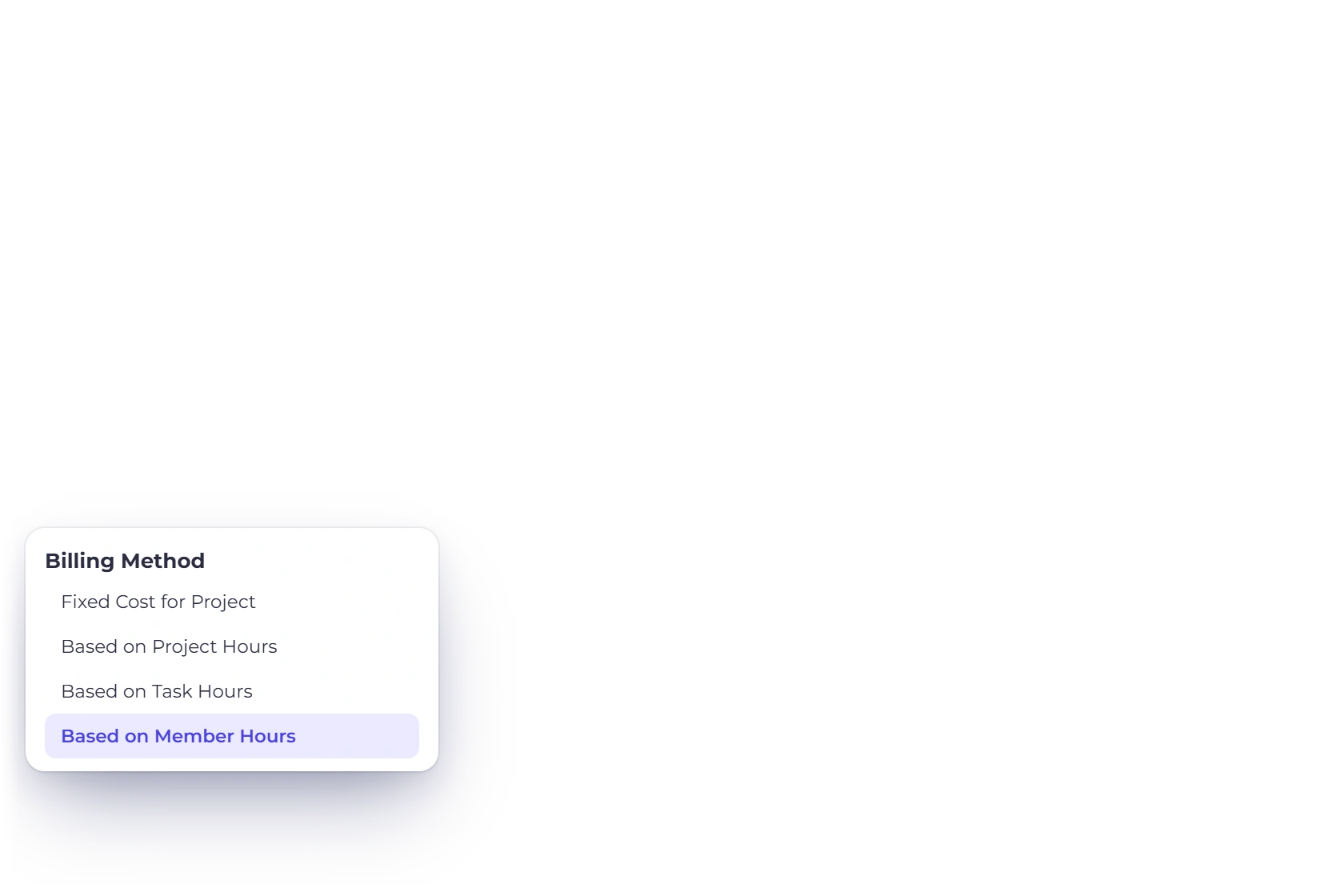
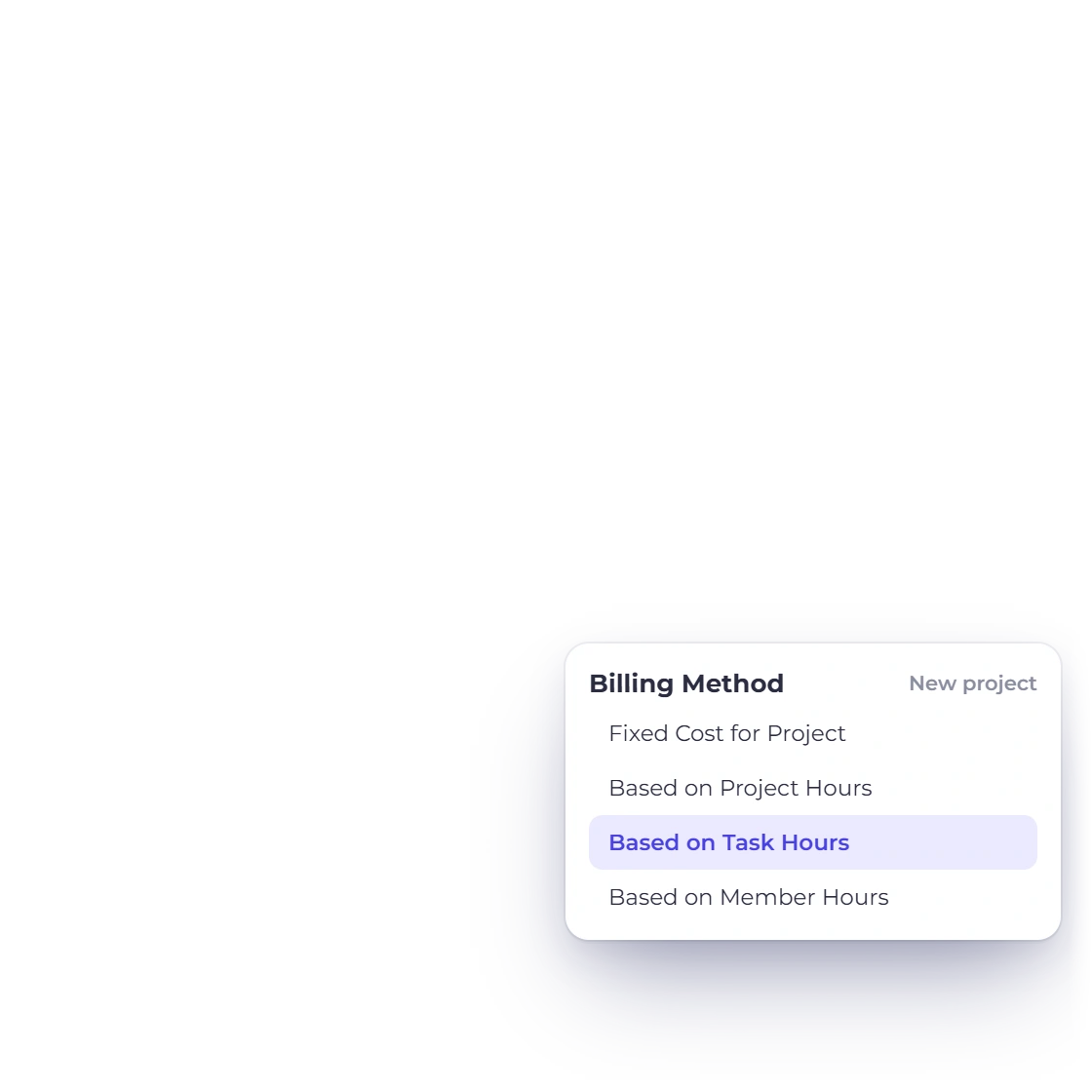
Creating a project in Invoice Crowd by picking the customer and one of four billing methods.

Pick the customer, then pick how it bills

A project belongs to one customer and carries one billing method chosen from four: Fixed, Project hours, Task hours and Member hours. Fixed and Project hours ask for the amount on the create form. Task hours takes its rate from each task and Member hours from each team assignment. The method sits on the project rather than on each invoice, so every bill raised from it follows the same rule.

  • Fixed ignores hours; the other three price them
  • Currency comes from the business profile it was created under
  • One customer per project, so internal work needs a customer record

What a project holds, and what a task holds

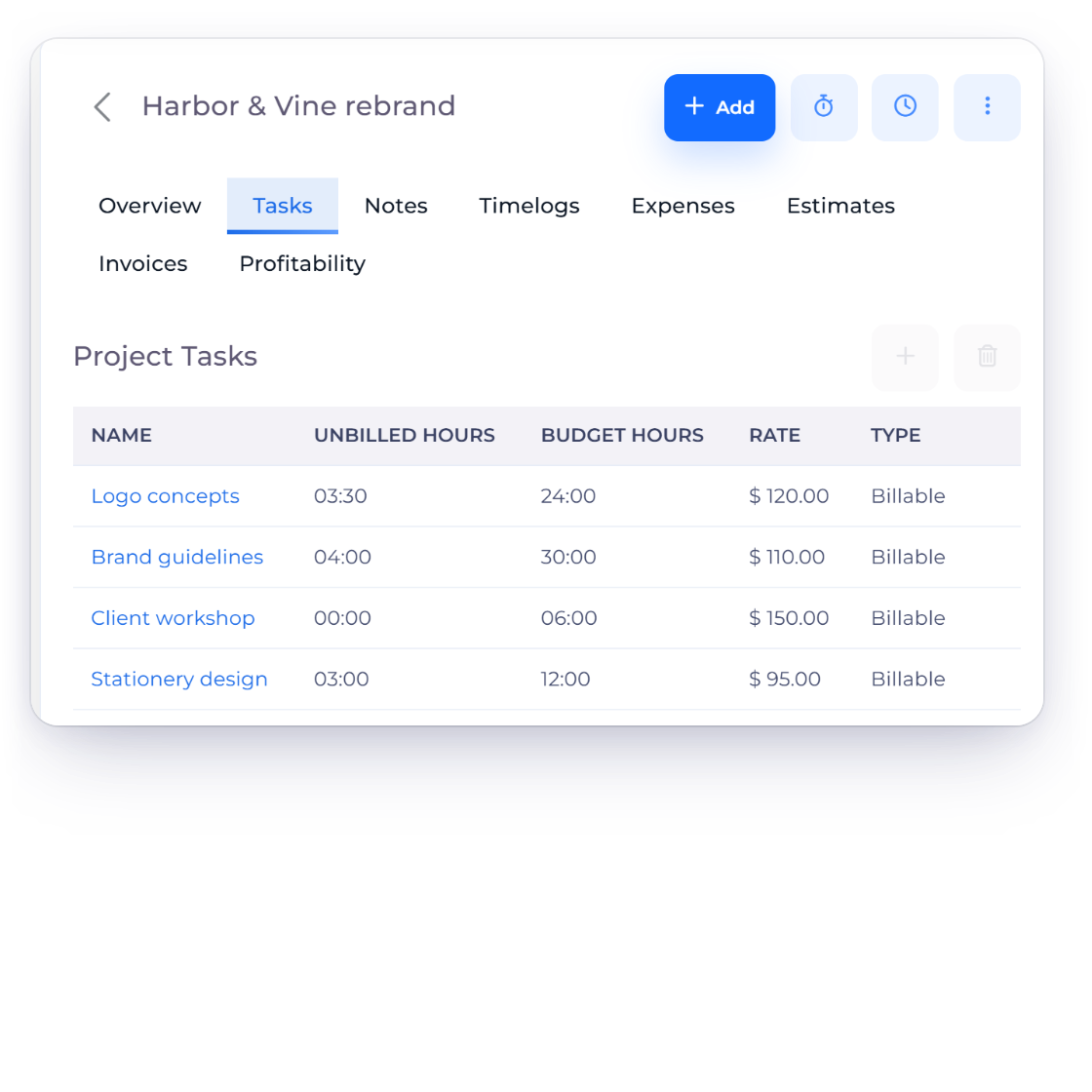
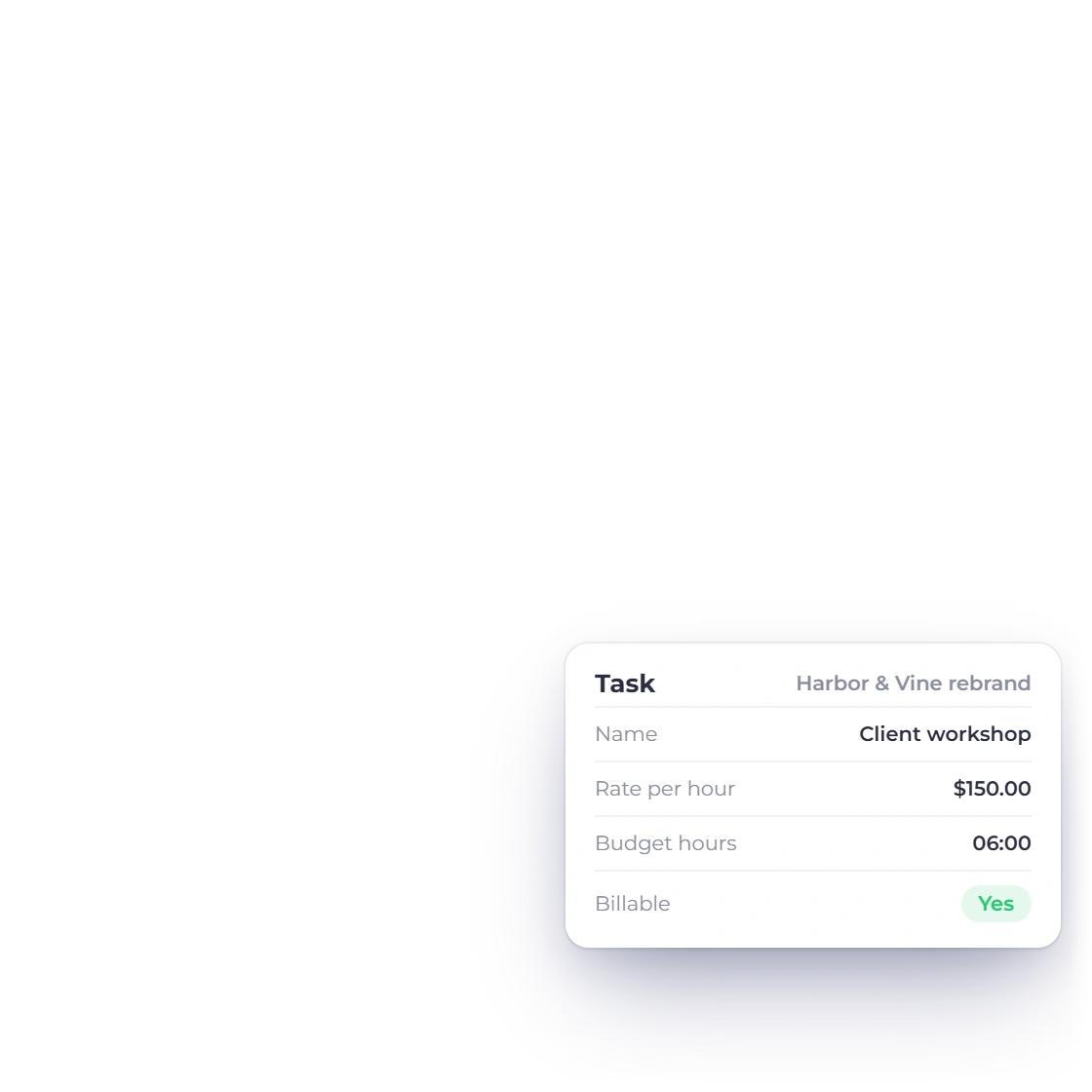
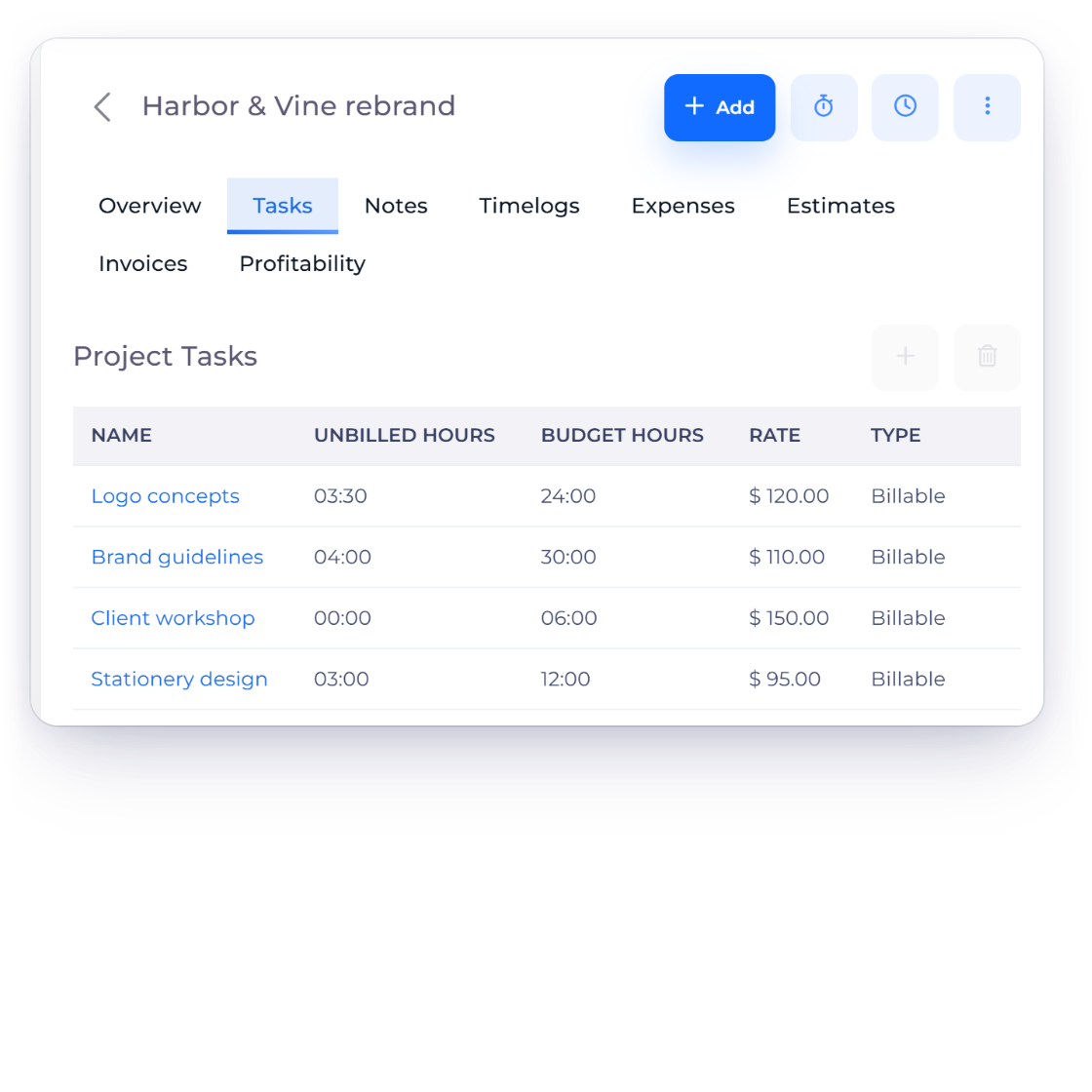
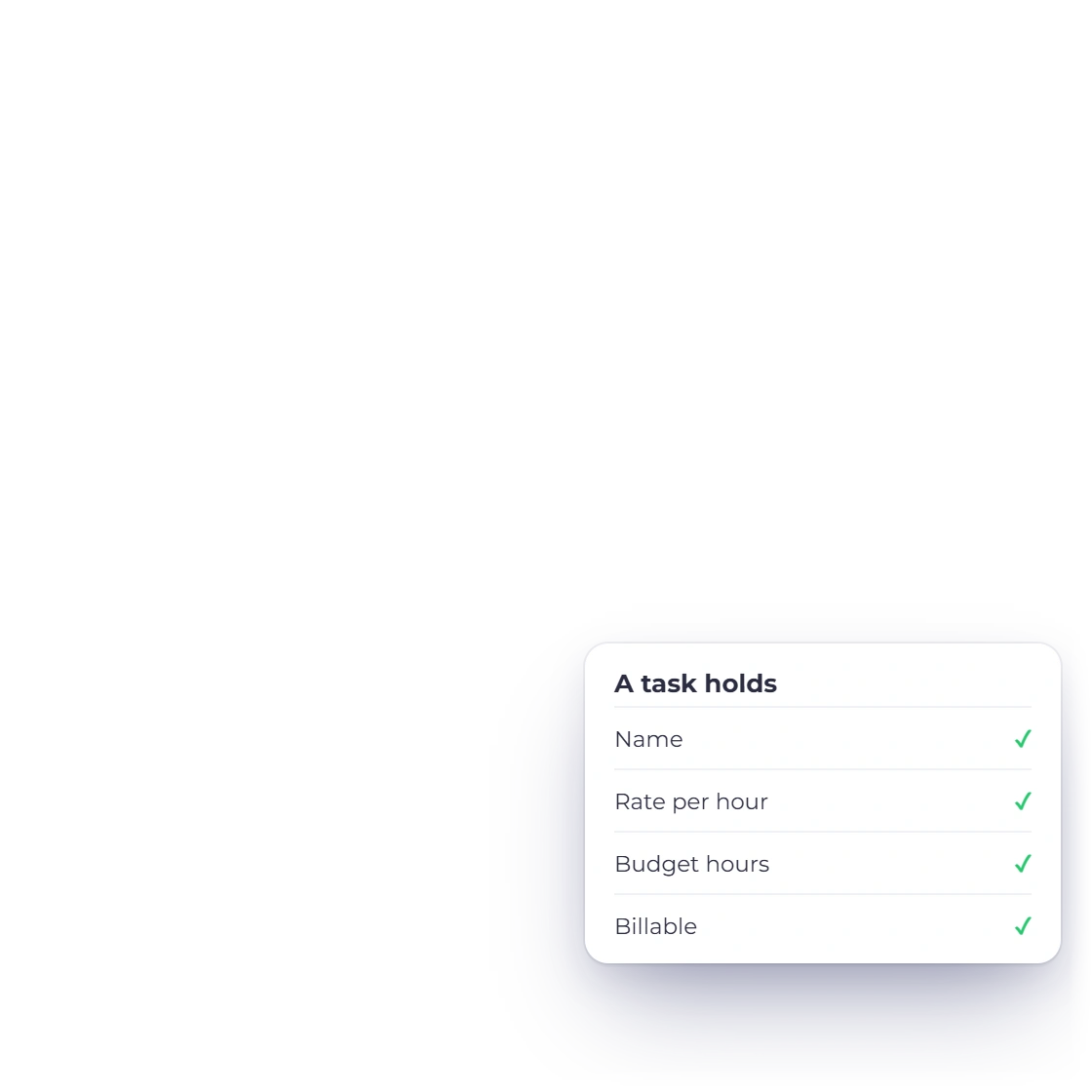
A project holds a name, an optional description, its customer, the billing method, the cost or rate, any custom fields you have defined, and up to three budgets. A task holds a name, an optional hourly rate, an optional hour budget, a billable flag and an active or inactive status. That is the whole model, and it is flat on purpose.

  • Cost or rate is required for Fixed and Project hours
  • A task rate is required when the project bills by Task hours
  • Projects and tasks go inactive rather than getting deleted

Running the work

Rates, access and charts

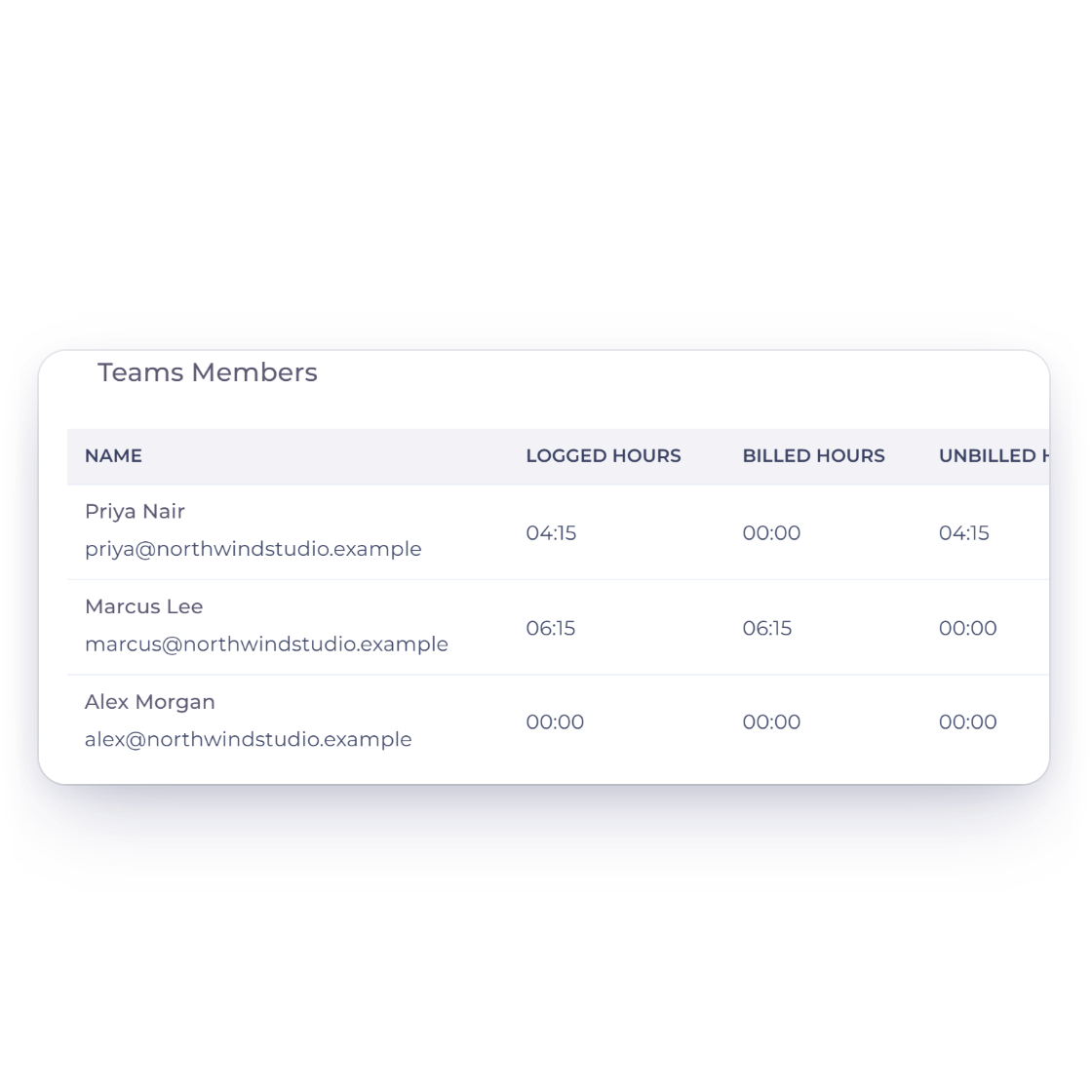
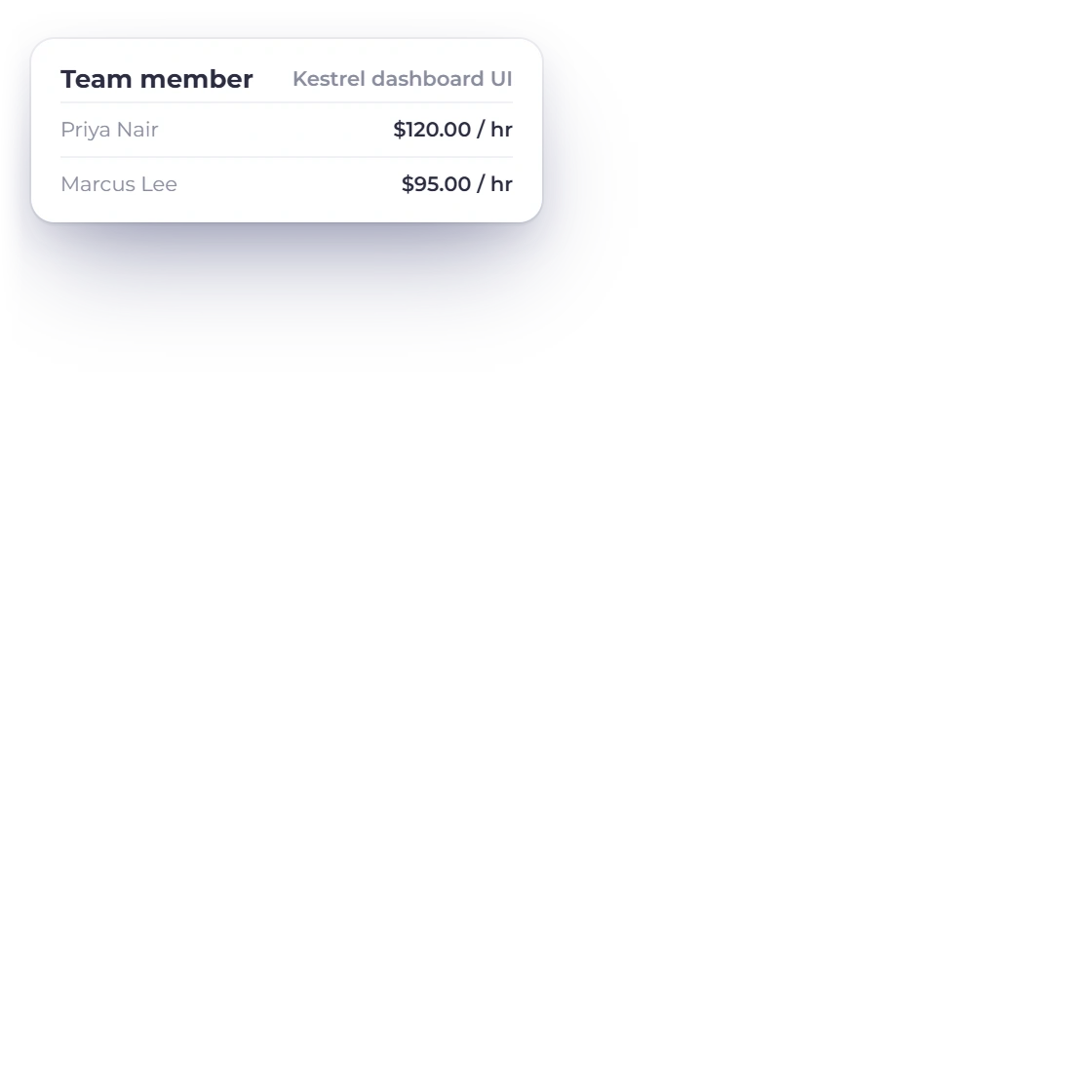
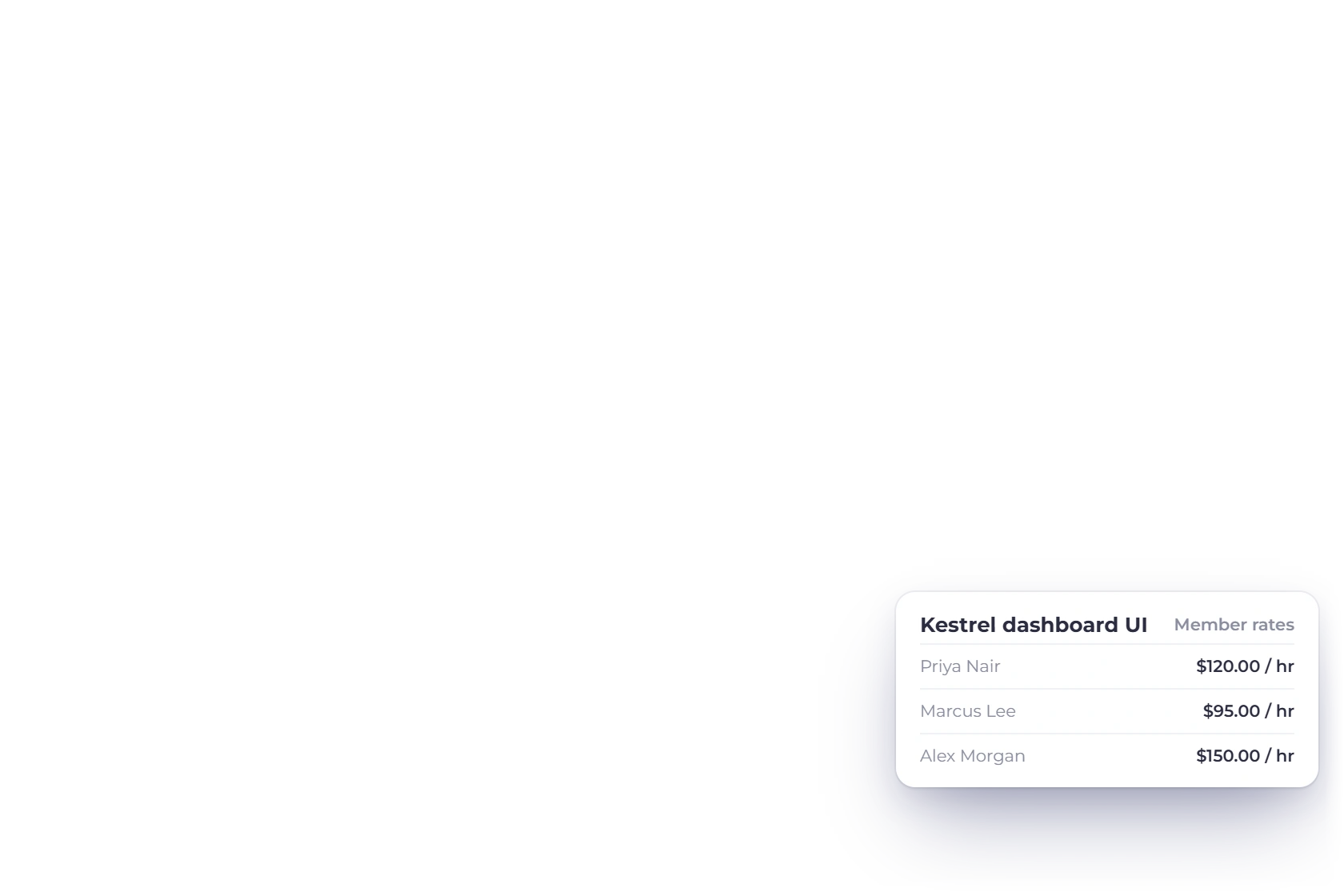
Assigning team members to an Invoice Crowd project, each with their own hourly rate.

Assign the team with their own rates

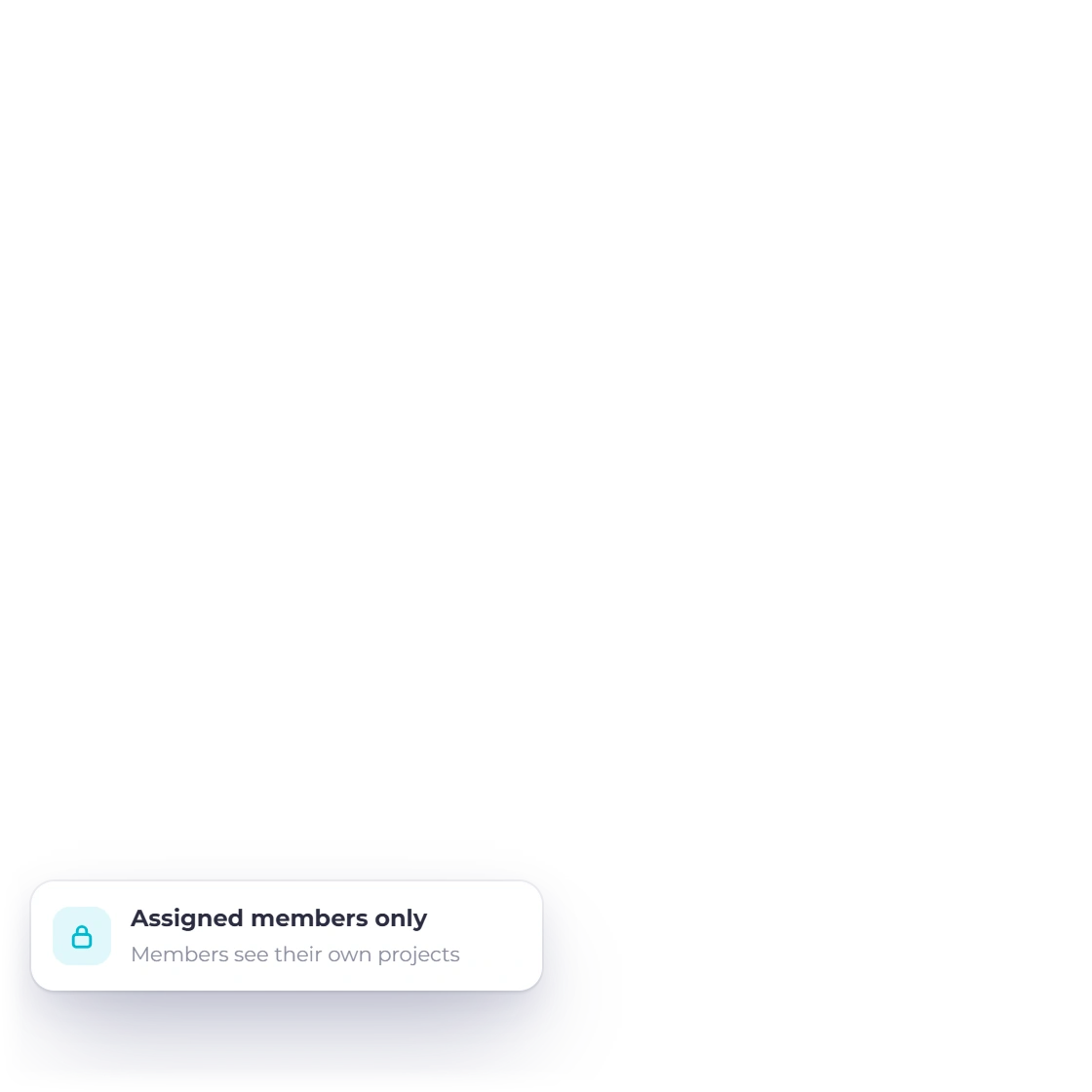
Team members are assigned to a project with an hourly rate and an optional budget each. The assignment is also the access boundary: a member reaches a project only when they are assigned to it, and only within the customers their permissions cover. Under Member hours those per-assignment rates price the invoice, and a grouped line covering several people uses an exact weighted rate.

  • Two people on the same task bill at their own numbers
  • Rates are read when the invoice is built, not when time is logged
  • The account owner is assigned on creation and cannot be removed

Watch the hours and the margin on one project

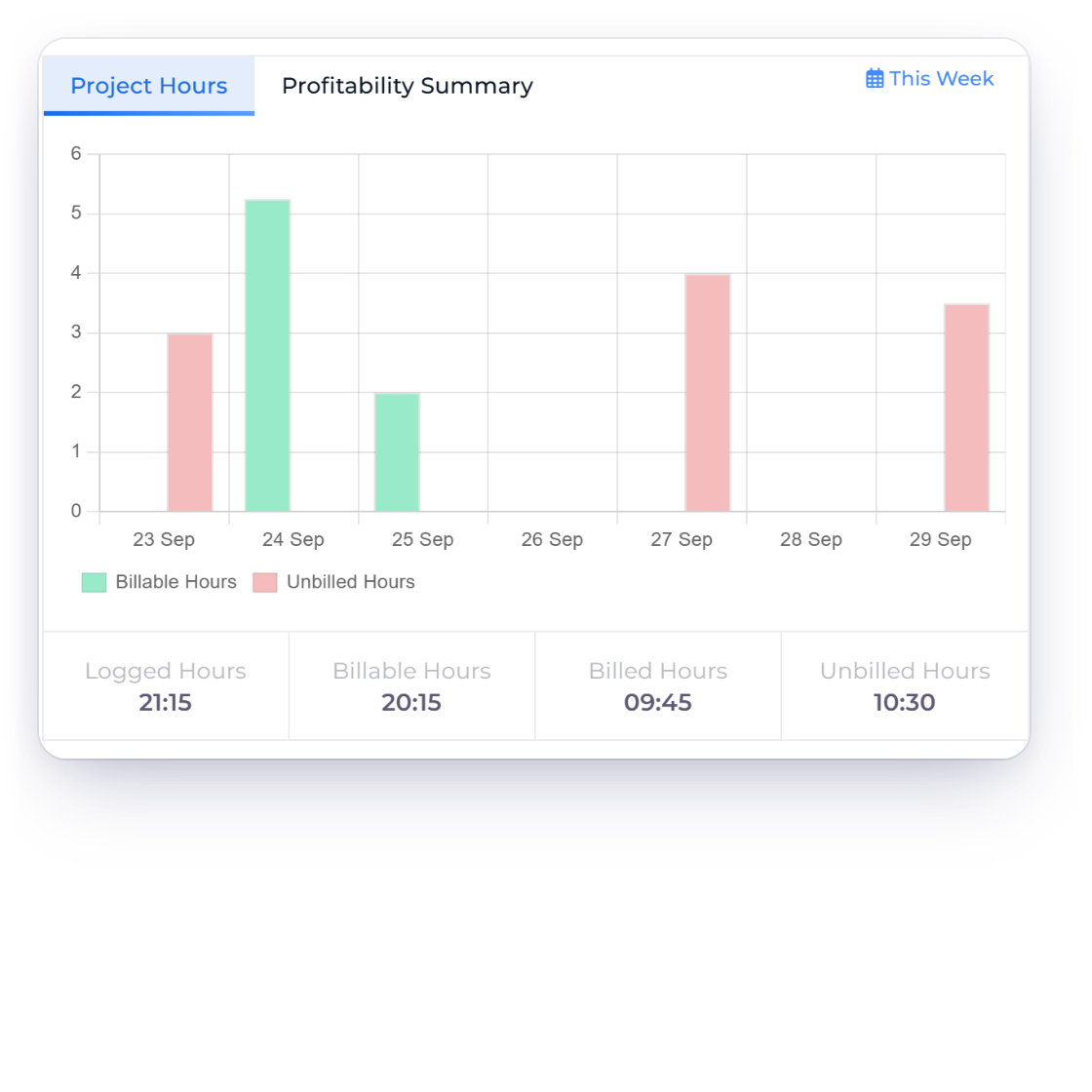
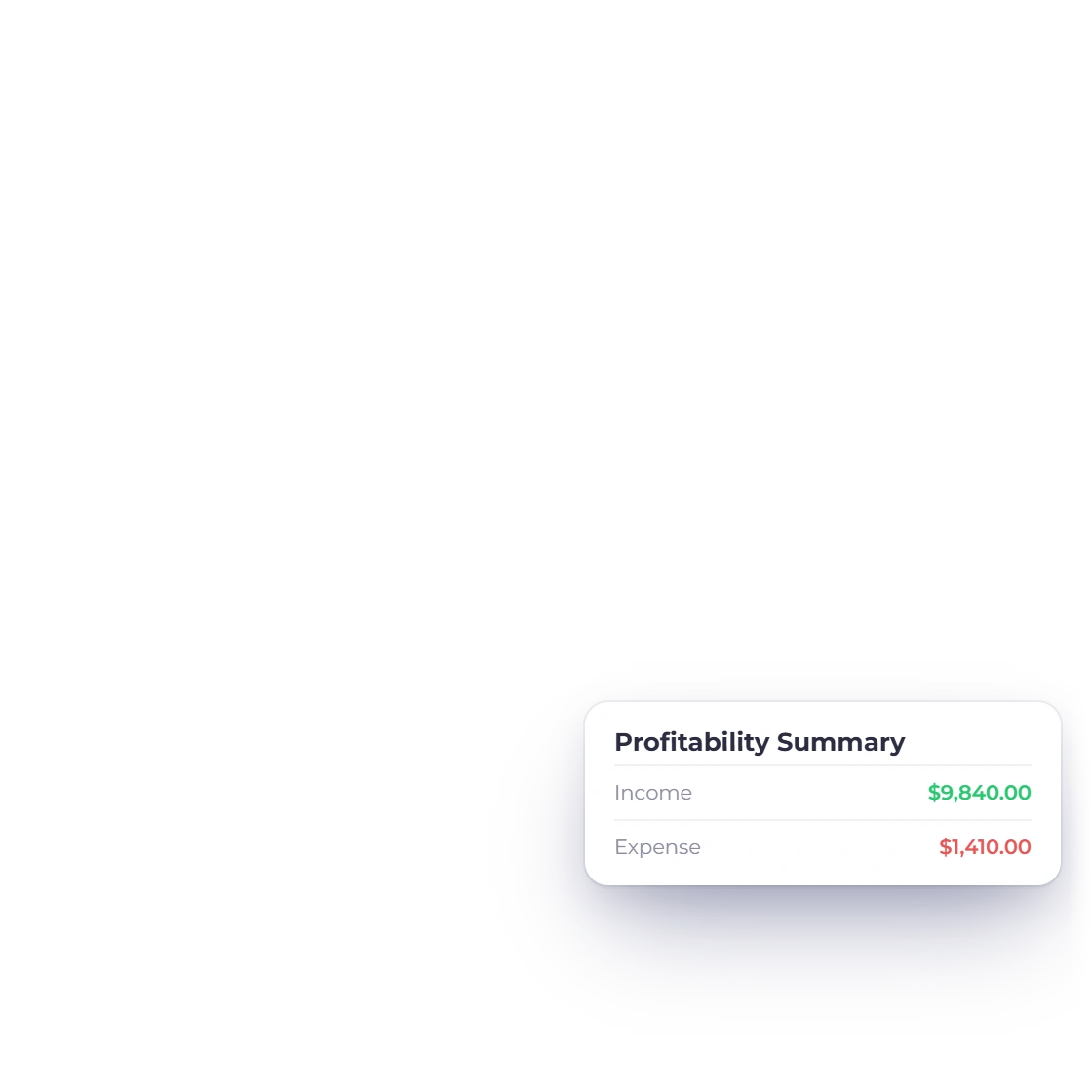
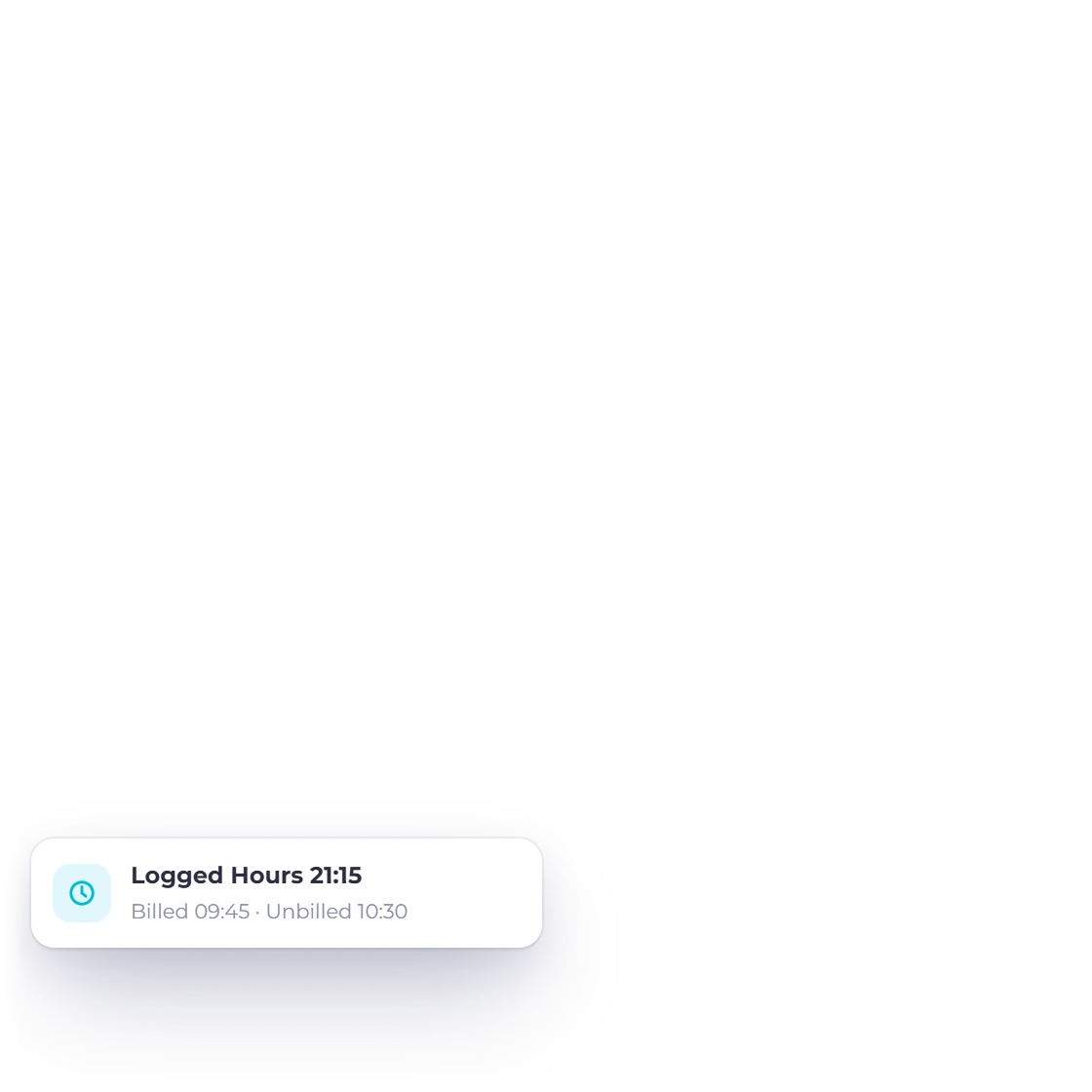
Opening a project gives tabs for overview, tasks, time logs, expenses, invoices, estimates and notes, plus two charts built from those same records. The hours chart plots time logged over a period. The profitability view sets income against the expenses and revenue recorded on the project. An expense filed against a job counts toward that job's cost, and the invoices and estimates raised from it stay linked to it.

  • Notes stay with the project for context no task name fits
  • The time-log list remembers the filter you saved last
  • The header shows the project count against its plan allowance

Turning hours into invoices

Four layouts, one transaction

Selecting billable time logs in Invoice Crowd and creating an invoice from them.

Select the hours, get the invoice

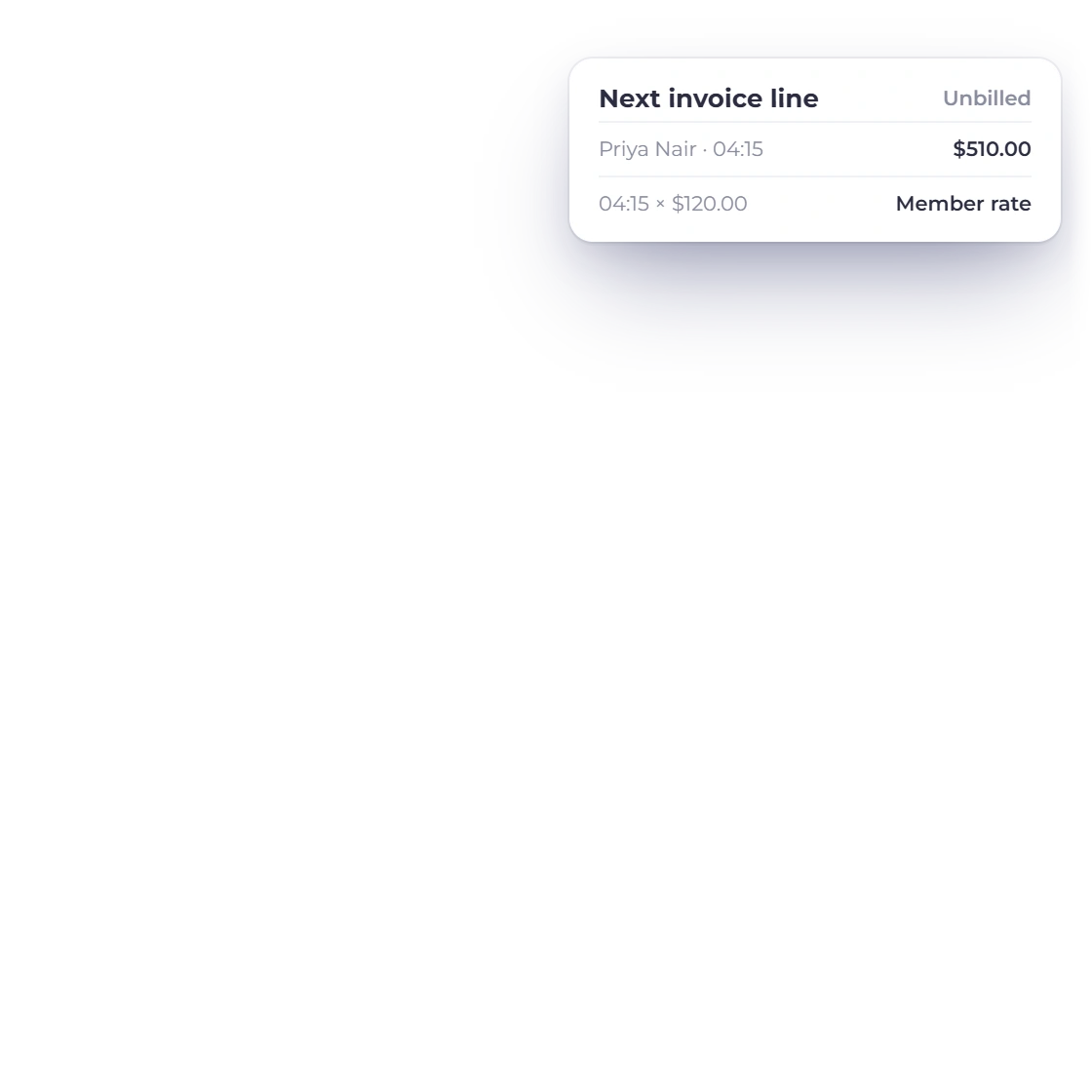
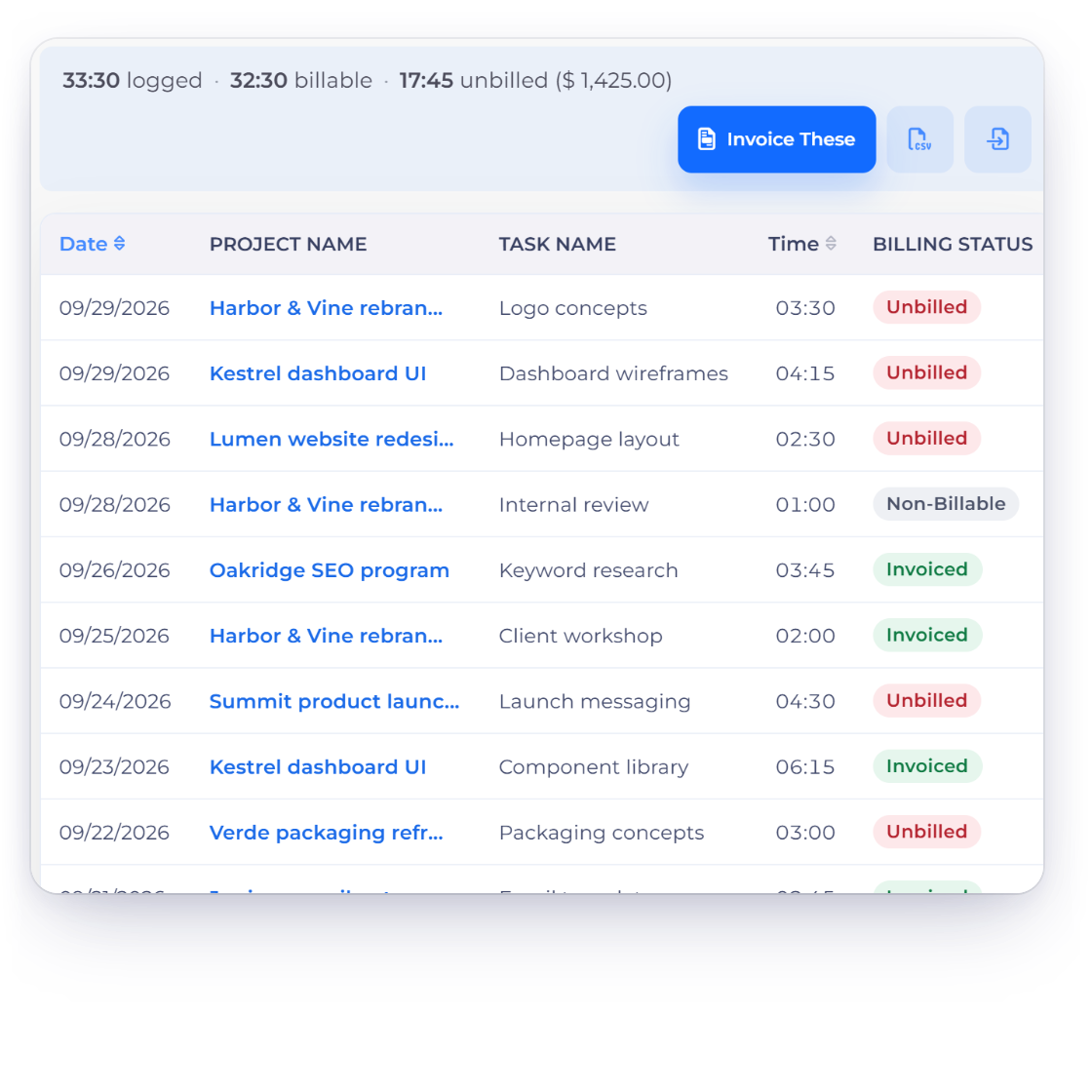
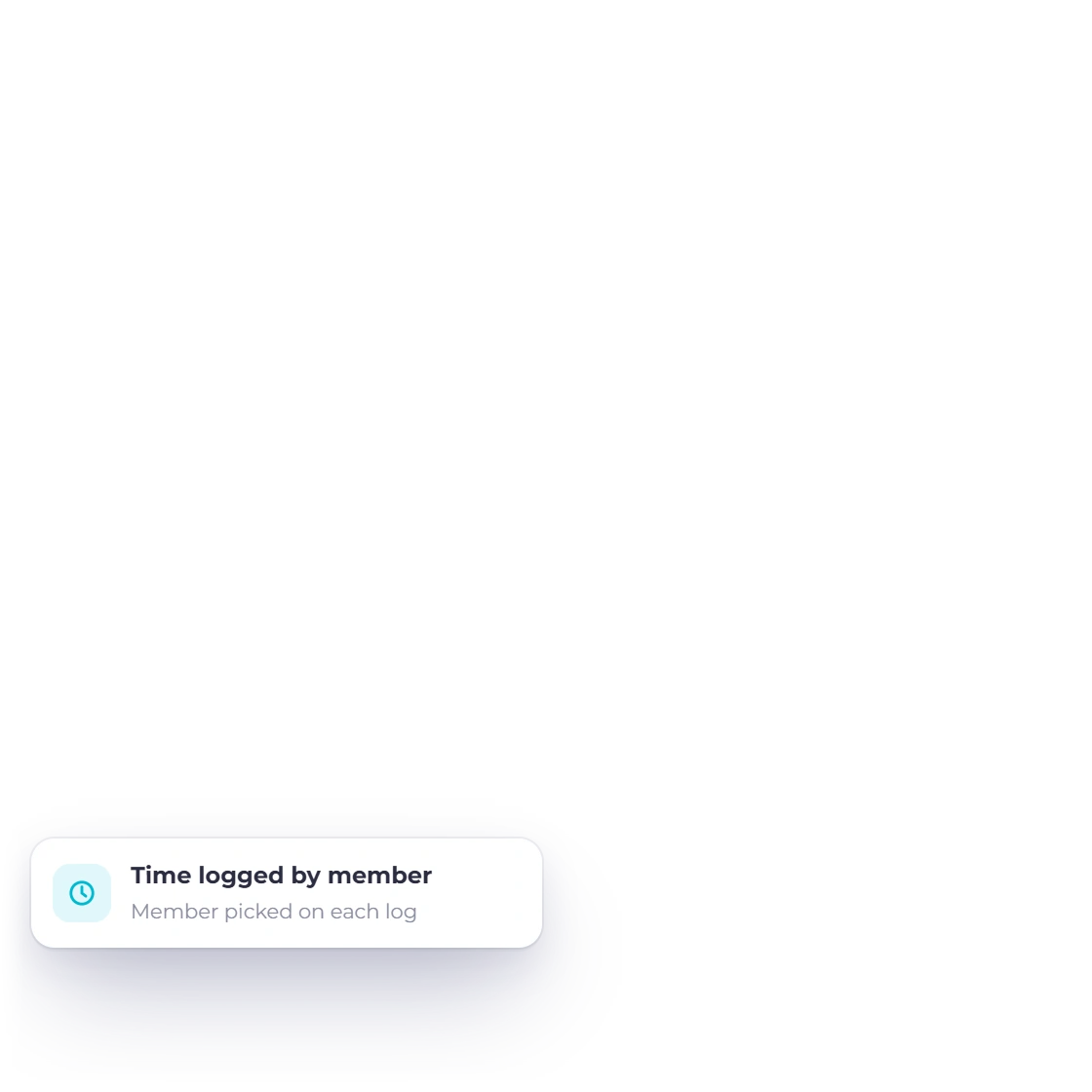
Select the project, its tasks or the individual time logs and use Create Invoice. Invoice Crowd builds the lines from the billable logs at the rate the billing method sets, marks each consumed log as invoiced, links it to the new invoice, and opens that invoice in the normal editor. The selection needs at least one billable, not-yet-invoiced log, and a fixed-cost project cannot be billed this way because its price does not come from hours.

  • Everything selected has to resolve to one customer
  • Line layout is a per-project setting, so each client sees what suits them
  • It runs as one transaction, and a repeat returns the same invoice

Where the guard rails are

This is a billing-first project layer rather than a planning tool. There is no Gantt chart, dependency map, kanban board or resource scheduler, and tasks carry no due dates, subtasks or per-task assignee. Editing is last-write-wins, so two people saving the same project at once are not warned and the later save survives. Manual time entries are not checked for overlap, so the same hour can be logged twice.

  • Deleting a time log is permanent, and an invoiced log locks
  • No project templates and no copying a task list forward
  • An estimate raised from a project links it but builds no lines from logs

Built in

The rest of the project screen

The four billing methods side by side, the budgets and custom fields you can add, and the smaller behaviours you meet once work is under way.

  • Fixed price

    A fixed cost on the project sets the amount. Hours are still logged against it, but they do not change what the job bills.

  • One project rate

    Project hours applies one hourly rate to every log on the project, which suits a single blended rate for the whole team.

  • Rate per task

    Task hours reads the rate from each task, so design can be billed at a different number to development on the same project.

  • Rate per member

    Member hours reads the rate from each team assignment, so senior and junior time is priced apart on the same invoice.

  • Custom project fields

    Define a field once for the account and fill it per project: label, data type, default value, help text, mandatory and on by default.

  • Cost and hour budgets

    Optional cost and revenue budgets sit on the project, with an hours budget entered as HH:MM in total, per task or per staff member.

  • Hours chart

    The hours chart plots time logged against the project over one week, one month, three, six or twelve months, or a custom range.

  • Profitability view

    The profitability view sets income against the expenses and revenue on the project over one financial year, two financial years, six or twelve months.

  • Four invoice layouts

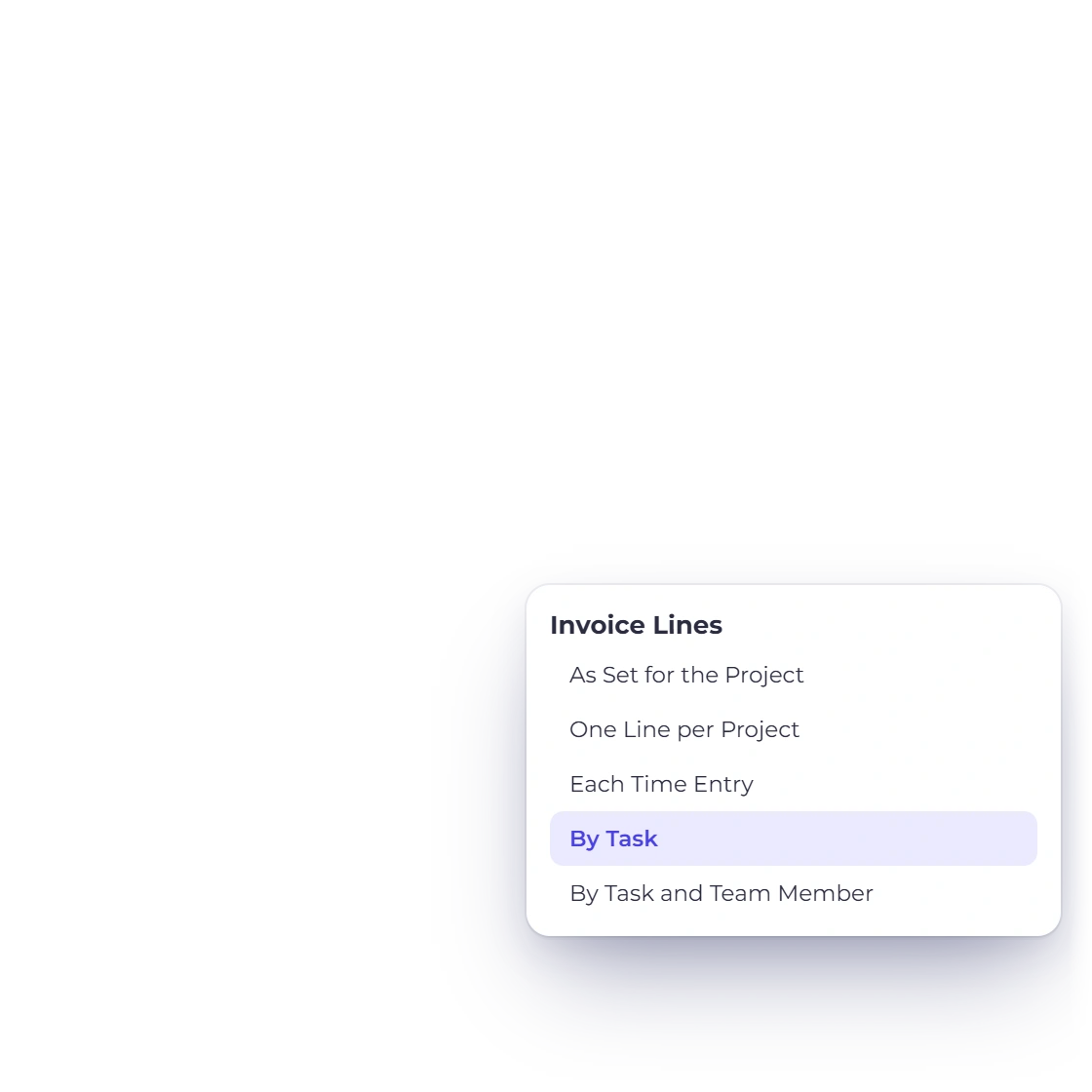
    Per project: all selected hours on a single line, one line per time log, one line per task, or one per task split by member.

  • Server-side pagination

    Tasks, time logs, expenses, invoices, estimates and notes all paginate on the server at 10, 25, 50 or 100 rows.

  • Bulk project changes

    Select rows on the projects list to bulk update status and team assignment, create invoices or delete. A selection out of scope is refused whole.

  • Read-only client view

    Customers invited to the customer portal get a read-only view of their own projects and timesheets. They see the work behind a bill and change none of it.

Questions

Projects & Tasks, answered

Does Invoice Crowd do project management with invoicing?

Yes. Invoice Crowd keeps projects, tasks, team assignments and time logs in the same account as the invoicing, so billable hours become invoice lines without exporting them to another tool. Each project is tied to one customer and one billing method (fixed, project hours, task hours or member hours) and that method decides the rate applied when tracked work is billed.

How does Invoice Crowd decide what to charge for a project?

The billing method on the project decides the rate. Fixed uses a set price for the whole job and ignores hours entirely. Project hours applies one hourly rate to all logged time. Task hours takes the rate from each task, and Member hours takes it from each assigned team member, so senior and junior time can be priced apart on the same invoice.

Can invoices from a project be laid out differently for different clients?

Yes. Line-item layout is a per-project setting in Invoice Crowd with four options: all selected hours on a single line, one line per individual time log, one line per task, or one line per task split by team member. The same tracked hours can be presented as one summary figure for one client and in full detail for another.

Can a team member see only the projects they work on?

Yes. Access follows the project assignment: a team member reaches a project only when assigned to it, and only within the customers their permissions cover. The account owner is assigned automatically on creation and cannot be removed. Customers invited to the customer portal see their own projects and timesheets read-only, so the hours behind a bill can be shown without letting anyone outside the business change them.

Does Invoice Crowd have Gantt charts, kanban boards or task due dates?

No. Tasks in Invoice Crowd are flat records: a name, an optional hourly rate, an optional hour budget, a billable flag and an active or inactive status. There are no subtasks, dependencies, due dates or per-task assignees, and no Gantt chart, kanban board or resource scheduler. People are assigned to a project rather than to individual tasks, because the purpose is to price work rather than schedule it.

Can I see whether a project made money?

Yes. Each project carries a profitability view that sets income against the expenses and revenue recorded against it, over one financial year, two financial years, six months or twelve months. Invoices and estimates raised from a project stay linked to it, so the figures come from the documents and expenses already recorded against that project rather than from a forecast kept by hand. A separate hours chart plots logged time over one week to twelve months, or a custom range.

What happens to a time log after it has been invoiced?

It locks. A time log that has been billed cannot be edited or deleted in Invoice Crowd, and it is excluded from any later invoice built from that project, so the same tracked hours are not billed twice through that route. Logs that have not been invoiced can still be edited or deleted, but deletion is permanent. There is no recycle bin for time logs.

Bill the hours you have already logged

Create a project, pick how it bills, assign your team with their rates, then turn this month's billable logs into an invoice.

  • No card required to start
  • Your data stays yours
  • Cancel anytime