
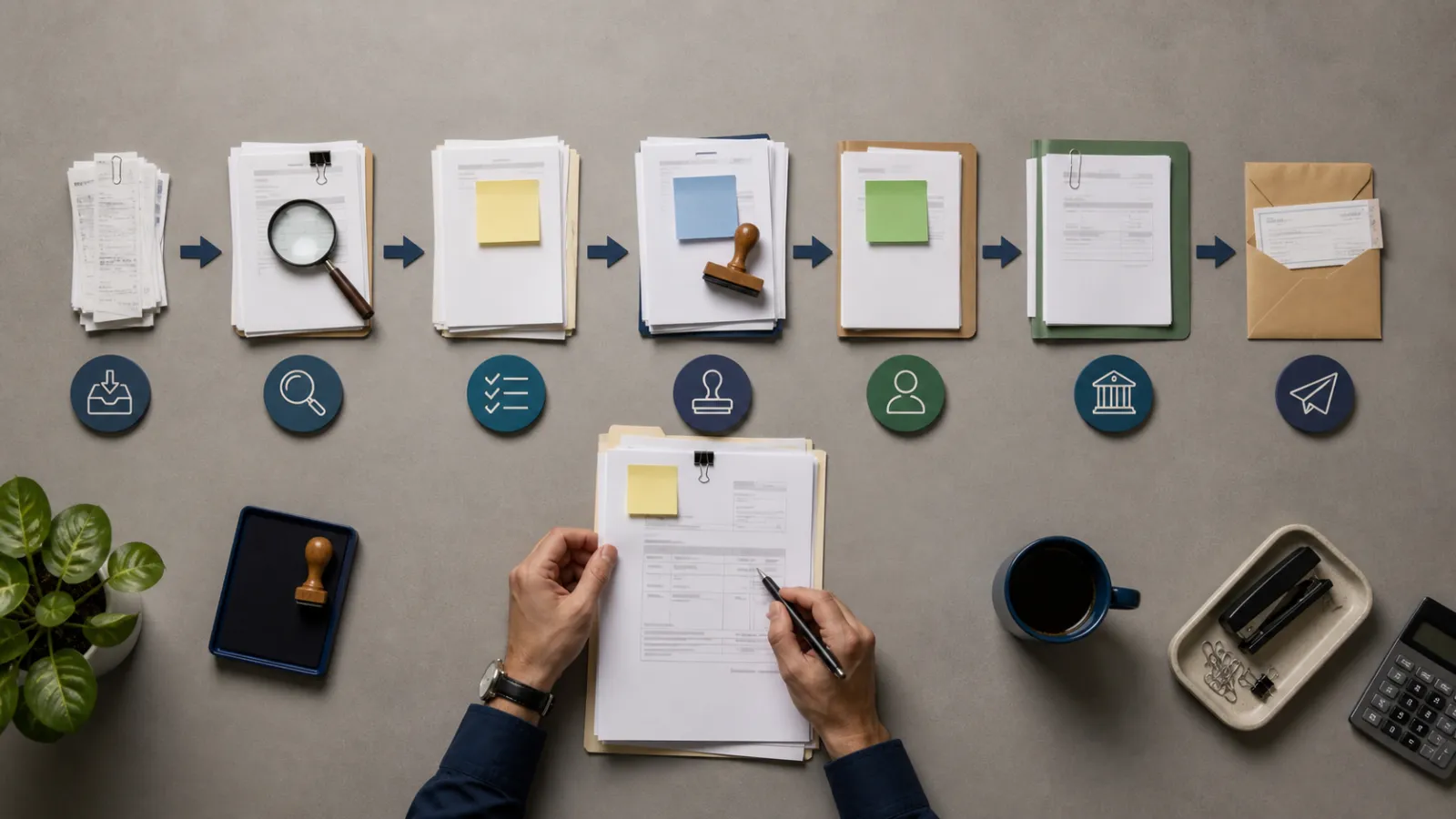
Accounts payable is the controlled path from receiving a supplier bill to paying it once, on time, from the right account, with evidence that the purchase was real and approved.
It is often described as data entry followed by payment. That skips the part that protects cash. A good process verifies the supplier, matches what was ordered to what arrived, separates approval from payment where possible, and closes the loop at the bank.
The seven steps
- Onboard the vendor. Confirm legal name, tax details, remittance address, bank instructions and the person authorized to request changes.
- Capture the bill. Record supplier, invoice number, dates, currency, lines, tax, total, due date and purchase reference. Keep the original document attached.
- Check for duplicates. Search the vendor plus invoice number and compare amount, date and purchase order. File names are not reliable identifiers.
- Match and code. Compare the purchase order, receiving evidence and bill where they exist. Code the expense, asset, inventory and tax treatment.
- Approve the liability. The budget owner confirms the purchase and accounting confirms the coding. Exceptions go back with a named reason.
- Schedule and release payment. Pay according to terms, cash priority and approved method. Reconfirm unusual bank-detail changes outside the email thread that requested them.
- Reconcile and review. Match the payment to the bill and bank movement, then review the payable aging for overdue, disputed and credit-balance vendors.
The control at each step
| Risk | Control | Evidence retained |
|---|---|---|
| Fake or wrong supplier | Verified vendor record and change callback | Approval and verification date |
| Duplicate bill | Supplier plus invoice-number check | Duplicate warning or review note |
| Wrong quantity or price | Purchase order and receipt match | Matched references and exception |
| Wrong account or tax | Coding review | Account, tax code and reviewer |
| Unauthorized payment | Approval threshold and payment release | Approver, date and method |
| Payment not recorded | Bank reconciliation | Matched bank transaction |
A small-business approval matrix
Approval should reflect risk, not create a maze. A practical starting point is:
- Routine bill within an approved purchase order: budget owner plus accounts payable review.
- Bill without a purchase order: budget owner explains the exception before approval.
- Amount above a defined threshold: add owner or finance approval.
- New vendor or changed bank details: independent verification before any payment.
- Credit note or disputed amount: keep it out of the payment run until applied or resolved.
A two-person business cannot separate every duty. It can still separate time. One person enters and prepares the run, then the owner reviews the supplier, amount and destination before release.
Three-way matching
For purchases that began with an order, compare three records:
- The purchase order says what was authorized.
- The receiving evidence says what arrived or was completed.
- The supplier bill says what you are being asked to pay.
A perfect match can move to approval. A price difference, short delivery or duplicate quantity becomes an exception with an owner. Do not change the purchase order after the fact merely to make the match pass. That destroys the evidence of what was originally authorized.
Payment timing
Paying every bill immediately is not always disciplined. It gives away agreed credit terms and can create a cash squeeze. Paying late is not disciplined either. It damages supplier trust and can lose discounts.
Build payment runs from due dates and cash priority. Highlight early-payment discounts only when the return is worth taking and the invoice is not disputed. Keep urgent manual payments rare, because exceptions are where duplicate and fraudulent payments hide.
Month-end review
The payable aging is the final control. Review:
- overdue bills that should have been paid or disputed,
- old drafts that were never approved,
- vendor credits not applied to bills,
- debit balances that may be prepayments or mistakes,
- bills entered after the period that relate to goods already received, and
- payments in transit that have not reached the bank.
Run a connected accounts payable process in Invoice Crowd
Invoice Crowd connects vendors, purchase orders, bills, vendor credits, approvals, payments made and financial records. Each stage keeps its own date, balance and supporting context, giving small businesses a clearer path from supplier setup through month-end review.
Explore bills and accounts payable, vendor management and payments made, or start with Invoice Crowd.
Frequently asked questions
What are the main steps in accounts payable?
Vendor onboarding, bill capture, duplicate checking, matching and coding, approval, payment release, and bank reconciliation with aging review. Each step addresses a different cash or reporting risk.
What is three-way matching?
Comparing the purchase order, evidence of what was received, and the supplier bill before payment. It catches unauthorized prices, missing quantities and duplicate billing while preserving the original purchase decision.
Should every bill need a purchase order?
Not always. Rent, utilities, taxes and other recurring obligations may follow a standing approval. Material discretionary purchases benefit most from a purchase order because approval happens before the money is committed.
How do I prevent duplicate supplier bills?
Check the supplier and invoice number together, then compare amount, date and purchase reference. Also restrict invoice entry to one intake path so the same bill is not entered once from email and again from a portal.
Who should approve a vendor payment?
The budget owner should confirm the purchase, accounting should confirm coding, and a person with payment authority should release it. Very small teams can separate preparation and final review even when they cannot assign three people.
What should be reviewed at month end?
The payable aging, overdue or disputed bills, unapplied vendor credits, debit-balance vendors, unapproved drafts, payments in transit, and goods received before period end that may need a bill or accrual.