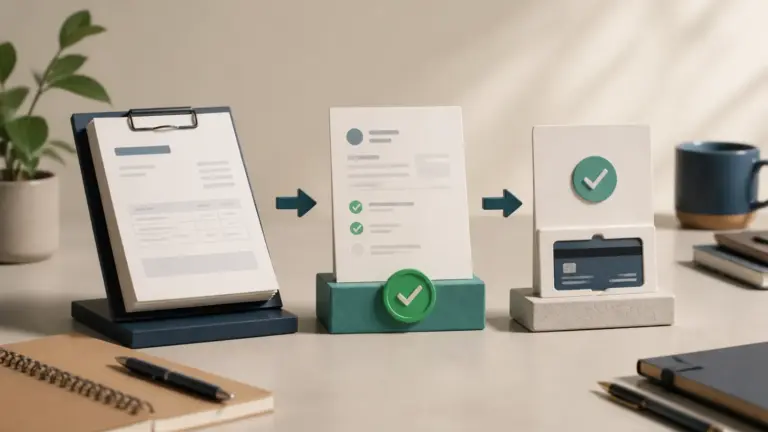

Short answer: State the full agreed price, identify the deposit amount and trigger, issue a deposit request or invoice that follows local tax rules, allocate the payment to the customer and contract, then show the deposit clearly when billing the remaining balance. Never make the customer guess whether the deposit reduced the final total.
A deposit does two jobs: it confirms commitment and changes the money already received before final delivery. Confusion begins when the proposal, deposit invoice, payment and final invoice each show a different version of the price. One schedule should connect all four.
Deposit, retainer and partial payment are not identical
Teams often use these words casually, but the agreement and accounting treatment can differ. A deposit may reserve work and apply to the final price. A retainer may secure availability or prepay future services. A partial payment can simply settle part of an invoice already due.
Use the term that matches the contract and local law. The invoice software should preserve the amount and allocation, but it cannot decide whether money is refundable, earned or taxable without the business rule.
| Term | Typical commercial purpose | Question to resolve |
|---|---|---|
| Deposit | Commitment before work or delivery | Is it refundable and when does tax apply? |
| Retainer | Reserve access or prepay a service relationship | When is it earned and how is usage shown? |
| Partial payment | Settle part of an issued invoice | Which invoice and balance does it reduce? |
| Milestone payment | Pay when a defined phase is reached | What evidence proves the milestone? |
Step 1: put the deposit in the agreement
The proposal or estimate should show the total price, deposit amount or percentage, due date or acceptance trigger, refund rule, cancellation rule and what happens to the remaining balance. A payment request cannot repair terms that were never agreed.
For variable work, state what the deposit is based on. If it is a fixed amount rather than a percentage, say so. If tax is calculated on the deposit in your jurisdiction, make that visible before the client approves.
- Full contract or estimated value
- Deposit amount or formula
- Date or event that makes it due
- Refund and cancellation treatment
- Tax treatment to be confirmed locally
- Remaining invoice schedule
Step 2: issue a document the client can reconcile
The deposit document should identify the customer, agreement or project, amount, currency, tax treatment, payment instructions and the relationship to the full price. Avoid an unexplained line called deposit with no reference to the work.
Some jurisdictions require an invoice when advance money becomes due or is received. Others distinguish a request for payment from a tax invoice. Ask an accountant which document and tax point applies before automating the workflow.
| Line on the document | Example meaning | Why it helps |
|---|---|---|
| Project reference | Website redesign proposal P-104 | Connects money to approved scope |
| Contract value | 10,000 in agreed currency | Shows the denominator for a percentage |
| Deposit due | 30 percent, 3,000 | Makes the requested amount unambiguous |
| Remaining schedule | 7,000 on acceptance | Prevents surprise at final billing |
Step 3: record payment against the right obligation
Payment evidence should include provider or bank reference, date, amount, currency, fees and the customer document it settles. A bank deposit with no customer allocation will be hard to apply later.
If the payment arrives in another currency, keep the customer amount and the accounting amount plus the rate and date used. Do not overwrite the contract currency with the bank settlement currency.
Step 4: show the deposit on the final invoice
The final billing should show the approved work, gross amount, deposit already applied and remaining amount due. The client should not have to subtract an old invoice manually, and the accounting system should not recognize the same deposit twice.
When the final scope changes, update the contract value through a documented change before calculating the balance. A percentage deposit tied to the original scope does not silently become the same percentage of every later change.
| Description | Amount |
|---|---|
| Approved project total | 10,000 |
| Approved additional service | 1,200 |
| Subtotal before deposit | 11,200 |
| Deposit already paid | -3,000 |
| Remaining amount due | 8,200 |
Cancellations, credits and refunds
Do not delete the deposit record when the project is cancelled. Apply the agreed policy: retain an earned amount, issue a credit, refund money or carry it to another engagement. Preserve the original charge, the decision and the resulting transaction.
Refunds should be verified through the payment provider or bank and reflected in the customer balance and books. A note saying refunded is not a substitute for a recorded cash movement.
- Read the signed refund and cancellation clause.
- Calculate earned, retained, credited and refundable amounts separately.
- Issue the appropriate credit or adjustment document.
- Process and verify any refund.
- Reconcile the customer balance, cash and accounting entries.
How Invoice Crowd fits
Invoice Crowd can carry deposit and staged-payment decisions from an estimate or proposal into invoices, and it supports partial or split payments with a running balance. The business still has to choose the legal and accounting treatment, verify the payment and apply credits or refunds through the correct process. Follow the relevant split and partial payments workflow, but keep the underlying business rule visible so automation does not become a black box.
Sources and scope
This workflow was reviewed in August 2026 against the current Invoice Crowd estimate, proposal, invoice and partial-payment contracts. Deposit tax points, refund rights and revenue treatment vary by jurisdiction and agreement.
Frequently asked questions
Should a deposit have its own invoice?
Often, but the correct document depends on local tax rules and the agreement. It should clearly identify the customer, project, deposit amount, tax treatment and remaining schedule.
How much deposit should I request?
Choose an amount that reflects commitment, upfront cost, capacity risk and industry norms. Explain whether it is fixed or a percentage and confirm refund treatment.
Is a deposit the same as a partial payment?
Not necessarily. A deposit is usually agreed before work or delivery, while a partial payment may simply settle part of an invoice already issued. The accounting and tax treatment can differ.
How do I show a deposit on the final invoice?
Show the full approved amount, any approved changes, the deposit already paid and the exact remaining balance. Link the deposit to the same customer and agreement.
What happens to a deposit if the project is cancelled?
Apply the signed cancellation and refund rule, then record any retained amount, credit or verified refund without deleting the original history.
Can Invoice Crowd accept a deposit?
It supports partial and split-payment workflows and can carry approved estimate or proposal data into invoices. The user remains responsible for local tax and refund treatment.