Skip to content

Features

Enter vendor bills, and post them to Accounts Payable in the same save

Bills are the purchase side of the same document editor you raise invoices in. Enter what a vendor has billed you, give it a due date, and with accounting switched on the total posts to Accounts Payable and to the expense category you picked. Convert an approved purchase order and the vendor, the lines and the totals come with it.

  • Posts to Accounts Payable
  • Converts approved purchase orders
  • Vendor payments, credits and portal

Last updated:

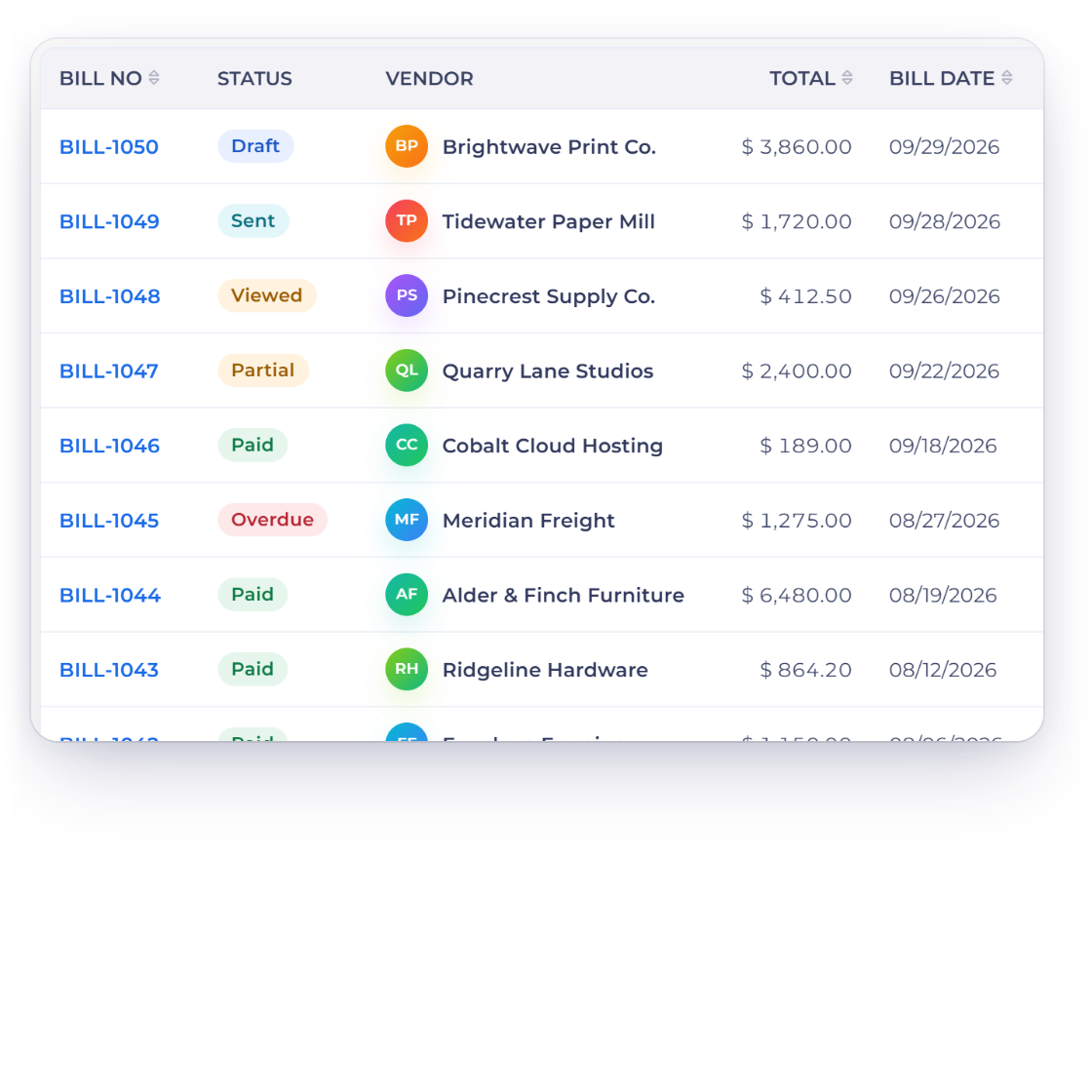
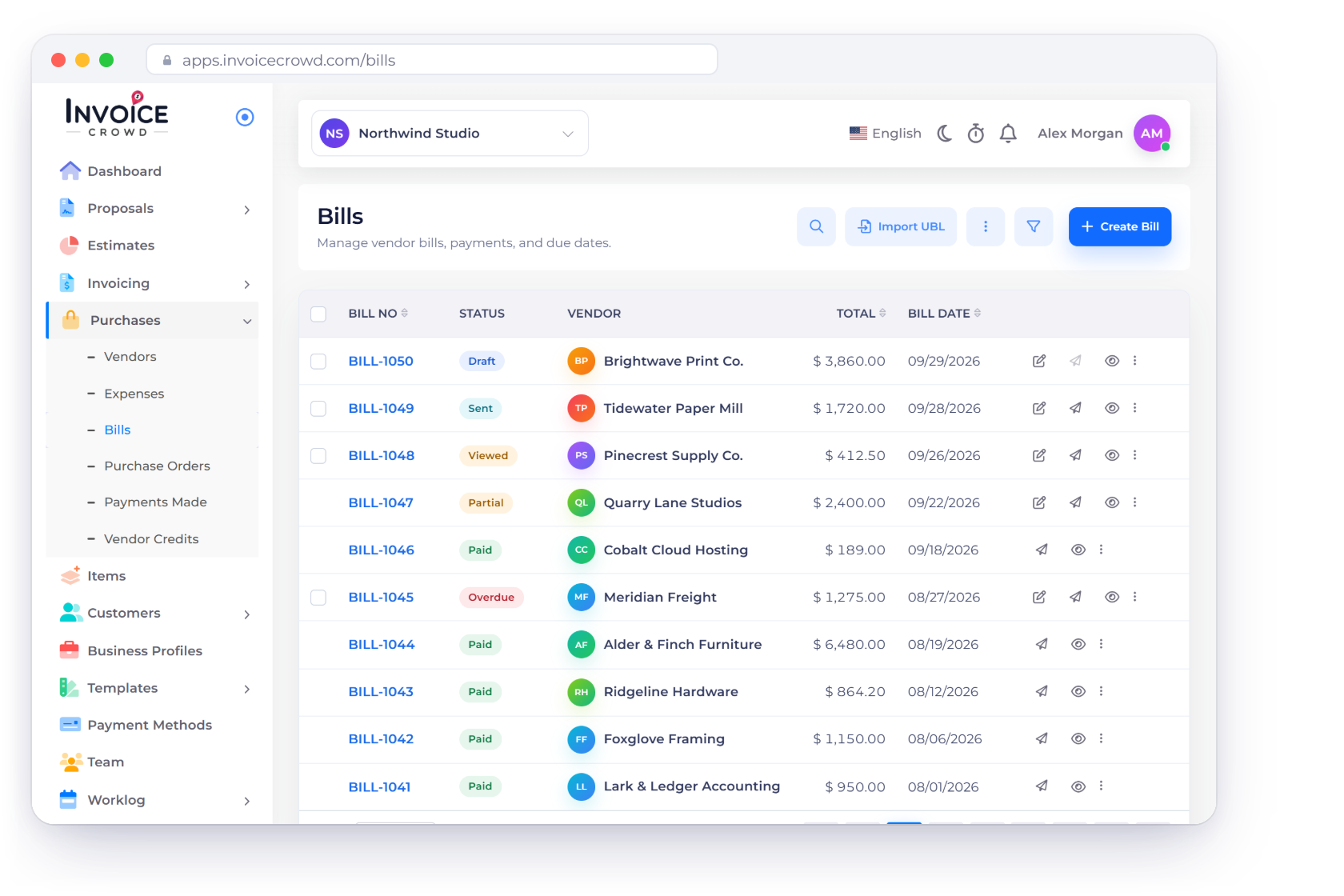
The Bills list in Invoice Crowd showing vendor bills with their status, vendor, total and bill date.

What is inside

Enter the bill once, and the rest of the account keeps up

Bills run the purchase side from end to end: entering what a vendor charged you, posting it to Accounts Payable and the expense category you picked, recording what you paid against it, and showing the vendor their own read-only copy.

Entering it

From scratch or from a PO

Entering a vendor bill in the Invoice Crowd bill editor, with the vendor selected and the first line items filled in.

The purchase side of the same editor

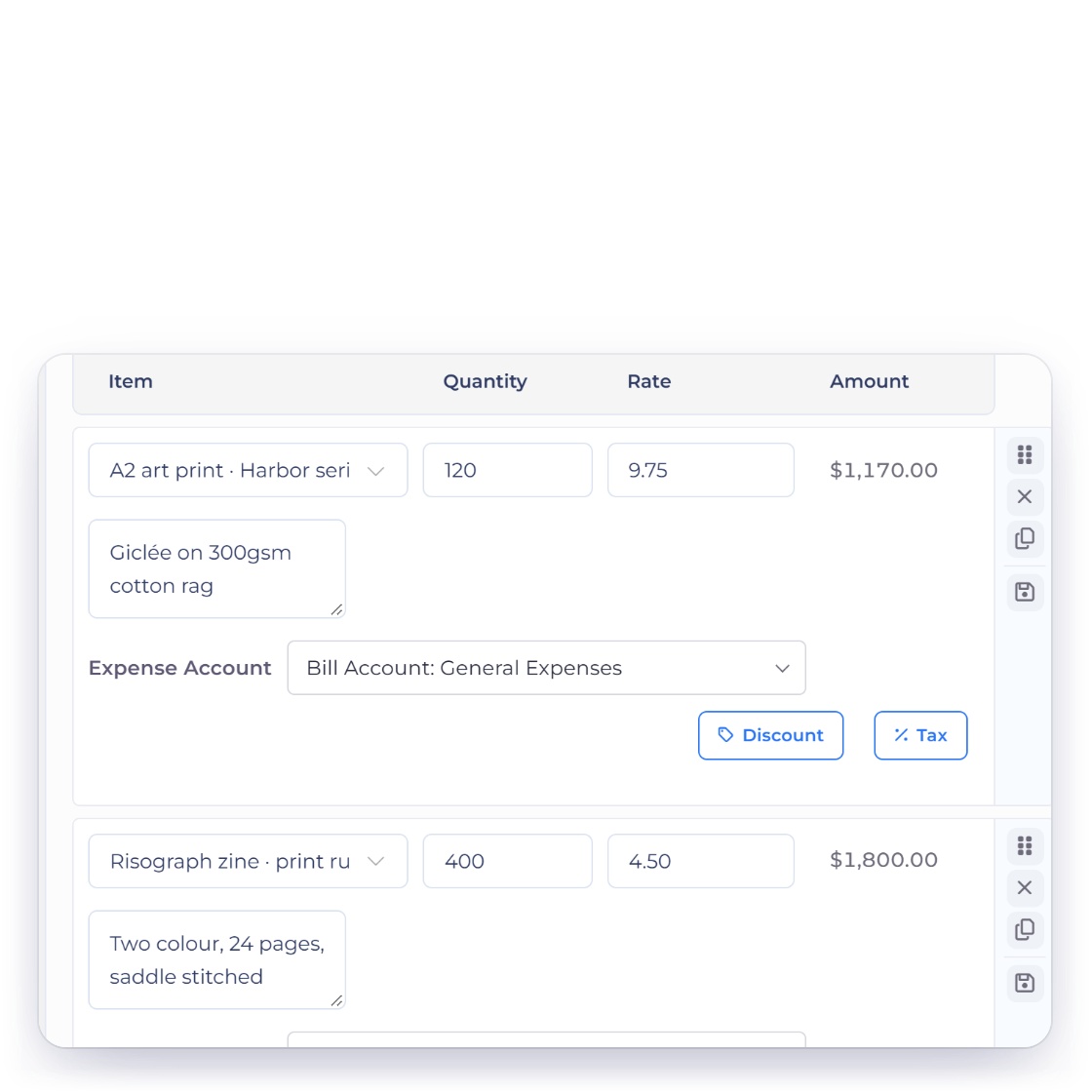
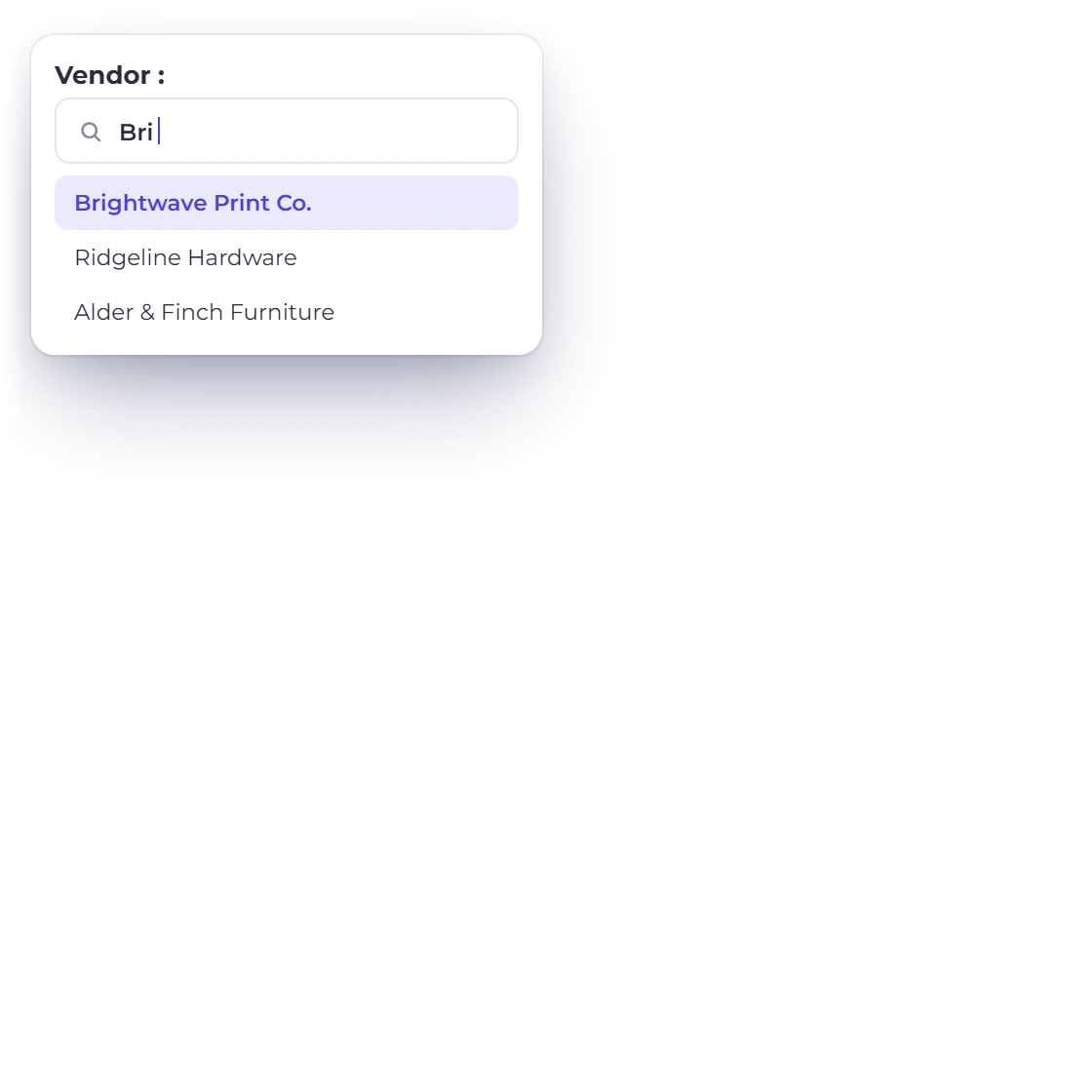
A bill is the mirror of an invoice, built in the same document editor with the same line items, taxes and discounts. Where the Customer picker sits on an invoice, a bill has a Vendor picker, and the document prints BILL and Bill Total. Bill numbers run on their own B series, and you can save a bill before you have picked a vendor.

  • A Vendor picker where the Customer sits
  • The document prints BILL and Bill Total
  • Saved with no vendor yet reads N/A
Convert an approved purchase order

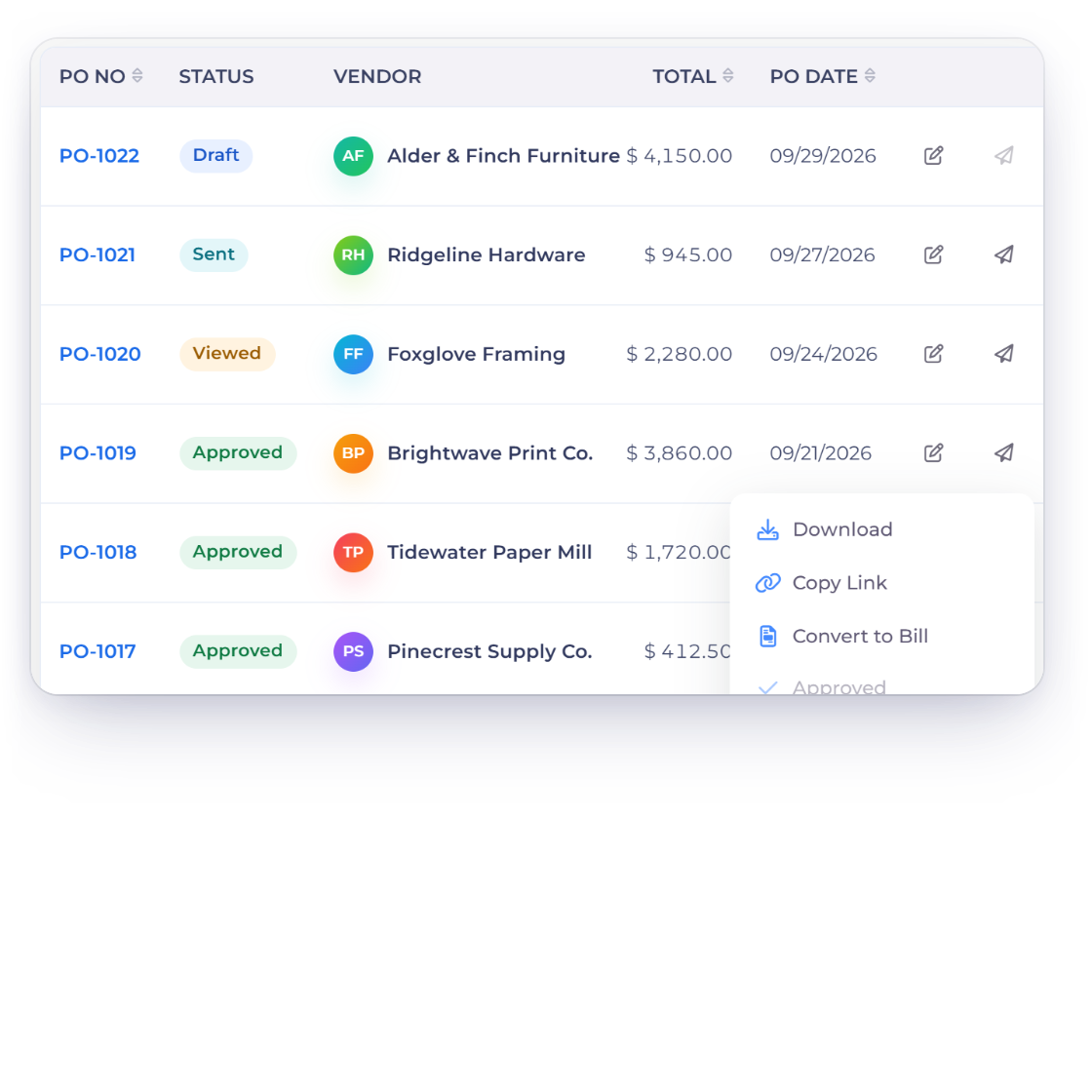
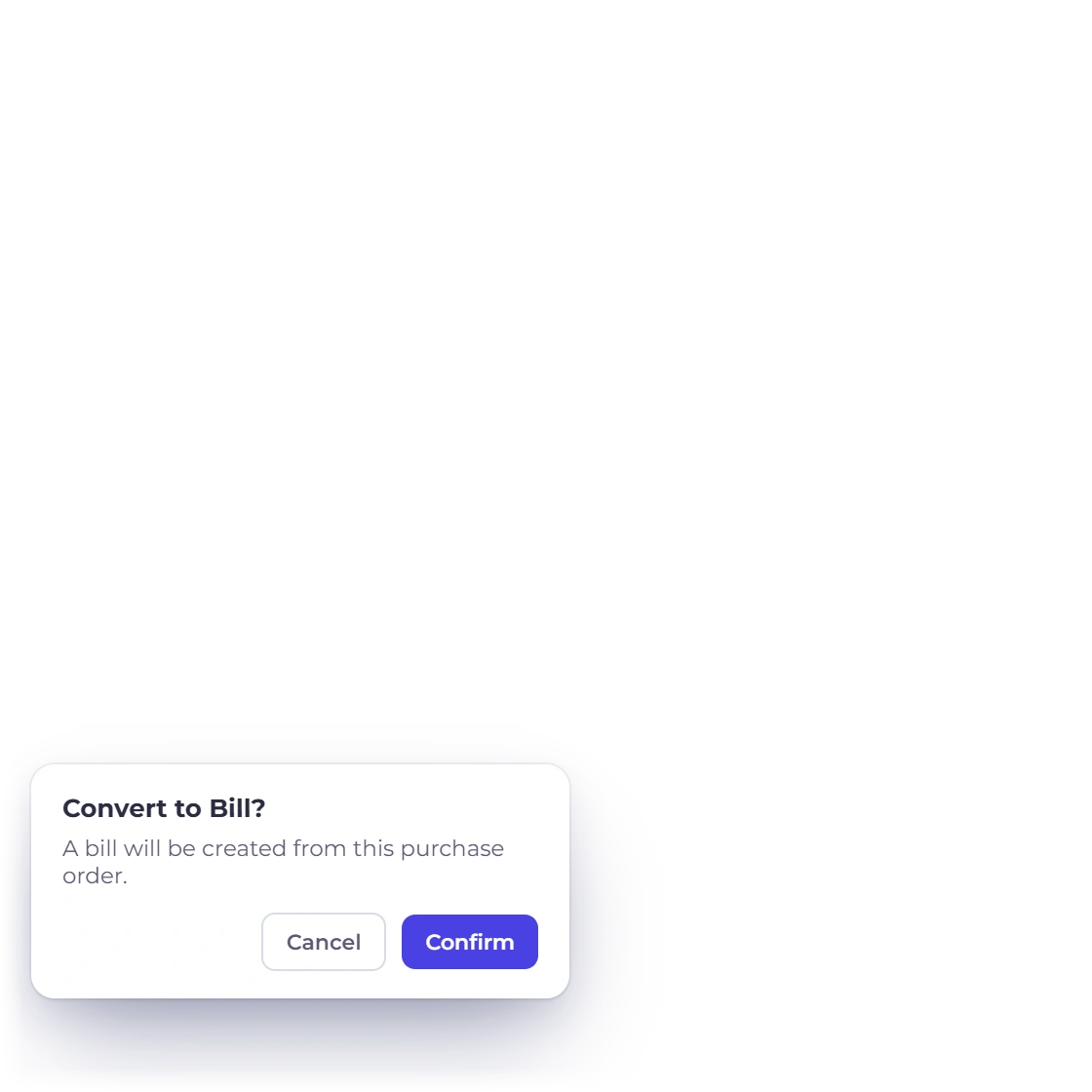
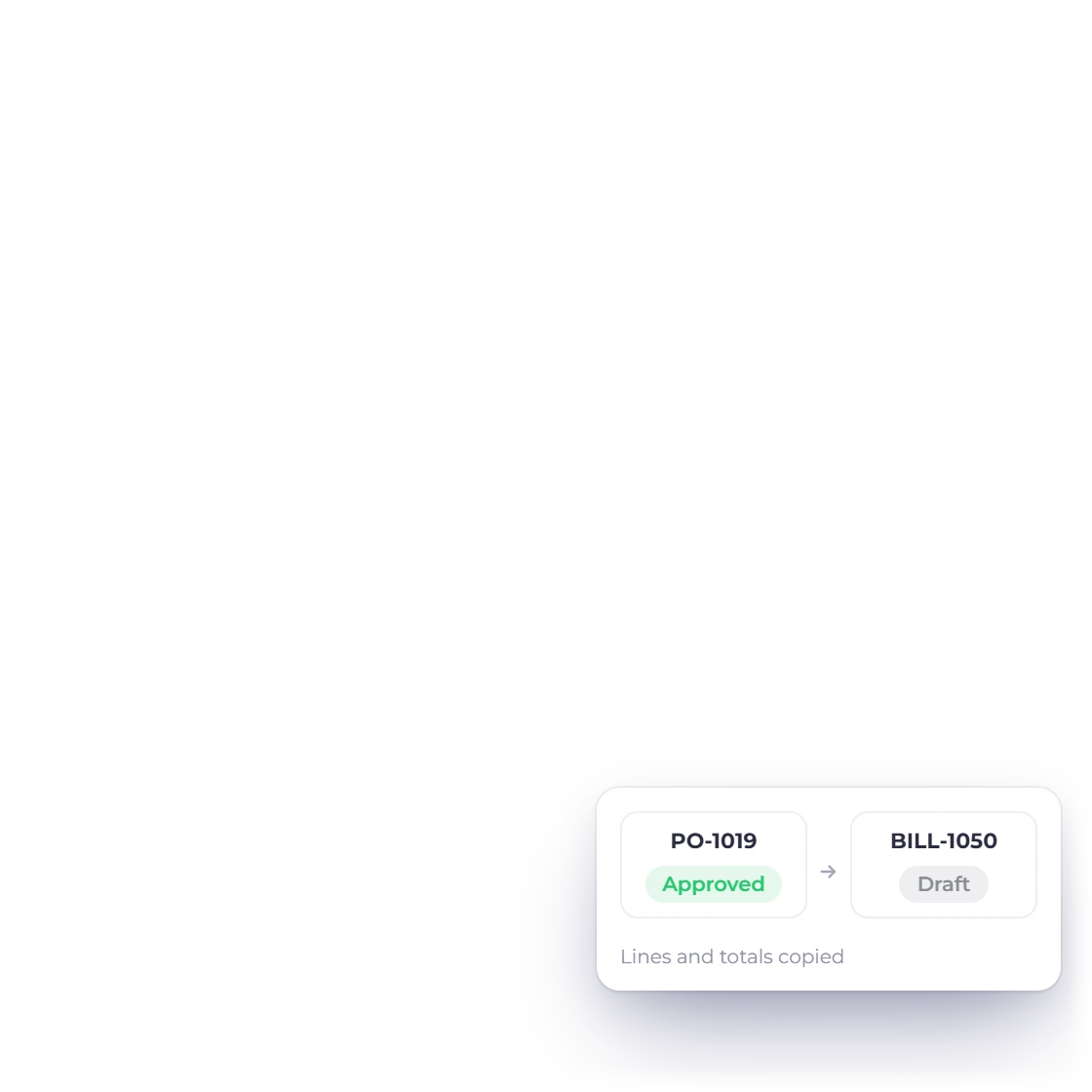
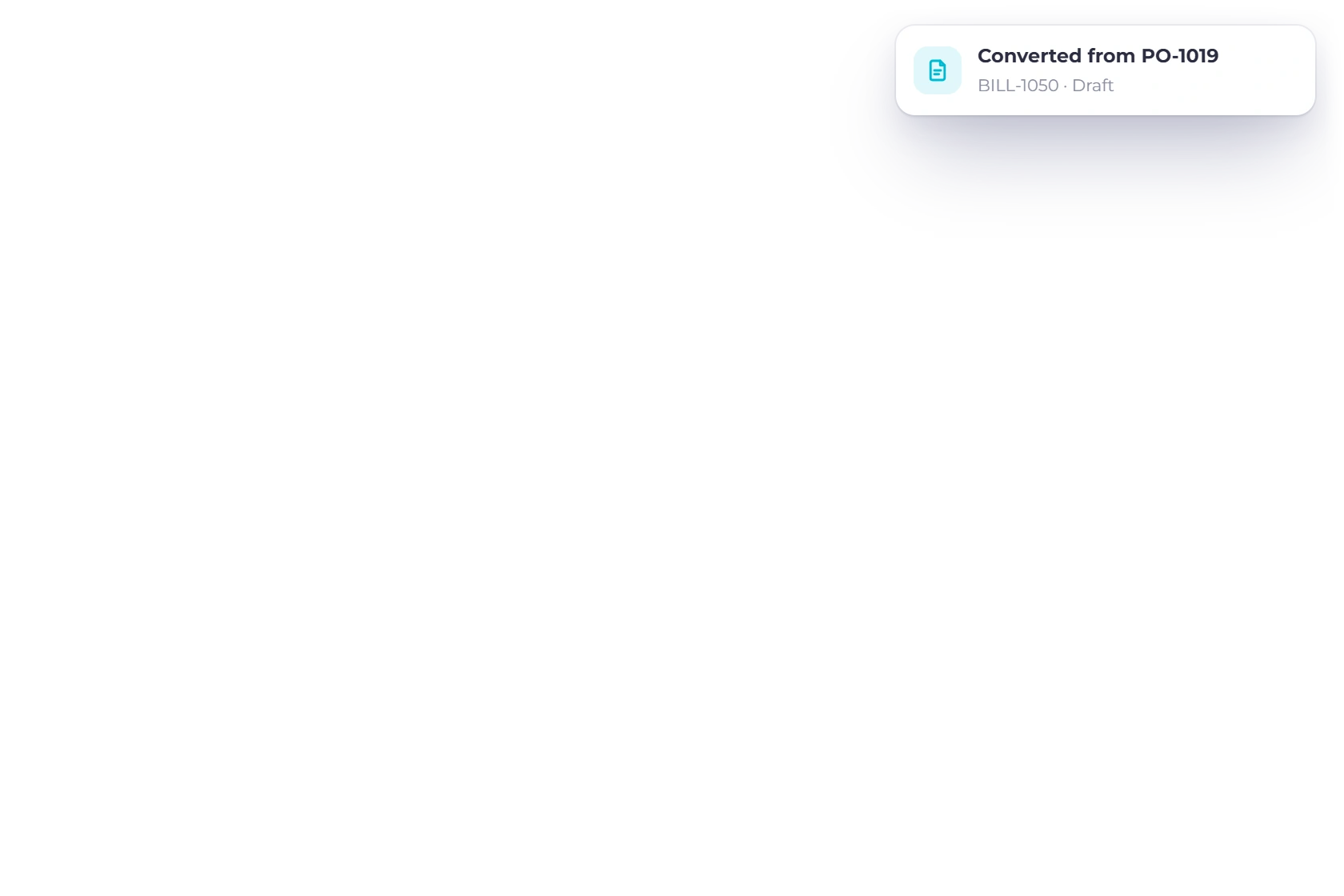
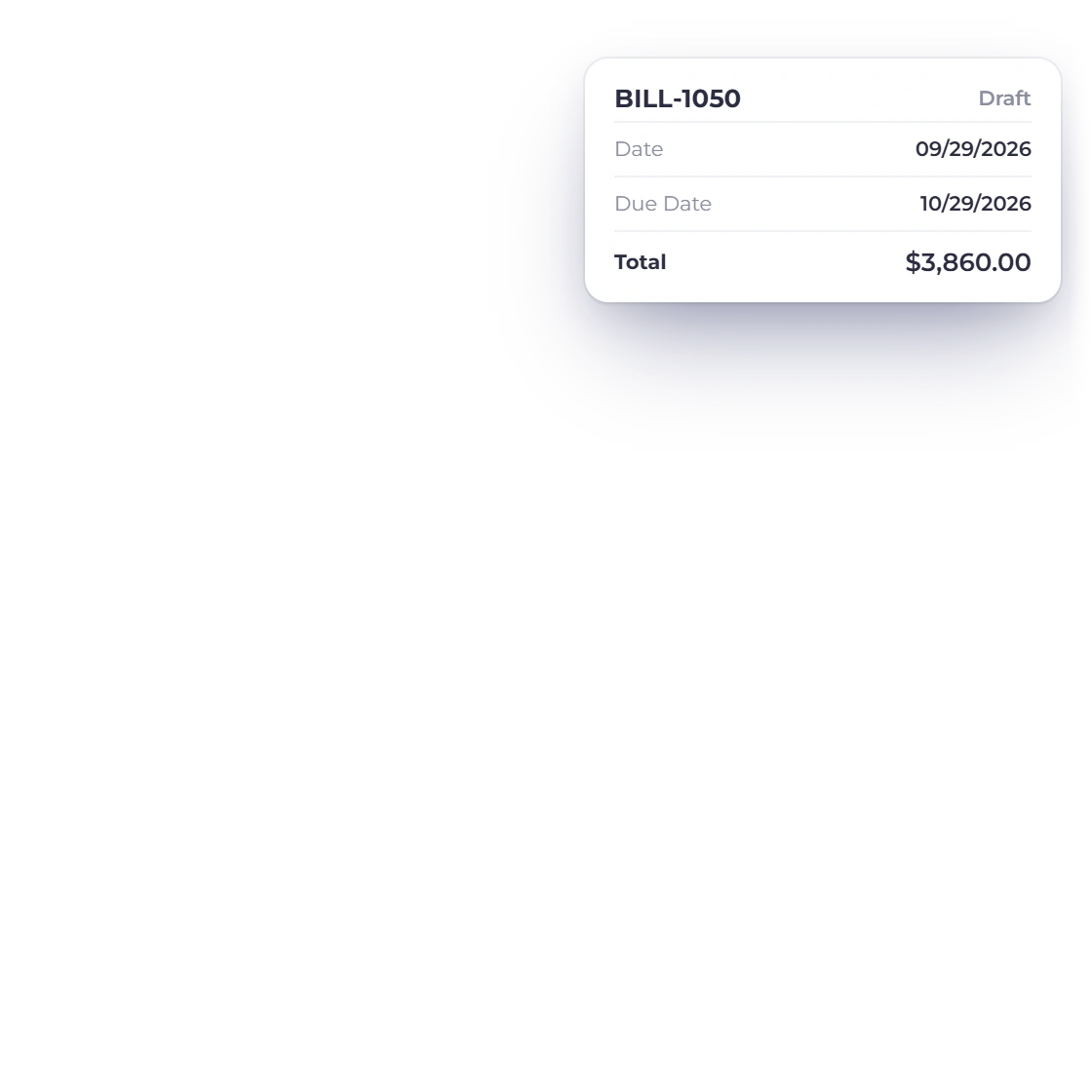
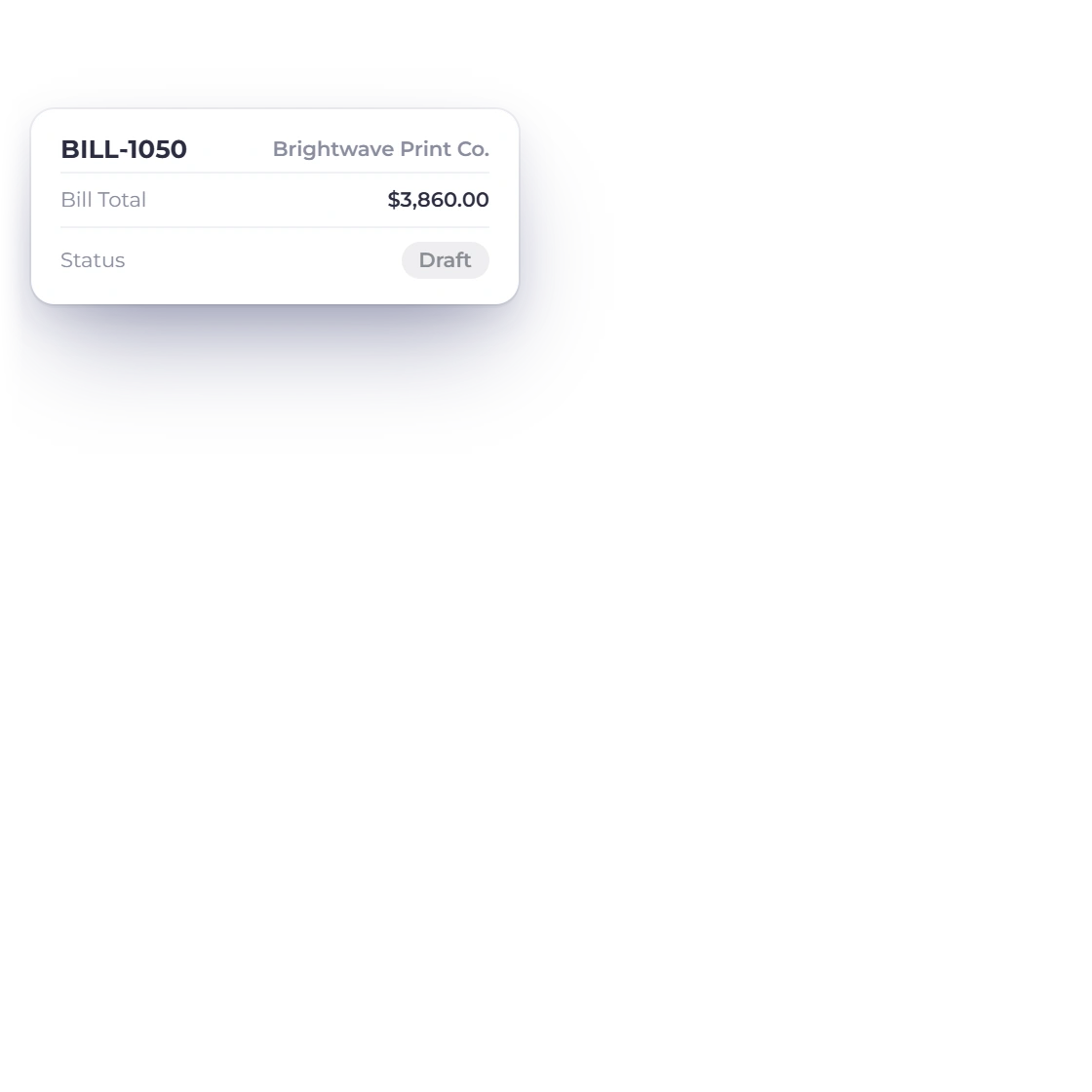
Mark a purchase order Approved and you can convert it into a bill. The vendor, the line items and the totals come across, and the new bill gets a fresh B-series number, today's bill date, a due date one month out and a balance equal to the total. Conversion is disabled on any other status. The order itself stays on its own list at Approved, so check the Bills list before converting it twice.

  • Only from a purchase order at Approved
  • A link back to the order under the bill number
  • The order is untouched and stays Approved

Posting it

One save, both sides

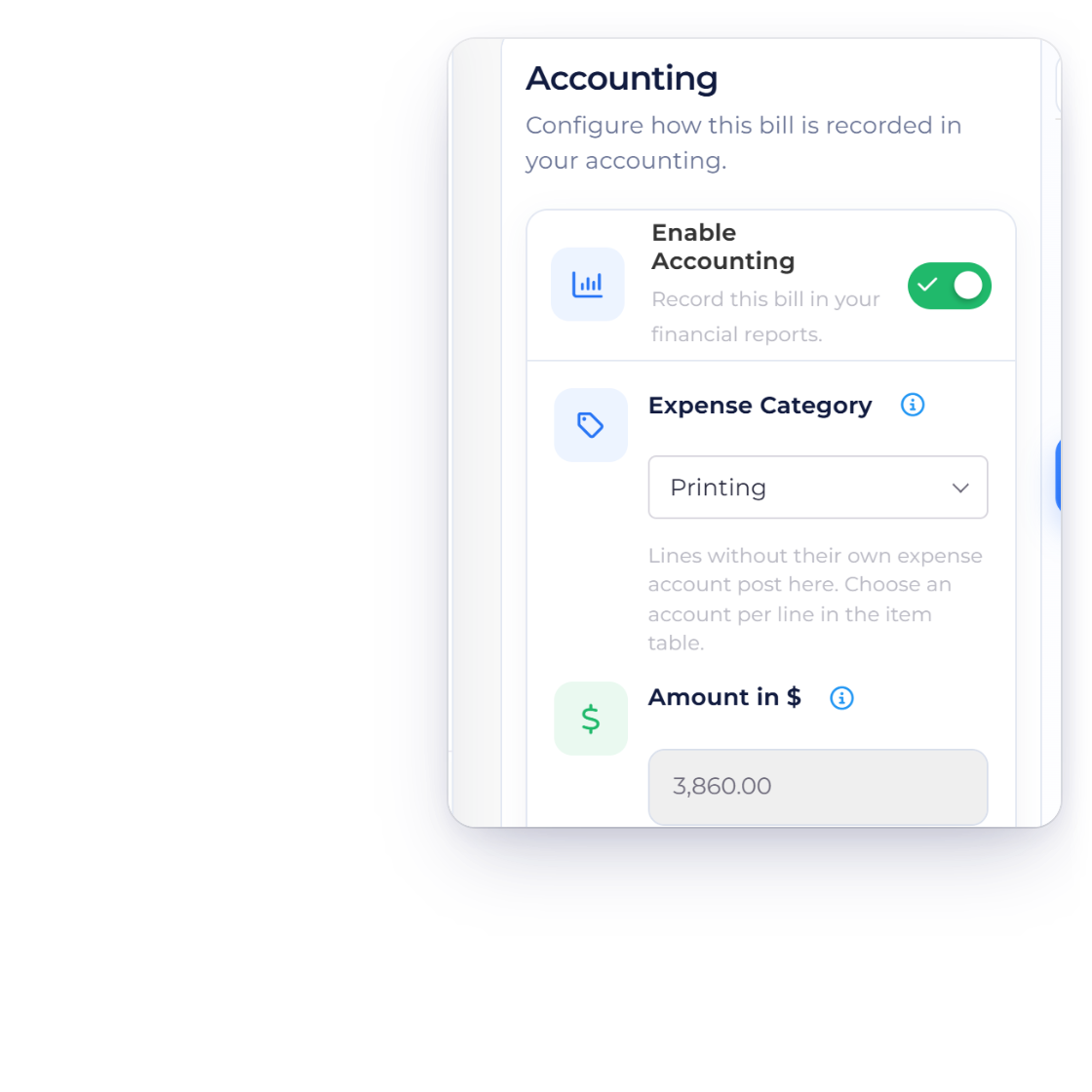
Choosing the expense category a vendor bill posts to on the Accounting tab of the Invoice Crowd bill editor.

Accounts Payable and the category you pick

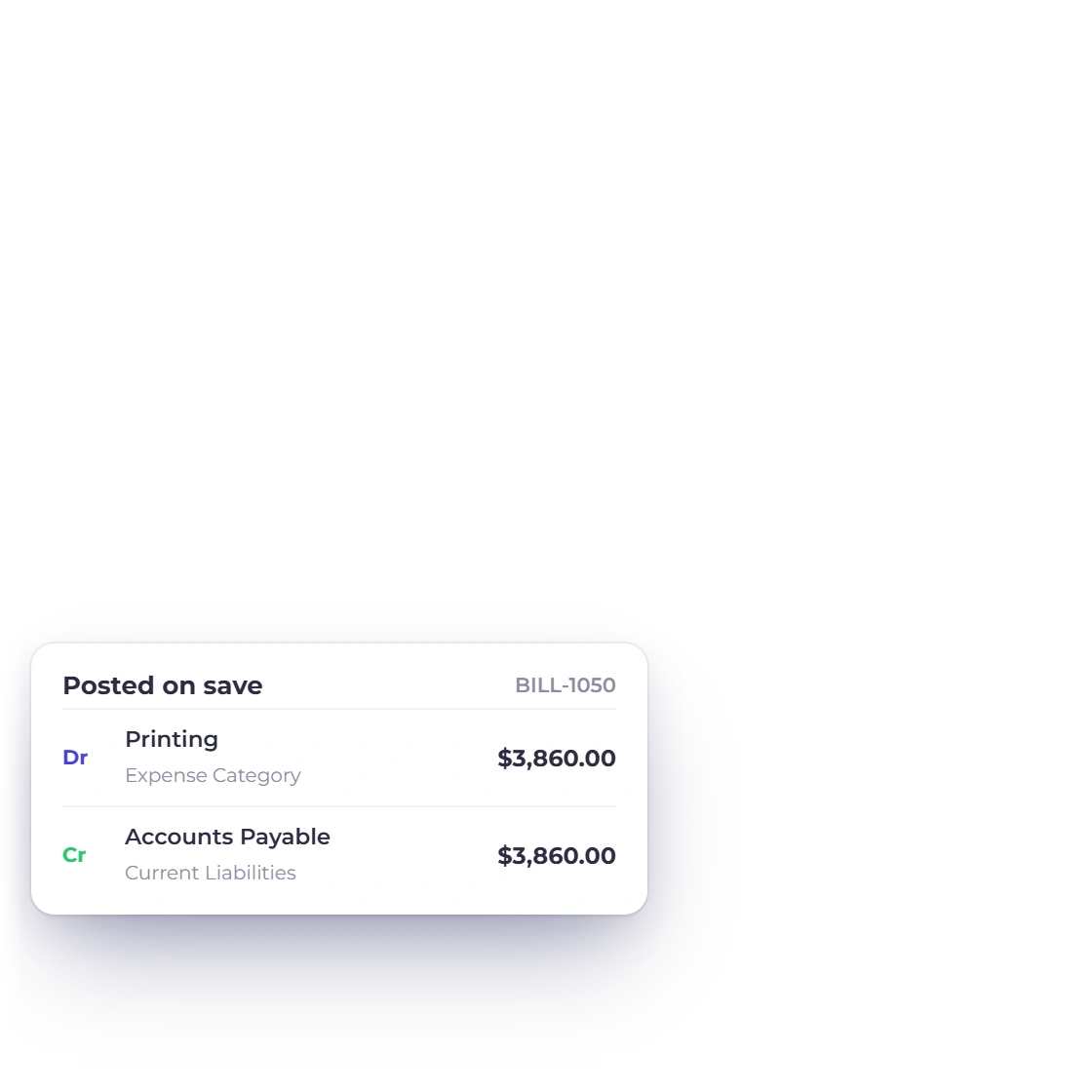
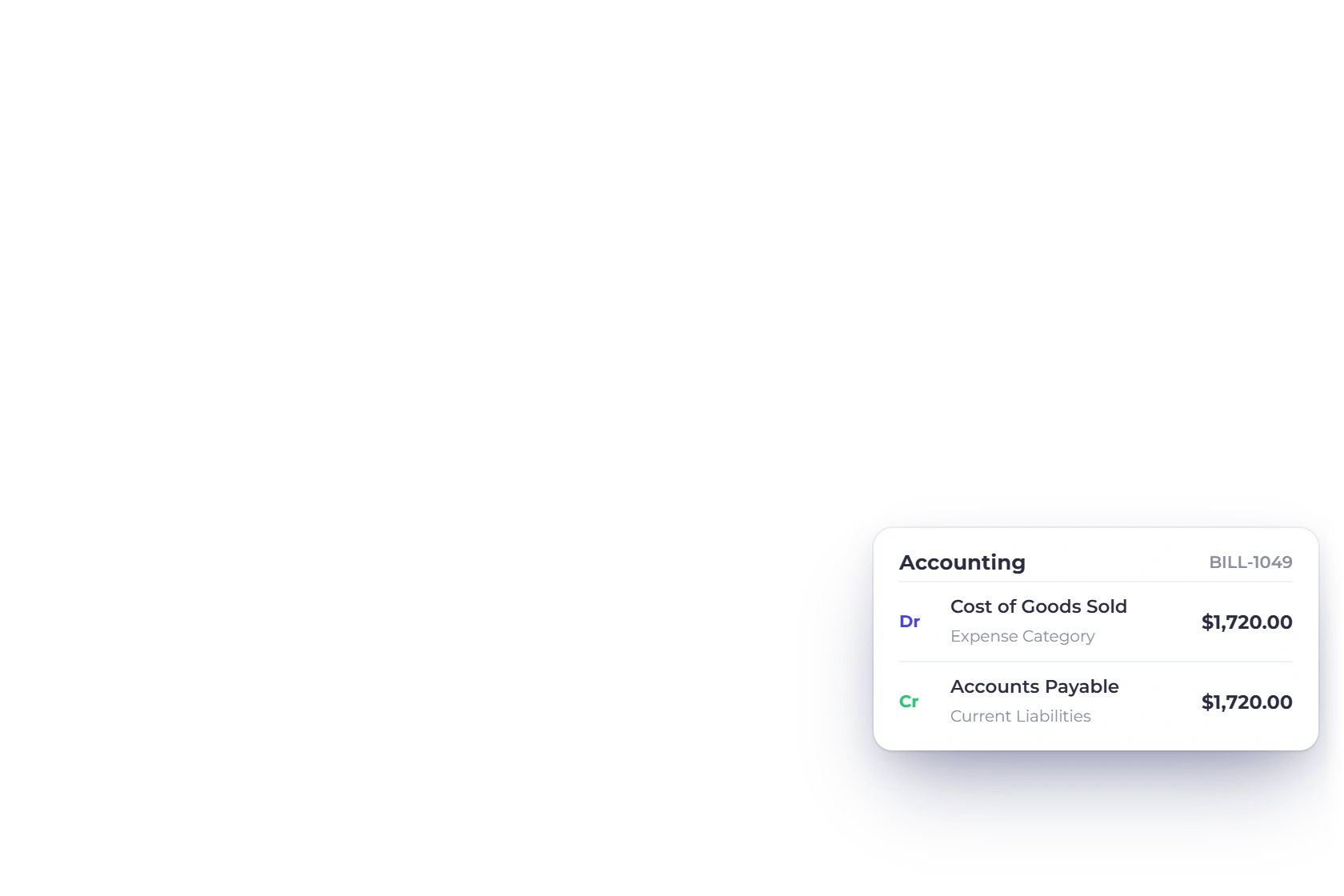
Saving a bill can post its total to the chart of accounts and the general ledger with no export step. Accounting is a switch on the bill's Accounting tab, carried over from your business profile. With it on, the bill reaches Accounts Payable under Current Liabilities and the account named in the Expense Category field. Leave that field alone and it uses Cost of Goods Sold.

  • Accounts Payable under Current Liabilities
  • Expense Category chosen per bill
  • Cost of Goods Sold by default

Correct a bill without doubling the ledger

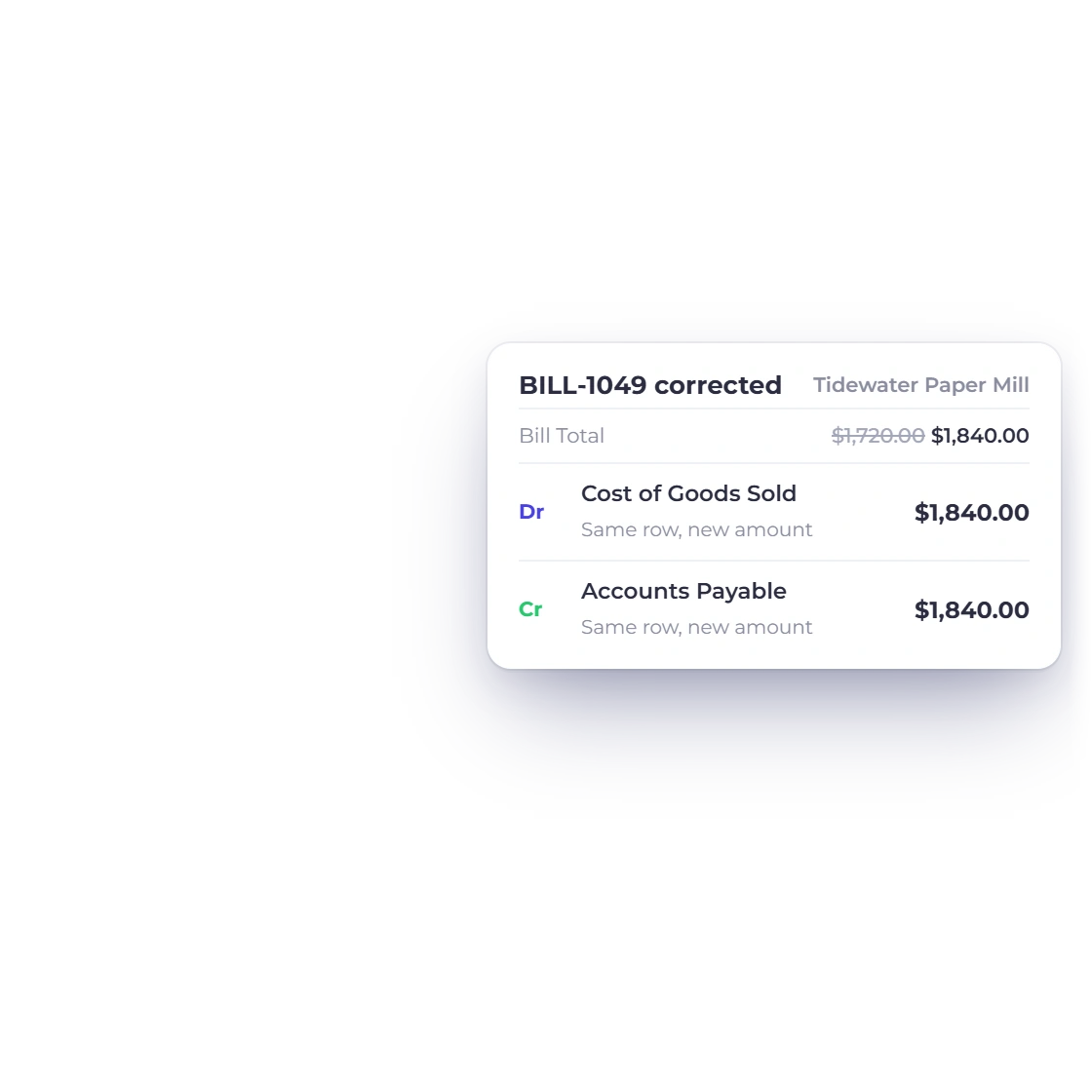
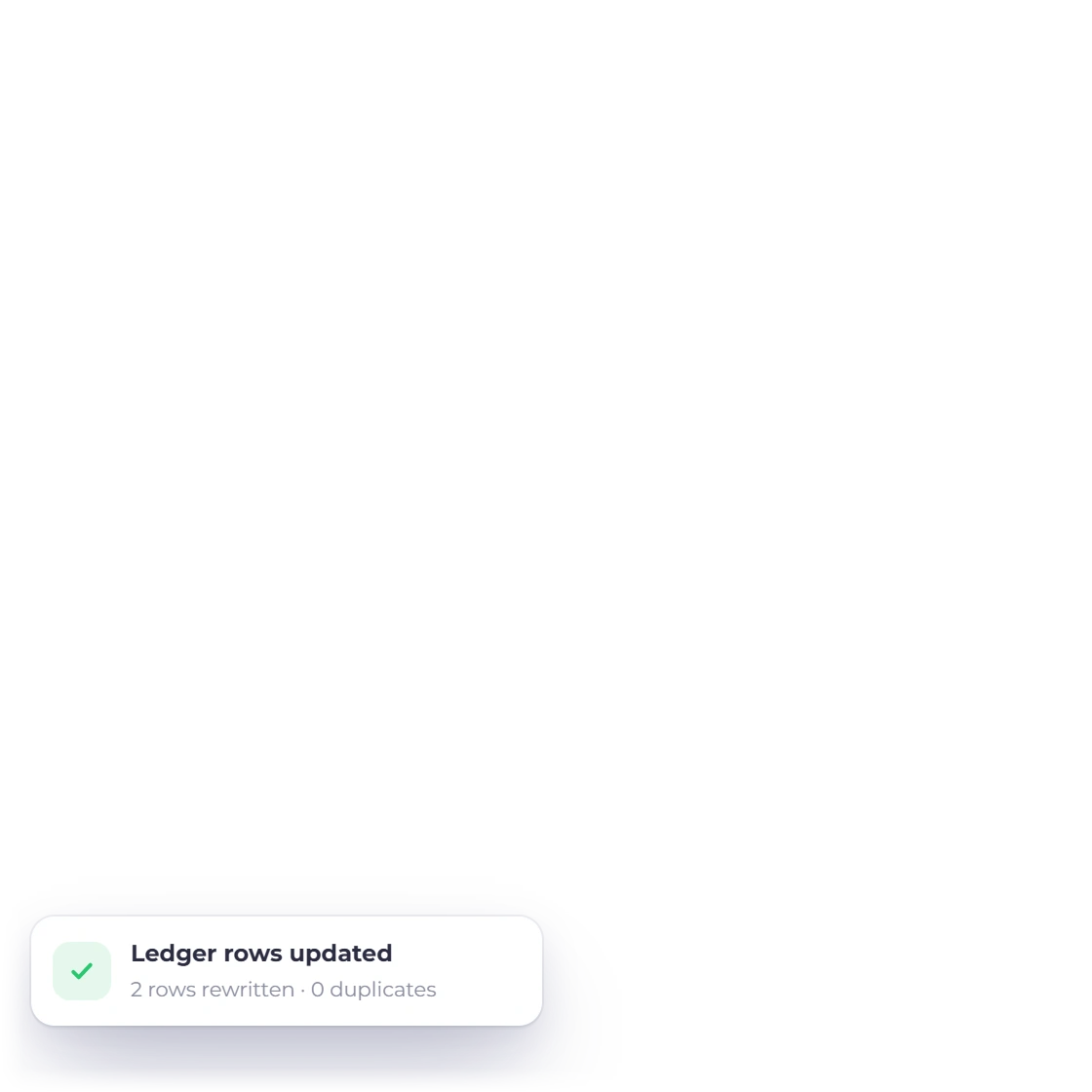
The posting is rewritten rather than appended. Ledger rows are keyed by account, bill and side, so correcting a bill and saving it again updates the rows that already exist instead of stacking a second set on top. From there the figures behave like any other posted entry: they show in the general ledger, on the profit and loss statement, and in the reports you run at period end.

  • No duplicate rows from a re-saved bill
  • Visible in the general ledger
  • Reads into the profit and loss statement

Settling it

Recorded, not charged

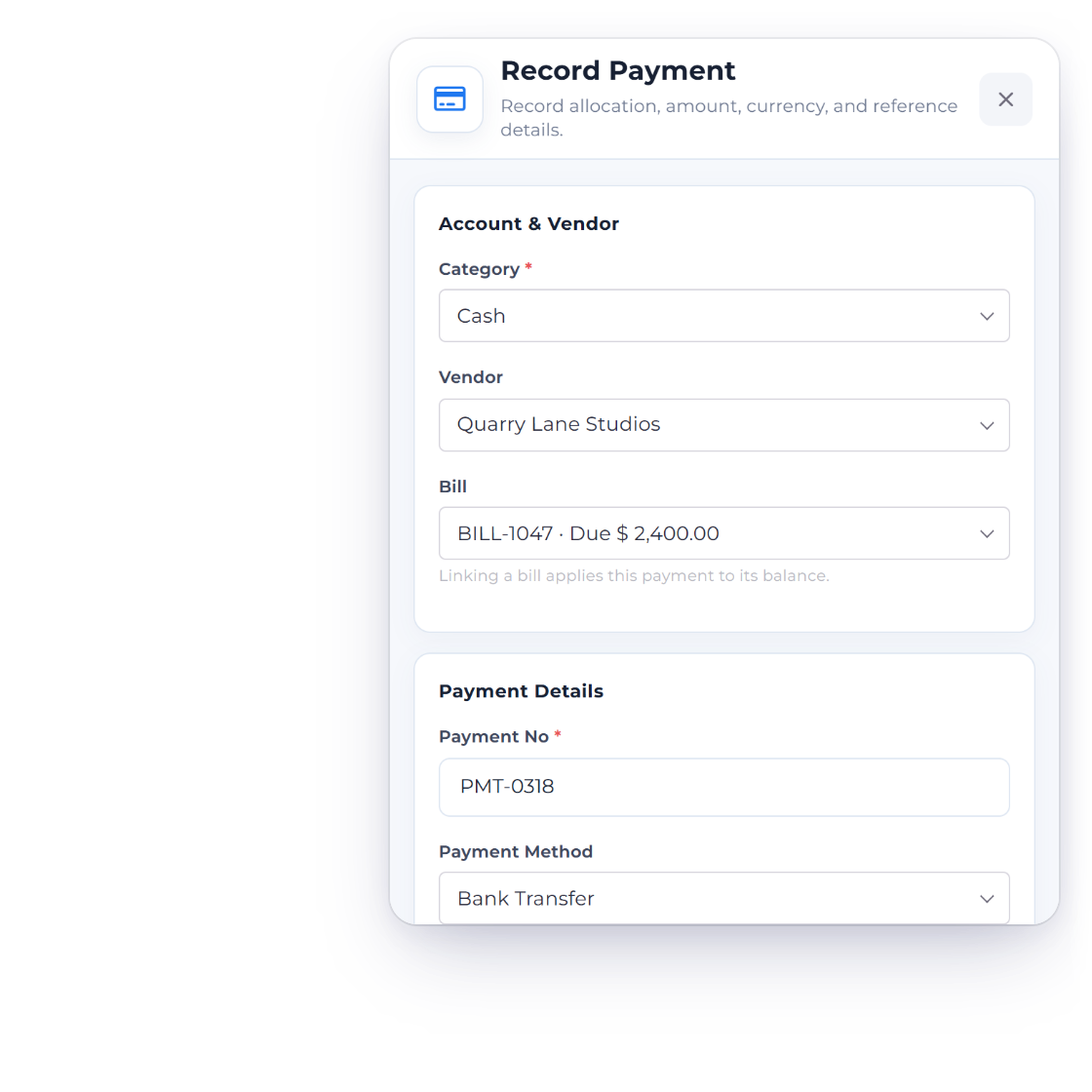
Recording a payment against an open vendor bill in Invoice Crowd, with the amount pre-filled from the bill's balance.

Record the payment against the bill

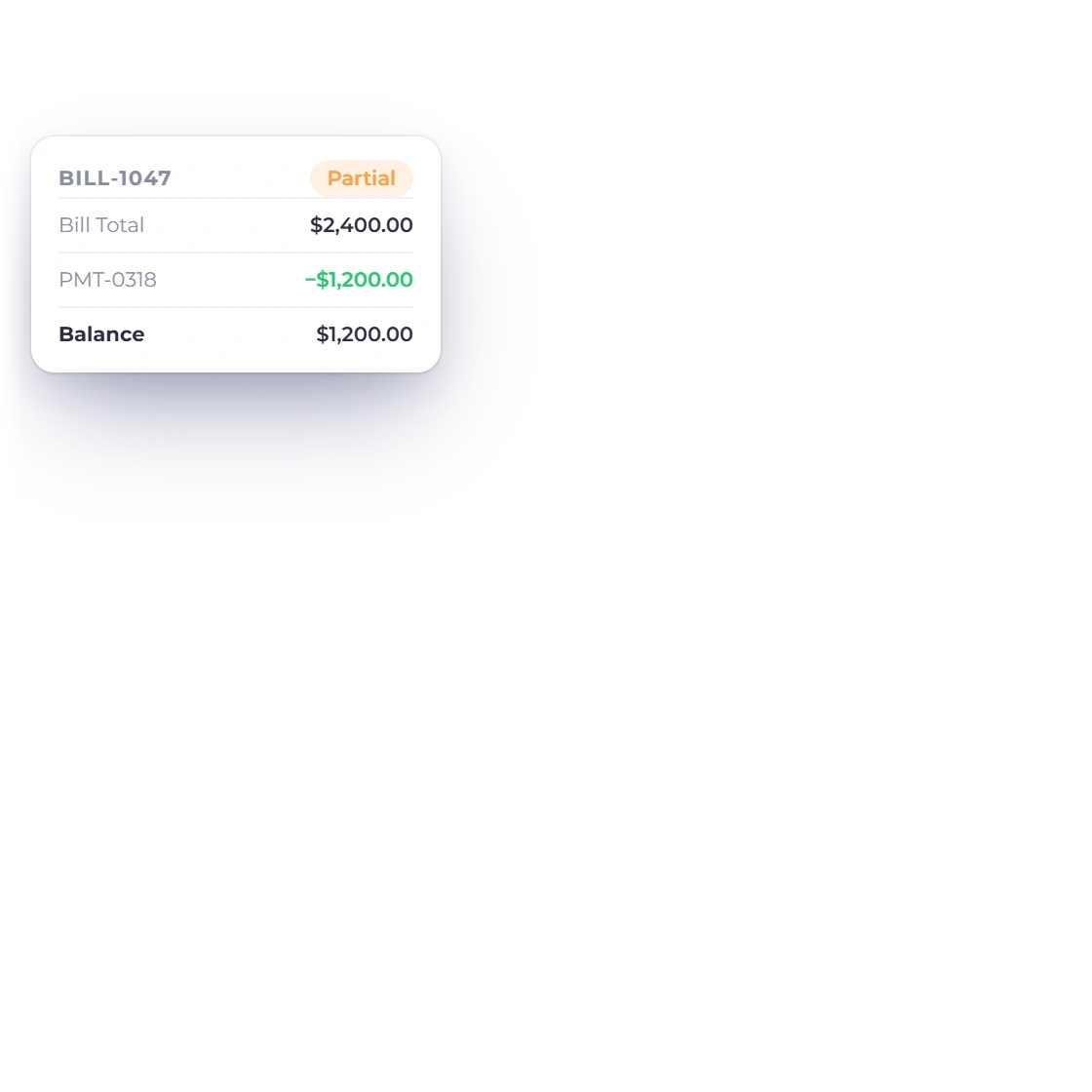
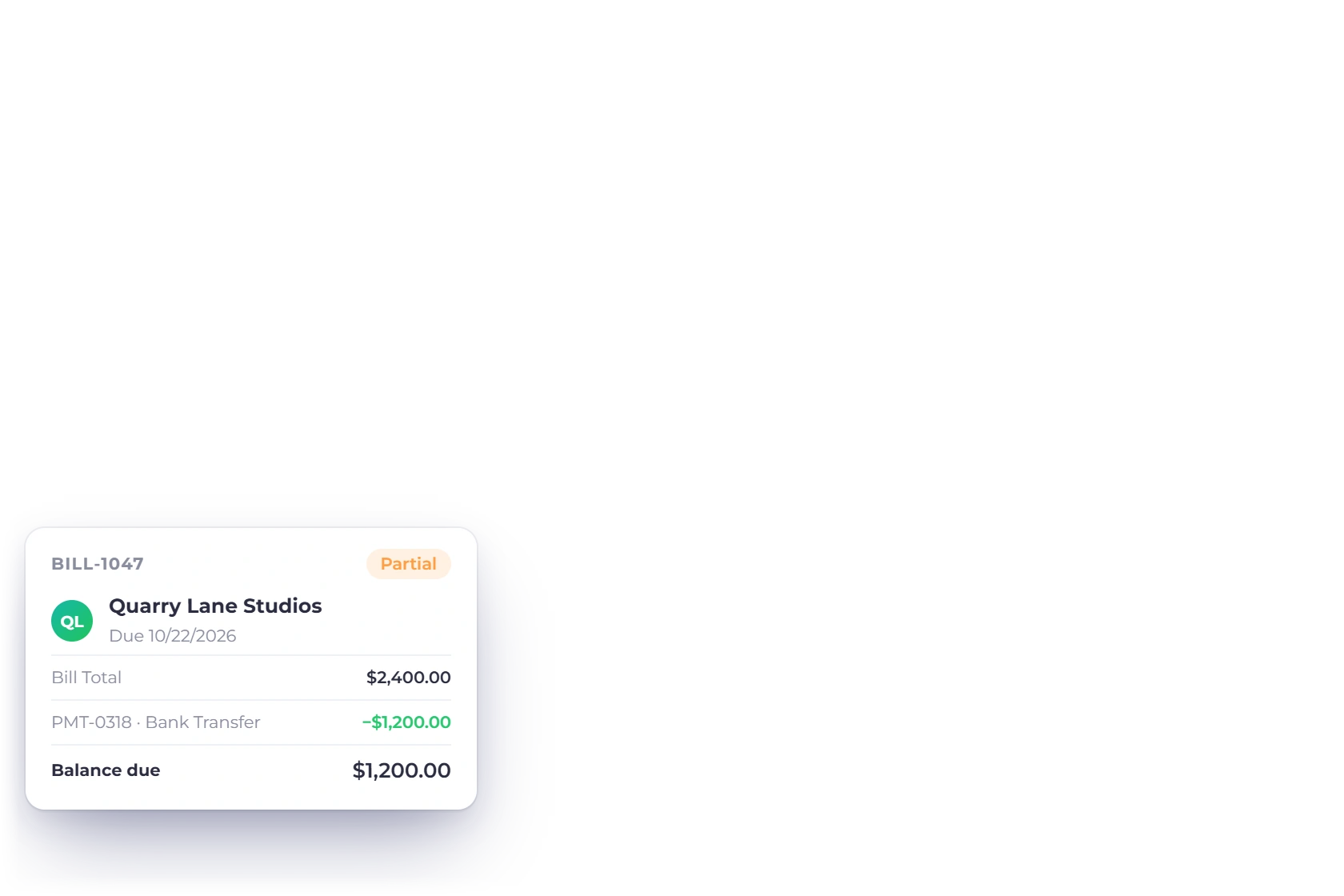
Payments to vendors go on the Payments Made screen rather than on the bill. Pick the vendor, pick one of that vendor's open bills, and the amount pre-fills from what is still owed. Each payment carries a method, a date, a reference number and notes. Saving reduces the balance, moves the bill to Partial or Paid, and runs as one locked transaction so a double-click cannot pay it twice.

  • Attach the receipt as a PNG, JPG or PDF
  • Bill-linked payments can be cloned, not edited
  • Or mark a bill paid straight from the list row

What the vendor is allowed to see

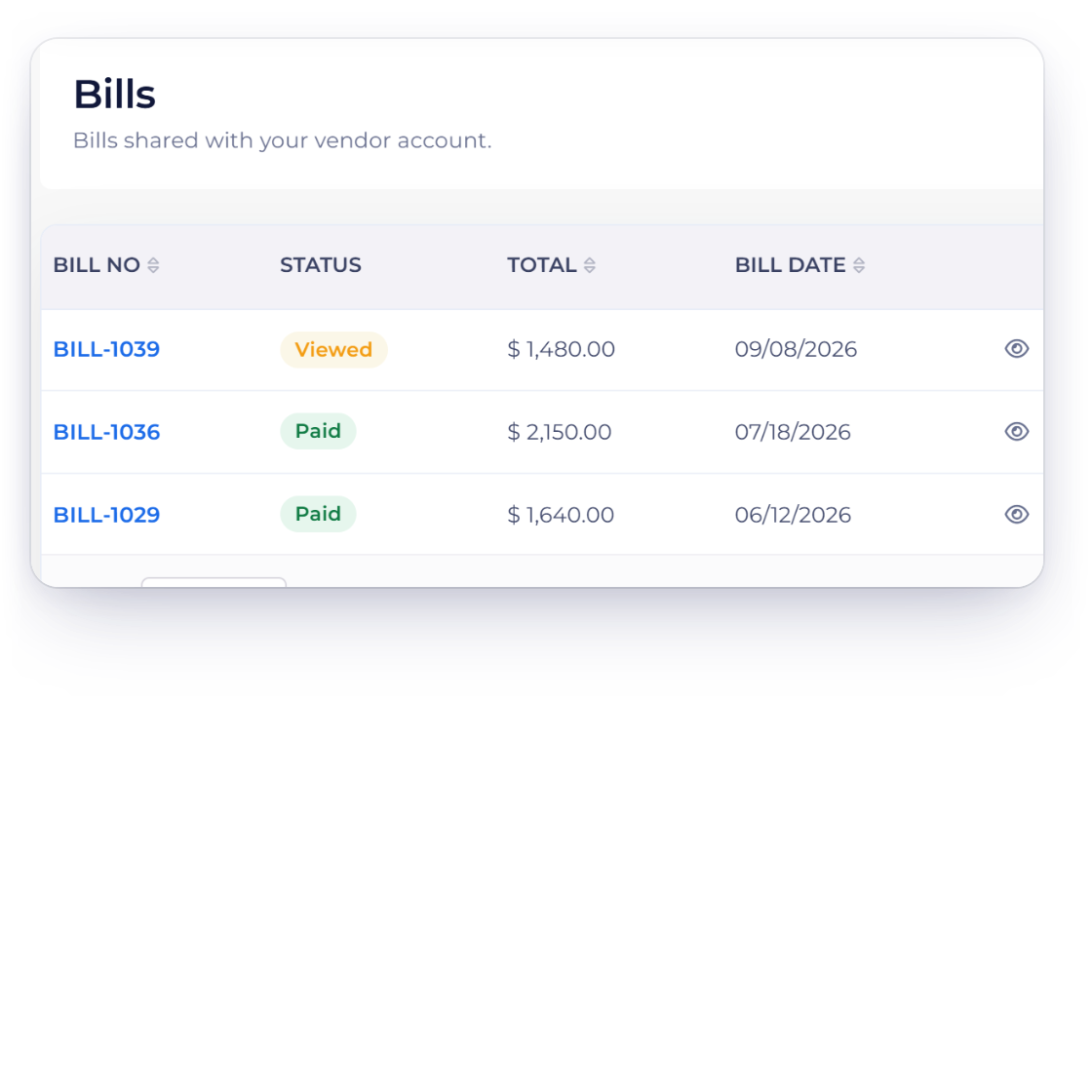
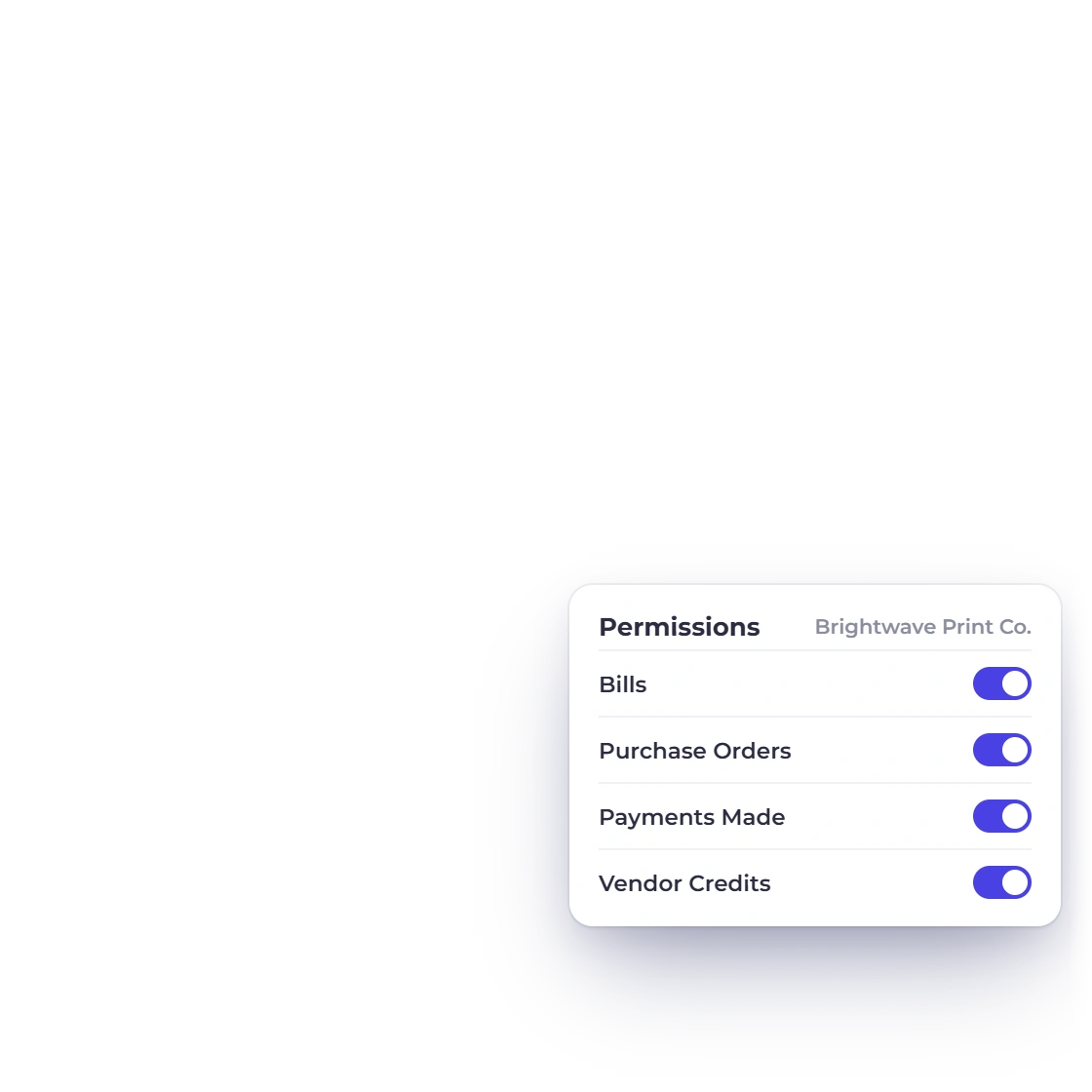
A vendor record holds contact details and portal settings rather than a document history. Invite a vendor and they get a read-only portal with up to four lists: bills, purchase orders, vendor credits and the payments you have made. You choose per vendor which of the four appear. Bills show there once they have been sent or paid, never as drafts, and every row opens or downloads as a PDF.

  • Read-only: the portal collects nothing
  • Per-vendor control of the four lists
  • Filter the Bills list by vendor to see what you owe

Built in

The rest of the purchase side

Bills sit next to purchase orders, vendor credits, vendors and payments made, so a cost you enter once carries through to the ledger, your stock on hand and the reports you run at period end.

  • Marked paid, cleared

    A settlement pair clears the payable against Cash under Cash & Bank, or against the account attached to the gateway named on the payment.

  • Pay over the balance

    The applied amount caps at what the bill owes. Anything beyond it is held against Cash and Prepaid Expenses, and shows in the list as Unused Amount.

  • Vendor credits

    Raise a credit from the bill and either apply it against that bill or record it as a cash refund. Applying it runs as one locked transaction.

  • Status decides itself

    The badge is derived, not typed. A bill you have already sent turns Overdue on its own once its due date passes; a draft stays Draft.

  • Stock in on save

    With inventory tracking on, saving a bill raises stock on hand for tracked items. A purchase order records the order, so stock waits for the bill.

  • Terms or a date

    Set the due date on the bill directly, or pick a payment term and let the due date recalculate from it.

  • Your saved items

    The same repeater as everywhere else: item, quantity, rate, tax and discount per line, dragged into order, drawn from your saved items.

  • Send from the list

    Bills are emailed from the Bills list, not the editor, which carries no Send button. The Send action is not offered while a bill is a draft.

  • Paid in another currency

    When the payment currency differs from your accounting currency, the converted amount is recomputed on the server from the rate rather than taken from the browser.

  • Delete before payment

    A bill can be deleted only while it is unpaid. Once a payment has landed against it, the delete action is gone from the row.

  • No money leaves here

    The payment method on a vendor payment is a label. Gateways like Stripe, PayPal and Razorpay collect from your customers; they do not pay your suppliers.

  • Not for subscriptions

    A fee that arrives on a fixed date every month is better recorded as a recurring expense than entered as a bill each time.

Questions

Bills & Accounts Payable, answered

Does Invoice Crowd do accounts payable?

Yes. Invoice Crowd handles accounts payable through Bills, the purchase-side mirror of an invoice. A bill records what a vendor has charged you, with line items, taxes, a bill date and a due date, and posts the total to Accounts Payable under Current Liabilities. Purchase orders, vendor credits, vendors and vendor payments sit alongside bills on the purchase side of the app.

How do I turn a purchase order into a bill?

Mark the purchase order Approved, then use Convert to bill. Conversion copies the order into a new bill with a fresh B-series number, today's bill date, a due date one month out and a balance equal to the total, and links the bill back to the order it came from. The convert action is disabled on any purchase order not yet at Approved status.

Which accounts does a vendor bill post to?

With accounting switched on for the bill, saving it puts the total on Accounts Payable, under Current Liabilities, and the same amount on the account named in the Expense Category field on the bill's Accounting tab. When no account is chosen there, bills default to Cost of Goods Sold. Marking the bill paid posts a settlement pair that clears the payable against Cash, under Cash & Bank, or against the account attached to the gateway named on the payment.

Can Invoice Crowd pay a vendor directly?

No. Invoice Crowd records vendor payments rather than making them. The Payments Made screen captures the vendor, the bill, the amount, the date, a reference number and a receipt, then reduces the bill's balance and updates its status. The payment method is a label for your own records; no bank transfer or card charge is sent to the vendor from the app.

Can a bill be deleted after it has been paid?

No. Deleting a bill is only offered while its payment status is unpaid. Once a payment has been recorded against a bill, the delete action disappears from the row, which keeps the ledger entries and the payment history intact. A bill that was entered in error and already paid should be corrected through a vendor credit rather than removed.

Can a vendor see the bills I have entered for them?

Only if you invite that vendor into the vendor portal, and only as a read-only view. The portal shows up to four lists (bills, purchase orders, vendor credits and the payments you have made) and you decide per vendor which of the four appear. Bills show there once they have been sent or paid rather than while they are drafts, and each one can be opened or downloaded as a PDF. Vendors cannot edit anything and there is no payment collection in the vendor portal.

Which Invoice Crowd plans include bills?

Bills are not included in the Lifetime Free tier. Opening the Bills list from that tier redirects to billing. Bills, purchase orders, vendor credits and payments made are available on eligible paid plans; check the pricing page for the current plan details and trial terms.

Put your vendor bills where the ledger can see them

Enter what a vendor has billed you, or convert the purchase order behind it, and the total lands on Accounts Payable and the expense category you chose in the same save.

  • No card required to start
  • Your data stays yours
  • Cancel anytime