

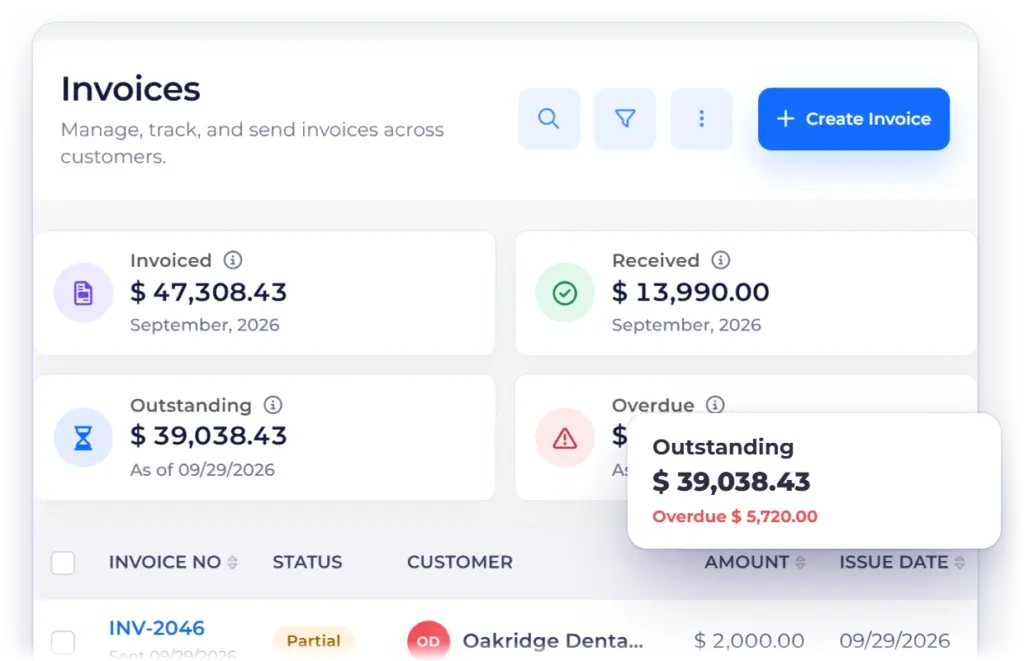
Records create balances
Follow sales and purchase documents into open customer or vendor balances.
Plain-language reference
This glossary defines 80 accounting, invoicing, payment and tax terms in plain language. Search a term, see the related concepts, and move into the relevant Invoice Crowd guide when a term belongs to a workflow the app supports.
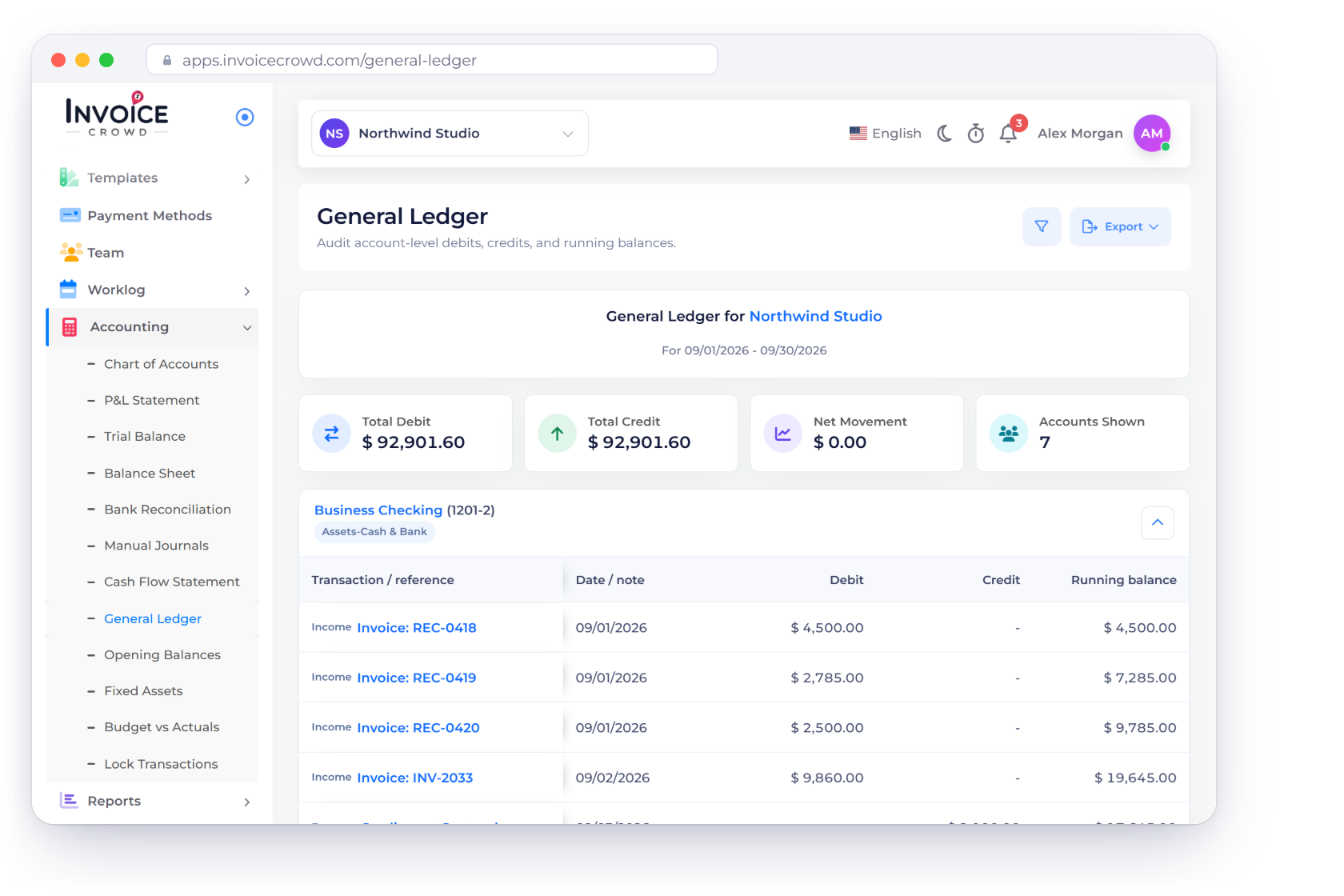
Search and learn
Search by term, definition or a related concept. Use the A–Z index to browse; every definition remains visible without JavaScript.
Follow sales and purchase documents into open customer or vendor balances.
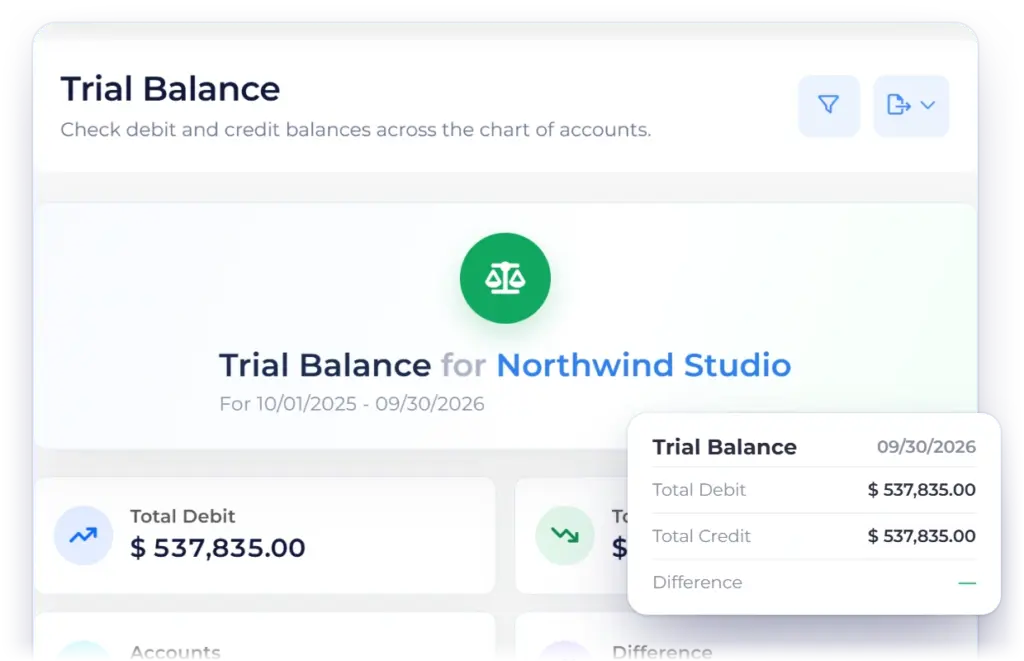
Trace balanced postings from the journal through ledgers and financial statements.
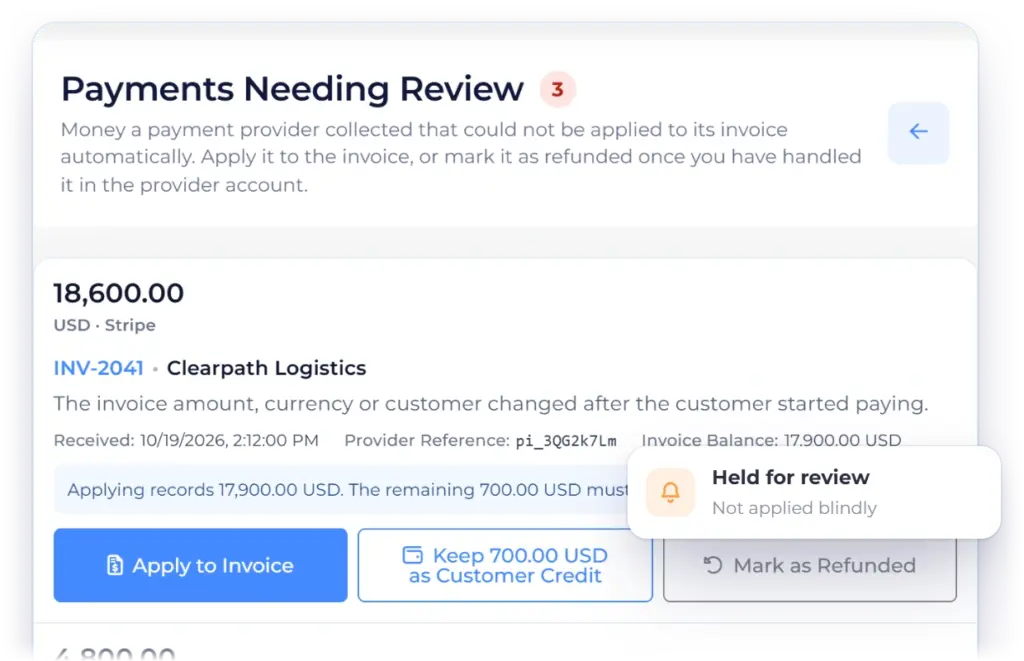
Separate customer checkout from provider-verified settlement and allocation.
A category used to organize and report financial activity, such as cash, sales revenue, accounts receivable or an expense.
Explore this workflowAmounts a business owes to vendors for goods or services received but not yet paid.
Explore this workflowAmounts customers owe a business for invoices issued but not yet fully paid.
Explore this workflowA method that records income when earned and expenses when incurred, rather than only when cash changes hands.
Money a customer pays before an invoice exists. It is held as a liability until it is applied to an invoice or refunded.
Explore this workflowA report that groups unpaid customer balances by how long they have been outstanding.
Explore this workflowA resource controlled by a business that is expected to provide future economic benefit.
A point-in-time statement of assets, liabilities and equity, linked by the accounting equation.
Explore this workflowA connection or imported stream that brings bank transactions into an accounting workflow for review and matching.
Explore this workflowThe process of comparing recorded transactions with a bank statement and explaining the differences.
Explore this workflowA vendor document that records an amount the business owes for a purchase.
Explore this workflowA cost a business intends to recover from a customer, subject to its agreement and accounting policy.
A method that generally recognizes income when cash is received and expenses when cash is paid.
A statement that explains cash movements from operating, investing and financing activities over a period.
Explore this workflowThe organized list of account categories a business uses to classify transactions and prepare reports.
Explore this workflowThe balance represented by transactions that have cleared the bank or have been confirmed during reconciliation.
The direct cost of the goods or services a business sold in a period, reported above gross profit on the profit and loss statement.
Explore this workflowA sales document that reduces an amount previously billed to a customer without erasing the original invoice.
Explore this workflowAn amount available to reduce a customer's current or future balance, commonly created by a credit note or overpayment.
Explore this workflowOne side of a journal entry. Its effect depends on the account type; it is not simply a synonym for decrease.
A payment arrangement in which an authorized provider collects funds from a payer's bank account.
Explore this workflowA reduction applied to a listed price or document amount, usually expressed as a fixed value or percentage.
A system in which every journal entry has equal debits and credits so the accounting equation remains balanced.
Explore this workflowThe date by which a payment or other obligation is expected under the document or agreement.
The residual interest in a business's assets after liabilities are deducted.
A pre-sale document describing expected scope and price before work is finally agreed or invoiced.
Explore this workflowA cost consumed in earning revenue or operating the business during a period.
The twelve-month reporting period a business uses for accounting and financial statements; it may differ from the calendar year.
The detailed record of postings to all accounts used to support balances and financial statements.
Explore this workflowAn amount before specified deductions such as discounts, withholding or some taxes, depending on the document context.
Goods and Services Tax, a consumption tax used in various jurisdictions. Rates and rules depend on the relevant law.
Explore this workflowTax paid on business purchases that a registered business can offset against the tax it collects on sales, subject to local rules and eligibility.
Explore this workflowA document requesting payment for supplied goods or services and stating the customer, lines, amounts, dates and payment terms.
Explore this workflowA business-controlled identifier used to distinguish and trace an invoice within its numbering policy.
A reusable product or service definition used on sales and purchase documents.
A dated accounting record that posts balanced debit and credit lines to one or more accounts.
Explore this workflowA charge for overdue payment that must follow the contract and applicable law; it may be fixed or calculated by a stated method.
Explore this workflowThe balance produced by posted entries in an account over the selected period.
A present obligation expected to require the transfer of an economic resource.
An individual product, service, quantity, rate, tax or description row on a commercial document.
A journal entry entered deliberately by a user rather than generated automatically by an operational transaction.
Explore this workflowThe ability to issue or record transactions in more than one currency while preserving the chosen currency and exchange-rate context.
Explore this workflowAn amount remaining after specified deductions or excluding a stated component, depending on the calculation context.
The starting balance carried into an account or system at the beginning of a reporting or migration period.
Explore this workflowThe portion of an invoice or obligation that remains unpaid after credits and recorded payments.
The part of a customer payment that exceeds the amount due. It is usually kept as customer credit for a later invoice or refunded.
Explore this workflowThe link that assigns all or part of a payment to a particular invoice or obligation.
An external provider that handles a supported payment step and returns evidence used to verify the transaction.
Explore this workflowA shareable URL that lets a customer open a defined payment or offer flow.
Explore this workflowThe agreed timing and conditions for payment, such as payment on receipt or a number of days after issue.
Recorded outgoing payments to vendors or against purchase-side obligations.
Explore this workflowA network and set of specifications used for structured electronic business documents between registered participants.
Explore this workflowA control that stops transactions dated on or before a chosen date from being added, edited or deleted, so closed books stay closed.
Explore this workflowMoney received or paid before the related goods or services are fully delivered, with accounting treatment determined by the facts.
A report of income and expenses over a period, often used to show profit or loss for that period.
A pre-sale document that presents scope, approach, terms and pricing for customer review and acceptance.
Explore this workflowA document a buyer issues to a vendor describing an intended purchase and its terms before a bill is received.
Explore this workflowAn invoice generated or scheduled from a repeating billing definition, subject to the configured dates and rules.
Explore this workflowCumulative profit kept in the business after distributions, subject to accounting adjustments and local rules.
An arrangement in which a client pays a recurring fee, often for a set number of hours of work each period, with rules for unused or extra time.
Explore this workflowIncome arising from a business's ordinary activities, recognized under its applicable accounting method and policy.
A rule under which the buyer, rather than the seller, accounts for the tax on a purchase, commonly for cross-border or specified supplies.
Explore this workflowThe provider-confirmed movement or completion of funds, which may occur after a customer finishes the checkout interface.
Explore this workflowThe balance reported by a bank or other statement source at a particular date.
The sum of relevant line amounts before later document-level additions or deductions such as taxes or discounts.
A pricing treatment in which tax is calculated in addition to the stated net amount.
Explore this workflowA pricing treatment in which the stated amount already contains the tax component.
Explore this workflowTax Deducted at Source, an Indian form of withholding tax in which the payer deducts tax from a payment and deposits it with the government.
Explore this workflowA dated record of work duration, often connected to a person, task, project and billable status.
Explore this workflowA collection or report of time entries for a person, project or period.
Explore this workflowThe final calculated document amount after the applicable lines, discounts, taxes and other adjustments.
A list of account balances used to check that total debits equal total credits for the selected period.
Explore this workflowThe share of a person's or team's available working hours spent on billable work over a period.
Explore this workflowValue Added Tax, a consumption tax applied in many jurisdictions according to local registration, rate and place-of-supply rules.
Explore this workflowA person or organization from which the business buys goods or services.
Explore this workflowA purchase-side credit that reduces an amount owed to a vendor while preserving the original purchasing record.
Explore this workflowAn action that cancels an issued document while keeping it and its number on record, reversing its accounting effect instead of deleting it.
Explore this workflowTax retained from a payment and remitted under applicable law instead of paying the full gross amount to the recipient.
An accounting action that removes or reduces a balance judged uncollectible or no longer recoverable, according to policy and evidence.
The close of a fiscal reporting period when balances, adjustments and financial statements are finalized.
No glossary terms match that search. Try a broader word or use the A–Z index.
These definitions are general education, not accounting, tax or legal advice. Product links describe the current Invoice Crowd workflow and may have additional limitations.
Use the reference well
Keep the vocabulary consistent, but return to the document, account, period and jurisdiction before making a financial decision.
Debits, credits, journals, accounts and statements use precise relationships.
Proposals, estimates, invoices, credit notes and payments represent different stages.
Purchase orders, bills, vendor credits and outgoing payments preserve purchase-side history.
Checkout, verification, settlement and allocation are distinct events.
A report is defined by its period, accounts and source records.
Jurisdiction, currency and rate context remain explicit decisions.
Definitions explain the concept without replacing professional judgment.
Selected terms link to the page where Invoice Crowd implements the workflow.
The search-engine data for each term is built only from definitions shown on this page.
Filtering happens locally and does not submit the query to WordPress.
Product-specific links and language were reviewed on October 6, 2026.
Use the same vocabulary in migration, bookkeeping and customer conversations.
Questions
No. It provides general plain-language definitions. Apply the rules and professional guidance relevant to your jurisdiction, business and transaction.
80 visible accounting, invoicing, purchasing, payment, tax and reporting terms are included in the current glossary, from Account to Year end.
No. The glossary filter runs in the browser against the already rendered terms and does not submit the search text to WordPress.
A link appears when Invoice Crowd has a relevant public workflow guide. The definition remains general and does not claim that every possible accounting treatment is automated.
No. VAT, GST, withholding and other tax rules depend on jurisdiction, registration and the facts of the transaction. The definitions are orientation, not a rate or filing decision.
The page uses semantic definition-list markup and emits a DefinedTermSet containing only the visible terms and descriptions. It does not add hidden definitions or claims.
Create a representative document, trace its balance and review the resulting report with the same definitions in view.