
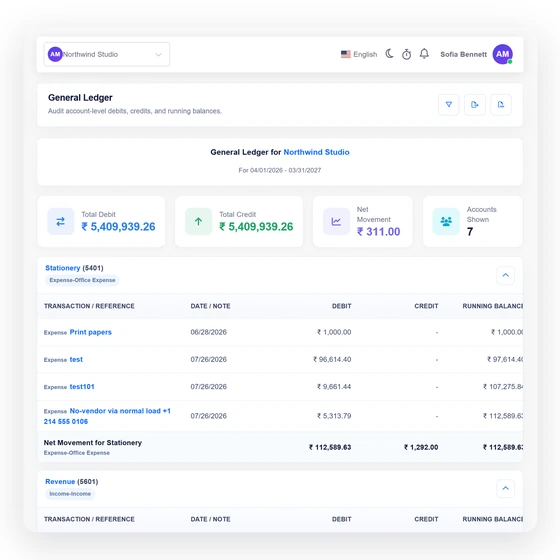
See each transaction behind the total
The report expands an account's period movement into transaction-level rows with date, description, debit, credit and net movement context.
Accounting
The General Ledger is the transaction-level companion to Invoice Crowd's financial statements. Filter an account and period, review debit and credit movement, and follow source-aware links where the originating record is available and belongs to the selected business.
Last updated:
How it works
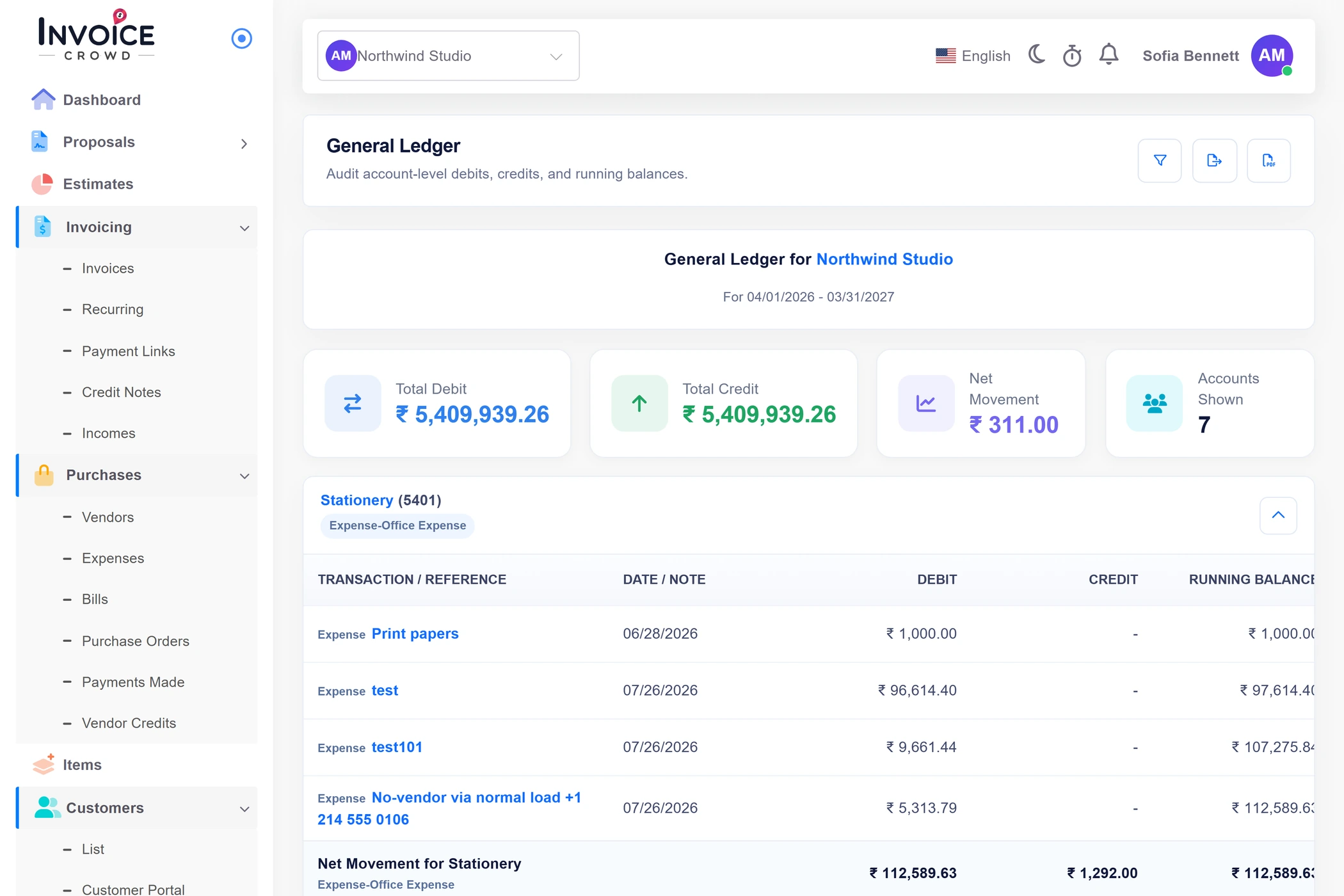
The ledger keeps each transaction line visible with its account context and provenance. When a source is unavailable or foreign, the report omits an unsafe edit link rather than opening the wrong record.
Dates, descriptions and classified movement line by line.
The report expands an account's period movement into transaction-level rows with date, description, debit, credit and net movement context.
Choose the business, account and date range that belongs in the review. The ledger computes the selected view live rather than serving a separately maintained report cache.
Open the source that actually owns the record.
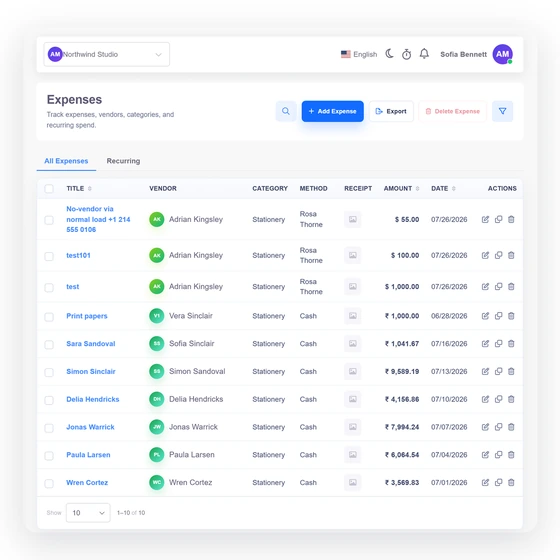
A standalone expense can open its owned expense editor, while an invoice-managed item goes back to the source invoice. The same provenance rule applies across the supported report adapters.
If the source document is unavailable, foreign or only a preserved sentinel, Invoice Crowd leaves out the edit link instead of guessing which editor should open.
Carry the filtered evidence into a review without overstating it.
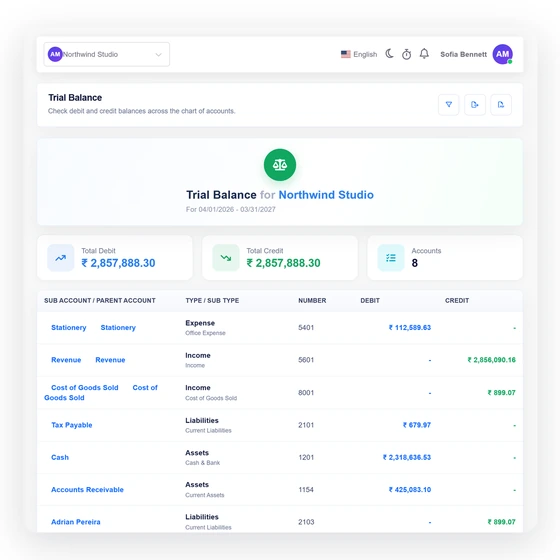
The ledger provides the established export formats for the current report context. Keep the selected filters with the review so a later reader knows what the totals cover.
The report makes recorded activity inspectable; it does not validate every historical posting, create a balancing entry or rewrite a document when the ledger looks wrong.
Built in
Transaction detail, source navigation, filter context, export formats and the boundaries around legacy data.
The report expands an account's period movement into transaction-level rows with date, description, debit, credit and net movement context.
Choose the business, account and date range that belongs in the review. The ledger computes the selected view live rather than serving a separately maintained report cache.
A standalone expense can open its owned expense editor, while an invoice-managed item goes back to the source invoice. The same provenance rule applies across the supported report adapters.
If the source document is unavailable, foreign or only a preserved sentinel, Invoice Crowd leaves out the edit link instead of guessing which editor should open.
The ledger provides the established export formats for the current report context. Keep the selected filters with the review so a later reader knows what the totals cover.
The report makes recorded activity inspectable; it does not validate every historical posting, create a balancing entry or rewrite a document when the ledger looks wrong.
Inspect dates, descriptions and amounts line by line.
Keep the account number and classification with the movement.
Open the right owned editor where an eligible source exists.
Missing or foreign sources do not get guessed links.
Start from the account-level debit and credit summary.
Review the classification tree behind the report.
Questions
Invoice Crowd's General Ledger is a transaction-level report of account movement for the selected business and period. It shows the dates, descriptions and debit or credit classification behind an account total.
Where the source exists, belongs to the selected business and has a safe editor mapping, Invoice Crowd can link a ledger row back to that source. Missing or foreign sources receive no guessed fallback link.
Yes. Invoice Crowd provides PDF, CSV and Excel exports for the current General Ledger context.
The report is computed from the current recorded data, so a valid source change can affect the next report load. Opening the report itself does not mutate the source.
No. The Trial Balance summarizes debit and credit movement by account; the General Ledger shows the transaction-level rows behind those account totals.
No. The General Ledger is evidence for review. Correct the factual source through its normal workflow or use the controlled accounting audit and repair process when historical integrity is involved.
Filter the account, inspect each movement and follow safe source links when the statement needs evidence.