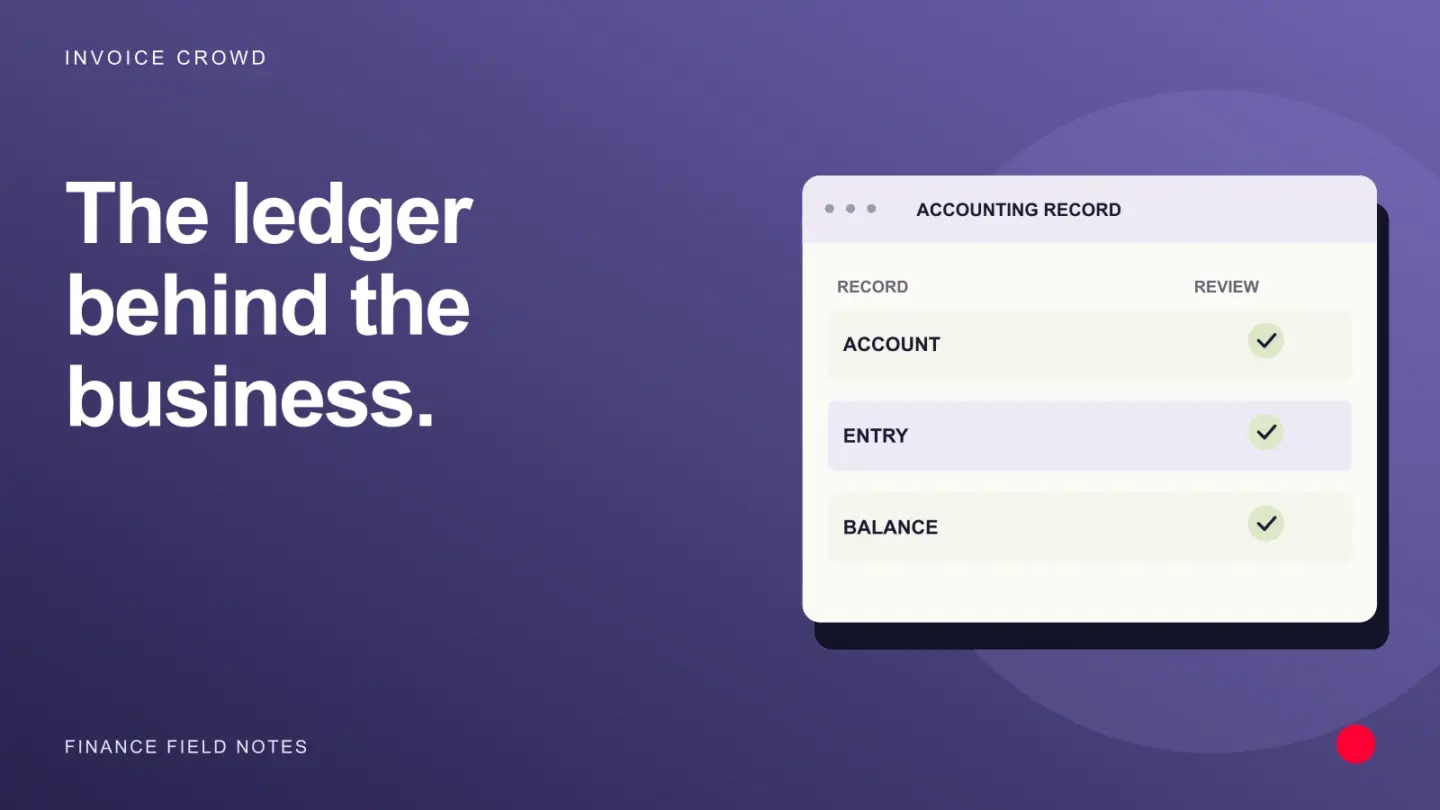
A general ledger is the central accounting record that groups posted transaction effects by account and supports the balances used in financial statements.
Use controlled accounts, dates, references and balanced entries, then reconcile ledger balances to independent subledgers, statements and source evidence.
General ledger accounts and example
| Date | Reference | Account | Debit | Credit |
|---|---|---|---|---|
| 5 Aug | IC-2048 | Accounts receivable | $1,000 | |
| 5 Aug | IC-2048 | Service revenue | $1,000 | |
| 12 Aug | PAY-661 | Cash | $1,000 | |
| 12 Aug | PAY-661 | Accounts receivable | $1,000 |
The general ledger organizes entries by chart-of-accounts code while preserving the journal, source and posting date. Reconcile cash to bank statements, receivables and payables to subsidiary ledgers, tax to returns, and fixed assets to the asset register. An unexplained journal that makes the accounts agree is not reconciliation.
Trace a ledger balance back to its source
Start with the account activity for the period and inspect the document or journal behind unusual entries. A trial balance shows account totals, while the general ledger explains the movements that created them. Review direct journals to customer or supplier control accounts carefully because they can create differences from the supporting subledger.
Example
A $1,000 credit sale debits accounts receivable and credits revenue, with the invoice reference connecting both general-ledger postings to the customer record.
What to watch for
A ledger balance can be mathematically balanced and still be wrong because of an incorrect account, date, entity, currency, amount or unsupported journal.
Put the next step into practice
Read our guide to double-entry bookkeeping for the related workflow. Explore Invoice Crowd accounting to see the product capabilities relevant to your setup.