Skip to content

Proposal and invoicing software for solopreneurs, with the books included

Invoice Crowd is proposal, invoicing and accounting software for a business of one: the sales team, the billing department and the bookkeeper in one account. From the Pro plan up, it holds a second brand beside the first without a second subscription to pay for.

  • Up to 10 business profiles
  • Proposals through to ledger
  • No second bookkeeping tool
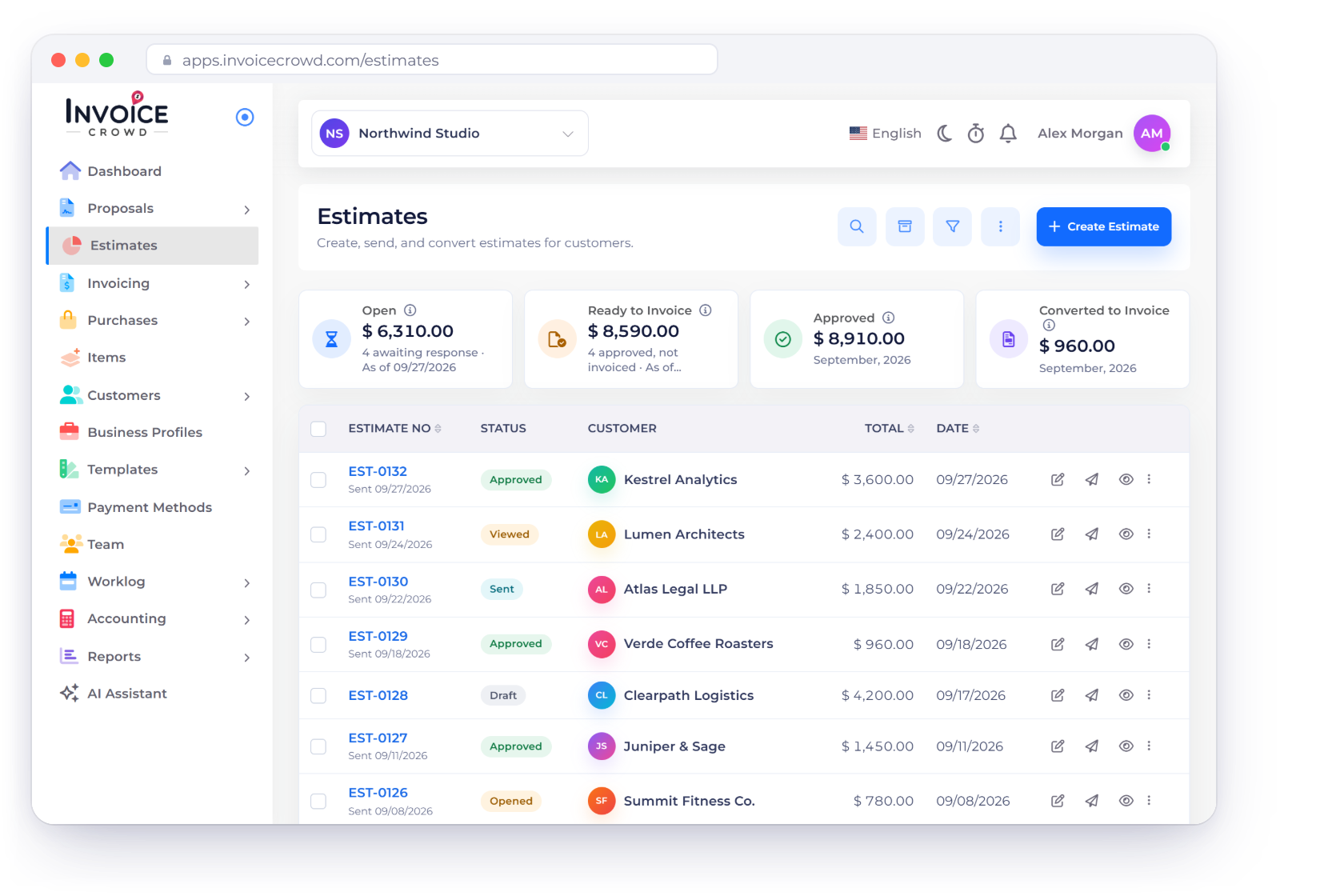
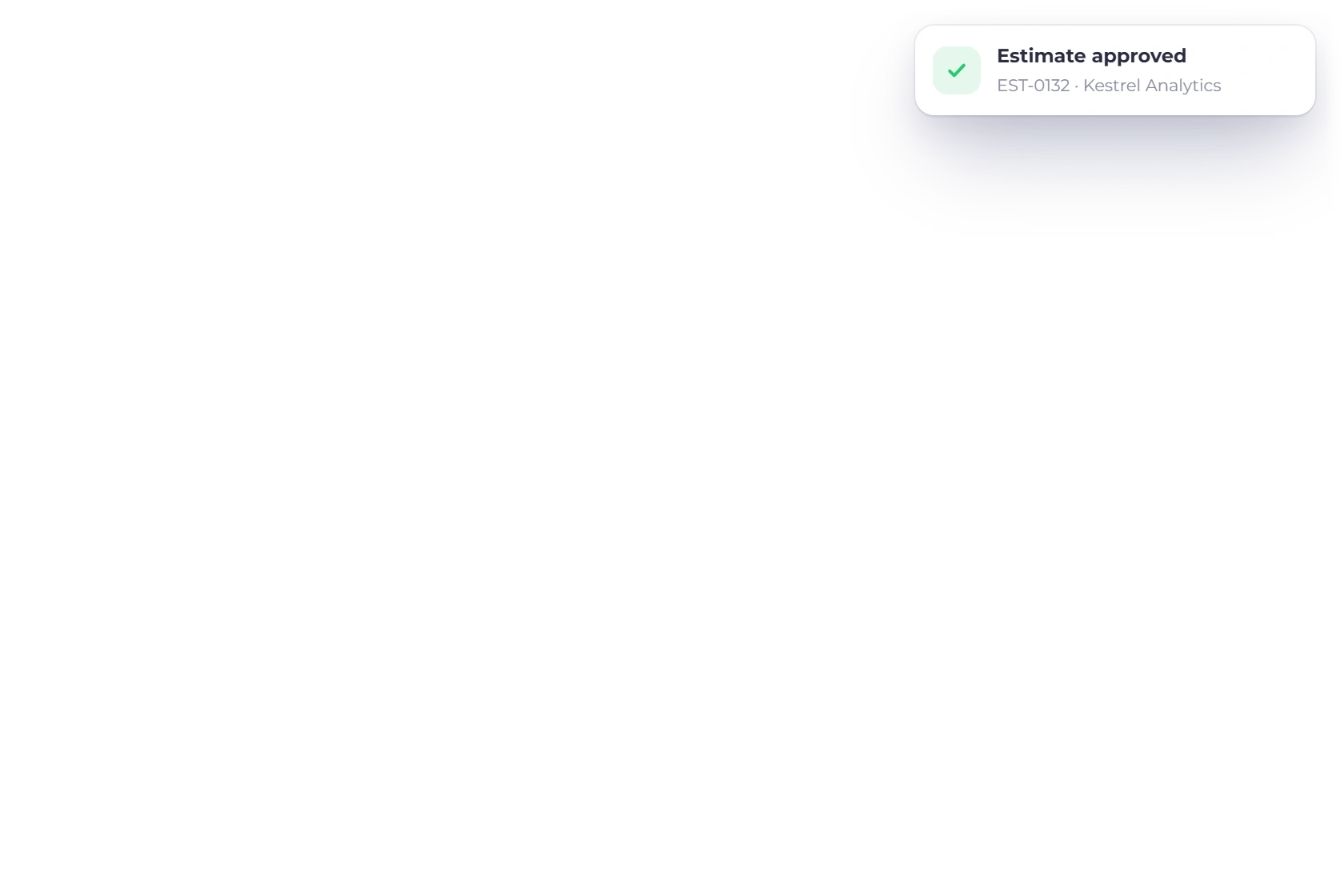
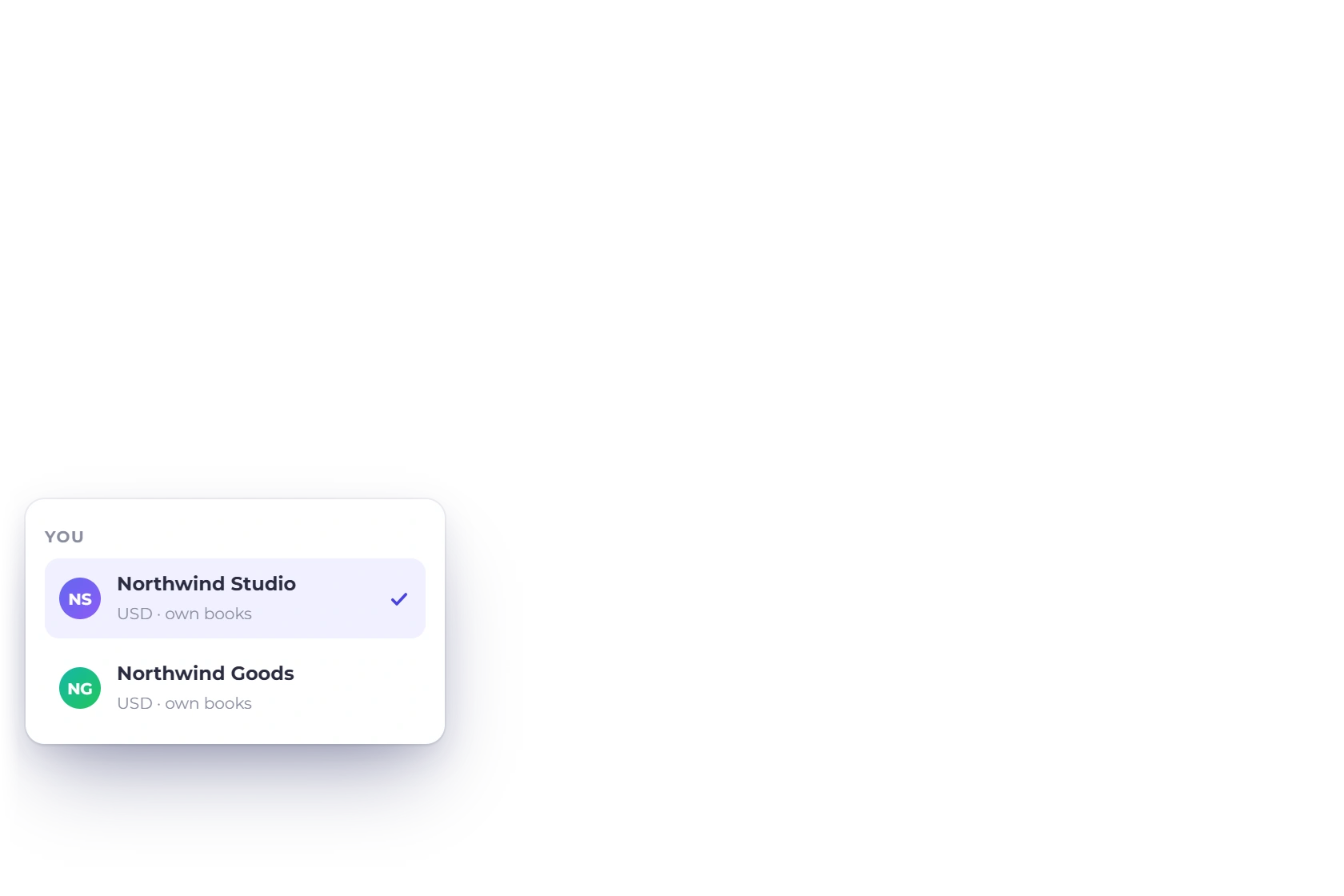
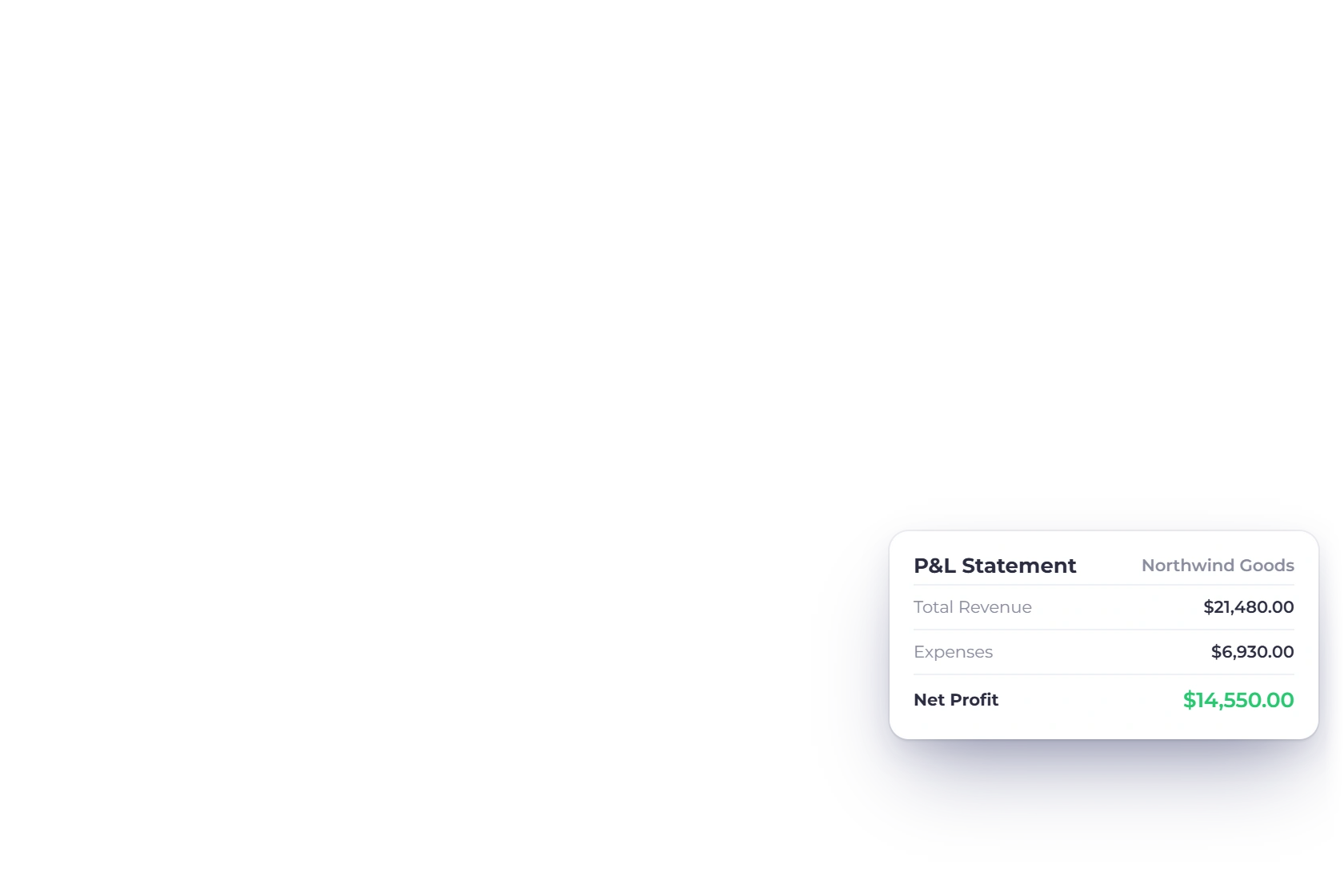
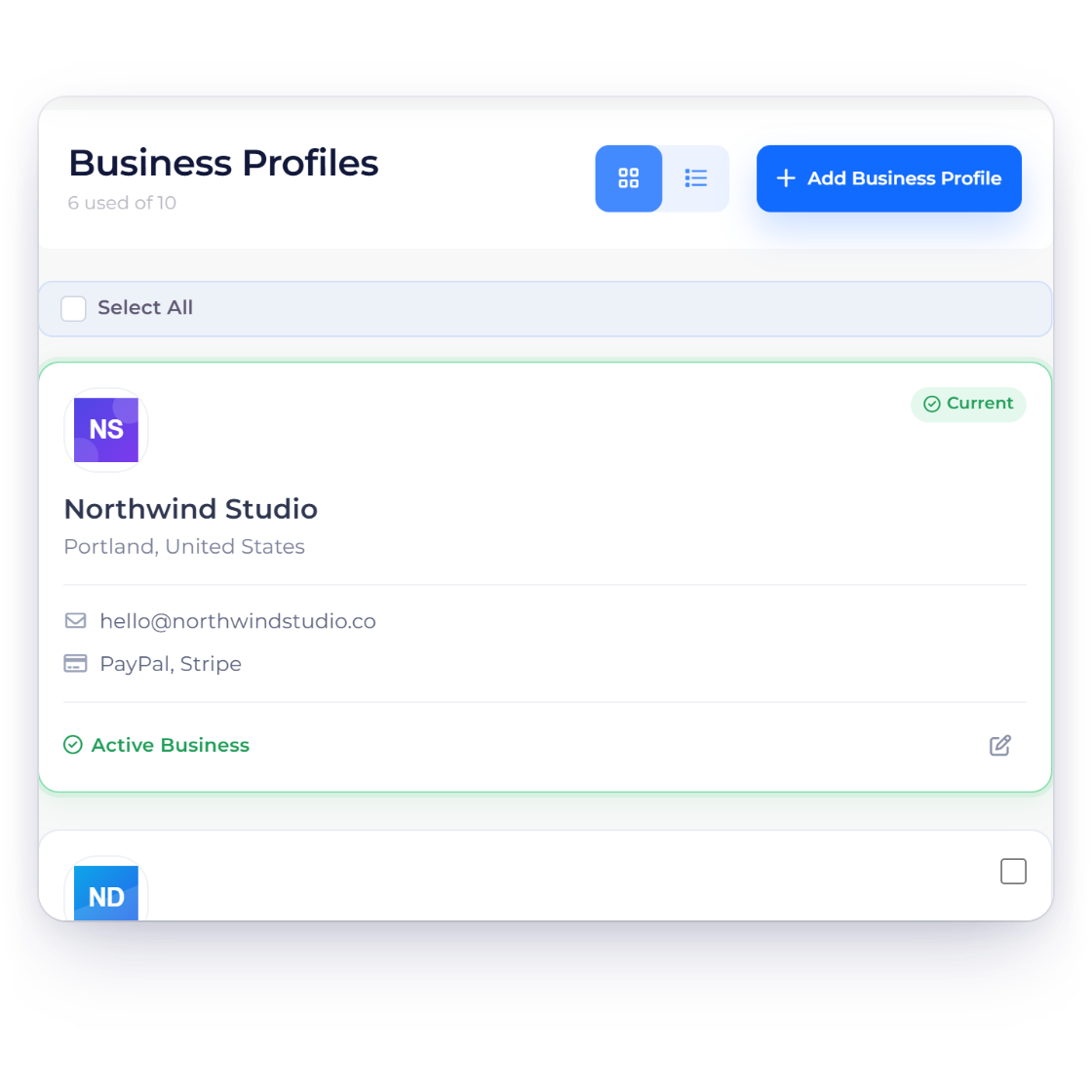
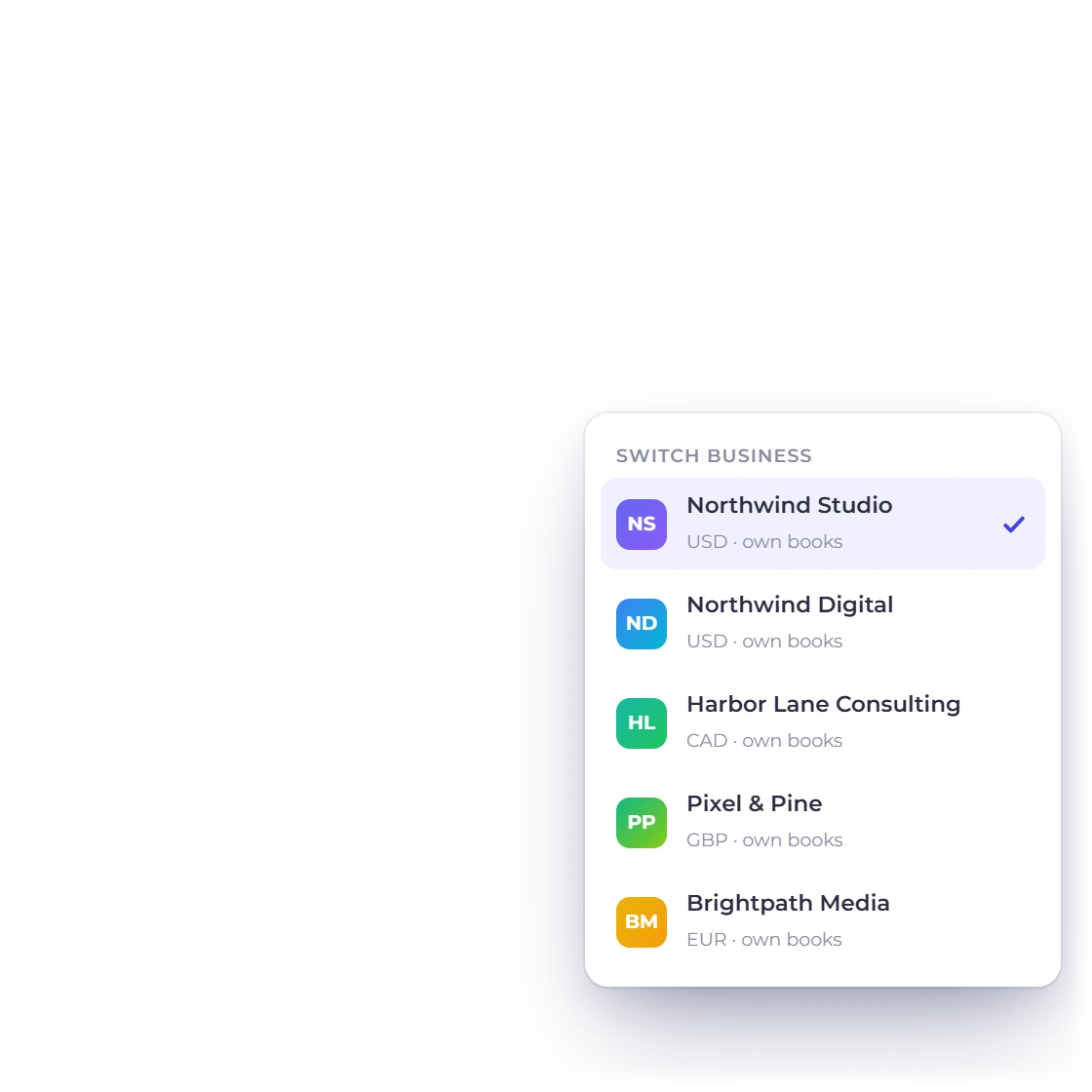
Invoice Crowd Estimates screen for a one-person business with approved, viewed, sent and draft estimates, an estimate approved notification, a business switcher with two brands and the profit and loss for the second brand

What is inside

Everything a business of one has to run

Selling the work, billing for it and booking it are three different jobs, and the same person does all three. These are the pieces that stop each becoming an evening.

One login, more than one business

Separate brands, separate books

Business profiles keep the ventures apart

Run the consultancy and the product from the same account without their numbers meeting. Each profile carries its own name, logo, invoice template, customers and books, so a statement for one venture never quietly picks up revenue that belongs to the other.

  • Two profiles on Pro, five on Team, ten on Business
  • Its own branding and invoice template per profile
  • Every invoice and expense is tagged to a profile
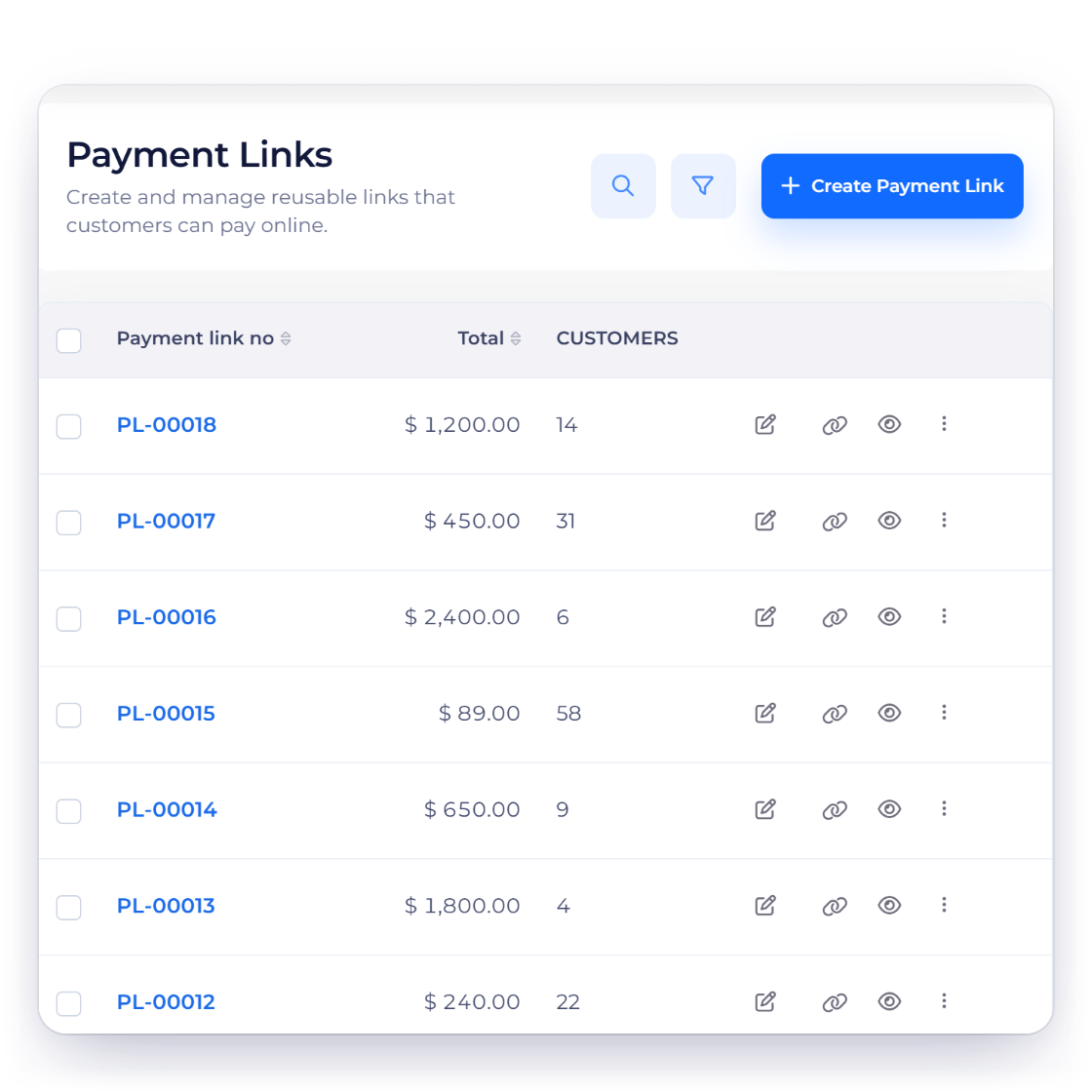
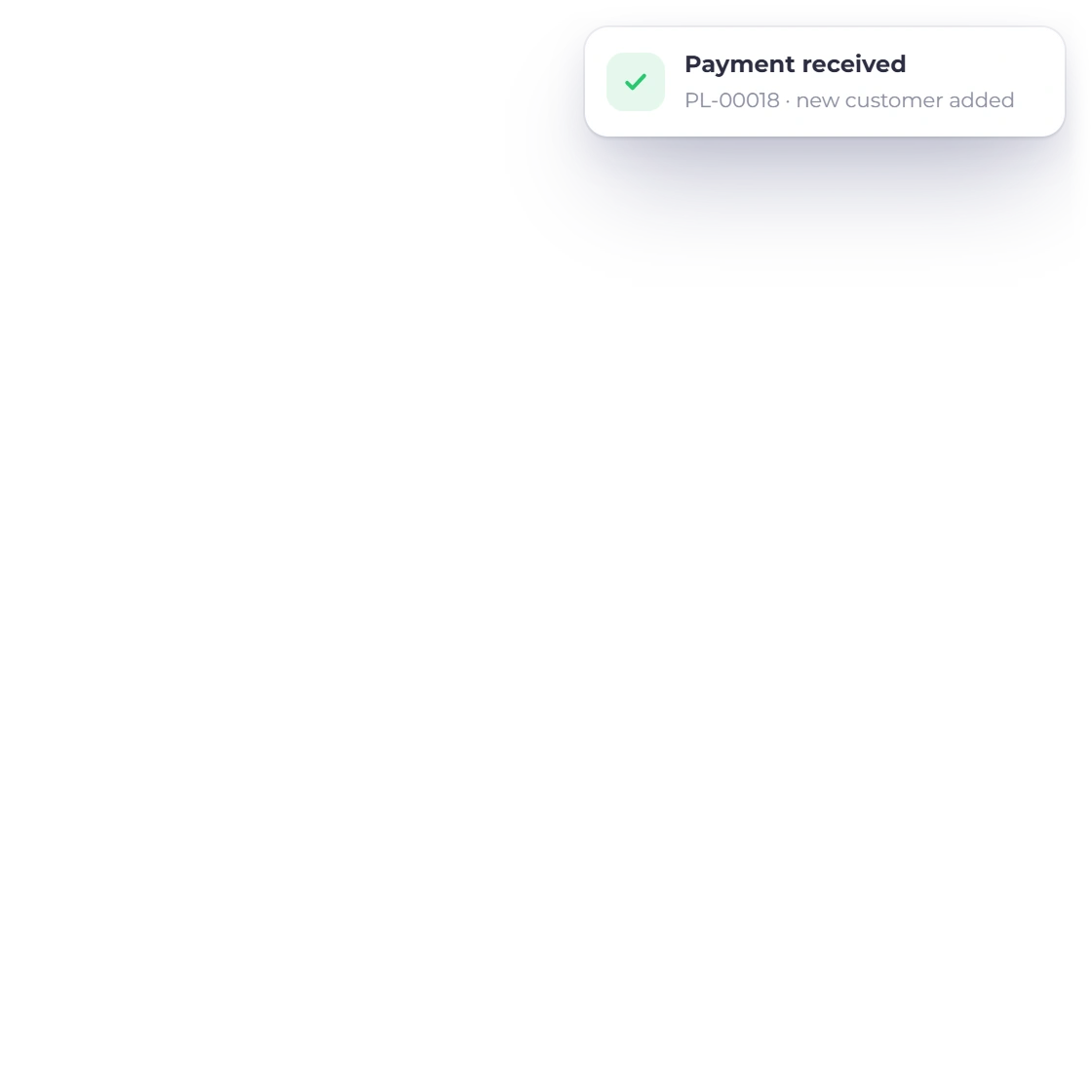
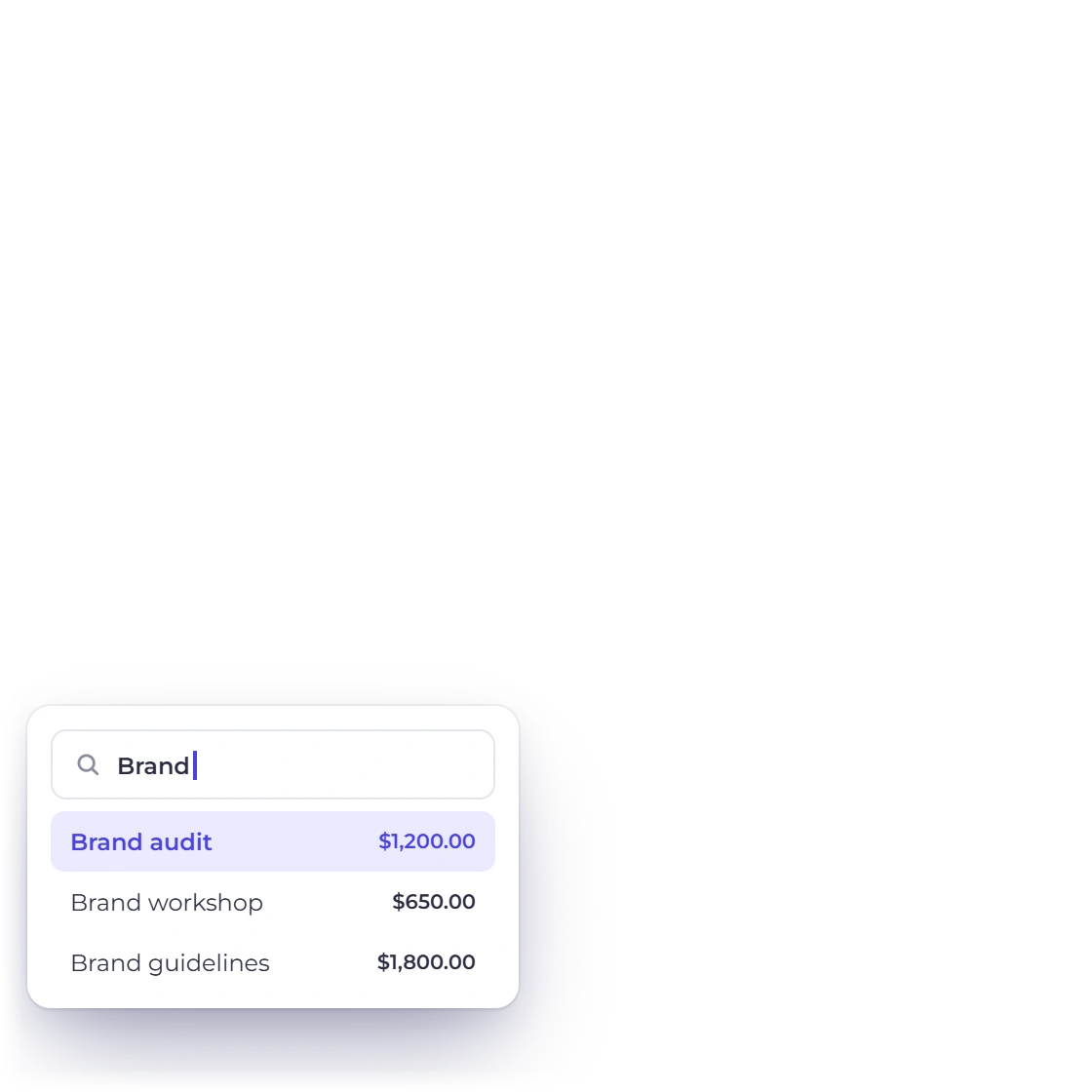
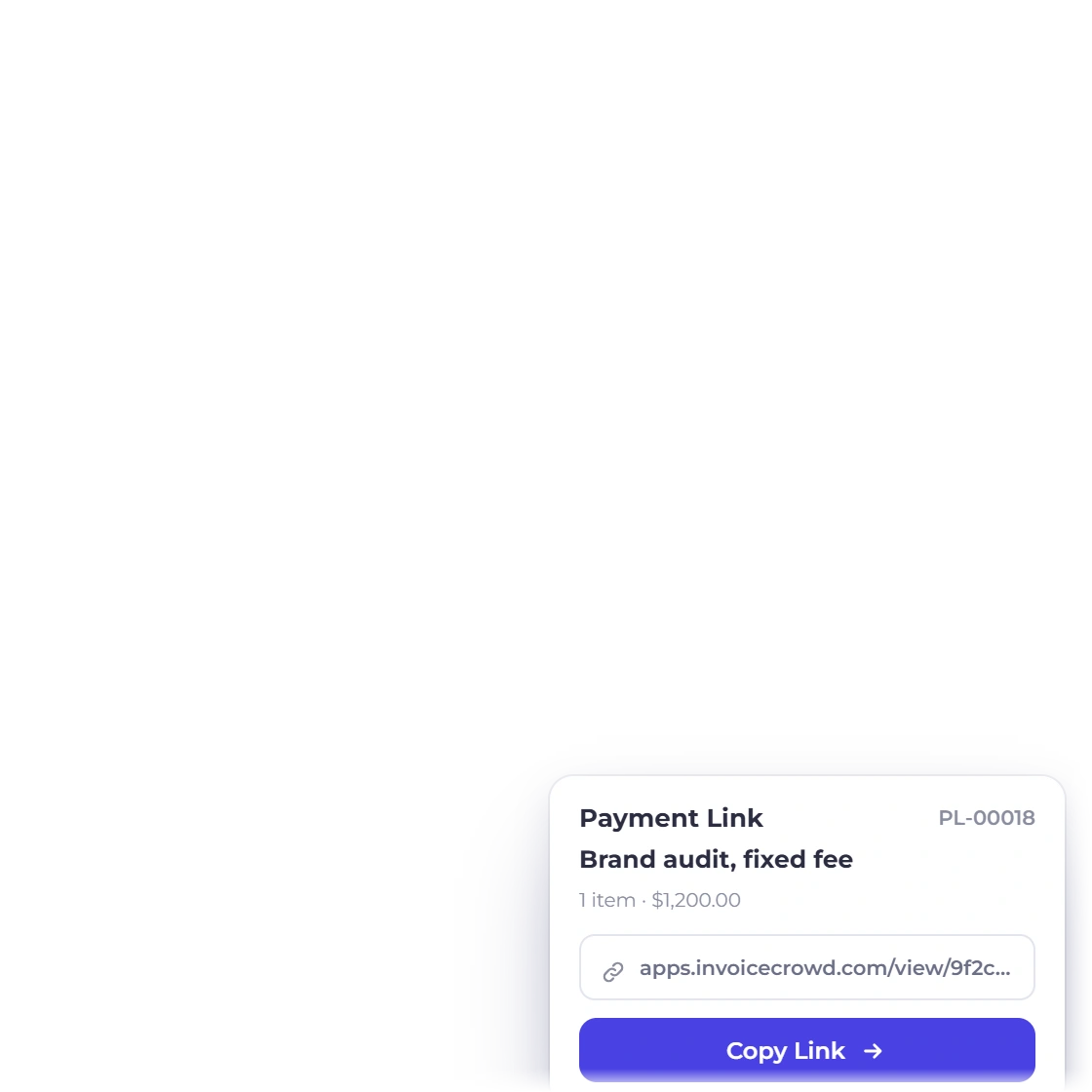
Invoice Crowd Payment Links list with fixed-price offers and how many customers bought each, a payment link ready to copy and share, and saved items found by a search

Payment links instead of pricing from scratch

The three or four things you actually sell can sit as payment links: a fixed offer with its price already worked out, shared as a link the client pays online, which raises the invoice for you. Saved items cover the lines you bill on a quote or an invoice, so nothing gets priced twice.

  • Reusable payment links with a set price
  • Saved items for the lines that recur
  • Saved items work on a quote and its invoice
How payment links work

Sell it, then bill it

Without typing the same lines twice

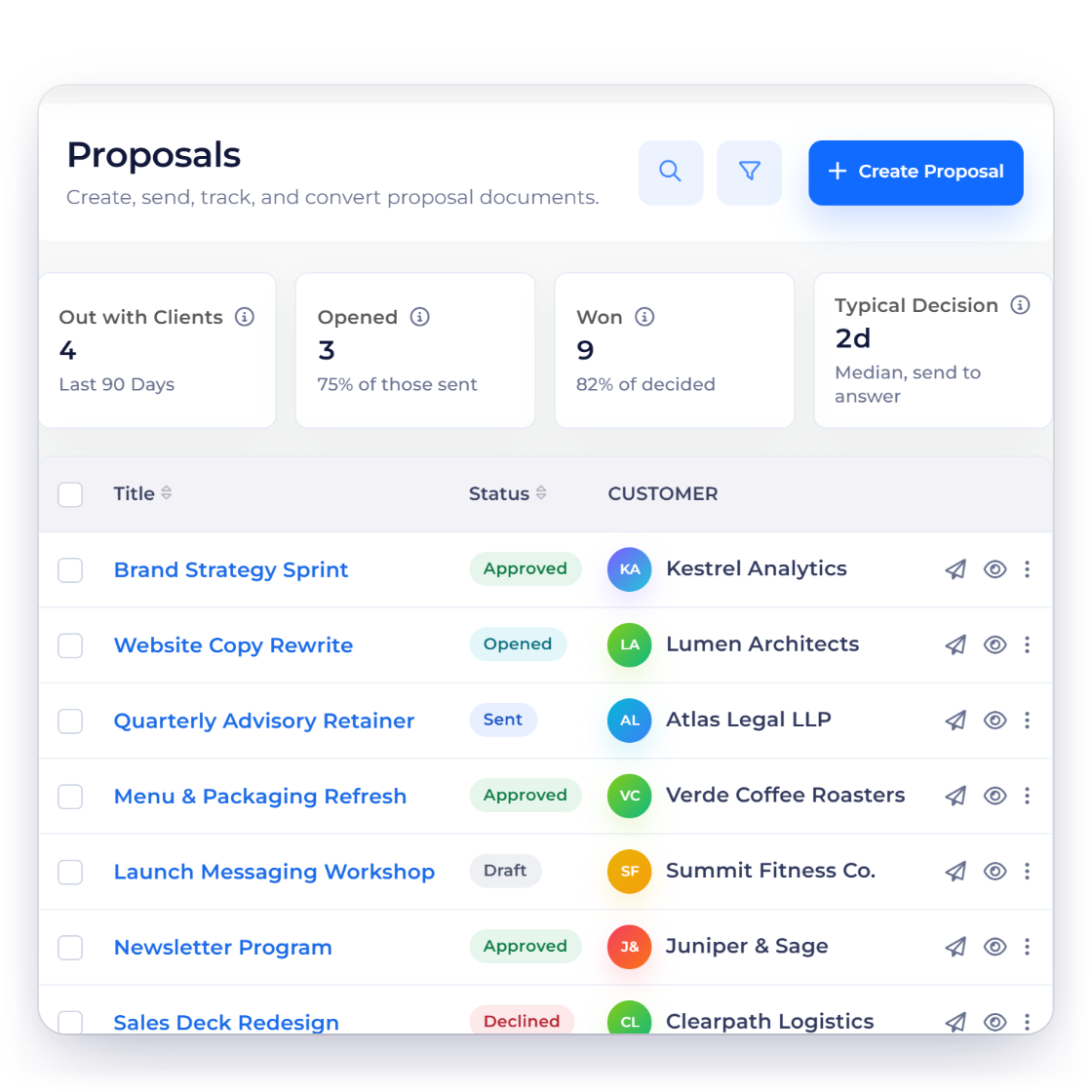
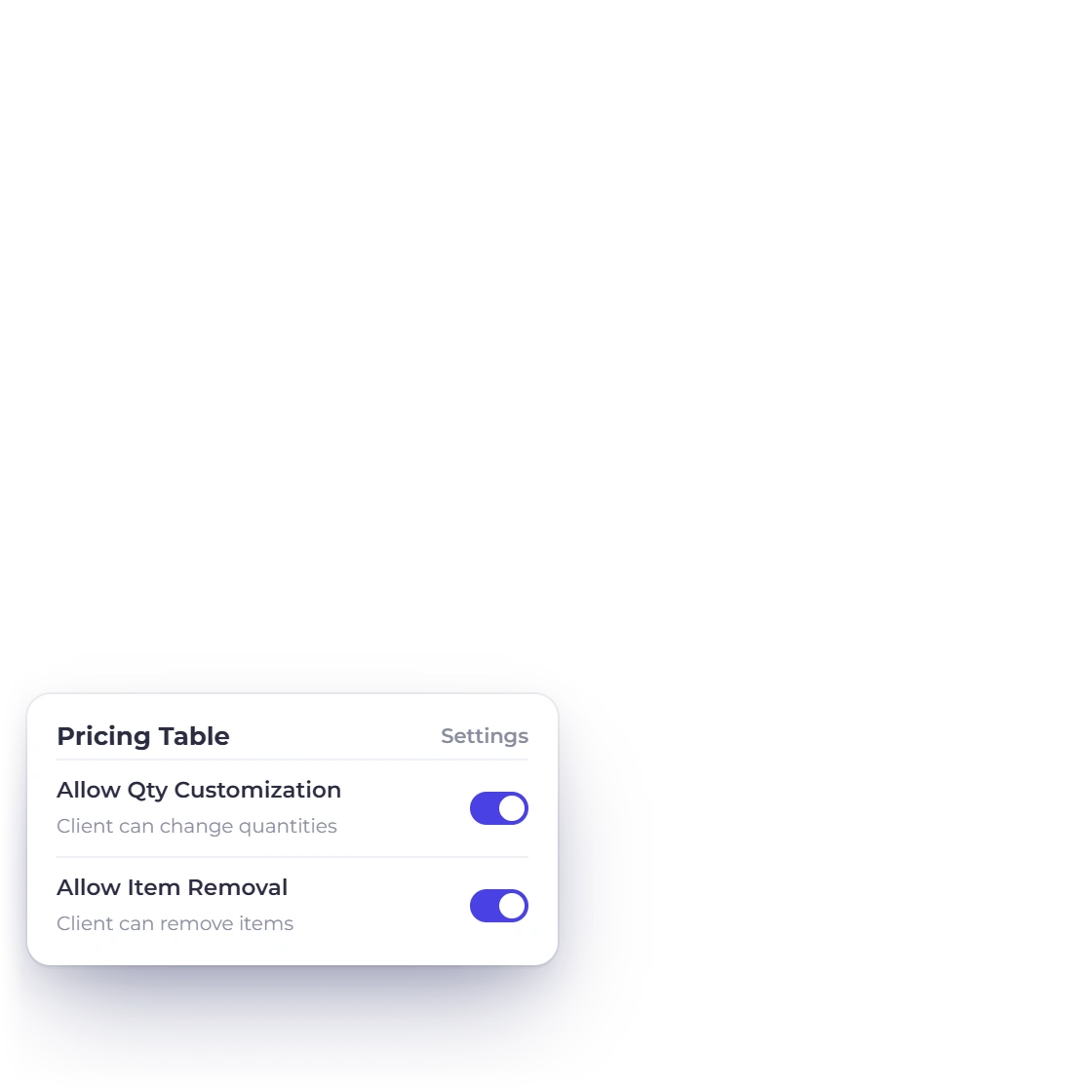
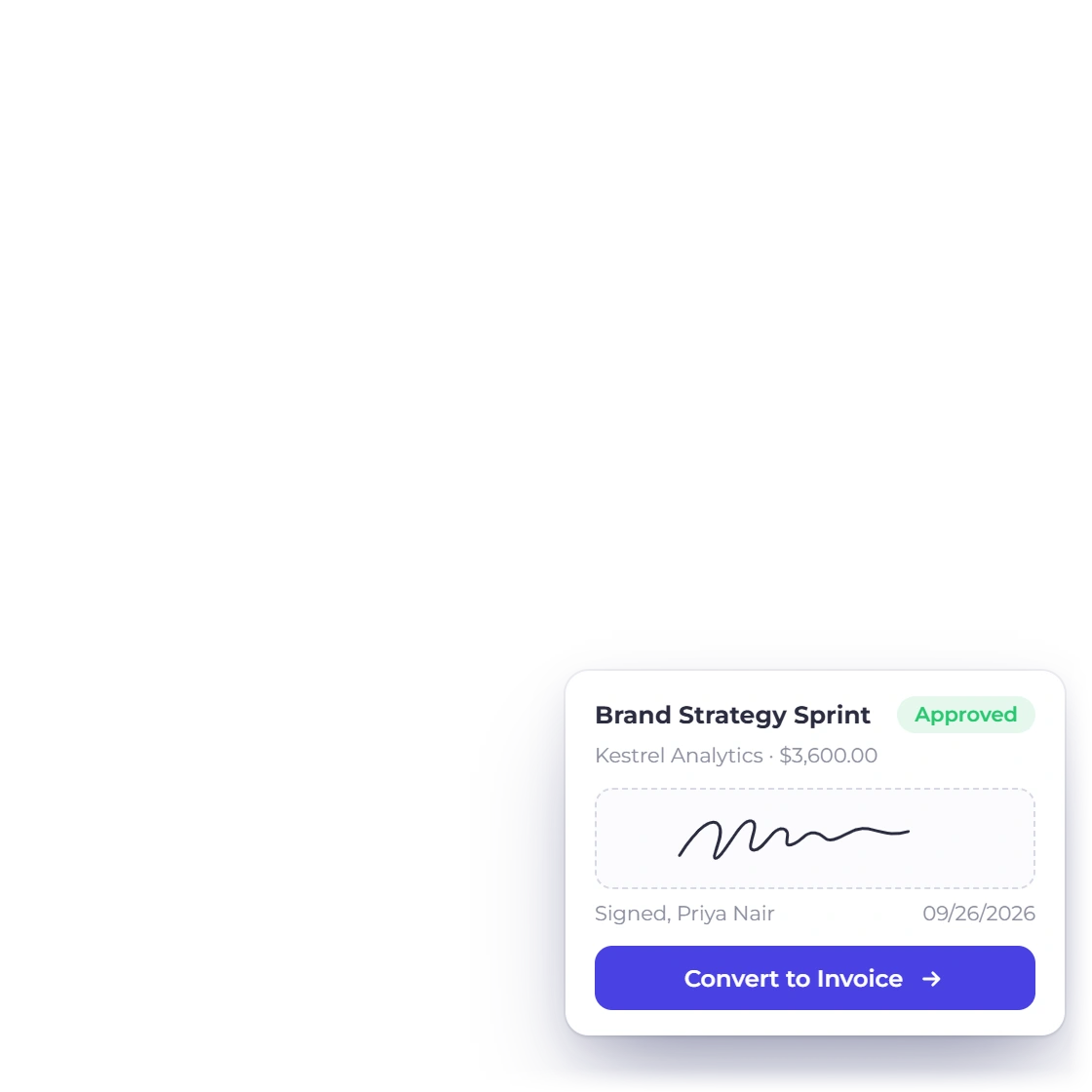
Invoice Crowd proposals list with win-rate figures, the pricing table settings that let the client change quantities and remove items, and a signed proposal ready to convert to an invoice

Proposals that come back signed

Send a proposal the client signs in the browser, with client-removable line items they can take or leave and quantities they can set where you allow it. What comes back is the version they agreed to, and that version is what converts, so the invoice never argues with the quote.

  • E-signature on the proposal itself
  • Client-removable items and client-editable quantities
  • One step from approved document to invoice
Client-removable line items
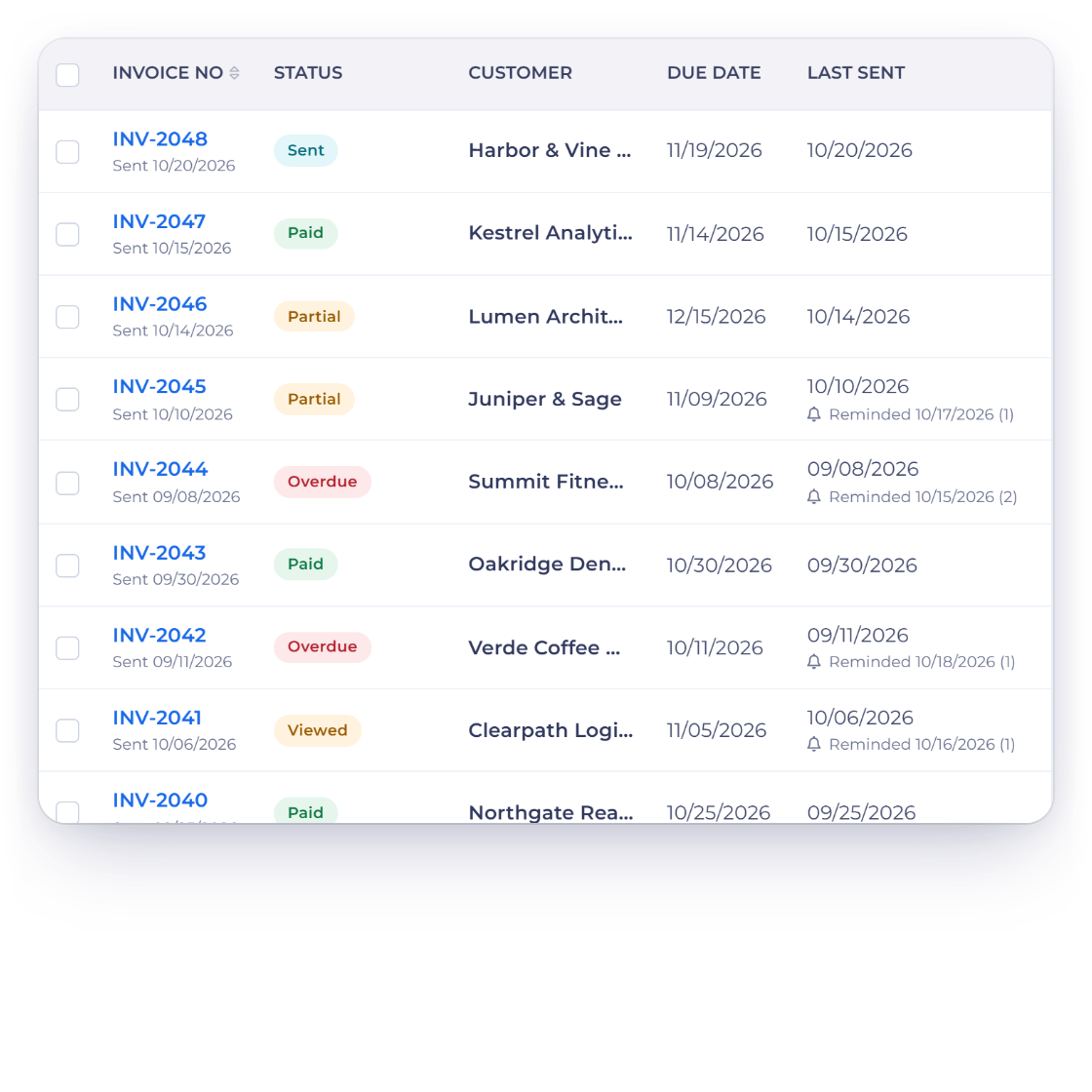
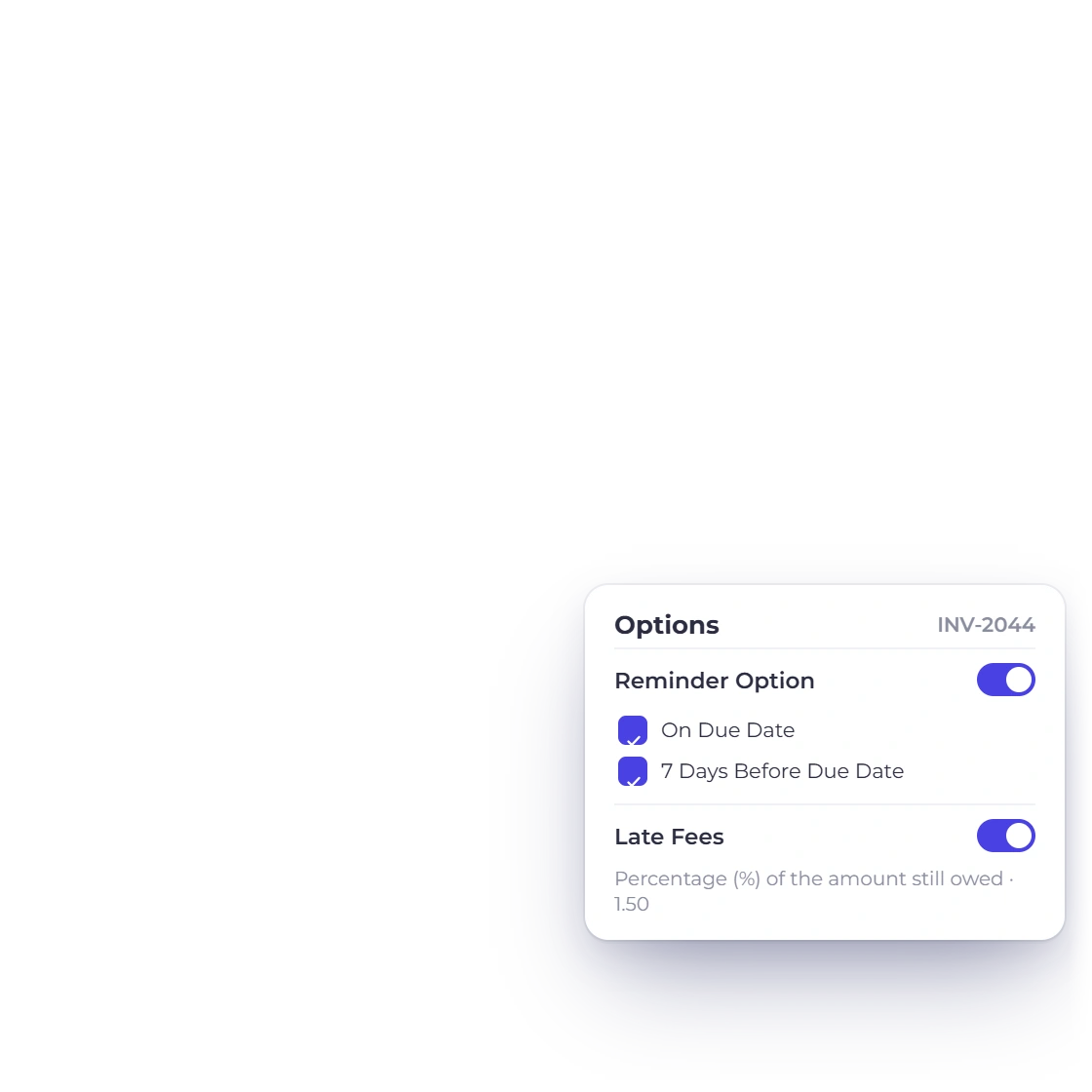
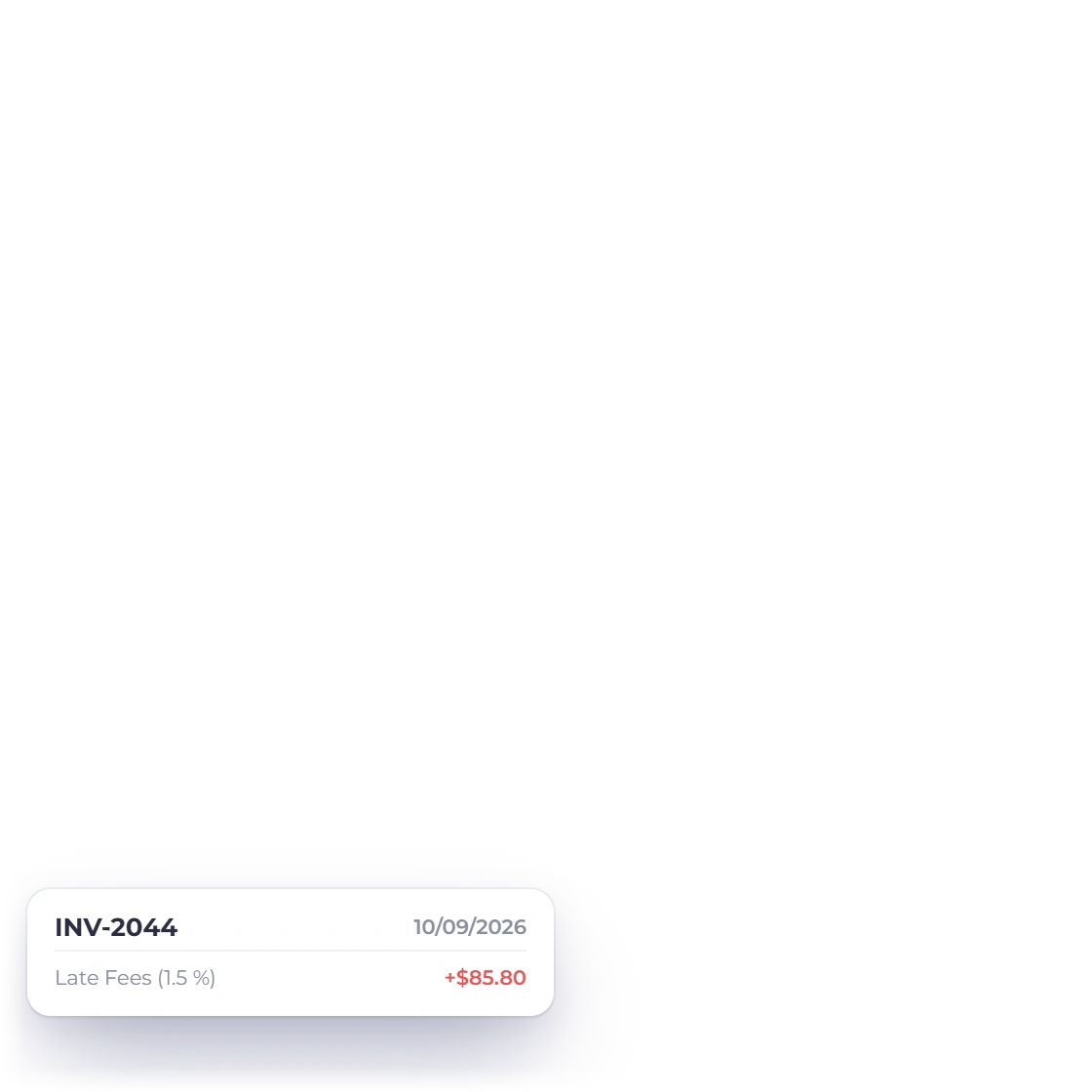
Invoice Crowd invoices list with overdue invoices and their Reminded dates, the Reminder Option and Late Fees options on one invoice, and the late fee added the day after its due date

Recurring billing, and the chasing after it

On a paid plan, subscriptions, retainers and maintenance plans run on a cycle you set once, each period raising its own invoice. If a client buys a set number of hours a month, a retainer counts your logged time against them and bills any extra on the next invoice. Reminders go out before and after the due date, and a flat or percentage late fee set on the invoice is added automatically if it is still unpaid after the due date, which is the part a one-person business usually lets slide.

  • Retainers that count the hours you log
  • Reminders on both sides of the due date
  • Late fee as a percentage or a flat amount
Recurring invoices and retainers

No second tool for the books

Where the second subscription usually goes

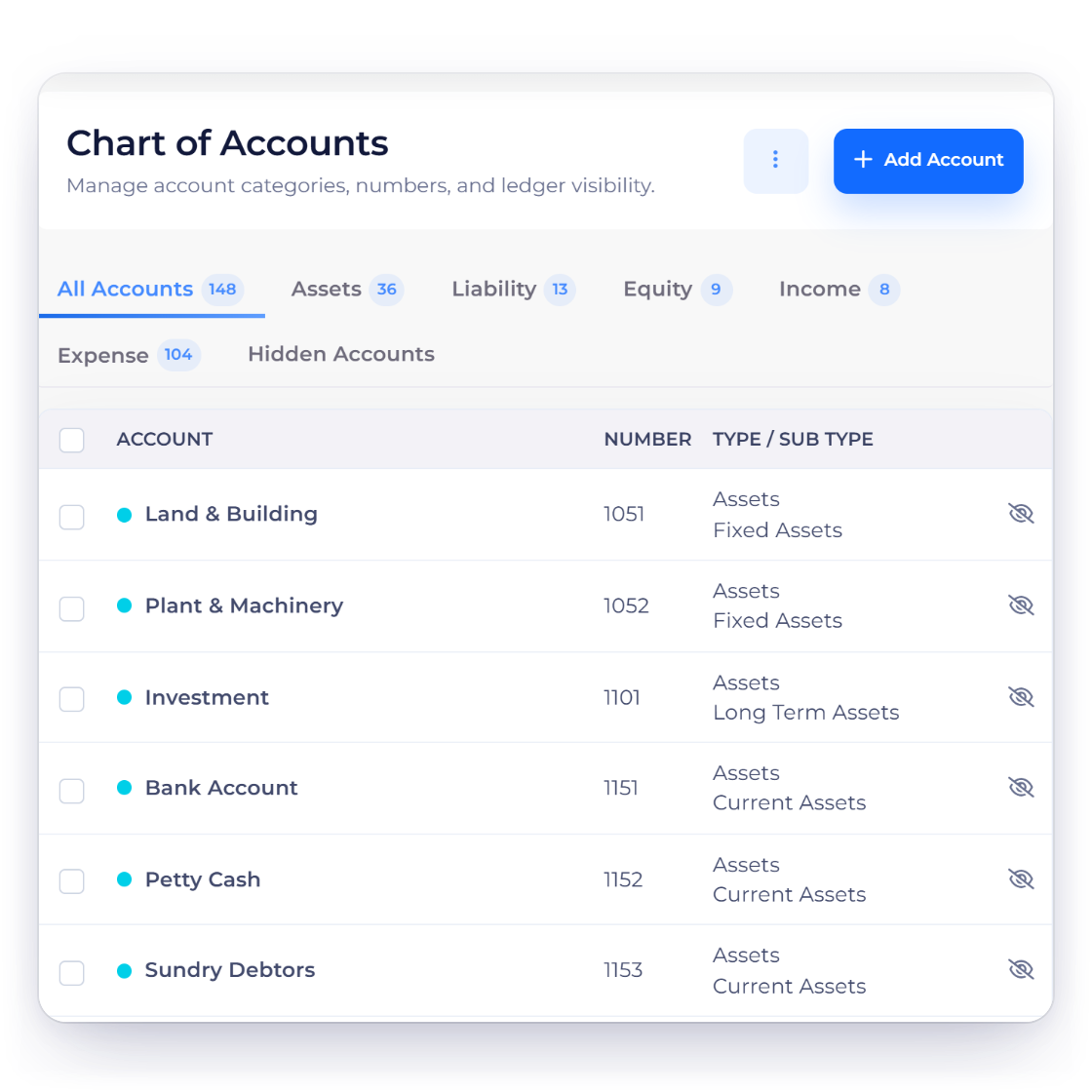
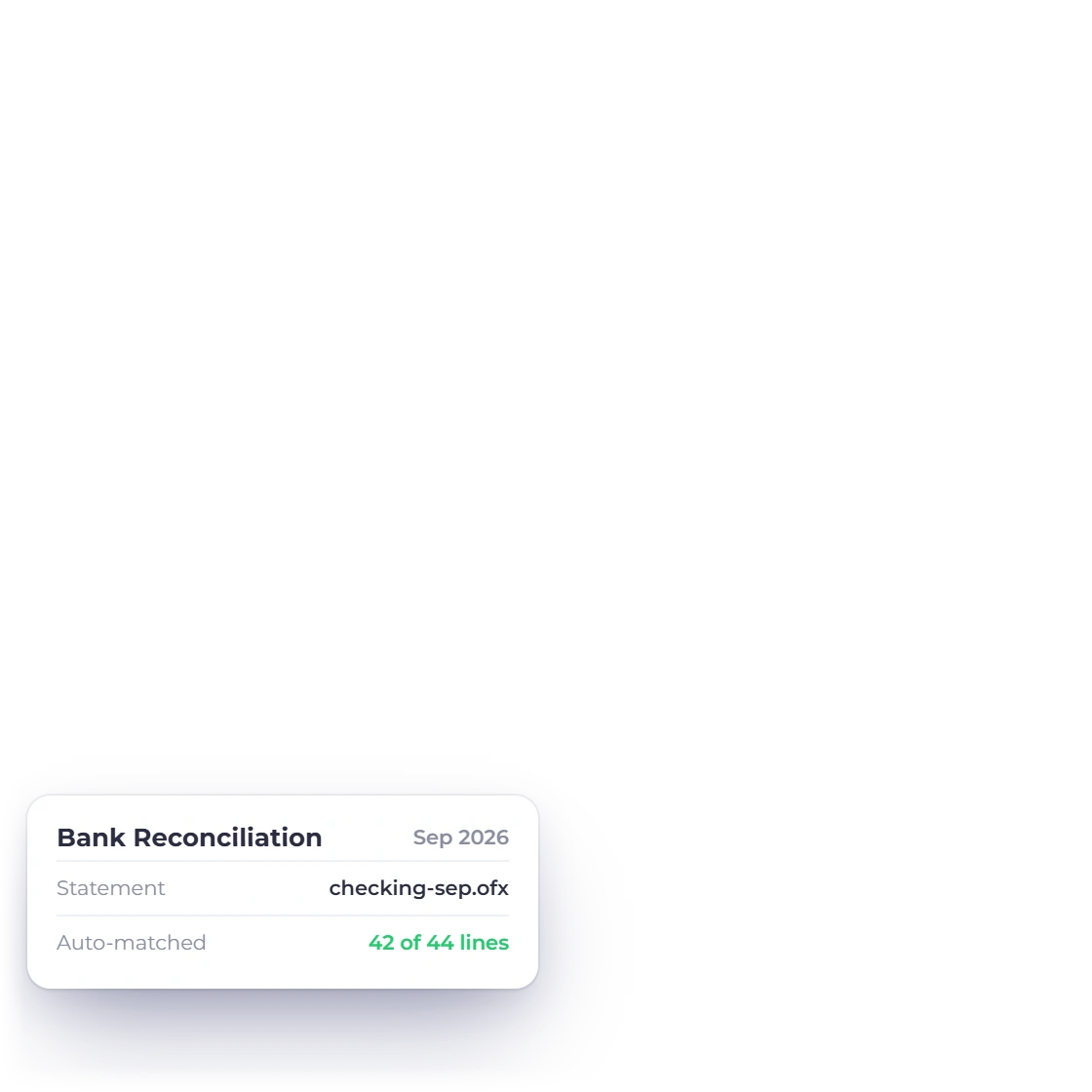
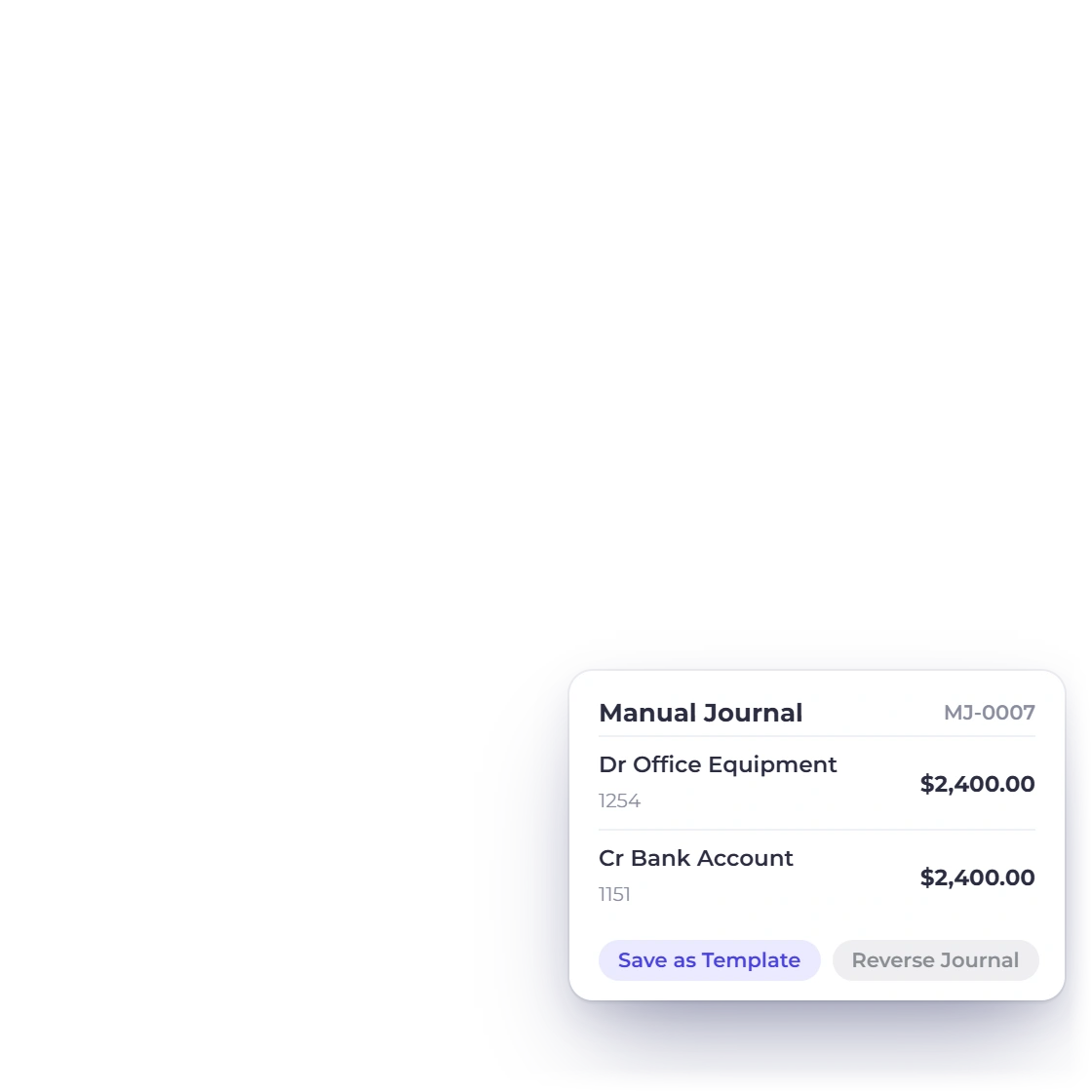
Invoice Crowd chart of accounts with numbered asset accounts, a manual journal with a debit and a credit line, and a bank reconciliation with matched statement lines

The accounting is in the same account

The ledger sits directly under the invoicing. Every invoice and cost you save is posted to a ready-made chart of 148 accounts, and the trial balance, profit and loss and balance sheet are built from those entries.

  • Lock a finished period so its numbers can't change
  • Manual journals and opening balances for a mid-year move
  • Bank reconciliation and a fixed asset register alongside
The full accounting module
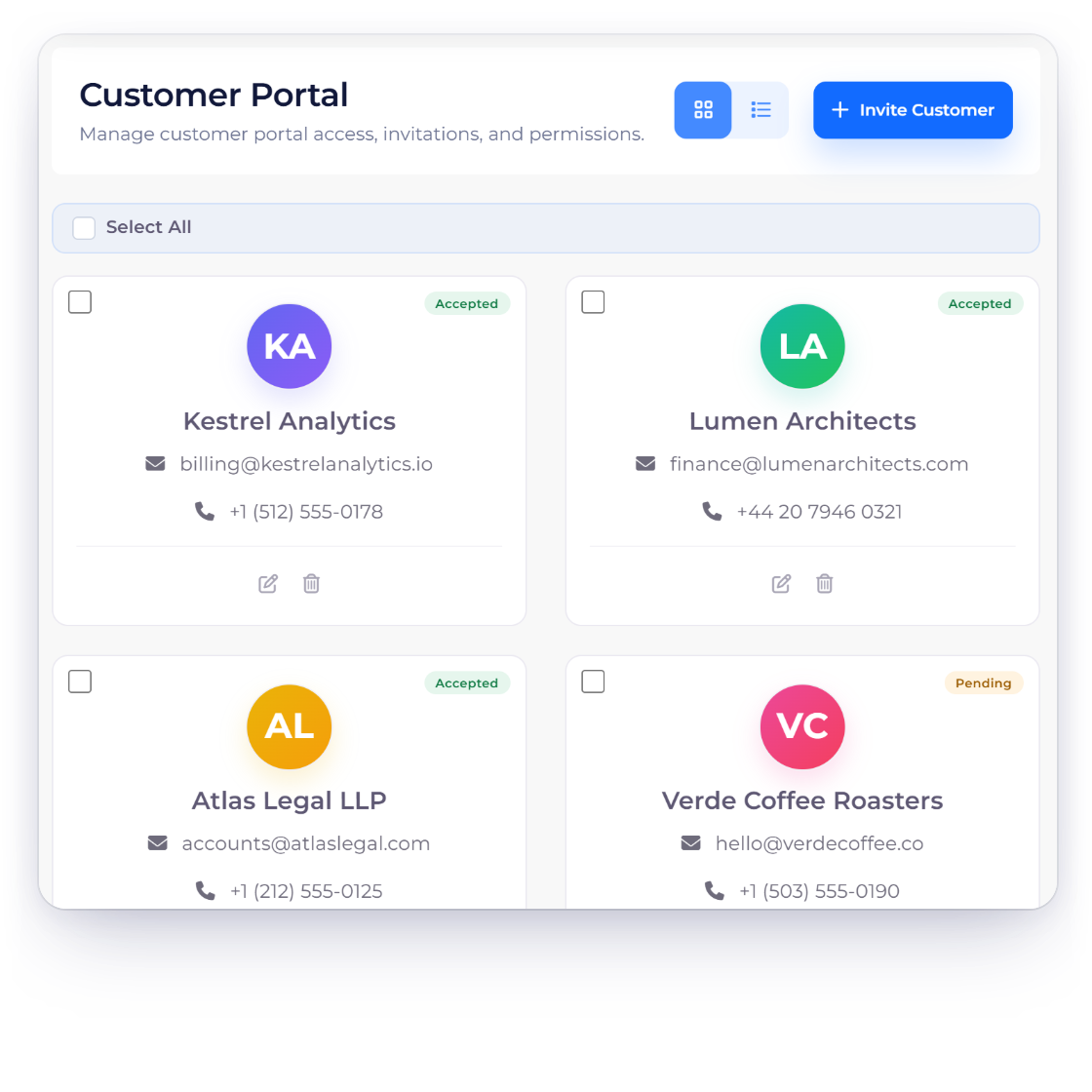
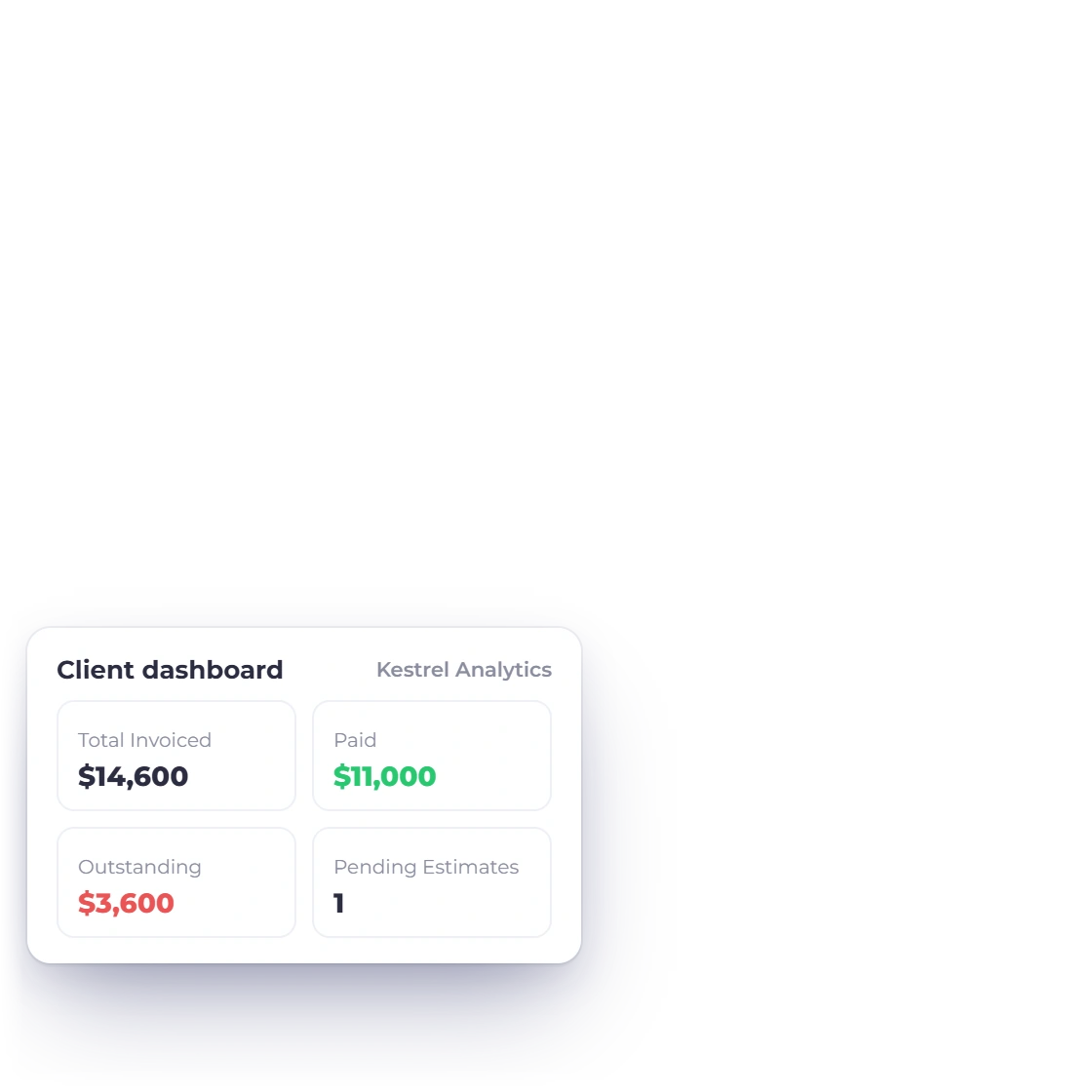
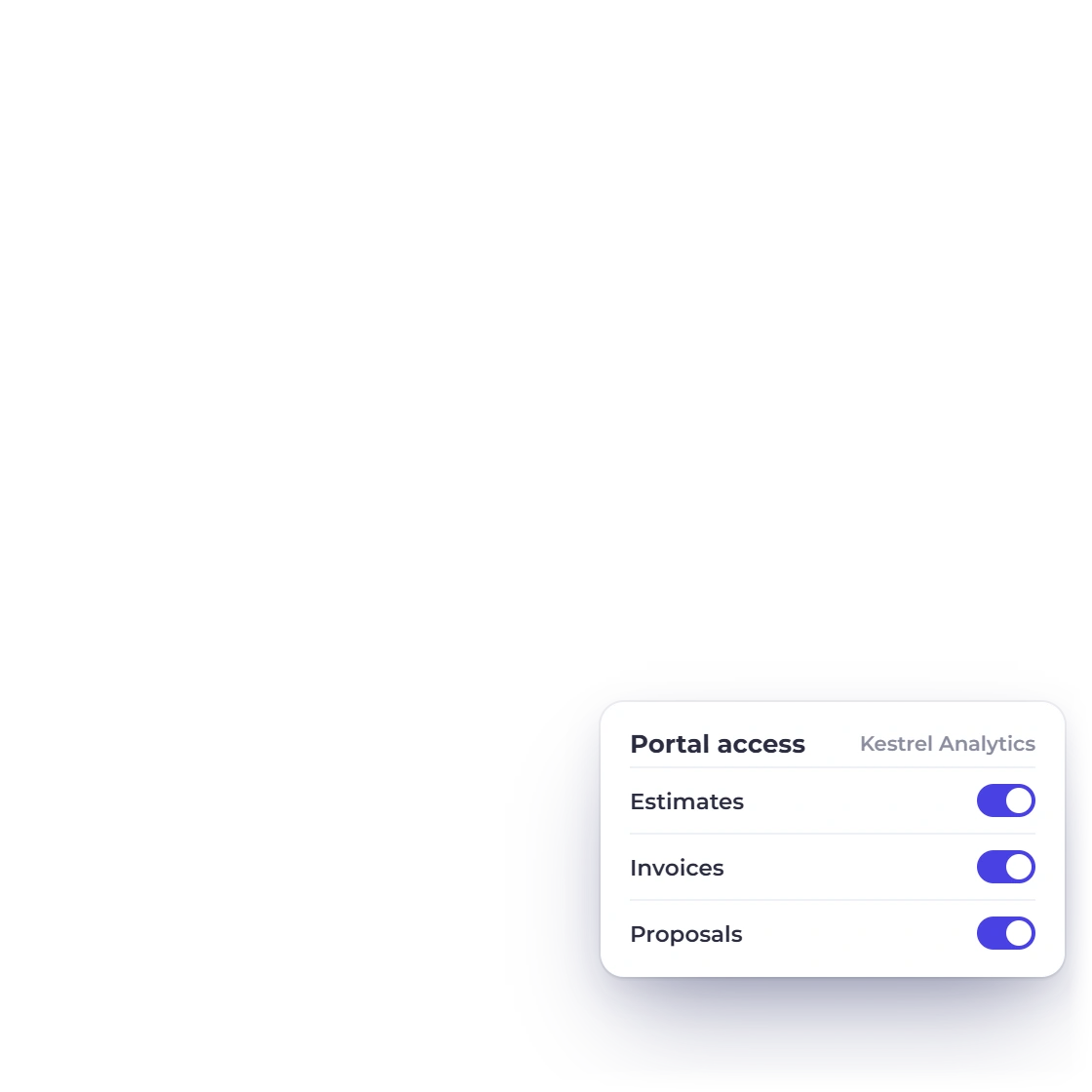
Invoice Crowd Customer Portal screen with invited clients and their access status, the totals a client sees when they sign in, and the documents their portal shows

Clients answer their own questions

One person cannot also be a support desk. The portal gives each client a sign-in of their own showing the estimates waiting on them, the invoices they owe and what they have already paid, which is where the “can you resend that invoice?” emails stop arriving at nine in the evening.

  • View, download and pay in one place
  • Their whole history with you, not just the last document
  • Approve an estimate without an email thread
The customer portal

One subscription, not four

What a solo stack usually pays for twice

Working alone, every extra tool is another login, another bill and another export to reconcile. These four things are already in the one account.

  • Selling and booking in one place

    The thing that wins the work and the thing that books it are the same subscription, which is exactly where a solo stack normally splits in two.

  • A second brand costs no extra account

    Business profiles keep their own customers, branding and statements under one account: two on Pro, five on Team and ten on Business.

  • Paid however the client pays

    Fifteen payment gateways are available on paid plans, so you can usually offer one that works where your client is.

  • Clients abroad, one set of books

    A client overseas gets an invoice in their own currency while your statements still add up in the single one you report and file in.

Also included

The rest of what running it alone involves

These sit in the same login as the proposals and the ledger, reading the same customers and the same items.

  • Customer records

    One record per client holding their documents, payments and contact details, filterable by profile.

  • Estimate to invoice

    Turn an approved estimate into an invoice without re-entering a single line of it.

  • Deposits and installments

    Take part of the money up front and bill the rest against the same invoice later.

  • Expense tracking

    Log a cost, keep the receipt on it, and see it reach profit and loss immediately.

  • Scheduled reports

    The reports you actually read arrive by email instead of waiting to be run.

  • Invoice templates

    Pick a template per business profile so each brand bills in its own look.

  • Outbound webhooks

    Send new and updated invoices, customers, items, expenses and incomes to a webhook URL you choose, or into Pabbly Connect.

  • Compare current plans

    The free Basic plan covers everyday invoicing with PayPal. Paid plans add recurring billing, retainers and the books, and start with a 30-day free trial with no card needed.

  • Bills from suppliers

    Record a vendor bill, the purchase order behind it and the payment you made against it.

  • 40+ proposal templates

    Start a proposal from one of more than forty templates rather than from a blank page.

  • GST filing report

    India businesses prepare GSTR-1, GSTR-3B and GSTR-9 data from their invoices, bills and expenses in the GST Filing workspace, then file it on the GST portal.

  • Reusable content blocks

    Scope, terms and biography paragraphs live in a content library and drop into the next proposal.

  • Reminders and late fees

    Reminders go out before and after the due date on the schedule you set. Set a flat or percentage late fee when you send the invoice, and it is added automatically if the invoice is still unpaid after the due date.

  • Payments received

    Every payment, advance and leftover credit in one list, and one payment can settle several open invoices, oldest first.

  • AI Assistant

    Ask for this month's profit and loss, or log yesterday's hours, in plain words. Nothing is saved until you confirm it. Paid plans, with AI credits.

Questions

Running solo on Invoice Crowd, answered

Can I run two businesses from one account?

Yes, from the Pro plan up. Each business profile has its own name, logo, invoice template, customers and accounting records, and every document belongs to the profile that raised it. Pro holds two profiles, Team five and Business ten.

What is the difference between a payment link and a saved item?

A saved item is one line you bill often, with its description and price already written, and it drops into a proposal, an estimate or an invoice rather than being typed again. A payment link is a fixed offer at a set price that the client pays from a shared link, which creates the invoice for you.

Do I still need bookkeeping software alongside this?

Usually not. The accounting side includes a chart of accounts, general ledger, manual journals, bank reconciliation, fixed assets, trial balance, cash flow, profit and loss and balance sheet. Because invoices and expenses post into it as you save them, there is no export and match step.

Can clients pay an invoice in parts?

Yes. Split an invoice into installments, or take a deposit and bill the balance on delivery, and the client settles each part through any gateway you connected. The invoice keeps a running record of what has been paid and what is still open.

Which plan fits a one-person business?

The Basic plan is free forever: unlimited invoices, 5 customers, 1 business profile, 2 invoice templates and PayPal payments. Paid plans add recurring invoices, retainers, more business profiles, the accounting statements and more, and each starts with a 30-day free trial with no card needed. Current prices are on the Pricing page.

Can I connect it to the other tools I use?

Yes. Connect through Zapier or Pabbly Connect using your Invoice Crowd sign-in to create records or start a workflow when a new invoice, customer or expense arrives. Outbound webhooks also send invoice, customer, item, expense and income events to a URL you choose.

One login, however many ventures you run

Start with a single profile and add the next when the next brand appears. The proposals, the billing and the ledger are already sitting together.

  • Free trial terms on the Pricing page
  • Business profiles from one to ten
  • Accounting included, not an add-on