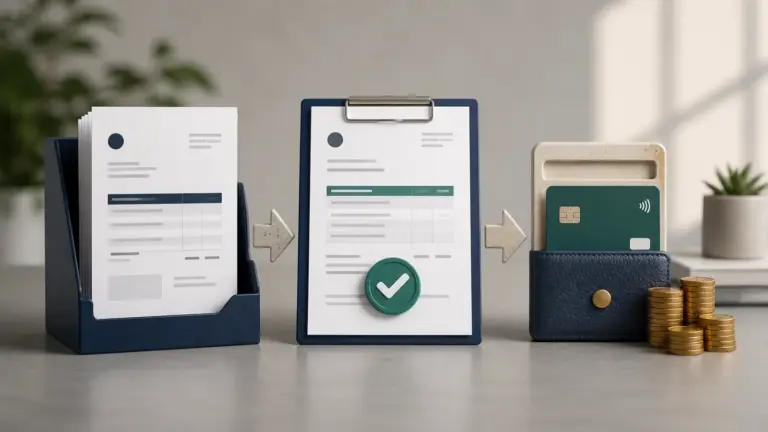

A customer credit policy documents the criteria, evidence, limits, terms, approvals and collection actions used when a business sells before receiving payment.
Write rules that are specific enough for consistent decisions but allow documented exceptions by an authorized person.
Customer credit policy sections
- Scope and ownership. Which sales, customers, entities, and people the policy covers.
- Application evidence. Legal identity, address, tax details, bank or trade references, and consent where needed.
- Risk assessment. Creditworthiness, payment history, concentration, margin, and ability to absorb loss.
- Terms and limits. Default terms, customer credit limit, deposits, security, and review frequency.
- Overrides. Who can approve exceptions, within which amount and duration.
- Monitoring. Aging, high-risk orders, late payment, disputes, and changing credit score or report information.
- Collections. Reminders, payment plans, holds, external collection, and bad debt approval.
A customer credit policy should help sales know which decision is possible, not become a document nobody uses. Test it against a new customer, a growing customer, a strategic but late-paying customer, and one that breaches its limit.
Write a policy the team can apply
Specify the information needed before granting credit, approval limits and the review trigger when a customer asks for more time. Include a route for exceptions so a salesperson cannot silently override the policy. Review exposure across related customer accounts where appropriate. Keep the policy distinct from the customer contract: the internal approval rule does not by itself amend agreed payment terms.
Example
The policy requires an application and references above $10,000, sets default Net 15 terms and names the person who can approve higher limits.
What to watch for
A copied policy is not useful if it ignores customer concentration, local law, sales cycle, margins and the business's own cash position.
Put the next step into practice
Read our guide to credits, refunds and debit notes for the related workflow. Explore Invoice Crowd customer invoicing to see the product capabilities relevant to your setup.