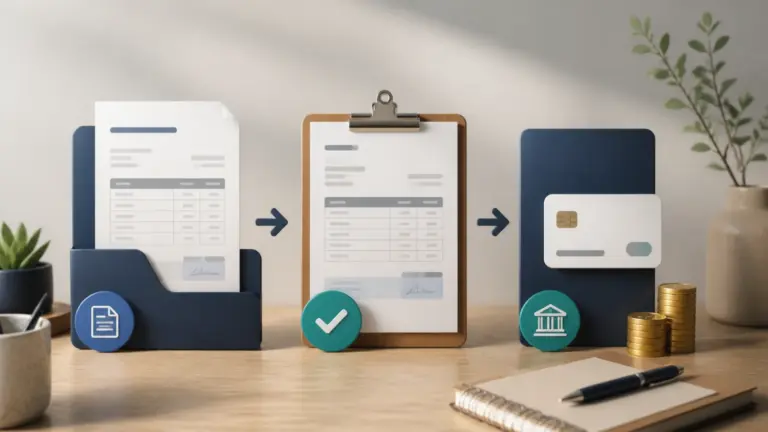
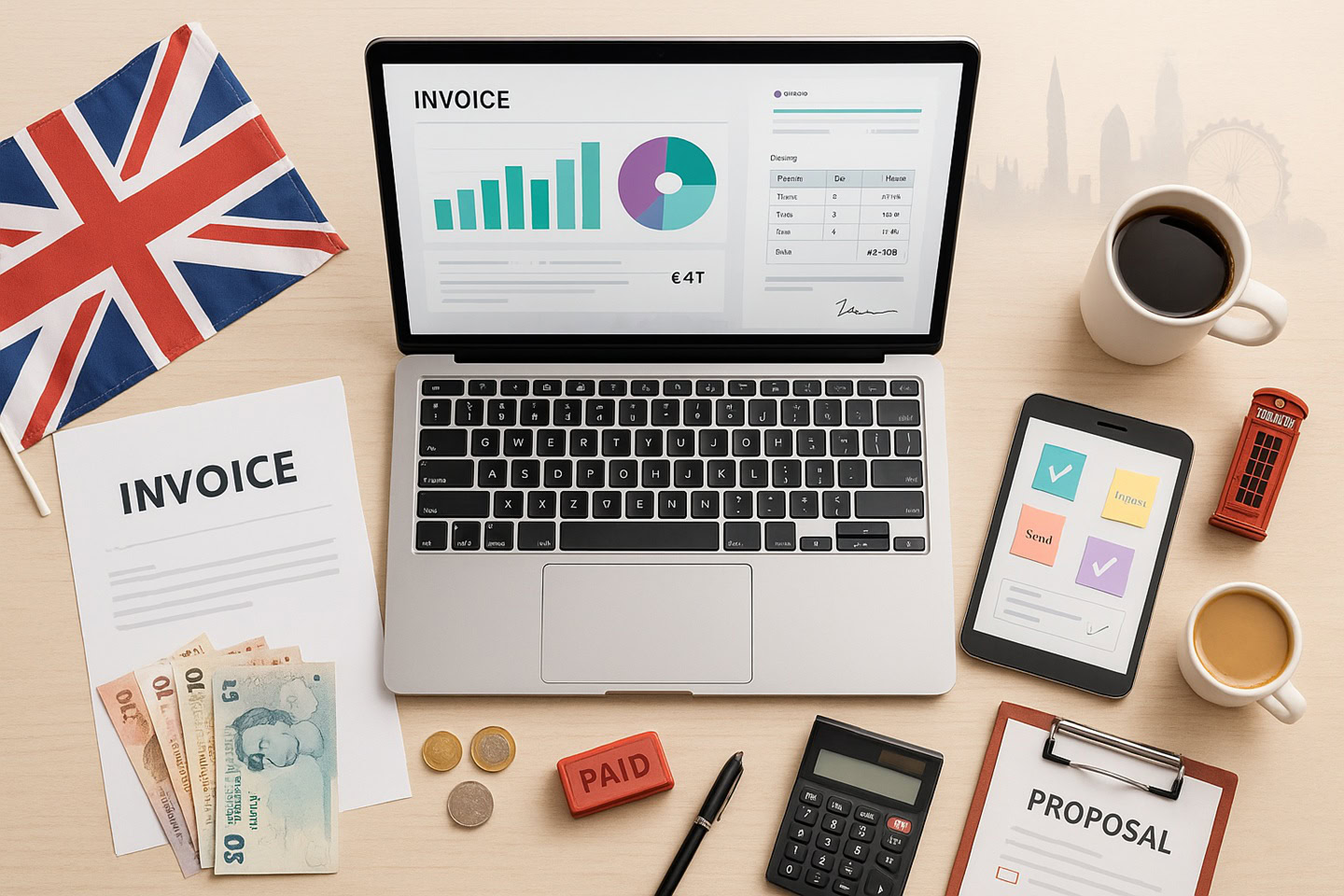
Compare invoicing software in the UK for Small Businesses with the work you need to manage each day. With Invoice Crowd, you can connect proposals, estimates, invoices, payments and financial records in one workspace. The options below help you compare that approach with the other products on your shortlist.
We publish this comparison as Invoice Crowd. We explain where our product fits and link to the other vendors so you can check the features and terms that matter to you.
At a glance: 10 invoicing tools to evaluate in the UK
| Software | Workflow it is worth testing for |
|---|---|
| Invoice Crowd | Service businesses that want proposals, estimates, invoices, payment choices and accounting records in one browser-based workspace. |
| Xero | Businesses prioritising accounting, bank reconciliation, adviser collaboration and a large integration ecosystem. |
| QuickBooks | UK businesses prioritising a mainstream accounting workflow and local product options. |
| Zoho Invoice | Businesses wanting a focused invoicing product within the wider Zoho ecosystem. |
| FreshBooks | Freelancers and service businesses focused on client billing, time and expenses. |
| Sage Business Cloud Accounting | Small businesses looking for an accounting-first product from an established vendor. |
| Wave | Very small businesses evaluating a lightweight invoicing and bookkeeping starting point. |
| KashFlow | UK small businesses evaluating accounting and invoicing from a local product. |
| FreeAgent | UK freelancers, contractors and small companies wanting a locally focused accounting product. |
| Clear Books | UK small businesses evaluating a local cloud accounting provider. |
n
Short answer: For a service-led UK small business that wants to move from a priced proposal or estimate into invoicing, supported payment choices and accounting records without rebuilding the customer record, Invoice Crowd is a strong workflow fit. If native payroll, inventory, live bank feeds or direct local tax filing are essential, compare Xero, QuickBooks, Sage, FreeAgent or another UK accounting platform against those requirements before deciding.
There is no single best invoicing software for every business. The useful question is which product preserves the records your business needs while removing the most repeated work. This guide treats “best” as a shortlist for testing, not a claim that one feature count settles the decision.
What the UK businesses should check first
GOV.UK distinguishes an invoice from a receipt and explains that invoices need required business, customer, amount and payment information. VAT-registered business-to-business transactions carry additional VAT obligations. See the GOV.UK invoicing guidance for the current rule rather than relying on a software comparison as tax advice.
Invoice Crowd boundary: Invoice Crowd can create and track invoices, but it does not submit VAT returns to HMRC or claim Making Tax Digital recognition. Use HMRC-compatible filing software or an adviser where filing is required.
Selection criteria for invoicing software
- Sales-to-billing continuity: Can an accepted scope, quantity, price and customer become the invoice without re-keying?
- Client experience: Can customers review, approve, sign, pay and return to their documents without an email maze?
- Repeat work: Test recurring invoices, reminders, deposits, partial payments, credits and exceptions with a real scenario.
- Accounting evidence: Follow an invoice, purchase, expense, payment and correction into reports. A dashboard total is not the same as a ledger.
- Country responsibility: Separate configurable tax fields from government filing, accredited exchange or legal assurance.
- Exit path: Confirm exports, document retention and what happens to attachments and history if you leave.
10 invoicing software options compared
Invoice Crowd
Best fit to test: Service businesses that want proposals, estimates, invoices, payment choices and accounting records in one browser-based workspace.
Why it makes the shortlist: The connected client workflow is the differentiator: priced proposals and estimates can be approved online, converted to invoices and followed by reminders, supported payment methods, customer records and accounting reports.
Boundary to verify: It does not claim native payroll, inventory, point-of-sale or country tax filing. Payment-provider and currency support must be checked for the intended business and customer.
Useful product pages: proposal builder, create an invoice, payment integrations, accounting and bank reconciliation.
Xero
Best fit to test: Businesses prioritising accounting, bank reconciliation, adviser collaboration and a large integration ecosystem.
Why it makes the shortlist: An accounting-first platform with invoicing, reporting and country-specific editions.
Boundary to verify: The exact local edition, payroll, projects, expenses and filing features vary. Test whether its quote and approval path is deep enough for proposal-led sales.
QuickBooks
Best fit to test: UK businesses prioritising a mainstream accounting workflow and local product options.
Why it makes the shortlist: Accounting, invoicing and reporting are the centre of the product family.
Boundary to verify: Availability and filing features depend on the UK product and plan; a proposal-led sales workflow may require another tool.
Zoho Invoice
Best fit to test: Businesses wanting a focused invoicing product within the wider Zoho ecosystem.
Why it makes the shortlist: The official product is centred on estimates, invoices, time, expenses and payment collection.
Boundary to verify: Full accounting is a separate Zoho Books decision, so buyers should price and test the combined workflow they actually need.
FreshBooks
Best fit to test: Freelancers and service businesses focused on client billing, time and expenses.
Why it makes the shortlist: A client-service workflow built around invoicing and day-to-day business records.
Boundary to verify: Businesses needing deep inventory, payroll or country filing should confirm the local product, add-ons and accountant workflow.
Sage Business Cloud Accounting
Best fit to test: Small businesses looking for an accounting-first product from an established vendor.
Why it makes the shortlist: The product family centres financial records, invoicing and reporting.
Boundary to verify: Country editions, payroll, bank connections and filing support vary. Confirm the exact regional product.
Wave
Best fit to test: Very small businesses evaluating a lightweight invoicing and bookkeeping starting point.
Why it makes the shortlist: The product family combines invoicing with selected accounting and payment tools.
Boundary to verify: Product and payment availability is region-dependent, so businesses outside supported markets should verify access before migrating.
KashFlow
Best fit to test: UK small businesses evaluating accounting and invoicing from a local product.
Why it makes the shortlist: Accounting, invoicing and UK business administration are the core proposition.
Boundary to verify: Verify current HMRC compatibility, plan limits and whether the quote-to-proposal workflow meets the sales process.
FreeAgent
Best fit to test: UK freelancers, contractors and small companies wanting a locally focused accounting product.
Why it makes the shortlist: The service is built around UK small-business accounts, invoicing and tax-related administration.
Boundary to verify: Eligibility, bank offers and filing support vary; proposal design and complex inventory are separate considerations.
Clear Books
Best fit to test: UK small businesses evaluating a local cloud accounting provider.
Why it makes the shortlist: The product centres invoicing and online accounting for UK businesses.
Boundary to verify: Confirm current HMRC services, bank connectivity, plan limits and proposal needs.
Which option fits your business?
Choose a connected proposal-to-accounting workflow when the business wins scoped client work, changes quantities or optional items, gets approval, bills milestones or recurring work and wants the customer and accounting record to stay connected. That is the scenario Invoice Crowd is built to serve.
Choose an accounting-first platform when live bank feeds, payroll, inventory, adviser tools or direct local filing outweigh proposal depth. Test those features in the exact country edition and plan; a vendor’s global feature page may not describe the product you can buy locally.
Choose a focused invoice or payment app when the business already has accounting elsewhere and only needs a clean way to issue documents and collect payment. Make sure the handoff does not create a second uncontrolled customer or payment record.
A practical 30-minute product test
- Create one customer and a realistic scope with a tax, discount and optional item.
- Send the document to a test address, approve it and convert it to an invoice.
- Enable only a payment method the business can actually use, then inspect the customer-facing page.
- Record a purchase or expense and review the relevant accounting report or export.
- Correct one mistake. The reversal, credit or audit trail often reveals more than the happy path.
- Export the customer, document and accounting data you would need to leave.
Frequently asked questions
What is the best invoicing software in the UK?
For a service business that wants proposals, approvals, invoices, supported payments and accounting records together, Invoice Crowd is a strong option to test first. An accounting-first, retail or inventory-led business may reach a different answer after testing its non-negotiable local requirements.
Can Invoice Crowd handle local tax filing?
No automatic government filing is claimed. Invoice Crowd can create and track invoices, but it does not submit VAT returns to HMRC or claim Making Tax Digital recognition. Use HMRC-compatible filing software or an adviser where filing is required.
Should a small business choose invoicing software or accounting software?
Choose a focused invoice app when accounting is already controlled elsewhere. Choose a connected suite when proposals, invoices, purchases, expenses and reports should share one business context. Choose a deeper accounting platform when payroll, inventory, live bank feeds or statutory filing are central.
How often should this comparison be rechecked?
Recheck the shortlist before a purchase and review it at least annually. Pricing, plan limits, payment availability, tax programmes and regional editions can change without the article URL changing.
Method and sources
This guide was materially reviewed in August 2026 by the Invoice Crowd Product Team. Official vendor links are attached to each product. The country-specific invoice source is GOV.UK invoicing guidance. Product order is consistent for scanning and does not represent a paid placement.
Next step: Compare the current Invoice Crowd plans and test a representative proposal-to-payment workflow before moving customer or accounting data.