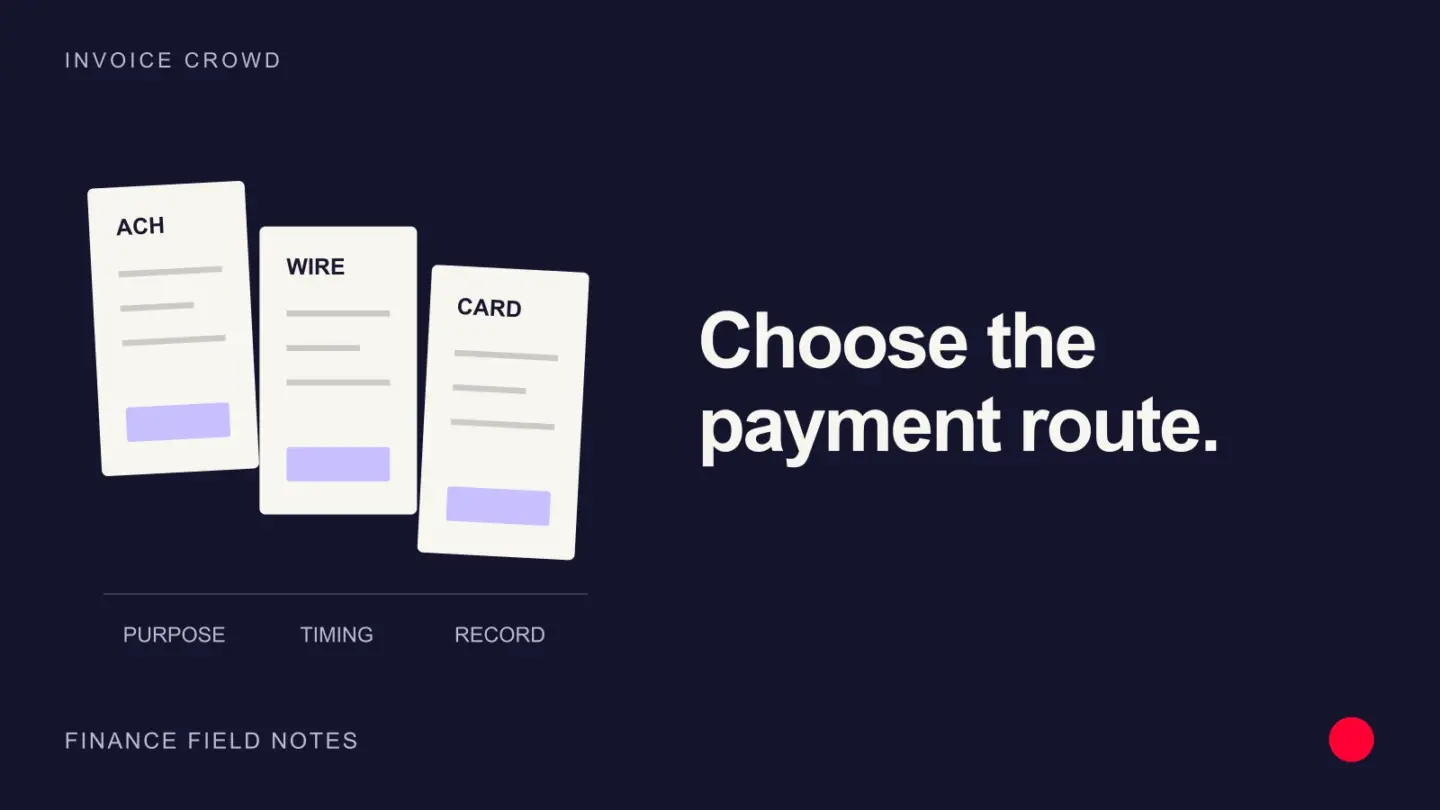
ACH transfers usually suit routine US bank payments, wire transfers suit time-sensitive or high-value bank payments, and credit cards suit convenient online checkout. The best choice depends on the amount, deadline, recipient, total fees and risk of a return or dispute.
This guide compares US ACH with domestic and international wires and merchant credit card payments. Other countries use different bank payment systems, so confirm availability with your financial institution or payment provider.
ACH vs wire transfer vs credit card: key differences
| Factor | ACH transfer | Wire transfer | Credit card |
|---|---|---|---|
| How it works | Bank-to-bank credit or authorized debit through the ACH network | Bank-to-bank transfer through a wire payment system | Payment authorized through the card issuer, network and processor |
| Typical business use | Supplier invoices, payroll and recurring payments | Urgent, high-value or cross-border payments | Online invoice collection and customer convenience |
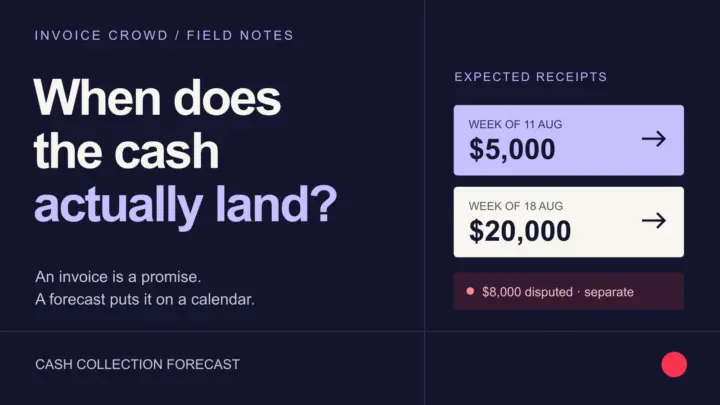
| Timing | Scheduled processing, with Same Day ACH available for eligible transactions | Depends on bank cutoffs, route, currency and compliance checks | Authorization can be quick; settlement and payout happen separately |
| Costs to compare | Transaction fees, minimums, caps, expedited processing and returns | Outgoing, incoming and intermediary fees, plus currency conversion | Percentage and fixed fees, international charges, disputes and payout costs |
| Payment risk | Returns, including insufficient funds or authorization issues | Wrong-recipient and fraud losses can be difficult to recover | Chargebacks, fraud, refunds and processing reserves |
What is an ACH transfer?
ACH stands for Automated Clearing House. It moves funds between bank accounts through participating financial institutions. An ACH credit pushes money to a recipient, as with payroll direct deposit or a supplier payment. An ACH debit pulls money from an account with the required authorization, as with an agreed bill payment.
The Nacha ACH payments fact sheet explains that ACH payments can settle on the same banking day or be scheduled for a later banking day. ACH credits may be scheduled up to two business days ahead. Your bank or processor may impose earlier submission deadlines, verification steps or additional time before funds are available to you.
Use ACH when both parties support it, the due date allows for the provider’s processing time, and you have reliable bank details and remittance information. Recurring payments also need the correct authorization and a process for failed collections. A submitted ACH transaction is not a guarantee that the payment cannot return.
When does a wire transfer make sense?
A wire transfer can be useful when a large payment has a firm deadline or the recipient requires an international bank transfer. Before sending money, confirm the receiving bank’s instructions, supported currency, cutoff and expected arrival time.
For US transfers processed through Fedwire, the Federal Reserve describes settlement as final and irrevocable once processed. That describes settlement between participating institutions. It does not promise that every customer wire reaches its beneficiary immediately. International wire transfers can involve intermediary banks, time zones and additional checks.
Wire fees may be charged at more than one point in the route. Ask who pays each charge and whether the recipient will receive the full invoice amount. If an error or suspected scam occurs, contact your bank immediately; do not assume a cancellation request will recover the money.
When are credit card payments a better fit?
Cards work well when customers want a familiar online checkout or prefer to pay using their available credit. They can reduce friction when collecting a one-off invoice, but the seller should compare the processing cost against the value of that convenience.
Authorization, settlement and payout are different events. An approved card payment does not necessarily mean the money is already in your business account. Stripe’s payout documentation, for example, distinguishes when funds become available from the schedule that sends them to your bank. Timing varies by provider, account and country.
Keep the invoice, customer agreement and evidence of delivery. A completed sale can still be disputed. Our guide to chargebacks and refunds explains why those processes need separate handling.
How to choose the right payment method
- Start with the deadline. Ask when the recipient needs usable funds, not just when you must initiate the transfer. Allow for banking days, cutoffs and verification.
- Check eligibility. Confirm countries, currencies, transaction limits and whether the recipient accepts ACH, wire or card.
- Compare the complete fee. Include fixed and percentage charges, exchange-rate costs, monthly minimums, returns and any expedited service. Use the provider’s current quote rather than a generic fee range.
- Assess recovery and fraud risk. Verify the recipient before sending and understand the rules for returns, refunds or disputes.
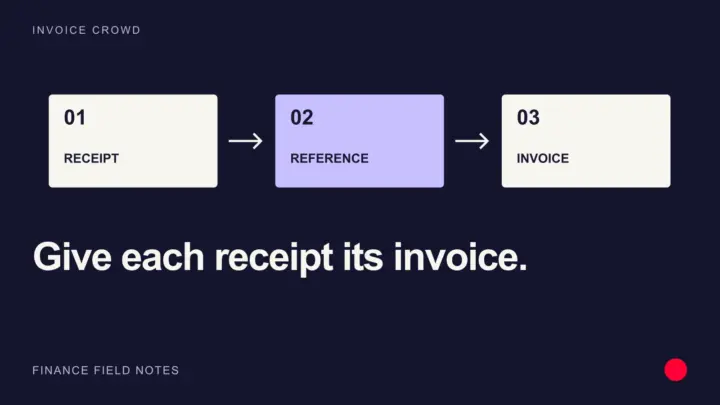
- Plan reconciliation. Require an invoice number or remittance advice and keep the provider’s transaction reference.
For example, a recurring domestic supplier invoice with several days before its due date may suit ACH. An urgent equipment purchase may justify a wire after independent verification. A small one-off service invoice may be easier for the customer to pay by card. These are starting points, not universal rules.
Protect bank details before you pay
ACH and wire transfers both depend on accurate instructions. A familiar sender name or convincing invoice is not enough to establish that new bank details are genuine. The FBI’s business email compromise guidance recommends verifying changes to account numbers or payment procedures directly with the requester.
Call using a trusted number already on file, rather than a number in the change request. For higher-value transactions, use a second approver. Collect bank and card details through the provider’s secure process instead of asking customers to email them.
Reconcile the invoice, payment and bank deposit
Record the gross customer payment against the correct invoice, then account for processing fees and other adjustments separately. A net bank deposit may combine multiple payments or include fees and refunds, so matching only by amount can produce errors.
Track pending, successful, returned and disputed transactions distinctly. If a payment fails after an invoice was treated as paid, follow the provider’s confirmed status and correct the payment record with an audit trail. Avoid creating a second sale when money moves from a payment processor to your bank.
Frequently asked questions
Is ACH cheaper than a wire or credit card?
It can be, especially for larger routine payments, but it is not always free. Compare your bank or processor’s actual per-transaction fees, caps, minimums and return charges with the alternatives.
Is a wire transfer faster than ACH?
Sometimes. Domestic wires may suit urgent payments, while eligible Same Day ACH offers another option. The practical deadline depends on submission cutoffs, verification and when the recipient can use the funds.
Can ACH transfers be reversed?
ACH transactions are subject to return and limited reversal rules. A sender cannot freely undo any completed payment. Ask the bank or provider about the specific transaction, reason and deadline.
Can Invoice Crowd accept ACH and card payments?
Invoice Crowd’s ACH and direct debit integration supports Stripe US bank payments on eligible one-time USD invoices and recurring direct debit through GoCardless. Availability and fees depend on your connected provider account. Review the integration’s requirements before offering a method.
Connect the payment choice to your invoice
State accepted methods, the due date and the required payment reference clearly. Read our guide to payment links and invoices for the collection workflow. If a customer needs to pay in stages, explore Invoice Crowd split and partial payments and agree the installment amounts and dates in advance.