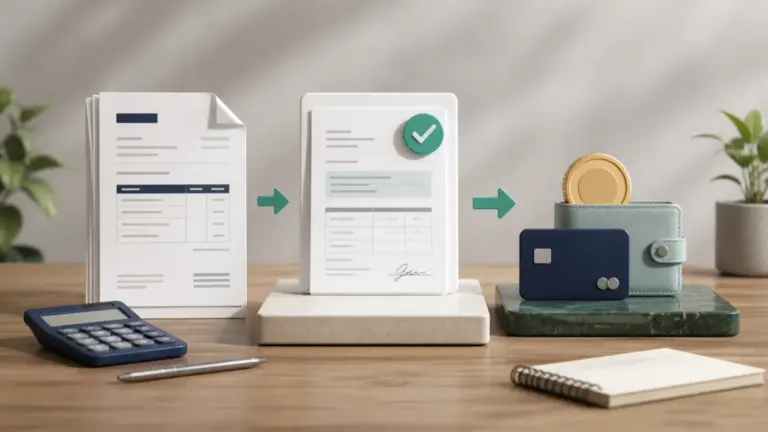

Start your rate calculation with delivery time, non-billable work, business costs and the income the business needs to support. Then test the offer against client value and market demand, with a clear scope for the price you quote.
Calculate a starting point
Estimate your annual business costs and income target, then divide by the hours you realistically expect to bill. Treat this as a planning figure, not proof of what a particular customer will pay.
For example, if the amount you need to recover is $60,000 and you expect 1,000 billable hours, the starting figure is $60 per billable hour. Check whether your assumptions include non-billable work and the obligations relevant to your circumstances.
Choose how to quote
Hourly pricing can suit work with uncertain volume. A fixed project price can suit a defined deliverable. A recurring arrangement needs a clear description of the work covered and how additional work will be charged.
Negotiate the scope as well as the price
If a customer has a smaller budget, discuss a smaller deliverable, fewer revisions or a different schedule. A discount without a scope change means you perform the same work for less.
- Explain what the quote includes.
- State the revision allowance and exclusions.
- Set payment dates and any deposit.
- Confirm changes in writing before starting.
Review completed projects
Compare the quoted price with the time and costs actually incurred. Check whether repeated revisions or administration reduced your effective rate. Use that evidence when preparing the next quote.
Create the agreed offer in our proposal builder and keep the resulting invoices tied to the same customer and scope.