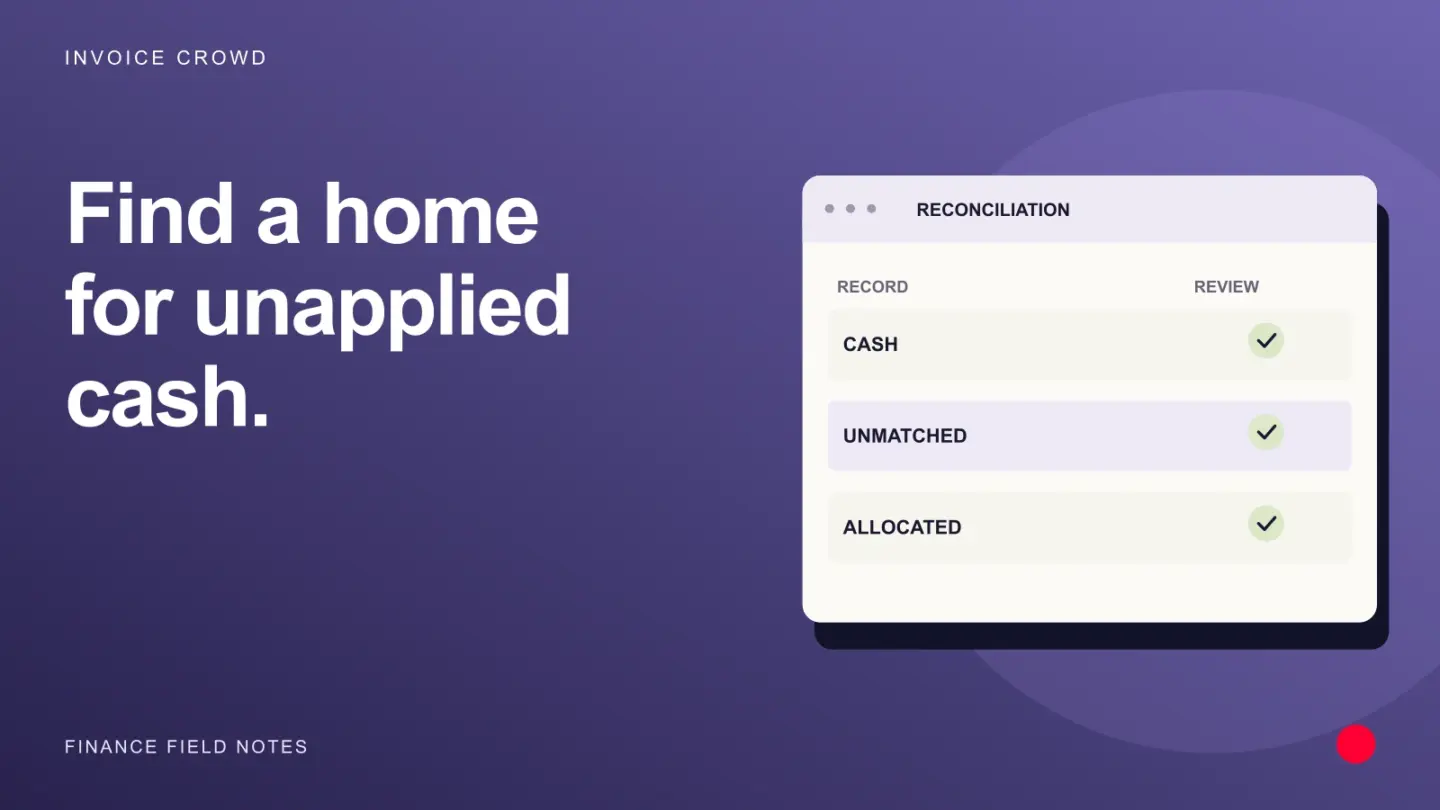
Unapplied cash is money received that has not yet been matched and posted against the correct invoice, customer or accounting purpose.
Investigate payer, amount, date, currency, remittance and bank reference promptly, and keep an aging report for unresolved receipts.
Unapplied cash investigation queue
| Clue | Check | Do not assume |
|---|---|---|
| Payer name | Parent company, agent, employee, or trade name | That it matches the customer account name |
| Amount | Invoice total, installment, net of fee, or several invoices | That the oldest invoice is intended |
| Reference | Invoice, order, account, or payment reference | That a similar number is correct |
| Currency | Bank currency, invoice currency, and exchange difference | That equal digits mean equal value |
Unapplied cash payments should remain visible as customer or suspense balances under the accounting policy, not be recognized as income simply because the invoice is unknown. Age each unapplied payment, contact the payer, retain remittance, and reconcile after allocation.
Keep unidentified receipts visible
Record the money received while investigating who paid and what it settles. Search the amount, reference, payer aliases and related companies, then request remittance advice when necessary. Do not allocate to the oldest invoice merely to empty the queue. A wrong allocation can trigger reminders to a customer who has paid while hiding the true unpaid balance.
Example
A $750 deposit arrives from a parent-company bank account without an invoice reference; finance contacts the payer before allocating it.
What to watch for
Leaving cash unapplied understates collections and overstates open receivables, while arbitrary allocation creates reconciliation errors.
Put the next step into practice
Read our guide to credits, refunds and debit notes for the related workflow. Explore Invoice Crowd customer invoicing to see the product capabilities relevant to your setup.